

Lorenzo Protocol (BANK) has become one of the most watched crypto tokens this week after a sharp price rally pushed it into the center of the BTCfi conversation.
According to CoinGecko data reviewed on July 20, 2026, BANK was trading around $0.246, up more than 100% over 24 hours and nearly 500% over seven days. Trading volume also surged, with CoinGecko showing more than $350 million in 24-hour volume during the move.
That kind of rally naturally attracts attention. But the more important question is not simply why BANK went up. The better question is whether this move reflects a deeper market rotation into BTCfi and tokenized yield, or whether it is mostly a short-term trading spike driven by momentum, social media and on-chain speculation.
For traders following fast-moving crypto narratives, Tapbit provides access to market tools and trading opportunities across major digital asset themes.
What Is Lorenzo Protocol?

Lorenzo Protocol is a crypto infrastructure project focused on BTCfi, tokenized yield and on-chain asset management.
The project describes itself as a Bitcoin Liquidity Layer. In simple terms, Lorenzo aims to make Bitcoin more useful inside decentralized finance. Instead of BTC sitting passively in wallets, Lorenzo’s model is built around turning Bitcoin and other supported assets into yield-bearing, composable financial products.
This matters because Bitcoin remains the largest crypto asset, but only a small portion of BTC is actively used in DeFi. BTCfi projects try to close that gap by building systems for Bitcoin staking, liquid staking, wrapped BTC, structured yield and lending markets.
Lorenzo’s broader pitch is that Bitcoin should not only be a store of value. It can also become productive collateral inside on-chain financial markets.
Why Is BANK Rising?
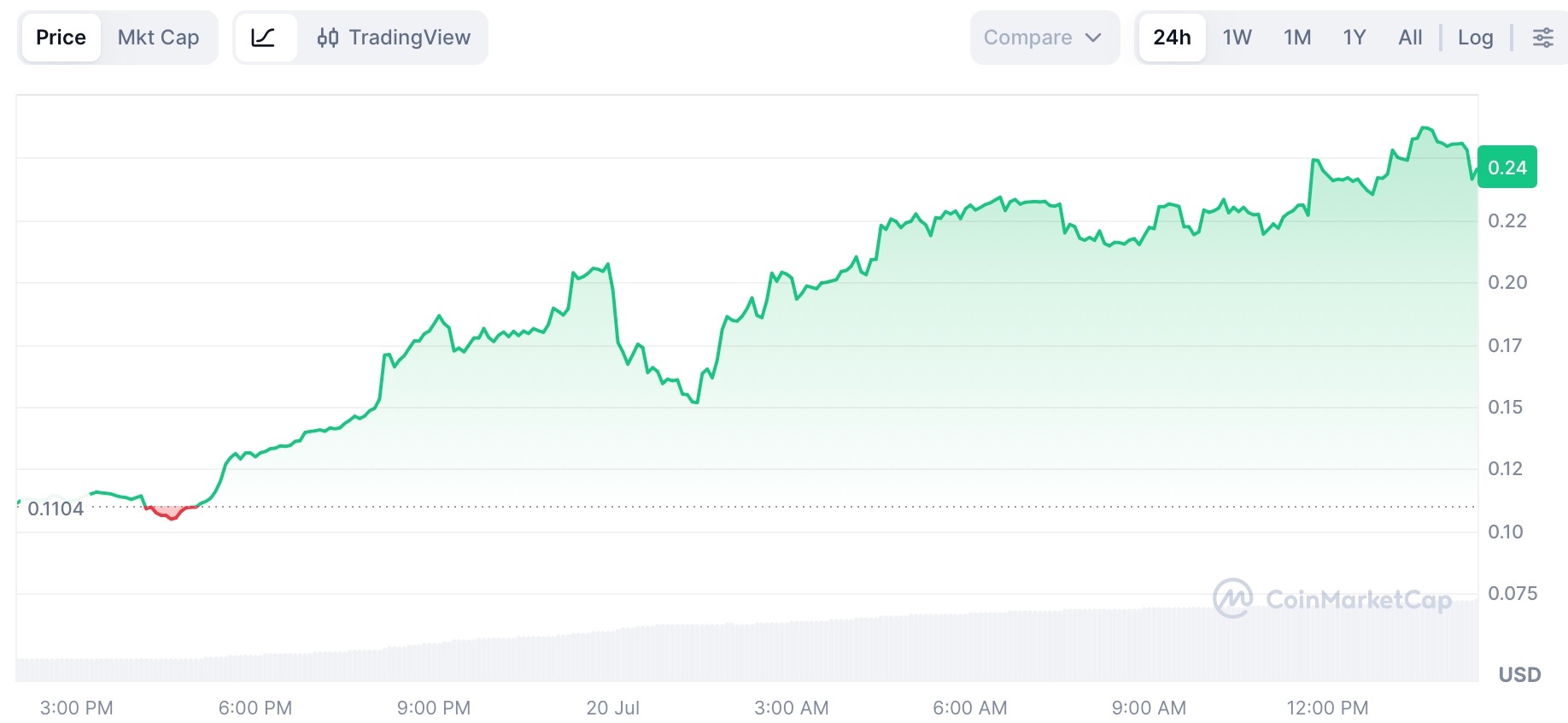
BANK is rising for several reasons, but not all of them are equally fundamental.
The first reason is market momentum. BANK became one of the top trending tokens on CoinGecko, and its price moved quickly across major trading venues. When a token posts triple-digit daily gains, it often attracts short-term traders, momentum accounts and social media attention.
The second reason is the BTCfi narrative. BTCfi has been one of the more active crypto themes this month as traders look for projects that can unlock Bitcoin liquidity and create yield opportunities around BTC. Lorenzo fits that narrative because it directly targets Bitcoin liquidity, tokenized funds and structured yield products.
The third reason is rising trading volume. CoinGecko data showed a major jump in 24-hour volume during the rally, which suggests the move was not only a thin-market price spike. However, high volume can also mean high speculation, especially when price moves this quickly.
The fourth reason is on-chain activity. PANews and KuCoin reported that a suspected BANK Foundation wallet transferred 84 million BANK tokens to a new address, which then sent the tokens to an Aster deposit address. This movement happened while BANK was already attracting market attention.
That transfer is important, but it should be treated carefully. It does not automatically prove a new partnership, listing or commercial agreement. At this stage, it is best described as a reported on-chain transfer from a suspected foundation-linked wallet.
What Is BTCfi?
BTCfi stands for Bitcoin Finance.
The idea is simple: Bitcoin has huge market value, but much of it remains financially underused. BTCfi tries to bring Bitcoin into DeFi through staking, lending, liquidity products, structured yield and tokenized derivatives.
For example, a BTC holder may want to earn yield without selling BTC. A BTCfi protocol may offer a liquid staking token, wrapped BTC asset or yield-bearing token that lets the holder keep exposure while using the asset elsewhere in DeFi.
This is why BTCfi has become a popular narrative. It connects Bitcoin’s brand and liquidity with DeFi’s search for productive capital.
But BTCfi also comes with real risks. Any system that moves Bitcoin into yield strategies introduces smart contract risk, custody risk, bridge risk, liquidity risk and strategy risk. The promise is attractive, but the structure behind the yield matters.
How Lorenzo’s Tokenized Yield Model Works
One of Lorenzo Protocol’s key ideas is the On-Chain Traded Fund, or OTF.
An OTF is designed to package yield strategies into a tokenized fund-like asset. Instead of users manually moving across different DeFi strategies, the OTF model can bundle exposure into a single product.
Project and market materials describe Lorenzo’s yield architecture as including DeFi strategies, quantitative trading, real-world asset exposure and structured products. Some products, such as sUSD1+, are designed around stablecoin-based yield strategies, while other products connect to broader BTCfi and BNB Chain ecosystems.
This is why Lorenzo is not just a meme-style momentum token. Its narrative is tied to a broader trend: making on-chain yield products look more like structured financial instruments.
That said, tokenized yield products are only as strong as their execution, transparency and risk controls. A polished product structure does not remove market risk.
Why the On-Chain Transfer Matters
The reported transfer of 84 million BANK tokens has become one of the most discussed short-term events around the token.
On-chain data reported by PANews showed that a suspected BANK Foundation wallet moved 84 million BANK to a new address, and that the tokens were then transferred to an Aster deposit address.
This is a meaningful amount of tokens, so traders are watching it closely. Large transfers can influence market sentiment because they may raise questions about liquidity, exchange deposits, market-making, treasury activity or future selling pressure.
But the most important point is restraint. A token transfer is not the same as a confirmed partnership. It is not the same as an official listing announcement. It is not proof of selling either.
For now, it is best understood as a large reported on-chain movement that increased attention around BANK during an already volatile rally.
Key Risks for BANK
The first risk is speed. BANK has moved extremely fast. A token that rises more than 100% in a day can also reverse quickly if momentum fades or early buyers take profit.
The second risk is social media-driven volatility. CoinGecko’s event feed described part of the recent move as a social-media-driven rally. That does not mean the project has no fundamentals, but it does mean short-term price action may be heavily influenced by attention rather than confirmed adoption.
The third risk is token movement. The reported 84 million BANK transfer should be monitored. Large wallet activity can affect confidence, especially if traders are unsure whether tokens are moving for liquidity, deposits, treasury management or other purposes.
The fourth risk is yield sustainability. BTCfi and tokenized yield products are attractive because they promise productive capital, but yield has to come from somewhere. Traders should understand whether returns come from real demand, trading strategies, incentives, leverage, external counterparties or token emissions.
Bottom Line
Lorenzo Protocol (BANK) is rising because it sits at the intersection of several powerful crypto themes: BTCfi, tokenized yield, on-chain asset management and speculative momentum.
The BTCfi narrative is real. The idea of making Bitcoin more productive inside DeFi is one of the most important experiments in crypto. Lorenzo also has a clear product angle through its Bitcoin Liquidity Layer and On-Chain Traded Fund model.
But BANK’s latest move should not be treated as a simple fundamental repricing. The rally has been extremely fast, social media attention is clearly part of the story, and the reported 84 million BANK transfer adds another layer of uncertainty.
For traders, the right approach is to separate the long-term BTCfi thesis from short-term price excitement. BANK may remain in focus if BTCfi continues to heat up, but the risks are high after such a large move.
New users can register on Tapbit to explore crypto market opportunities and follow emerging digital asset narratives.
Frequently Asked Questions (FAQ)
What is Lorenzo Protocol (BANK)?
Lorenzo Protocol is a BTCfi and tokenized yield project focused on making Bitcoin and other assets more usable in decentralized finance. Its BANK token is linked to the protocol’s ecosystem and governance.
Why is BANK rising?
BANK is rising because of strong market momentum, rising interest in BTCfi, increased trading volume, social media attention and reported on-chain activity involving a large BANK token transfer.
What is BTCfi?
BTCfi stands for Bitcoin Finance. It refers to protocols that try to make Bitcoin more productive in DeFi through staking, lending, wrapped BTC, liquid staking tokens, structured yield products and other financial tools.


