

The Federal Reserve begins its July policy meeting with markets facing an unusual degree of uncertainty.
Keeping interest rates unchanged remains the most likely outcome. However, a sharp rise in oil prices earlier in July revived concerns that inflation could accelerate again, pushing traders to consider the possibility of another rate increase.
Oil has since retreated from its recent highs, easing some of that pressure. Even so, markets continue to assign a meaningful probability to a surprise hike, while investors prepare for potential volatility across Bitcoin, gold and U.S. stocks.
For traders following global markets on Tapbit, the July meeting is not simply about whether rates rise. The language of the policy statement and Federal Reserve Chair Kevin Warsh’s comments may matter just as much as the decision itself.
When Is the July FOMC Meeting?
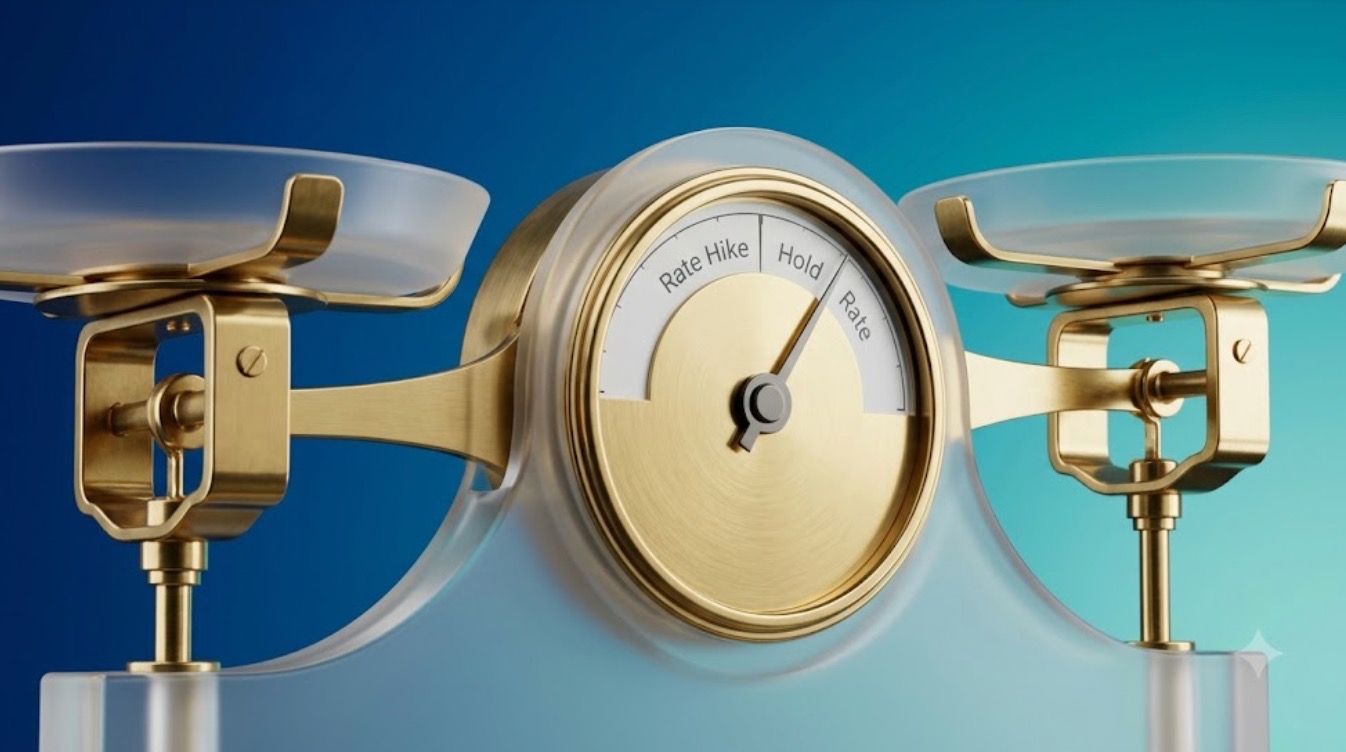
The Federal Open Market Committee is scheduled to meet on July 28 and 29, 2026. The current federal funds target range is 3.50% to 3.75%.
Unlike the March, June, September and December meetings, the July meeting will not include updated economic projections or a new dot plot. This means investors will have fewer formal forecasts to work with.
Instead, attention will fall on three areas:
-
The interest-rate decision.
-
Changes in the FOMC statement.
-
Warsh’s assessment of inflation, energy prices and future policy.
The Federal Reserve’s meeting calendar confirms that the next projection update will come with the September 15–16 meeting.
Is the Fed Expected to Raise Rates?
A rate hike is not the consensus forecast, but it is no longer being dismissed.
Market pricing on July 27 indicated roughly a 32% to 36% probability of a 25-basis-point increase. The estimates vary depending on when futures prices were measured, but both place the probability near one in three.
Most major brokerages still expect the Fed to hold rates steady. Reuters reported that institutions including BofA Global Research and Deutsche Bank see unchanged rates as the most likely July outcome, although some expect tightening to begin later in the year.
The unusual part is the size of the remaining disagreement. Federal Reserve decisions are normally signaled clearly before the pre-meeting communication blackout. This time, policymakers entered the meeting without fully removing the possibility of a hike.
Why Did Oil Prices Change the Debate?
The renewed rate-hike discussion was driven largely by energy prices.
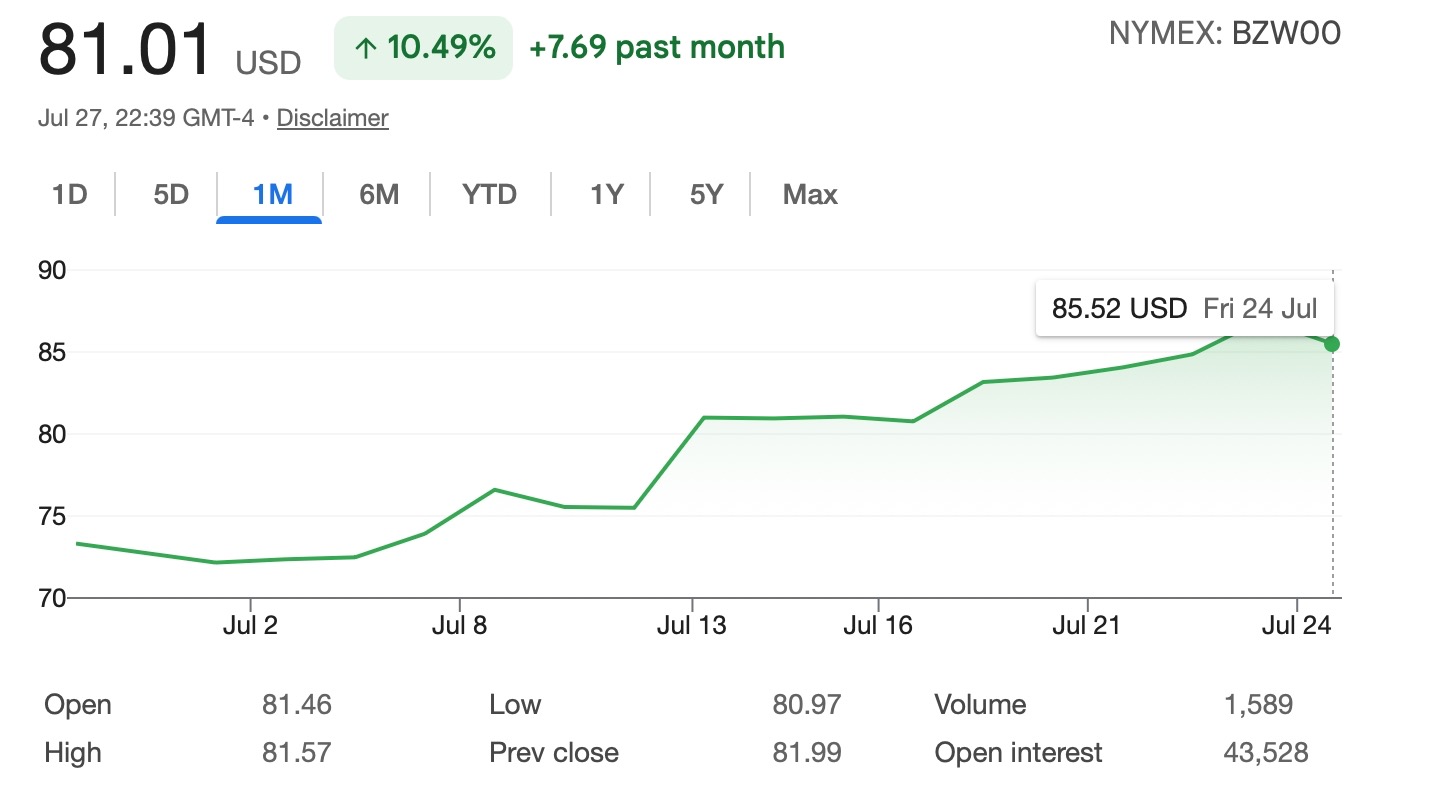
Brent crude moved above $100 per barrel in late April as conflict involving the United States and Iran raised concerns about supplies moving through the Strait of Hormuz. Higher energy prices can affect inflation through gasoline, shipping, air travel, manufacturing and consumer goods.
That created a difficult choice for the Fed. Raising rates cannot produce more oil, but tighter financial conditions may prevent an energy shock from spreading into broader inflation expectations.
The picture changed again on July 27. As the United States and Iran paused attacks and returned to negotiations, Brent crude fell 6.3% to approximately $85.87 per barrel. U.S. crude declined to about $82.61.
The drop reduced the immediate pressure on the Fed, but it did not erase the previous increase in fuel and transportation costs. Policymakers must decide whether the oil shock is fading or merely entering another volatile phase.
What Do the Latest Economic Data Show?
Recent inflation data make an immediate rate hike difficult to justify.
June headline CPI declined 0.4% from the previous month, while core CPI was unchanged. Producer prices also fell on a monthly basis. Meanwhile, U.S. employers added only 57,000 jobs in June, suggesting that labor demand is slowing.
These figures support waiting for more information.
At the same time, inflation remains above the Fed’s 2% objective. Tariffs, energy costs and strong investment in AI infrastructure could create additional price pressure. The labor market has slowed, but the unemployment rate has not risen enough to signal a severe downturn.
The Fed is therefore not being forced to ease policy. Its choice is between remaining patient and tightening again to reinforce its inflation commitment.
The Fed Is Divided Over What Comes Next
Minutes from the June meeting showed a meaningful split inside the FOMC.
Many policymakers believed the appropriate year-end interest rate would be at or slightly below the current range. Many others believed rates should be higher by the end of 2026.
Participants also discussed scenarios in which inflation could remain elevated because of energy prices, tariffs and AI-related demand. Under those conditions, additional policy tightening could be appropriate.
The committee nevertheless voted unanimously in June to maintain the target range at 3.50% to 3.75%. It also removed language that had previously suggested an easing bias.
This is why an unchanged July decision should not automatically be described as dovish.
Four Possible FOMC Outcomes
A neutral hold remains the baseline. The Fed could leave rates unchanged, acknowledge both cooling inflation and energy uncertainty, and emphasize that future decisions will depend on incoming data. This outcome could offer modest relief to risk assets.
A hawkish hold may be more important for markets. The Fed could keep rates steady while warning that persistent inflation may require a hike in September or later in the year. Under this scenario, Treasury yields and the dollar could rise even without an immediate rate change.
A surprise 25-basis-point hike would be the most disruptive outcome. Markets would likely reassess the entire rate path, including the probability of additional increases later in 2026.
A dovish hold appears less likely but remains possible. The Fed could focus on softer inflation, slower job growth and falling oil prices while reducing concerns about near-term tightening.
How Could Bitcoin React?
Bitcoin was trading around $64,000 to $65,000 ahead of the meeting, following a retreat from a recent high above $66,000.
In the immediate period after an FOMC decision, Bitcoin often responds to changes in the dollar, Treasury yields and broader risk appetite.
A neutral or dovish hold could support BTC if bond yields fall and investors become more willing to hold risk assets. Falling yields reduce the relative advantage of cash and short-term government securities.
A hawkish hold could produce the opposite reaction. If markets increase their expectations for a September hike, the dollar and short-term yields may strengthen, creating pressure on Bitcoin even though the July rate remains unchanged.
A surprise hike could cause a sharper move. Leveraged positions in crypto derivatives may amplify the initial decline through liquidations and forced position reductions.
Options positioning also points to greater volatility. Some traders have reportedly established approximately $2.5 billion in notional Bitcoin call spreads expiring on July 31. Those positions may benefit from a move toward $72,000, but they should not be interpreted as evidence that such a rally will occur.
How Could Gold React?
Gold entered the meeting near $4,100 per ounce after rising as oil prices and Treasury yields declined.
The metal is currently caught between competing forces. Inflation and geopolitical uncertainty support safe-haven demand, while high real yields and a strong dollar make non-yielding assets less attractive.
A dovish result would likely be the clearest positive scenario for gold. Falling yields and a weaker dollar could improve demand.
A hawkish hold or surprise hike may pressure gold initially. However, if tighter policy increases concerns about economic growth or financial stress, safe-haven buying could return after the first reaction.
For gold, the direction of real yields may be more informative than the policy rate alone.
How Could U.S. Stocks React?
U.S. stocks were mixed on July 27. The S&P 500 finished almost unchanged, the Dow Jones Industrial Average gained 0.5% and the Nasdaq Composite declined 0.2%.
Technology stocks remain particularly sensitive to interest rates. Higher long-term yields reduce the present value of future earnings and increase financing costs for data centers, chip purchases and other AI infrastructure.
Small-cap and highly leveraged companies may be even more exposed because they depend more heavily on external financing.
Still, the Fed is not the only market driver this week. Microsoft, Amazon, Apple and other major companies are reporting earnings. Their results and capital-spending guidance could move technology stocks independently of monetary policy.
Energy stocks may also react differently from the broader market. They can benefit from higher oil prices even when those same prices create inflation concerns for other sectors.
What Should Traders Watch After the Decision?
The first market move may not provide the full answer. Traders should monitor:
-
The two-year Treasury yield, which is closely linked to policy expectations.
-
The 10-year yield and real yields.
-
The U.S. dollar.
-
Oil prices and developments in the Middle East.
-
Expectations for the September FOMC meeting.
-
Any disagreement in the committee’s vote.
-
Warsh’s comments on energy-driven inflation.
-
Bitcoin derivatives liquidations and funding rates.
Upcoming economic data will also matter. The Fed’s preferred PCE inflation measure, employment figures and July consumer-price data will help determine whether September becomes a more likely time for a rate increase.
Conclusion
The most likely July FOMC outcome remains unchanged interest rates, especially after oil retreated from above $100 per barrel. Recent CPI, producer-price and employment data also support a patient approach.
That does not make the meeting uneventful.
Markets are still assigning roughly a one-in-three probability to a hike, and the Fed remains divided over whether inflation will require further tightening. A hawkish pause could therefore affect BTC, gold and technology stocks almost as much as a small rate increase.
The key question is not simply whether the Fed changes rates in July. It is whether policymakers believe the energy shock is temporary or the beginning of another period of persistent inflation.
Users can log in to Tapbit to monitor available markets during the FOMC decision or register for a Tapbit account.
Frequently Asked Questions
When will the July 2026 FOMC decision be announced?
The FOMC meeting takes place on July 28–29, 2026. The policy statement is scheduled for July 29 at 2:00 p.m. ET, followed by Chair Kevin Warsh’s press conference at 2:30 p.m. ET. In South Korea, these correspond to 3:00 a.m. and 3:30 a.m. on July 30.
What is the current federal funds rate?
The federal funds target range is currently 3.50% to 3.75%. The Fed has kept rates unchanged throughout 2026 so far.
Will the Fed raise interest rates in July?
Keeping rates unchanged remains the baseline forecast. However, as of July 27, futures markets were assigning roughly a 32% to 36% probability to a 25-basis-point increase. This probability can change as markets respond to oil prices, bond yields and geopolitical developments.


