
Google stock is trading near the $342 area after Alphabet reported strong Q2 revenue and exceptional Google Cloud growth. The headline numbers were impressive, but the market focused on a much larger capital-spending plan and the pressure that AI infrastructure is placing on free cash flow.
The result creates a valuation conflict. Alphabet’s core businesses are growing, Cloud is becoming more important and AI products are reaching more users. At the same time, investors must decide whether spending up to $205 billion in 2026 will generate an adequate return.
Google Stock Today: Post-Earnings Reaction
GOOGL closed near $342 before moving in after-hours trading. The final publication should refresh the close, after-hours price, volume and post-earnings low because the stock can change quickly as analysts revise forecasts.
The first technical question is whether Google can hold the post-report support area. The second is whether it can reclaim the $342–$345 region and then the pre-earnings level. A weak recovery would suggest that investors remain focused on spending risk.
Why Google Stock Fell Despite Strong Revenue
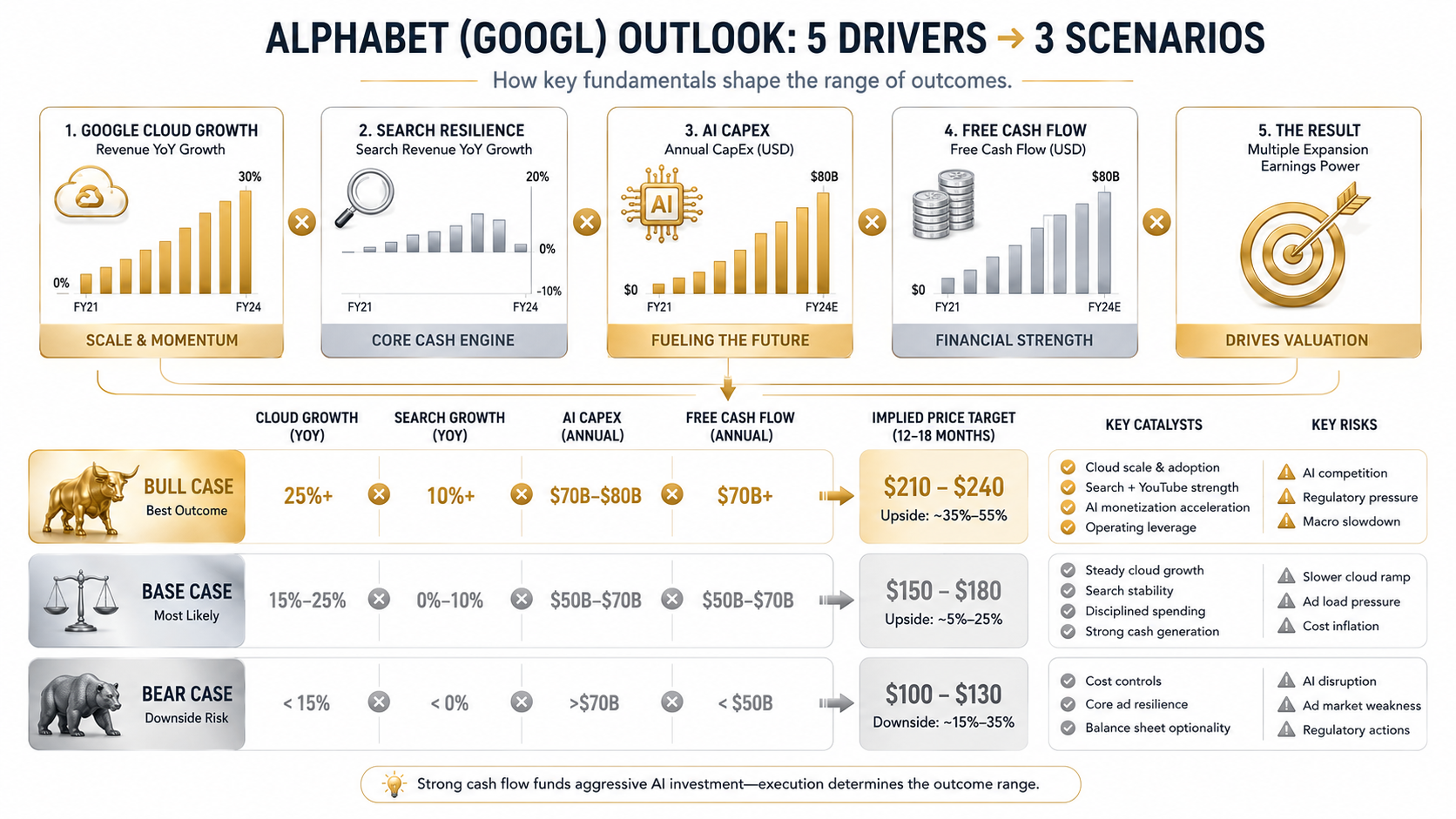
AI CapEx Rises to $195–$205 Billion
Alphabet raised its 2026 capital-expenditure guidance as it builds data centers, buys chips and expands AI infrastructure. The spending supports Cloud and Gemini, but it also increases depreciation and raises the return required from future revenue.
High capital spending is not automatically negative. It becomes a problem when revenue growth, margins or free cash flow fail to justify the investment. The market is therefore evaluating the productivity of every new dollar spent.
Free Cash Flow Pressure
Alphabet reported negative quarterly free cash flow in the latest report. That figure was influenced by the scale and timing of investment, but it changes the way investors interpret headline profit.
A company can report strong accounting earnings while cash generation weakens because spending on infrastructure occurs before the associated revenue. The key question is how quickly Cloud, Search and AI products convert that investment into durable cash flow.
AI Competition and Product Execution
Google competes with OpenAI, Anthropic and a growing group of open-source developers. Gemini adoption is important, but investors also care about model quality, developer tools, enterprise contracts and whether AI search protects advertising economics.
What Supports the Bull Case?
Google Cloud revenue grew 82% to roughly $24.8 billion, making Cloud the strongest operating signal in the quarter. Backlog growth indicates future contracted demand, although conversion timing matters.
Search remains a highly profitable distribution engine. AI Overviews and AI Mode can protect engagement if Google continues to connect answers with commercial intent. YouTube adds another large advertising and subscription platform.
Alphabet also has custom TPU chips, data-center scale, proprietary models and a large installed user base. That vertical integration may lower some long-term AI costs and give Google more ways to monetize infrastructure.
Google Stock Valuation After Q2
Investors should separate recurring operating earnings from large investment gains. Alphabet reported a significant non-operating gain in the quarter, which can make headline net income look stronger than the core business alone.
A cleaner valuation framework should use normalized operating profit, expected depreciation and capital-expenditure-adjusted cash flow. The stock deserves a higher multiple if Cloud growth remains exceptional and AI spending produces recurring revenue. It deserves a lower multiple if cash flow remains weak and competition forces continued heavy investment.
GOOGL Support, Resistance and Invalidation
The post-earnings low is the first support reference. The $342–$345 area is the immediate recovery zone, while the pre-report level becomes a stronger resistance target.
The bull case strengthens if the stock reclaims the recovery zone on strong volume and analysts maintain growth estimates. It weakens if GOOGL loses the post-report low and management’s spending plan continues to rise without stronger cash-flow guidance.
Google Stock Forecast
| Scenario | Confirmation | Main Driver | Invalidation |
|---|---|---|---|
| Bull | Cloud stays above expectations and cash flow recovers | AI monetization and Search resilience | Support break or weaker guidance |
| Base | Growth remains strong while spending stays elevated | Balanced revenue and investment cycle | Large estimate revision |
| Bear | CapEx rises faster than returns | Margin and free-cash-flow pressure | Rapid Cloud and cash-flow improvement |
Buy, Wait or Avoid Google Stock?
The buy case suits investors who believe Google Cloud, Search and AI distribution can justify the investment cycle. The wait case is stronger for users who want to see free cash flow recover or the stock reclaim resistance. The avoid case applies when the investor is uncomfortable with capital intensity or AI execution risk.
Tapbit Learn’s technology-sector risk guide provides a framework for evaluating growth and volatility. The support and invalidation guide explains how to structure chart confirmation.
How to Review GOOGL-USDT on Tapbit
GOOGL-USDT is a confirmed stock-linked futures contract on Tapbit. It is a derivative linked to Google’s market price; it is not a Google share.
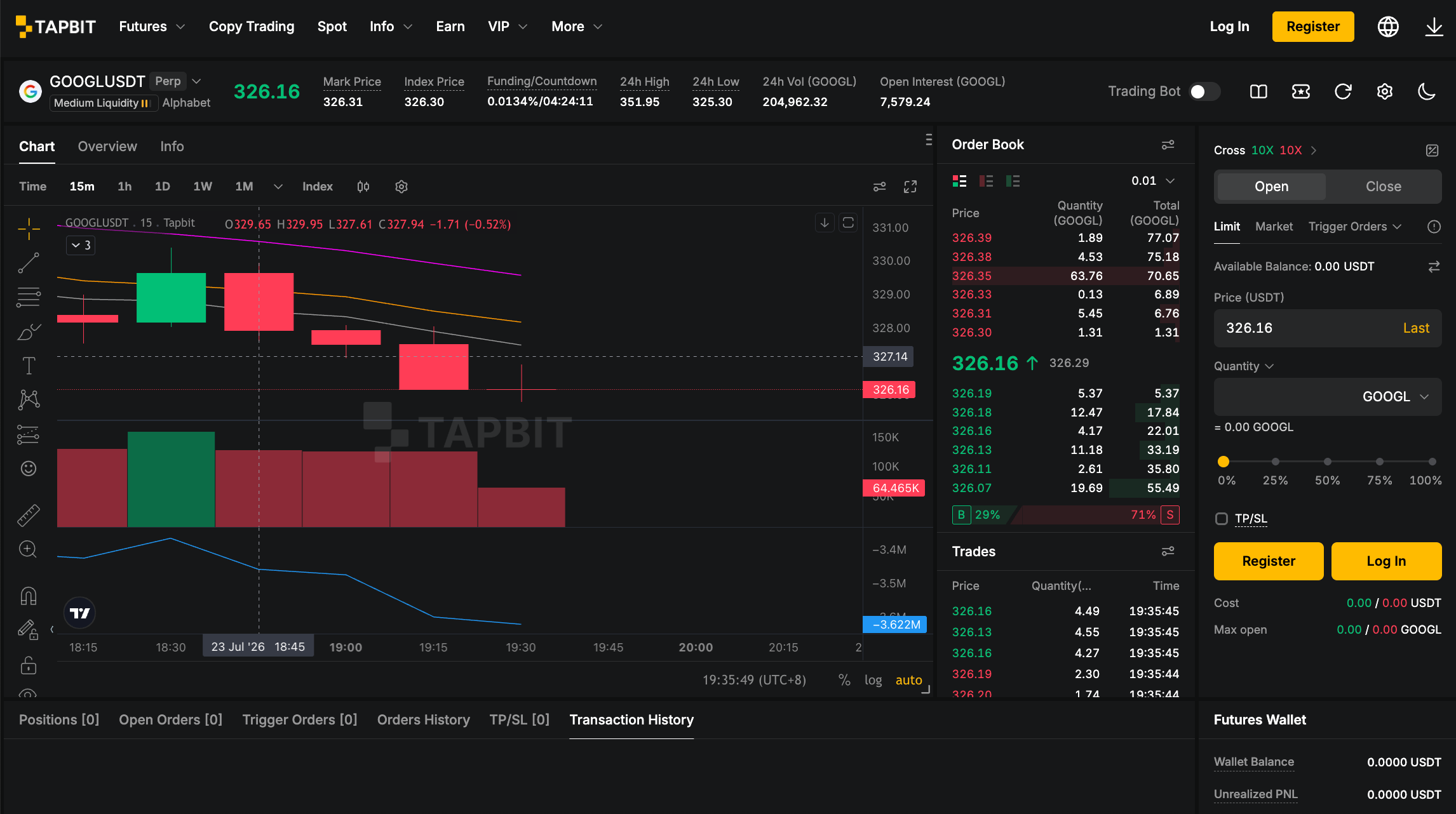
Holding the contract does not provide shareholder ownership, voting rights or dividends. The contract can also trade with leverage, which magnifies both gains and losses. Funding, margin and liquidation therefore matter in addition to the underlying stock thesis.
After earnings, traders should compare the contract price with the underlying GOOGL market, review the post-report support level and account for trading-hour differences. A futures position should have a predefined invalidation level rather than relying on the expectation that a strong company will automatically produce a short-term rebound.
Users who understand those mechanics can create an account and review the live contract specifications before placing an order.
Final Assessment
Google’s quarter showed strong operating momentum and unusually high investment intensity. The stock can recover if Cloud growth and AI monetization begin to convert into stronger cash flow. The risk is that spending continues to rise faster than visible returns, keeping valuation under pressure despite high revenue growth.
Frequently Asked Questions
Why did Google stock fall after earnings?
Investors focused on higher AI capital spending and free-cash-flow pressure despite strong revenue.
How fast did Google Cloud grow?
Google Cloud revenue increased about 82% to roughly $24.8 billion.
Is GOOGL-USDT a Google share?
No. It is a stock-linked futures contract and does not provide ownership, voting rights or dividends.
What price area matters?
The post-earnings low is the first support reference, while roughly $342–$345 is an immediate recovery zone that should be refreshed before publication.


