

Flare has achieved something rare among XRP‑focused DeFi projects: nearly 148 million XRP has been represented on its network as FXRP, worth roughly $200 million at current prices.
FLR, however, has not shared that momentum.
As of September 10, 2026, FLR was trading near $0.0064 — only about 9% above its August all‑time low. The divergence between FXRP adoption and the FLR price points to a core challenge Flare is now addressing: network activity does not automatically translate into demand for the network token.
FXRP Has Become a Real Market
FXRP is a tokenized representation of XRP on Flare. Users deposit XRP through the FAssets system and receive FXRP, which can be traded, lent, supplied to liquidity pools or deposited into yield strategies.
Approximately 147.8 million FXRP was in circulation on September 10. The position was worth about $204 million and was held across more than 12,200 addresses.
Around 86.9% of the system’s 170 million FXRP minting capacity had already been used. Flare also reported a verified reserve ratio of approximately 100%, while collateral supplied through agent pools exceeded 859 million FLR.
These figures show that FAssets has moved beyond a test product. XRP is entering Flare, and a substantial part of it is being deployed across staking, lending, vaults and decentralized exchanges.
The problem is that this activity has not created comparable buying pressure for FLR.
FLR Remains Close to Its Lowest Price
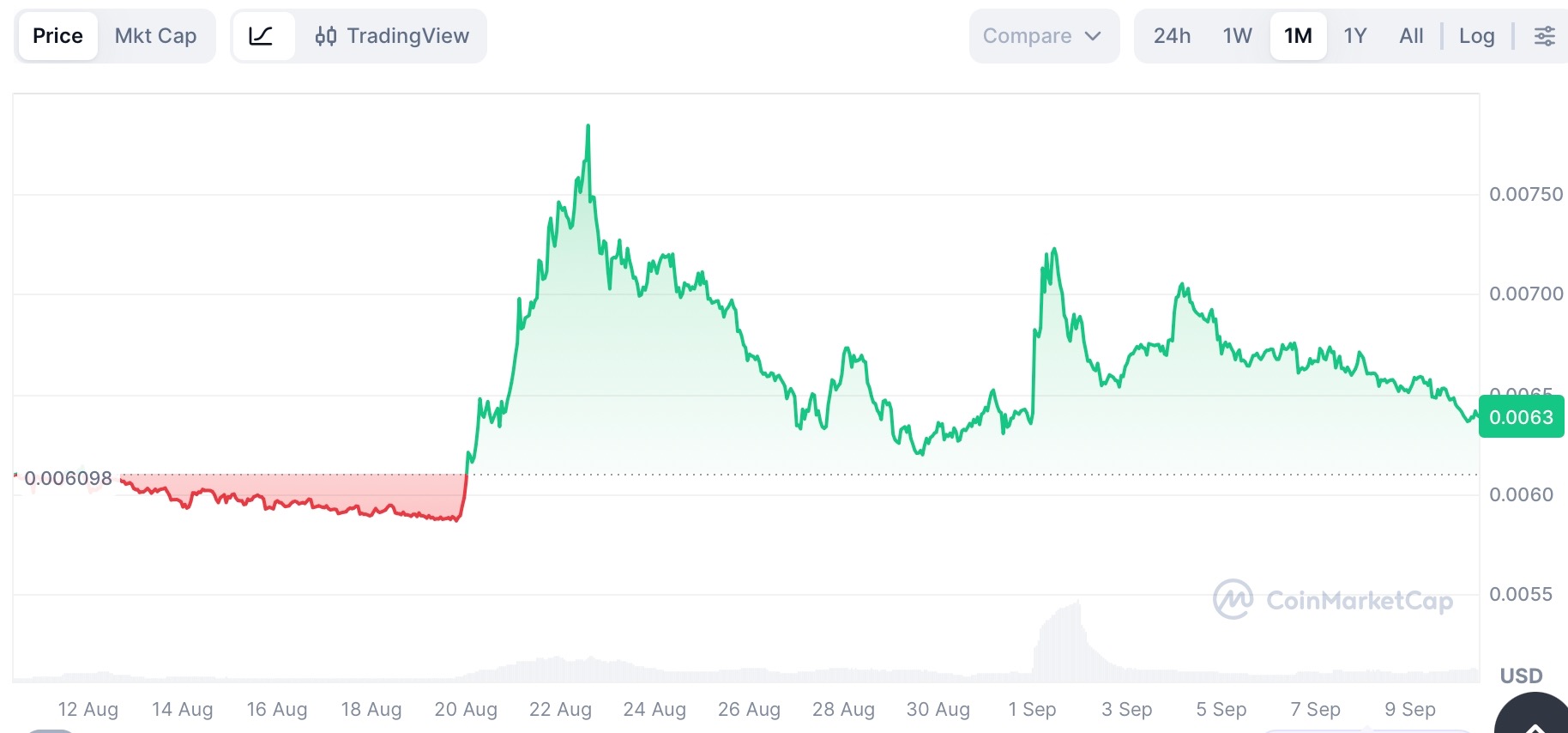
FLR is traded near $0.0064, with a market capitalization of roughly $560 million and daily volume of around $3 million.
The token reached an all-time low near $0.00586 in August 2026. A brief rebound carried it above $0.0075, but the move did not last. By early September, FLR had returned to the mid-$0.006 range.
This is not simply a case of investors overlooking Flare’s progress. The market is questioning how much of the value generated by FXRP actually reaches FLR holders.
FAssets Does Not Require Enough FLR Demand Yet
Flare originally expected FLR to play a larger role in supporting FAssets. The token could have been locked as collateral, creating a direct relationship between the amount of XRP entering the system and demand for FLR.
That design changed as Flare worked to make FAssets more capital-efficient. The result made FXRP easier to scale, but it weakened FLR’s position inside the system.
More FXRP can now be minted without requiring an equivalent increase in FLR purchases. Users may enter Flare with XRP, move into an FXRP vault and earn yield without holding a significant amount of FLR beyond transaction fees.
Those fees are extremely small. Even after a recent increase, a basic transaction still costs only a fraction of one FLR.
This explains the apparent contradiction. FXRP can grow while FLR remains under pressure because the two assets are connected operationally but not yet strongly linked economically.
FIP.16 Is Designed to Close the Gap
Flare’s governance community approved FIP.16 on April 24, 2026, with 98.06% support. The proposal restructures FLR issuance, staking incentives, transaction fees and protocol revenue.
Annual inflation was reduced from 5% to 3%, while the annual issuance cap fell from 5 billion to 3 billion FLR. The inflation reduction took effect on May 14.
A July hard fork increased the minimum transaction fee by 20 times. Because Flare burns transaction fees, this lifted the rate of FLR destruction without making ordinary transfers expensive in dollar terms.
The proposal also created the Flare Income Reinvestment Entity, known as FIRE. It receives revenue from FAssets minting, redemptions, FDC data requests and FXRP destination-tag registrations. Its mandate includes token burns, market purchases, ecosystem incentives and replacing inflation-funded rewards with network revenue.
FIP.16 gives Flare a mechanism for directing activity back toward FLR. It does not guarantee that the amount will be large enough.
The Burn Sounds Bigger Than It Is
Flare’s transaction-fee burn has increased by more than ten times since the July upgrade. Approximately 15.6 million FLR had been burned through transaction fees during 2026 by early September.
The percentage increase is impressive. The dollar value is not.
At an FLR price of roughly $0.0064, 15.6 million tokens are worth around $100,000. Gross annual issuance under the new 3% inflation rate is estimated at approximately 2.6 billion FLR.
Flare is therefore still inflationary. The burn is growing from a low base and remains far below the rate at which new tokens enter the system.
FIP.16 may improve that balance over time, particularly if network use expands. Current data does not show a supply reversal.
FIRE Revenue Is Live, but Economically Small
FIRE began collecting revenue in May. By early September, it had accumulated approximately $31,000, with more recent dashboard figures placing the total near $36,000.
FAssets minting fees and FDC request fees supplied most of that amount. Redemption fees and destination-tag registrations made smaller contributions.
A functioning revenue channel is better than a proposed one. Still, tens of thousands of dollars do not materially affect a token with a market capitalization above $500 million.
Several planned revenue sources have yet to arrive, including protocol-level MEV capture, Smart Account fees and Confidential Compute revenue. Their contribution will depend on whether the underlying products attract meaningful volume.
The mechanism now exists. The missing ingredient is scale.
FXRP Growth Was Supported by Incentives
Flare allocated approximately 2.2 billion FLR to its FAssets Incentive Program between July 2025 and July 2026. The program rewarded activity across decentralized exchanges, lending markets, collateralized debt protocols and yield products.
Those incentives helped FXRP establish liquidity. They also placed additional FLR into circulation, where recipients could sell their rewards.
Now that the scheduled program has ended, Flare faces a useful test. If FXRP balances and DeFi activity remain stable without the same level of subsidies, the network will have stronger evidence of organic demand. A sustained decline would suggest that part of the reported adoption was rented through incentives.
The coming months matter more than the launch-period figures.
The End of FlareDrops Did Not End Inflation
Flare completed its 36-month FlareDrop program on January 30, 2026. A total of approximately 24.2 billion FLR was distributed through the program.
Ending those monthly distributions removed a major source of supply. It did not make FLR scarce.
Staking rewards, protocol issuance and ecosystem incentives continue to add tokens. FIP.16 has reduced their rate, but circulating supply is still expanding. Buyers must absorb that growth before lower inflation can support the price.
This is why the end of FlareDrops and the passage of FIP.16 did not produce an immediate recovery.
FAssets Carries Its Own Concentration Risks
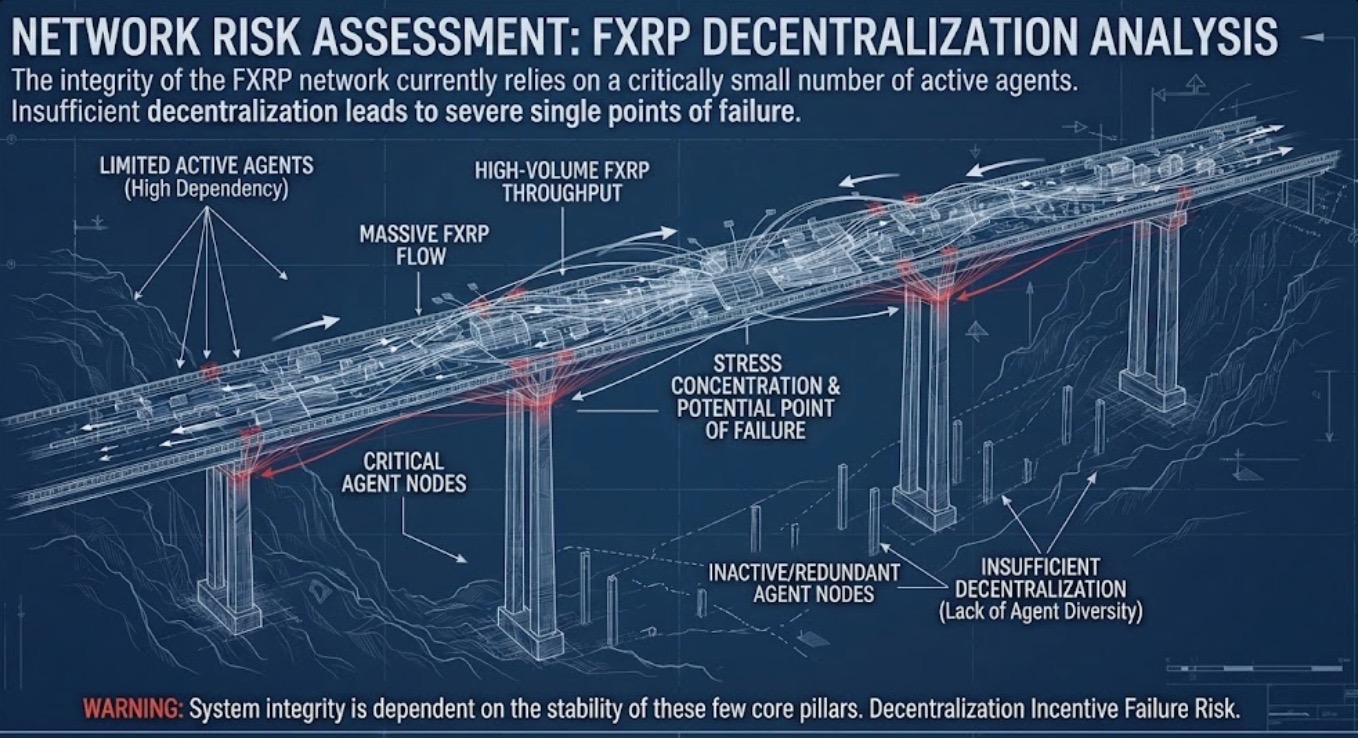
FXRP is overcollateralized and supported by verifiable XRP reserves, but its current scale rests on a small agent set.
Flare Metrics showed six active agents backing the outstanding FXRP supply. Minting capacity was close to 87% utilized, leaving limited headroom under the existing cap.
A small agent group does not prove the system is unsafe. It does mean that agent performance, collateral management and operational reliability deserve close attention. Expanding FXRP sustainably will require more capacity without weakening collateral standards.
Researchers should track the number of agents, payment-default rates, redemptions and reserve coverage alongside the headline supply figure.
Flare Has Adoption. Value Capture Is the Next Test
Flare has built a functioning XRPFi market with roughly $200 million in FXRP. That gives the network more measurable activity than many infrastructure projects trading at higher valuations.
FLR remains near its all-time low because the market is not valuing activity alone. It wants proof that activity produces demand for the token.
FIP.16 is a serious attempt to repair that connection. Inflation is lower, transaction burns have increased and protocol income now has a defined destination. Yet issuance remains much larger than burns, while FIRE revenue is still modest.
The next phase of the Flare story is therefore not about minting another $50 million of FXRP. It is about showing that each new user and transaction strengthens FLR’s economics rather than relying on FLR incentives to create activity.
Readers following FLR, XRPFi and other emerging crypto markets can find further analysis though Tapbit. Account holders can access the platform from the login page, while new users can register for Tapbit here.
Frequently Asked Questions
What is Flare (FLR)?
Flare is an EVM-compatible Layer 1 blockchain designed to bring decentralized data and assets from other networks into smart contracts. FLR is used for transaction fees, staking, governance and participation in Flare’s data protocols.
What is FXRP?
FXRP is a representation of XRP issued through Flare’s FAssets system. It allows XRP to be used in DeFi applications such as lending, liquidity pools, trading and yield strategies while remaining backed by XRP held within the system.
How much FXRP is currently on Flare?
As of September 10, 2026, approximately 147.8 million FXRP was in circulation, worth about $204 million at the prevailing XRP price. The dollar value changes with the market price of XRP.


