
COTI’s July rally first looked like another short-lived small-cap spike. The token rose from an intraday low near $0.00736 to roughly $0.01447 before pulling back. Six weeks on, the market has had to rethink that view.
According to CoinGecko historical data, COTI closed near $0.01770 on September 8 — above the peak of the July move. Volume reached about $70.9 million on September 7 and held near $39.1 million the following day. From its August 20 close near $0.00986, COTI has gained almost 80%.
The price action is real. The explanation is less clear.
COTI Price Moves Beyond the July Rally
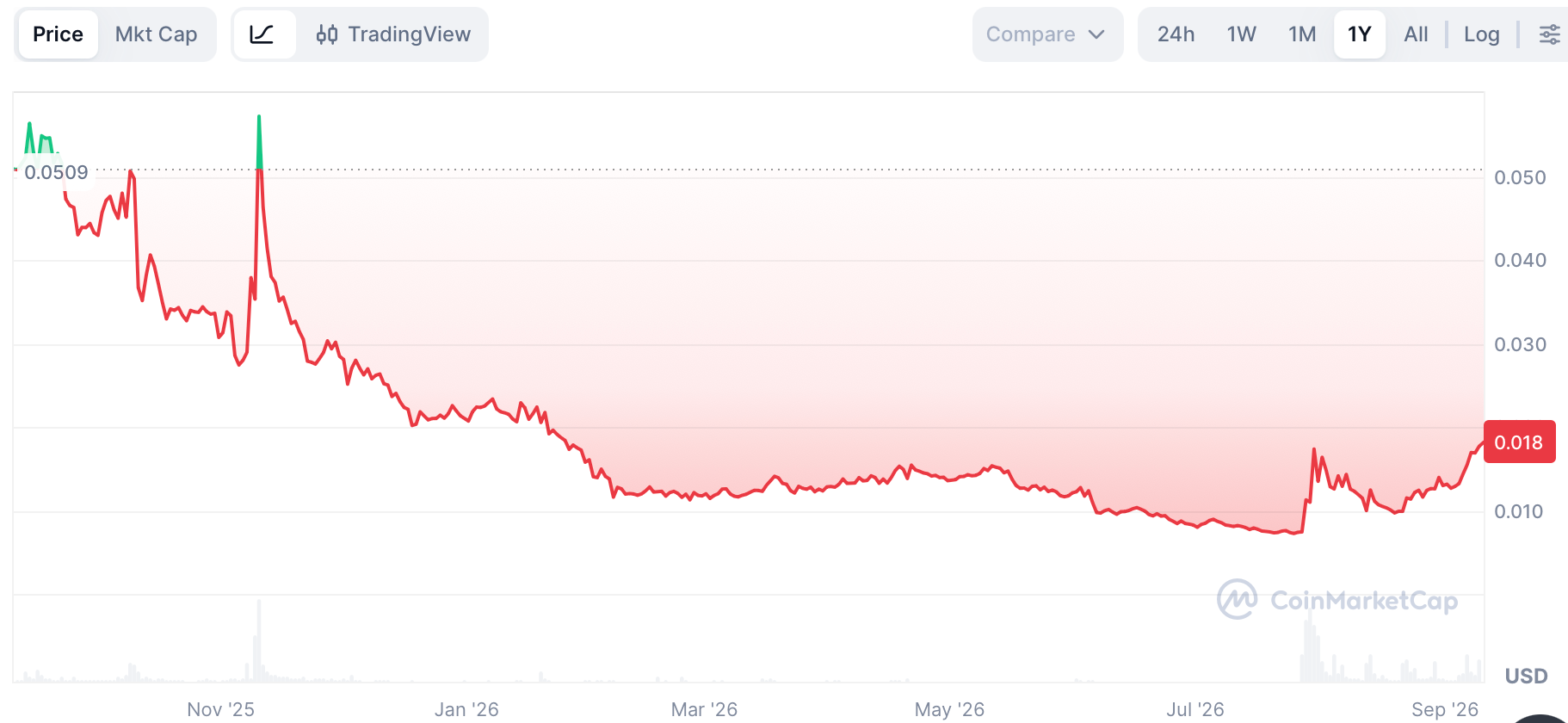
The July move was sharp but difficult to connect to a single announcement. Privacy-related crypto projects were attracting renewed interest, while COTI’s relatively small market value made the token sensitive to changes in trading volume.
The September breakout carries more weight because COTI moved above its previous high instead of simply bouncing within the same range. That does not prove a lasting trend, but it suggests buyers were willing to enter at prices that had previously attracted selling.
Volume also matters. A breakout accompanied by rising activity generally has more market significance than one produced by a handful of thin trades. Even so, COTI remains a small-cap asset, and strong turnover can disappear quickly once momentum fades.
COTI V2 Is Already Live
Some coverage still describes COTI V2 as an upcoming development. That is no longer accurate.
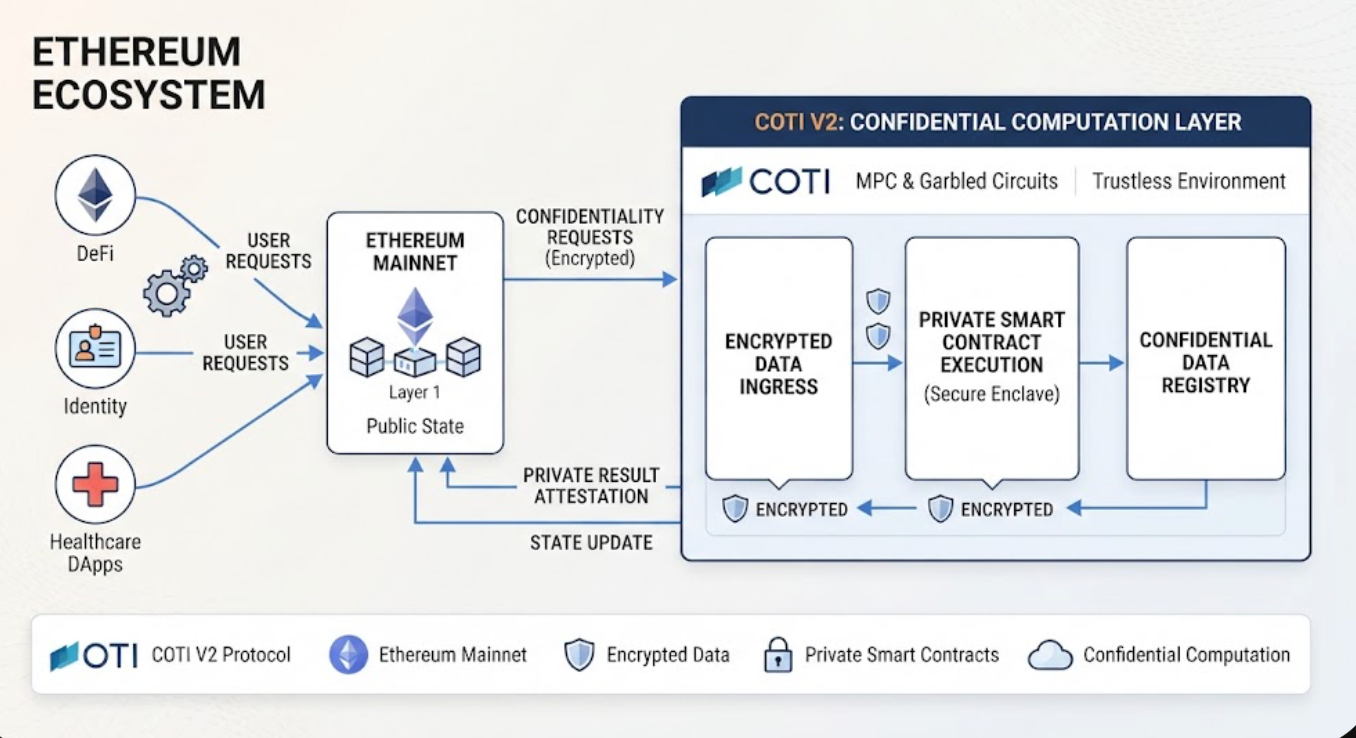
COTI V2 is operating as an Ethereum-compatible Layer 2 focused on confidential computation. Its design uses garbled circuits, a cryptographic method intended to let applications process sensitive information without exposing the underlying data.
The network has published its mainnet configuration, block explorer and developer resources. COTI also offers a bridge connecting its network with Ethereum, alongside contract tools for private token balances and transfers.
This gives the project more substance than a privacy roadmap built entirely around future milestones. Developers can already access the network and its tooling through the COTI V2 documentation.
What remains unclear is the level of demand. A functioning network is the starting point, not evidence of adoption. COTI still needs measurable activity from applications, users and businesses.
Privacy on Demand Is the More Important Test
COTI’s Privacy on Demand model could become more important than the standalone Layer 2 itself.
The concept allows applications on another blockchain to send selected computations to COTI’s privacy layer. A DeFi protocol, for example, could keep most of its existing infrastructure while using COTI to protect balances, strategy inputs or transaction details.
This approach addresses a practical problem. Developers are unlikely to move an entire application to a new network solely to access one privacy feature. A modular service can be easier to integrate.
COTI has published a working demonstration and testnet explorer for Privacy on Demand. However, the available activity remains limited, and the product should not yet be presented as widely adopted infrastructure.
The market may be pricing in its potential. It is too early to say that the potential has been converted into recurring demand.
Private Tokens Could Give COTI a Clear Use Case
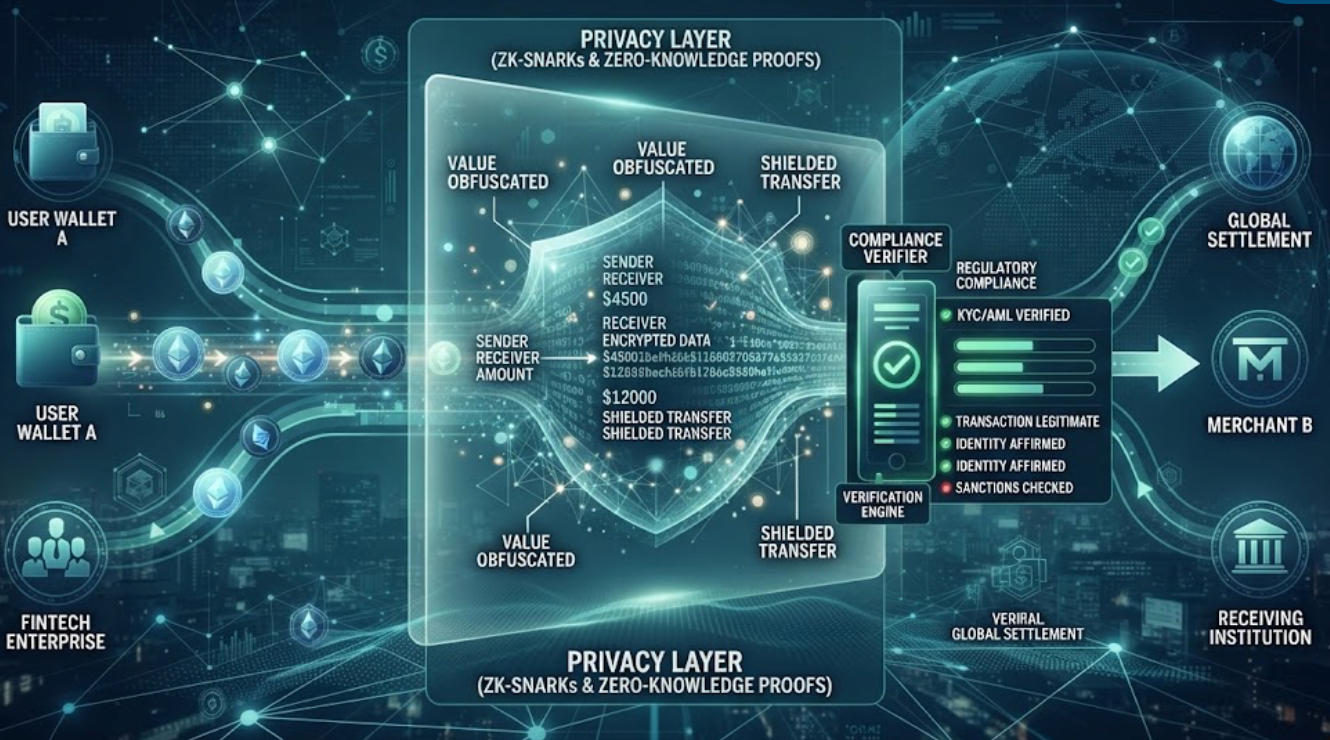
COTI’s contract library includes private ERC-20 functionality designed to support encrypted balances and confidential transfers. This could be relevant to payment applications, institutional settlement, payroll, private credit and tokenized assets.
Public blockchains create an awkward trade-off for these markets. They make settlement easy to verify, but they can expose information that businesses and individuals do not want displayed publicly.
Privacy tools may help close that gap, provided they remain compatible with compliance requirements. The opportunity is therefore broader than anonymous transactions. It includes selective disclosure: keeping information private by default while allowing authorized parties to verify it when necessary.
That distinction matters. Institutional adoption is more likely to depend on controlled confidentiality than complete invisibility.
COTI has made the relevant developer tools available through its contracts library. The next question is whether developers build applications that people continue to use.
COTI Tokenomics Are Not Simply Deflationary
COTI’s tokenomics require more careful treatment than the usual “limited supply plus token burns” description.
The COTI V2 whitepaper outlines a model in which new tokens are issued periodically. The initial issuance rate declines over time, while network fees enter a treasury. Governance can decide whether treasury funds are redistributed or burned.
That means supply can be influenced by both issuance and burning. It does not mean COTI is automatically deflationary.
Claims about a fixed supply or guaranteed reduction in circulation should therefore be treated cautiously. Investors need to compare actual issuance with completed burns rather than relying on planned measures or promotional summaries.
What Could Keep the COTI Rally Going?
The strongest case for COTI is not based on another short-term price spike. It depends on whether its privacy technology finds users.
A sustained improvement would likely show up through rising mainnet activity, more third-party contracts, visible Privacy on Demand integrations and recurring network fees. The transition from demonstrations to production applications would be especially important.
Broader market conditions will still affect the token. COTI’s size means it can outperform when capital rotates into privacy or infrastructure projects, but it may also decline faster when liquidity leaves smaller assets.
The September breakout has given the market a reason to revisit COTI. Product adoption will determine whether traders continue to care after the momentum slows.
The Signals That Matter After the Breakout
COTI has moved beyond its July high, while its privacy infrastructure has progressed from a roadmap into an operating network. Those are meaningful developments, but they answer only part of the investment question.
The more important evidence will come from applications using COTI V2, developers integrating Privacy on Demand and fees generated by real transactions. Token issuance and completed burns should also be tracked separately rather than compressed into a simple deflation narrative.
Until those figures improve, COTI remains a bet on the future demand for confidential blockchain infrastructure. The September breakout shows that traders are willing to price in that possibility. It does not confirm that adoption has arrived.
For broader market analysis and digital asset education, visit Tapbit. Existing users can access their accounts through the Tapbit login page, while new users can register here.
Frequently Asked Questions
Why is COTI rising?
COTI’s rise appears to reflect a combination of stronger trading momentum, renewed interest in blockchain privacy and growing awareness that COTI V2 is already operational. No single official announcement fully explains the move.
How much has the COTI price increased?
COTI rose from approximately $0.00986 on August 20 to about $0.01770 on September 8, an increase of nearly 80%. Prices can change quickly, so readers should check current market data before making decisions.
What is COTI V2?
COTI V2 is an Ethereum-compatible Layer 2 designed for confidential computation. It uses garbled circuits to help applications process private data without exposing all information publicly.


