
Circle is no longer just a private crypto infrastructure company. With CRCL now trading in public markets, investors finally have a direct stock-market proxy for one of crypto’s most important themes: stablecoins.
That is why the stock matters. Circle sits behind USDC, one of the most widely used digital dollars in crypto. Its business touches exchange liquidity, DeFi settlement, on-chain payments, institutional transfers, and the broader shift toward tokenized money.
But not every user can buy CRCL stock directly.
Some traders do not have access to a U.S. brokerage account. Some face regional restrictions. Some cannot fund a stock account easily. Others simply prefer using stablecoins and crypto-native platforms instead of traditional banking rails.
That is where CRCL alternatives come in. Futures, perpetual contracts, CFDs, tokenized stocks, and synthetic TradFi products may give users price exposure to CRCL. But they also come with a very important trade-off:
They are not the same as owning Circle shares.
Why CRCL Became a Stablecoin Market Proxy
CRCL is important because Circle is tied directly to USDC.
USDC is not just another crypto asset. It is one of the main settlement currencies across crypto markets. Traders use it to move capital. Institutions use it for digital-dollar settlement. DeFi protocols use it as collateral and liquidity. Exchanges use it as a base asset.
That makes Circle’s public stock unusually sensitive to crypto adoption.
Recent data shows why the market is paying attention. Circle reported Q1 2026 total revenue and reserve income of about $694 million, up 20% year over year. Adjusted EBITDA reached around $151 million, up 24%. USDC circulation stood at roughly $77 billion, up 28% year over year, while on-chain transaction volume reached about $21.5 trillion, up 263%.
Those are not small numbers. They show that USDC usage is still growing, even as the stablecoin market becomes more competitive.
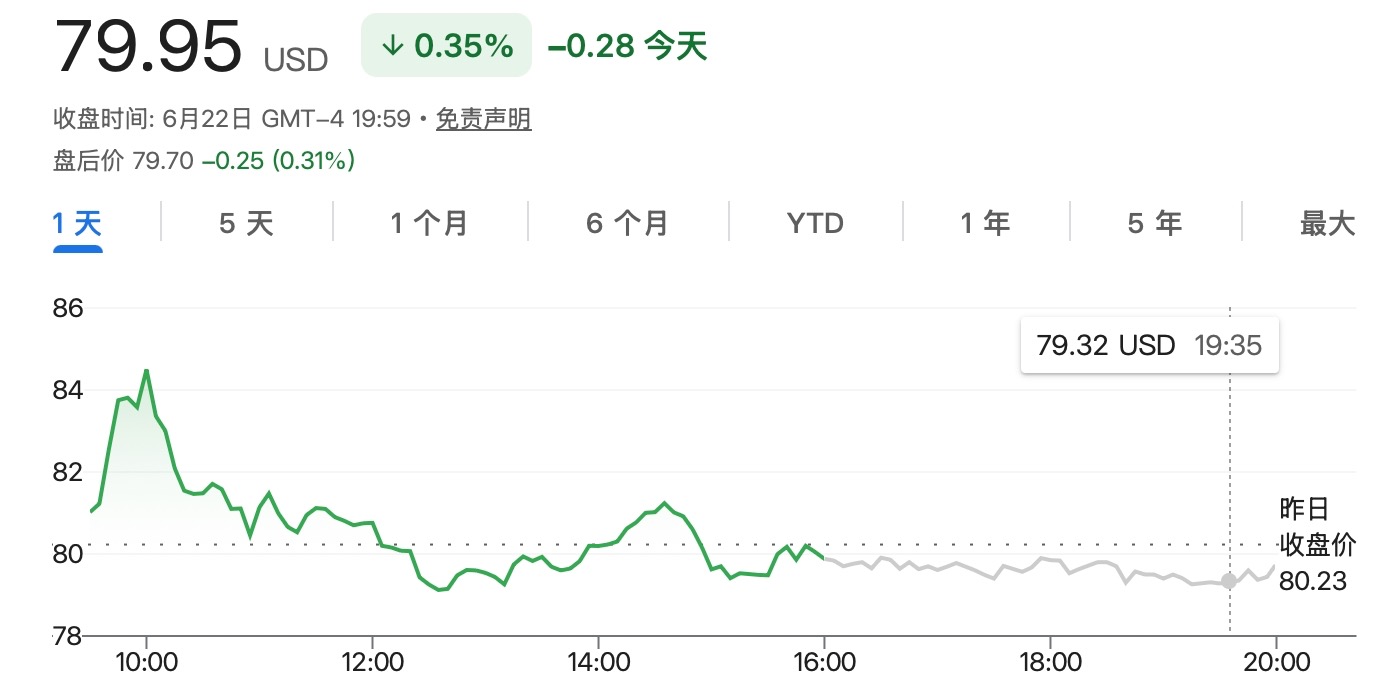
At the same time, CRCL remains volatile. Recent market data placed the stock around $79.95, with a market capitalization near $21.3 billion. That price is well below earlier highs, but still gives Circle a large public valuation for a company whose future depends heavily on stablecoin adoption, interest-rate conditions, and regulation.
This is why CRCL is not just a fintech stock. It is a crypto macro trade.
Why Some Traders Cannot Buy CRCL Directly
Buying U.S. stocks is simple if you already have the right brokerage access.
For many global users, it is not simple at all. Opening a brokerage account may require local eligibility, tax forms, proof of address, identity checks, and banking connections. Funding the account may require USD wires, card payments, or local transfer rails that are slow, expensive, or unavailable.
Some users may pass KYC but still face trading restrictions. Others may be able to buy large U.S. stocks but not newly listed or higher-risk names. In certain regions, access to U.S. equities can be limited by regulation, broker policy, or capital controls.
That creates an access gap. A trader may understand the CRCL thesis, follow USDC growth, and want exposure to the stock’s price movement — but still be unable to buy the stock directly.
This is why alternative instruments exist. They do not solve every problem. But they can give traders another route to express a view.
Price Exposure Is Not Stock Ownership
This is the most important distinction.
If a user buys CRCL through a traditional stock broker, they are buying Circle shares. That may come with shareholder rights, regulated custody, corporate-action treatment, and the legal framework of the equity market.
If a user trades CRCL through a futures contract, perpetual contract, CFD, or tokenized product, they are usually trading price exposure.
That means the user can gain or lose based on CRCL’s price movement, but they are not necessarily becoming a Circle shareholder.
In most price-only products, users do not receive voting rights. They do not get direct ownership of Circle shares. They may not receive dividends or corporate-action benefits. They may not have the same legal protections as shareholders in a traditional brokerage account.
This does not make the product useless. It makes it different.
For short-term traders, price exposure may be enough. For long-term investors who want actual equity ownership, it may not be.
That is the difference every trader needs to understand before touching CRCL-linked products.
The Main Alternatives to Buying CRCL Stock
There are several ways traders may access CRCL price movement without buying the stock directly.
CFDs allow users to trade the difference between entry and exit price with a provider. They can be flexible and may support both long and short positioning, but they carry provider risk, spreads, financing costs, and regional restrictions.
Futures and perpetual contracts let users trade CRCL-linked exposure with margin. These products can be useful for active traders because they may offer long and short access, stablecoin collateral, and extended trading hours. The risk is leverage. A wrong move can lead to liquidation, and funding rates can change the cost of holding a position.
Tokenized stock products attempt to bring equity-like exposure on-chain. They may track CRCL or another stock through an issuer, custodian, broker, or synthetic structure. These products can be convenient for crypto users, but they introduce tracking error, issuer risk, redemption limitations, and regulatory restrictions.
Synthetic TradFi products may offer price exposure without direct stock backing. These can be easier to list and trade, but users need to understand how the reference price is created and who stands behind settlement.
Circle’s Growth Story Is Real, but Competition Is Rising

CRCL bulls have a clear argument.
USDC is growing. On-chain volume is strong. Stablecoins are moving deeper into payments, remittances, DeFi, trading, and institutional settlement. Circle has a compliance-first image, strong brand recognition, and a major position in the digital-dollar market.
The Q1 numbers support that view: $694 million in revenue and reserve income, $151 million in adjusted EBITDA, $77 billion in USDC circulation, and $21.5 trillion in on-chain transaction volume.
But the bear case is also real. Stablecoins are becoming too important for competitors to ignore.
Reports that Stripe, Visa, and Mastercard are working on stablecoin-related platforms matter because those companies already control major payment networks. If they move aggressively into stablecoins, Circle may face pressure in areas where USDC currently looks strong.
Competition could affect fees, distribution, liquidity, partnerships, and margins.
Then there is Tether. USDT remains the largest stablecoin by market share and has deep liquidity across global crypto markets. Circle may be more institutionally friendly in some regions, but USDC still competes in a market where liquidity and network effects matter enormously.
CRCL is therefore not only a bet on stablecoin adoption. It is a bet on Circle’s ability to defend its role as stablecoin competition becomes more mainstream.
Regulation Can Help Circle — or Hurt the Stock
Stablecoin regulation is another reason CRCL moves so sharply.
Clear rules can help Circle. A regulated stablecoin framework may make institutions more comfortable using USDC. It may help Circle win banking, payment, and tokenization partnerships. It may separate compliant issuers from weaker offshore competitors.
But regulation can also limit the business model. If lawmakers restrict how stablecoin balances can be rewarded, distributed, or monetized, the market may rethink Circle’s earnings power. If banks receive a clearer path to issue tokenized deposits or bank-backed digital dollars, Circle could face new competition from inside the traditional financial system.
This is why CRCL can react strongly to policy headlines. Regulation is not automatically bullish. It depends on the details. For traders using CRCL-linked futures, perps, or tokenized exposure, this matters even more. A regulatory headline can hit the underlying stock and widen spreads in derivative or synthetic markets at the same time.
What Tapbit Users Should Watch
For Tapbit users, CRCL is useful because it shows how fast crypto themes can move into public equity markets.
Stablecoins used to be a crypto-native topic. Now Circle’s stock gives traders a public-market way to price that theme. At the same time, crypto-based TradFi products may give users a way to access CRCL price movement without going through a traditional stock broker.
CRCL-linked products can be useful, especially for crypto-native traders. They can also be risky if users ignore leverage, liquidity, funding, tracking error, counterparty risk, and product structure.
Users can visit Tapbit to follow supported markets, monitor volatility, and review available trading products. Existing users can log in, while new users can register here.
Frequently Asked Questions (FAQ)
What is CRCL?
CRCL is the stock ticker for Circle Internet Group, the company behind USDC. Because USDC is one of the most important stablecoins in crypto, CRCL is often viewed as a public-market proxy for stablecoin adoption.
Why do traders care about CRCL?
Traders care about CRCL because Circle sits at the center of stablecoins, on-chain payments, DeFi settlement, and institutional digital-dollar infrastructure. If USDC usage grows, investors may see Circle as one of the main beneficiaries.
What is USDC?
USDC is a U.S. dollar-pegged stablecoin issued by Circle. It is widely used for crypto trading, payments, DeFi, settlement, and on-chain transfers.


