

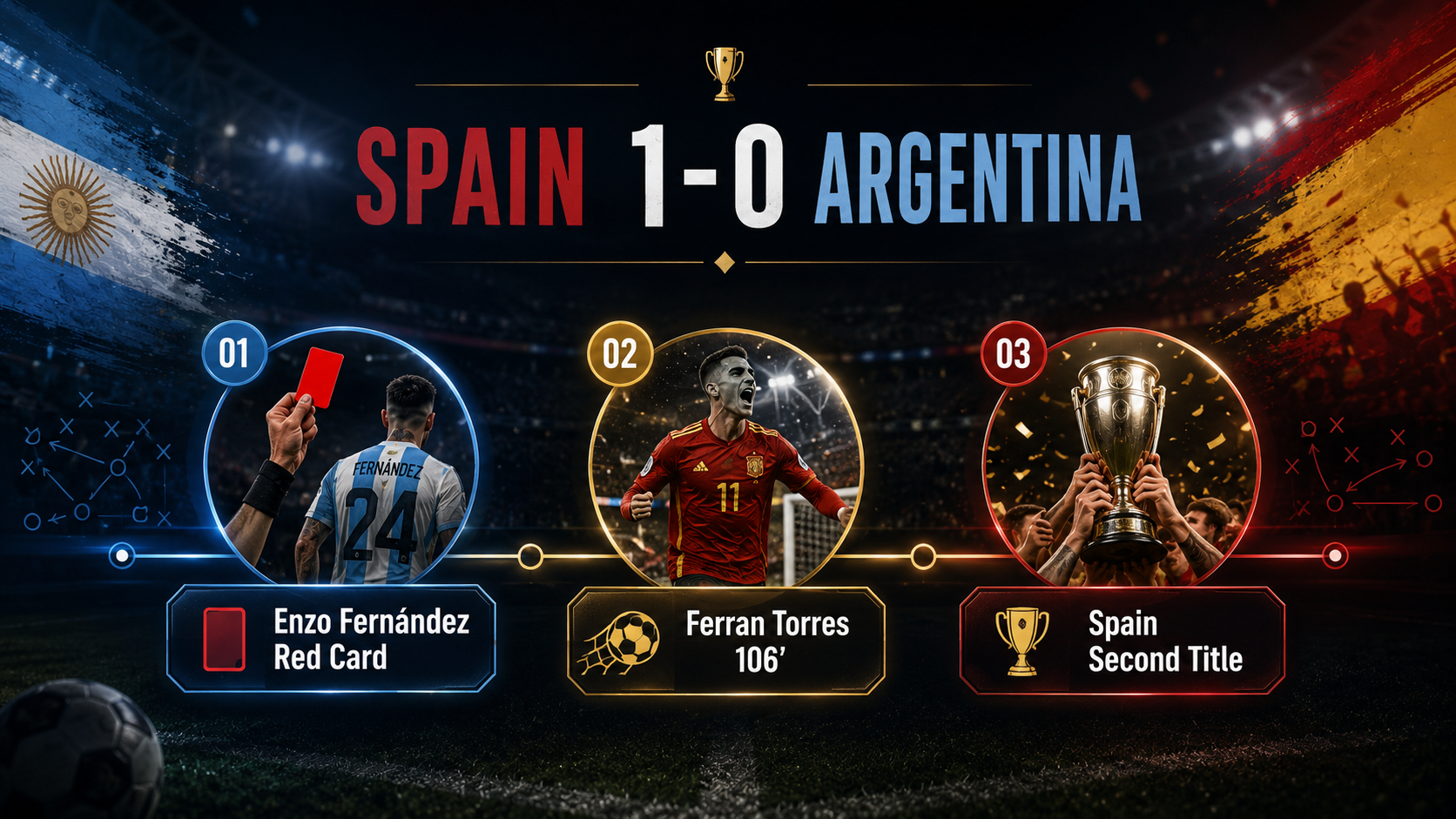
Spain is the 2026 FIFA World Cup final winner after beating defending champion Argentina 1-0 in extra time at MetLife Stadium. Ferran Torres scored the decisive goal in the 106th minute, giving Spain its second men's World Cup title and ending Argentina's bid to win consecutive tournaments.
The final remained scoreless through 90 minutes, but the balance changed when Argentina midfielder Enzo Fernández received a second yellow card during stoppage time. Spain used the extra space in extra time, and substitute Torres converted the opportunity that decided the tournament.
Who Won the 2026 FIFA World Cup Final?
Spain won the final 1-0 after extra time. The result added a second star to Spain's men's national-team history, following the 2010 triumph in South Africa. Argentina entered the match as the reigning champion after winning in 2022 but could not repeat the title.
The scoreline was narrow, but the result reflected Spain's ability to remain patient and control key phases. Argentina defended effectively for long periods, yet the red card increased the physical and tactical pressure at the most difficult stage of the match.
How Spain Beat Argentina 1-0
The Red Card Changed Extra Time
Enzo Fernández's dismissal left Argentina with 10 men at the end of normal time. The incident did not automatically decide the match—Spain still had to create and finish a chance—but it reduced Argentina's ability to press, counterattack and protect space during extra time.
Spain responded by stretching the field and increasing pressure around the penalty area. Argentina's remaining players had to cover more ground, making the defensive structure harder to maintain.
Ferran Torres Scores the Winner
Ferran Torres entered as a substitute and scored in the 106th minute. His goal broke a match that had remained tactically tight and gave Argentina limited time to respond with 10 men.
The timing was crucial. A goal early in extra time would have allowed Argentina more time to reorganize. Scoring in the 106th minute forced the defending champion to chase immediately while already under numerical pressure.
Why Spain Deserved the Title
Spain's title was built across the tournament rather than only in the final. The team combined structured possession with a strong defensive record and showed it could win different types of matches. Against Argentina, Spain did not abandon its approach when the game remained scoreless.
The final also demonstrated squad depth. Torres did not start the match, yet he delivered the decisive moment. Tournament winners often depend on substitutes and tactical adjustments as much as star players, particularly in the expanded 48-team format.
What the Result Means for Argentina and Messi
Argentina's title defense ended one match short of another championship. Lionel Messi's future will remain a major topic, but the final result does not by itself confirm his international retirement. Any claim about his next step should rely on an official statement.
For Argentina, the defeat also begins a transition discussion. Several senior players remain important, but the federation will need to balance experience with the development of the next generation before the next major tournament.
Spain's Place in World Cup History
| Country | Men's World Cup Titles | Latest Title |
|---|---|---|
| Brazil | 5 | 2002 |
| Germany | 4 | 2014 |
| Italy | 4 | 2006 |
| Argentina | 3 | 2022 |
| Spain | 2 | 2026 |
View Related FIFA and ArgentinaCoin Prices
Readers following football-themed crypto markets can review the current FIFA price page and ArgentinaCoin price page on Tapbit. These tokens are separate crypto assets and do not represent ownership, official tournament rights or guaranteed exposure to national-team performance.
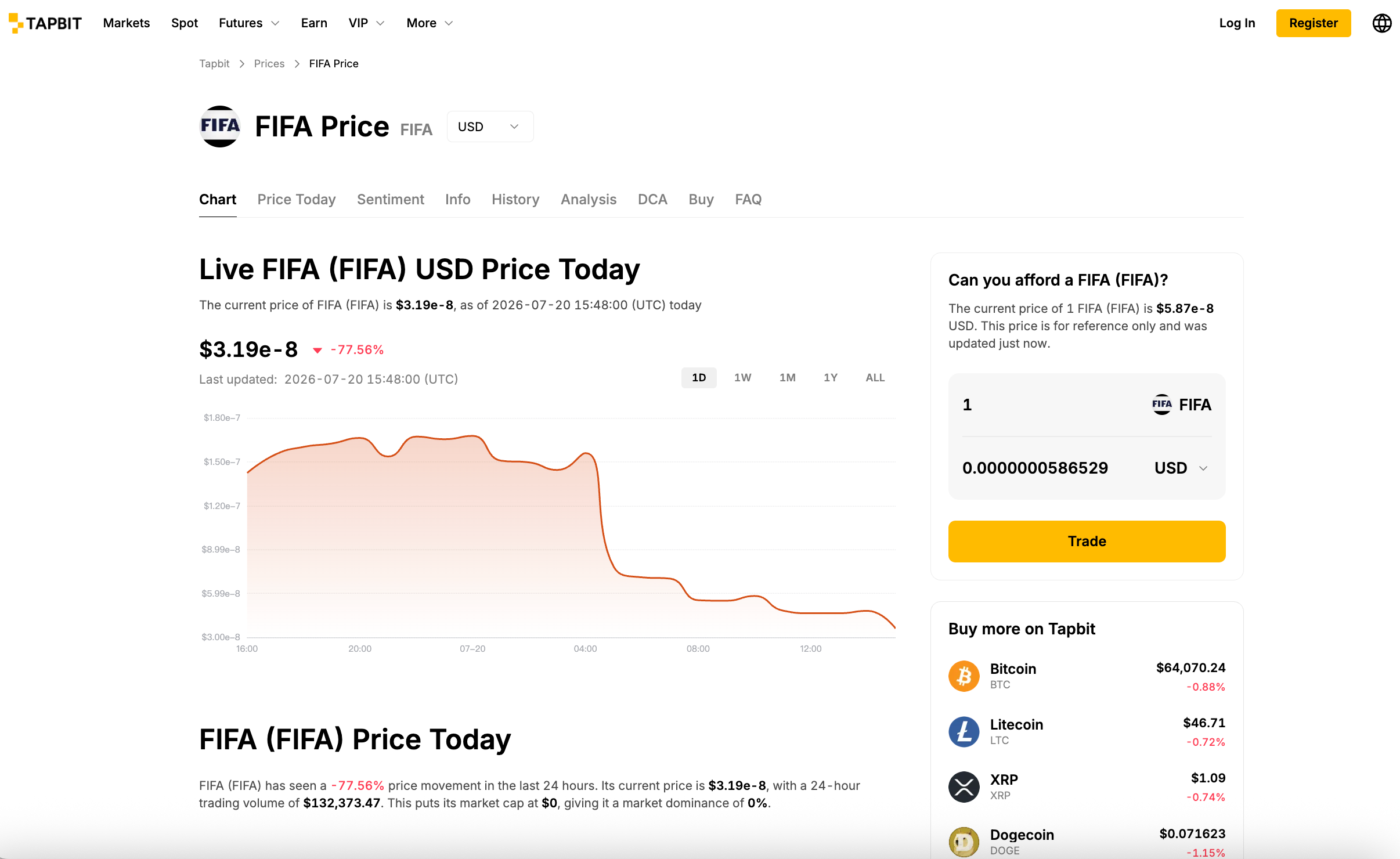
Users can create an account to review supported markets and product details before making a trading decision.
Three Tactical Reasons Spain Controlled the Final
Spain's victory was not only the result of Argentina's red card. The match was shaped by three tactical advantages that became more visible as the game progressed.
- Positional width: Spain kept the field wide enough to stretch Argentina's defensive block and create passing lanes around the penalty area.
- Substitute impact: fresh attackers increased the tempo during extra time, when Argentina's midfield was already under physical pressure.
- Game-state patience: Spain did not force low-quality shots simply because the match remained scoreless. The team continued circulating possession until a clearer opening appeared.
The red card amplified those advantages rather than creating them from nothing. Once Argentina went down to 10 men, Spain could move the ball more quickly from one side to the other and force defenders to cover larger spaces. Torres' winner came from the cumulative pressure of that approach.
For Argentina, the final showed the limits of defending deep without enough transition threat. The team protected central areas well for long stretches, but after the dismissal it became much harder to escape pressure or keep Spain's defenders occupied.
Final Assessment
Spain's 1-0 victory was decided by discipline, depth and one extra-time finish. The red card changed the conditions, but Spain still had to convert control into a goal. Torres did exactly that, securing Spain's second world title.
Frequently Asked Questions
Who won the 2026 World Cup?
Spain won the tournament after beating Argentina 1-0 in extra time.
Who scored the winning goal?
Ferran Torres scored in the 106th minute.
Why did Argentina play with 10 men?
Enzo Fernández received a second yellow card near the end of normal time.
How many World Cups has Spain won?
Spain has won two men's World Cups: 2010 and 2026.
Did Messi retire after the final?
The match result does not confirm retirement. An official statement would be required.


