

What Does Staking Ethereum Mean?
Staking Ethereum means locking up your ETH to help validate transactions on the Ethereum network — and earning rewards in return.
Since Ethereum's "Merge" in 2022, the network no longer uses energy-intensive mining. Instead, it runs on Proof-of-Stake (PoS): participants commit ETH as collateral, get selected to validate new blocks, and receive ETH rewards for doing so honestly. Behave badly or go offline too long, and a portion of your stake gets "slashed" as a penalty.
Think of it less like a bank deposit and more like a performance bond: your ETH is working for the network, and the network pays you for reliable service. Staking provides the security model for the entire Ethereum network — the more ETH is staked, the harder and more expensive it becomes to attack.
One important clarification upfront: staking rewards are not guaranteed fixed interest. Current staking yields range from roughly 2% to 3% APY depending on how you stake, and the rate shifts as more validators join the network.
How ETH Staking Works — and the 32 ETH Question
To become a solo validator, you deposit 32 ETH into a smart contract. Those funds act as collateral. Validators are then randomly selected to propose new blocks and attest to other validators' work — earning ETH rewards for each successful contribution.
The 32 ETH minimum exists to ensure validators have meaningful "skin in the game." As of 2026, the Pectra upgrade (EIP-7251) raised the maximum effective validator balance from 32 ETH to 2,048 ETH, allowing large holders to consolidate into fewer nodes and automatically compound rewards above 32 ETH.
But you do not need 32 ETH to participate. There are four main routes:
|
Method |
Min. ETH |
Technical Skill |
Key Trade-off |
|
Solo staking |
32 ETH |
High |
Full rewards, full responsibility |
|
Staking pools (e.g. Rocket Pool) |
Any amount |
Low |
Smart contract risk |
|
Liquid staking (e.g. Lido/stETH) |
Any amount |
Low |
Depeg risk, 10% protocol fee |
|
ETH Earn platforms (e.g. Tapbit) |
Low |
None |
Custodial, simplest entry |
Withdrawals from native staking are not always instant — exit timelines vary based on network conditions, and during high-activity periods, delays can extend from days to weeks.
Rewards and Risks: What to Expect Honestly
On rewards: ETH staking rewards in 2026 come from three sources: base block rewards, priority transaction fees, and MEV (Maximal Extractable Value) from block ordering. Solo stakers running MEV-boost earn approximately 4–5% APY; liquid staking protocols like Lido return around 3–4% after their 10% fee cut; centralized platforms typically offer 2–3% APY.
On risks: Three matter most for beginners.
-
Price volatility. Your ETH could fall in dollar value while staked. Rewards don't insulate you from a bear market.
-
Slashing. Validators who act maliciously or fail to fulfill their duties risk losing a portion of their staked funds through slashing. For solo stakers, this requires careful node management.
-
Platform risk. Centralized staking platforms and smart contract pools carry custodial or code risk. Picking an audited, reputable provider matters.
Is staking right for you? It suits long-term ETH holders comfortable with temporary illiquidity. It's a poor fit for anyone who may need quick access to their funds or has a low tolerance for ETH price swings.
Beginner Alternative: ETH Earn Platforms
For users who want ETH passive income without running validator hardware, managing 32 ETH, or navigating DeFi protocols, centralized ETH Earn products offer a simpler entry point.
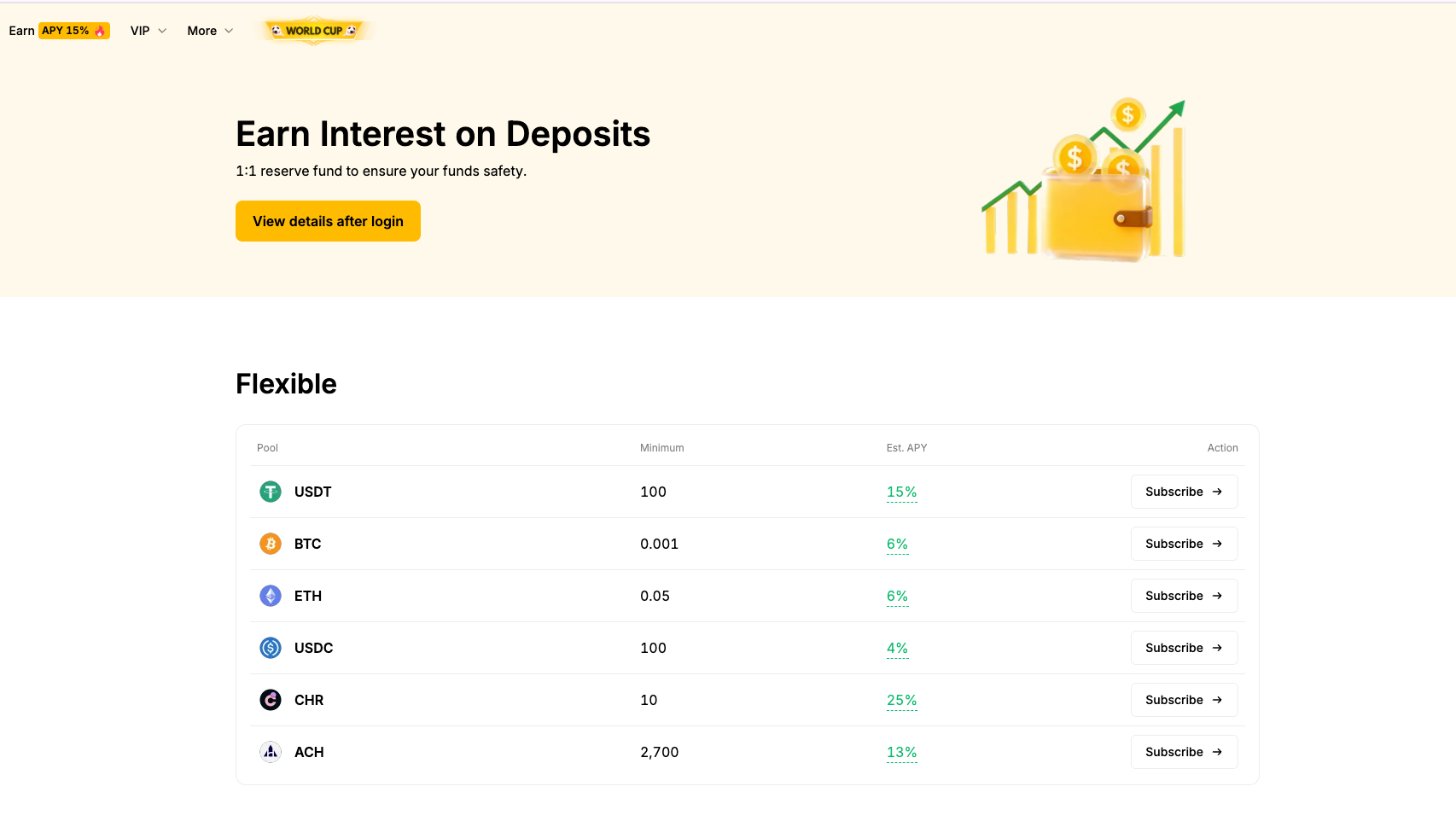
Platforms like Tapbit Earn let you deposit ETH into flexible earning products and generate passive returns — no validator setup, no technical knowledge required. Compared to solo staking or liquid staking protocols, custodial Earn products are significantly easier to access and suit users who are just starting to explore ETH yield opportunities.
The trade-off is custody: with any centralized platform, you are trusting the provider to manage your funds securely. That is why choosing a reputable exchange with transparent operations matters. You can also review Tapbit's trading fees and proof of reserves before depositing.
FAQ
Do you need 32 ETH to stake Ethereum?
Only for solo validator staking. Staking pools, liquid staking, and ETH Earn platforms accept any amount.
Can you lose your ETH if you stake it?
Yes — through ETH price decline, slashing penalties (solo staking), smart contract exploits (DeFi pools), or platform failure (centralized products). No staking method is risk-free.
How much do you make from staking Ethereum?
Verified APY across top ETH staking providers in 2026 clusters between 2.25% and 3.46%, with solo stakers who run MEV-boost reaching closer to 4–5%.
Can you unstake Ethereum anytime?
It depends on the method. Liquid staking tokens like stETH can be swapped on DEXs immediately. Native validator exits take days to weeks depending on the exit queue. Centralized Earn platforms vary by product terms.
Is ETH staking passive income?
Largely yes — once set up, rewards accrue without active management. But "passive" doesn't mean "risk-free." Monitoring your validator uptime or platform status remains important.


