
Anyone watching stablecoin yields this month has probably done a double-take. 35% APY on a stablecoin? In 2026? It feels like late 2021 all over again.
USD1, the stablecoin backed by World Liberty Financial (WLFI), has quietly eaten up market share, pushing its market cap to $5.4 billion and crashing the old USDT/USDC duopoly. Retail money is flooding into these pools to chase the yield.
But before you park your capital in those high-yield farms, we need to talk about the mechanics driving that number. Because right now, the on-chain data is flashing a massive red warning sign. A closer look at recent market reports reveals a structural vulnerability hiding beneath USD1’s explosive growth—a circular lending setup that feels uncomfortably similar to the Alameda playbook.
Here is our breakdown of how USD1 bought its market share, the escalating liquidity crisis on Dolomite, and how you should actually be trading this.
The Land Grab: Buying the Settlement Layer
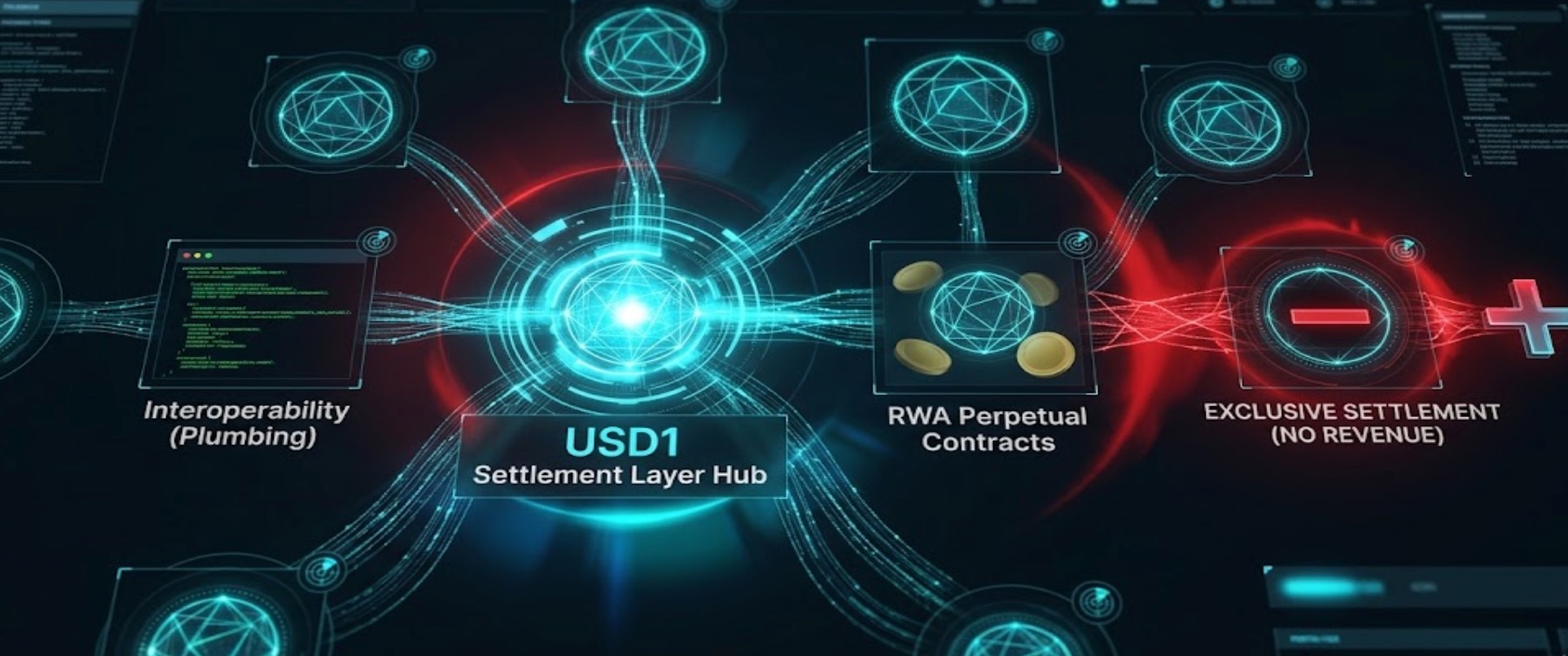
You don't hit a $5 billion market cap in a single year just by having good marketing. While Tether dominates offshore liquidity and Circle plays the slow compliance game, USD1 took a completely different route: aggressive protocol integration.
Earlier this month, Aster DEX made USD1 the exclusive settlement asset for its Real-World Asset (RWA) perpetual contracts. If you want to trade decentralized Gold ($XAUUSD1), Silver, or Brent Crude on their platform, you have to use USD1.
To force this adoption, they are heavily subsidizing the liquidity. The fee structure on these commodity pairs is aggressive—they are literally paying market makers to use USD1 with a -0.5 bps maker rebate. It is a heavily subsidized land grab to force the stablecoin into the foundation of DeFi.
The Red Flag: The Dolomite Liquidity Squeeze
Subsidies are one thing. What is happening on the Dolomite lending protocol is another.
If you track the recent coverage, the WLFI ecosystem is caught in a nasty liquidity squeeze. Here is exactly what the tape shows:
-
The WLFI Treasury dumped roughly 3 billion of their own highly illiquid governance tokens (WLFI) into Dolomite as collateral.
-
Against that illiquid collateral, they borrowed around $75 million in hard stablecoins, including 50.44 million USD1.
-
This massive internal extraction maxed out the USD1 pool's utilization rate.
That 35.81% APR you see? That is not organic retail demand. That is a manufactured liquidity deficit caused by the project borrowing from itself.
Add in the fact that Dolomite’s co-founder sits as an advisor to World Liberty Financial, and you have the exact kind of circular, incestuous lending loop that took down Celsius and FTX. As CoinMarketCap highlighted last week, the market recognized this risk immediately. The "loan" triggered a panic that sent the WLFI governance token crashing to historical lows near $0.07.
Execution: How to Trade the Triopoly
As a trader, you need to separate the stablecoin from the governance token.
Because USD1 is custodied by BitGo and backed by short-term US Treasuries, the fiat backing is solid. The peg will likely hold. The WLFI token, however—down over 90% from its all-time high—is a live grenade.
Here is how the desk is navigating the current setup:
-
Skip the Yield Trap: Do not supply stablecoin liquidity to protocols where the primary collateral is heavily concentrated in WLFI. A sudden drop in WLFI’s price could trigger bad debt cascading across those specific lending pools, permanently trapping your capital.
-
Watch the Peg for Arbitrage: During moments of extreme panic regarding the WLFI team, retail traders often mistakenly panic-sell the USD1 stablecoin. If USD1 momentarily de-pegs to $0.98 or $0.99 due to headline fear, algorithmic arbitrageurs will snap it up, knowing the BitGo reserves are untouched.
-
Trade the Volatility: The WLFI team is scrambling to push a 4.5 billion token burn proposal to save the price. That level of governance desperation creates immense short-term volatility. Don't marry a long position here; trade the swings.
Mapping out your entries? Log in to your Tapbit terminal to check the real-time spot depth and perpetual futures funding rates for major stablecoin pairs. If you need deep liquidity to execute, register your Tapbit account today.
Frequently Asked Questions (FAQ)
Is USD1 going to collapse like Terra's UST did?
Highly unlikely. The underlying mechanics are completely different. Terra’s UST was an algorithmic stablecoin backed by a volatile crypto asset (LUNA). USD1 is a fiat-backed stablecoin, custodied by BitGo and backed by short-term US Treasuries. The risk right now is in the DeFi lending pools holding the WLFI governance token, not the fiat backing of the USD1 token itself.
Why did the WLFI token price crash so hard?
It was a combination of massive insider token unlocks and the public fallout from the Dolomite lending controversy. When the market realized the treasury was using billions of its own WLFI tokens to extract $75M in hard liquidity from an affiliated lending protocol, confidence broke.
Why is Aster DEX using USD1 exclusively?
It is a brute-force strategy to capture market share. By making USD1 the mandatory settlement asset for RWA (Real World Asset) perpetual contracts and paying traders a negative maker fee (-0.5 bps), Aster DEX and WLFI are artificially creating deep liquidity. If you want to trade commodities on their chain, you are forced to use their stablecoin.


