

In equity markets, one company’s earnings report can quickly affect another company’s share price.
That is what happened after Nike released its fiscal 2026 fourth-quarter and full-year results. Nike’s numbers were not entirely weak. The company reported full-year revenue of $46.4 billion, flat on a reported basis and down 2% on a currency-neutral basis. Fourth-quarter revenue came in at $11.0 billion, down 1% year-over-year and down 4% on a currency-neutral basis.
Still, investors focused less on the headline earnings beat and more on the quality of the recovery. Nike Direct revenue fell 7% in the fourth quarter, Nike Brand Digital declined 12%, and Greater China remained a major drag.
The pressure did not stay with Nike alone. JD Sports shares also slipped after the report, as investors read Nike’s slower turnaround as a potential warning sign for sportswear retailers with close exposure to major athletic brands. Market reports showed JD Sports falling around 2% to 2.3% after Nike’s update.
Nike’s Results Were Mixed, Not Simply Bad
The market reaction to Nike shows why traders should look beyond one number.
Nike’s fourth-quarter gross margin increased to 49.2%, and diluted earnings per share reached $0.72. However, Nike said EPS included a $0.52 benefit related to the expected recovery of IEEPA tariffs. In other words, part of the earnings strength came from a specific benefit, not only from stronger underlying demand.
That distinction matters. A company can report better-than-expected earnings while still facing pressure in sales, brand momentum or future demand.
For Nike, the challenge is clear. The company is trying to rebuild growth after a difficult period for its product cycle, digital sales and regional performance. CEO Elliott Hill said Nike had taken steps to strengthen its foundation and reposition the business for long-term growth, but also acknowledged that the company still faces top-line headwinds.
China Remains a Key Concern

Greater China was one of the most closely watched parts of Nike’s report.
Nike’s Greater China revenue fell from $1.476 billion to $1.297 billion in the fourth quarter, a 12% decline on a reported basis. Footwear revenue in Greater China dropped 13% on a reported basis and 17% on a currency-neutral basis, while apparel declined 10% on a reported basis and 15% on a currency-neutral basis.
For a global consumer brand, weakness in China is not a small detail. It can affect product planning, inventory decisions, brand investment and wholesale expectations.
This is why the market response was cautious. Nike’s North America business showed signs of resilience, but weakness in China and digital channels suggested that the company’s recovery may take more time than investors wanted.
Why JD Sports Was Affected
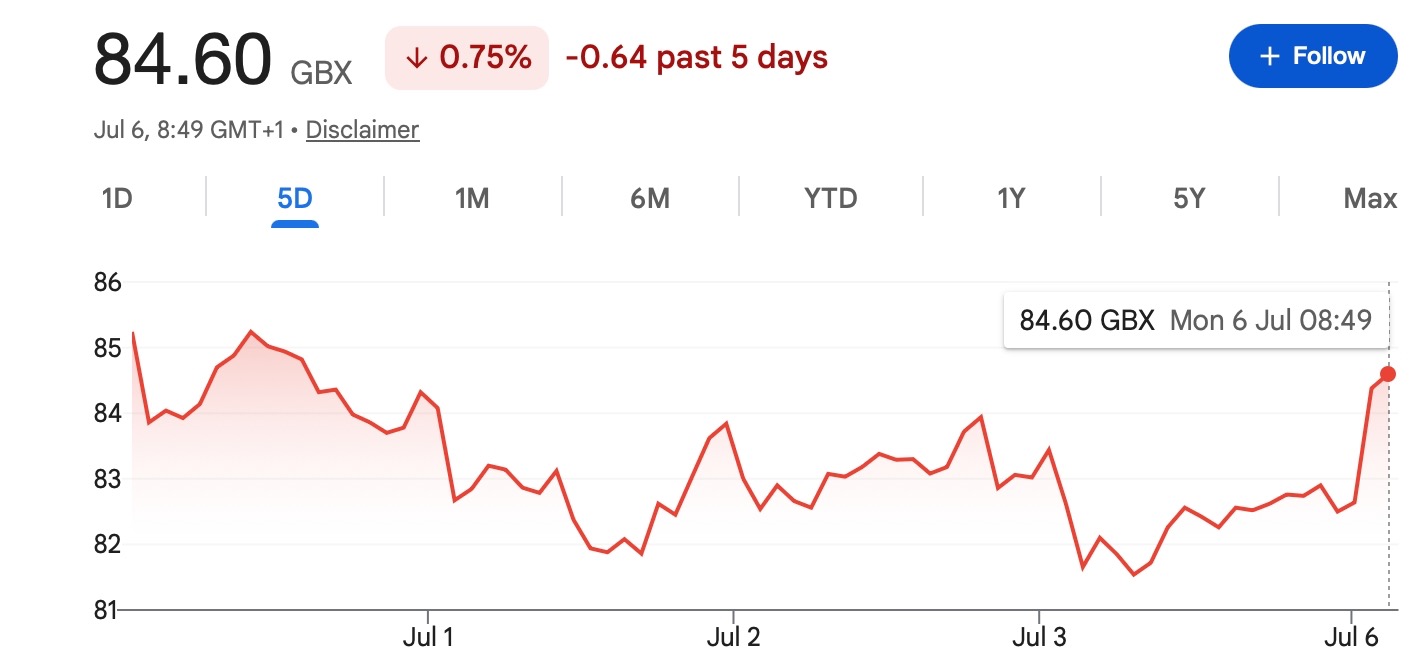
JD Sports did not fall because of a single internal shock. The move was more about market read-through.
JD Sports is a global sports fashion retailer, and its performance is closely tied to consumer demand for major athletic brands. When a major partner like Nike signals weaker sales momentum or a slower recovery, investors often reassess the wider retail chain.
This is especially important in sports retail because brand strength drives traffic. A retailer can manage stores, costs and online operations well, but if key brands face softer demand, product fatigue or regional weakness, the retailer may still feel pressure.
JD Sports’ own FY26 results also show a business operating in a more cautious environment. The company reported profit before tax and adjusting items of £852 million, down from £923 million in FY25, while statutory profit before tax fell 12.0% to £629 million. For FY27, JD Sports guided for profit before tax and adjusting items of £750 million to £850 million, reflecting uncertainty.
At the same time, JD Sports is not standing still. The company reported strong free cash flow of £462 million, announced a 20% uplift in its ordinary dividend, launched a rolling £200 million share buyback programme and set a three-year cumulative free cash flow target of more than £1.4 billion for FY26 to FY28.
That creates a balanced picture: JD Sports still has cash generation and strategic flexibility, but investor sentiment can remain sensitive when major brand partners face weak demand.
What Traders Can Learn
The JD Sports and Nike reaction offers a useful lesson for traders.
Stock prices are not only driven by one company’s own earnings. They are also shaped by the wider business ecosystem around that company.
For retailers, that ecosystem includes suppliers, brand partners, consumer spending, inventory cycles, online traffic, regional demand and promotional activity. When one part of the chain weakens, the market may quickly price risk into related companies.
This is especially relevant for traders watching equities or stock-linked markets. A retailer’s chart may move because of another company’s earnings call. A brand’s China weakness may affect a European retail stock. A shift from direct-to-consumer sales back toward wholesale may change expectations for retail partners.
In short, traders should not only ask, “What did this company report?” They should also ask, “Which other companies are exposed to this report?”
Key Signals to Watch Next
For Nike, traders may focus on whether Greater China stabilizes, whether digital sales recover, and whether wholesale growth can offset weakness in direct channels.
For JD Sports, attention may turn to like-for-like sales, margin pressure, inventory discipline, North America performance, online investment and whether its FY27 profit guidance remains achievable.
The market will also watch whether Nike’s turnaround improves brand heat. If Nike can rebuild product momentum in key categories, retailers such as JD Sports may benefit from stronger footfall and better sell-through. If the recovery remains slow, investors may continue to price caution into the sports retail sector.
Tapbit View
The reaction in JD Sports shares is a reminder that markets often move through connections.
Nike’s earnings were not only a Nike story. They became a sports retail story, a consumer demand story and a brand dependency story. For traders, this kind of read-through risk is important.
A single earnings report can reveal pressure points across an entire value chain. That is why market analysis should look beyond headline revenue or EPS. The deeper questions are about demand quality, regional weakness, channel mix and how much one company depends on another company’s brand strength.
In fast-moving markets, understanding these links can help traders read price action more clearly and avoid focusing on isolated data points.
Users can visit Tapbit to explore educational resources. Existing users can log in, while new users can register here.
Frequently Asked Questions (FAQ)
Why did JD Sports shares fall after Nike’s earnings?
JD Sports shares fell because investors read Nike’s weaker outlook and China sales pressure as a potential risk for sportswear retailers exposed to major athletic brands.
Did Nike report bad earnings?
Nike’s report was mixed. Earnings benefited from a tariff-related recovery, but revenue declined, Nike Direct remained weak and Greater China sales fell sharply.
Why is China important for Nike?
China is one of Nike’s key international markets. Weakness there can affect revenue growth, inventory planning and investor confidence in the company’s turnaround.


