

Ronin Ethereum Layer 2 Migration Overview
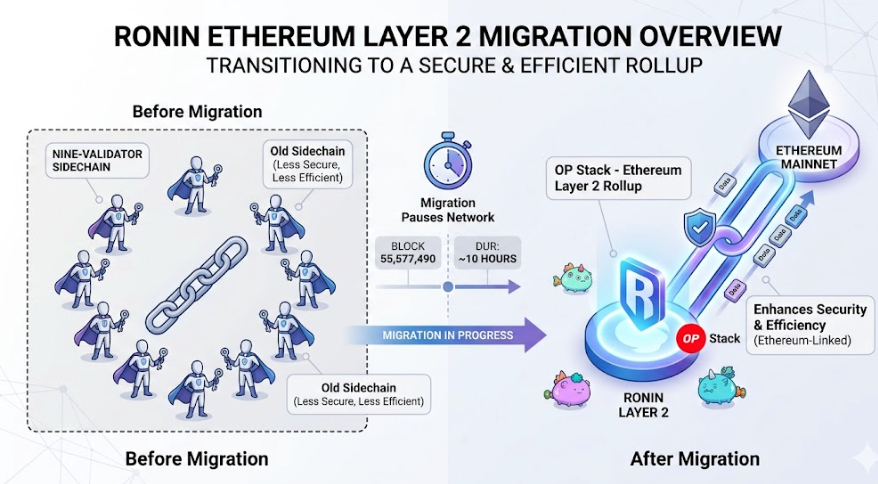
Ronin Ethereum, the blockchain behind Axie Infinity, has begun its Ethereum Layer 2 migration on the OP Stack, pausing the network for approximately 10 hours at block 55,577,490.
This upgrade replaces the old nine-validator sidechain with a more secure Ethereum-linked rollup, enhancing network security and efficiency.
Why This Migration Matters
The migration is crucial for network security, addressing risks exposed by the $625 million Ronin Bridge hack in 2022. By moving to Ethereum Layer 2, Ronin inherits Ethereum’s robust security model.
The 2025 Ronin Bridge migration to Chainlink’s cross-chain interoperability protocol was a key preparatory step for the full Layer 2 transition.
Explore Ethereum (ETH)
Learn about the ETH ecosystem
AI Fraud and Compliance Trends
Crypto firms are facing a 180% year-over-year increase in AI-driven fraud, while only 23% of companies are ready for new identity and fraud regulations.
- Common Attack Methods: Deepfakes, synthetic identities, and automated phishing networks.
- Industry Response: Adoption of blockchain intelligence and automated compliance tools such as Chainalysis is accelerating.
FAQ: Ronin Ethereum Layer 2 Migration
Q1: When will the Ronin Layer 2 migration occur?
A1: The migration is scheduled at block 55,577,490 and will pause all network activity for roughly 10 hours.
Q2: What are the main benefits of the migration?
A2: Security is strengthened by linking to Ethereum, RON token inflation drops below 1%, marketplace fees increase to 1.25%, and 90M previously staked RON tokens move to the treasury.
Q3: What is EigenDA and why is it important?
A3: EigenDA allows transaction data to be stored off-chain while remaining verifiable on Ethereum, improving scalability without compromising transparency.
Q4: How does this migration prevent hacks like the 2022 Ronin Bridge exploit?
A4: The move eliminates reliance on a small set of validators, instead leveraging Ethereum’s decentralized security infrastructure.
Q5: What impact does AI-driven fraud have on crypto compliance?
A5: AI fraud is surging, driving adoption of automated compliance tools. Only 23% of firms are prepared for new regulations, and attacks include deepfakes, synthetic IDs, and automated phishing.


