

FBTC and Bitcoin are closely connected, but they are not the same thing. FBTC, commonly associated with the Fidelity Wise Origin Bitcoin Fund, is a spot Bitcoin exchange-traded product designed to track Bitcoin price exposure through traditional financial markets. Bitcoin, by contrast, is the actual decentralized digital asset that exists on the Bitcoin blockchain.
The difference matters. Someone buying BTC directly can withdraw it to a wallet, send it on-chain, use it across crypto infrastructure, and take responsibility for custody. Someone buying FBTC is buying shares of a fund product whose value is linked to Bitcoin, but the investor does not personally hold BTC or private keys.
For users who prefer to monitor live Bitcoin market moves directly, Tapbit provides a BTC/USDT market page where traders can follow Bitcoin price action and market depth. This is different from buying an ETF, but it can help users compare spot crypto market behavior with Bitcoin ETF price movements.
What Is FBTC?
FBTC is Fidelity's Bitcoin fund product that gives investors exposure to Bitcoin through a traditional brokerage-style wrapper. Instead of opening a crypto wallet and buying BTC on-chain, investors can buy and sell FBTC shares during market hours through eligible brokerage accounts.
The fund is designed to reflect Bitcoin's market price before expenses and operational differences. In practice, this means FBTC can be useful for investors who want Bitcoin exposure inside familiar account structures, including taxable brokerage accounts and, where supported, retirement-oriented accounts.
Is FBTC the Same as Bitcoin?
No. FBTC is not Bitcoin itself. It is a financial product that holds or references Bitcoin exposure and issues shares that trade in the securities market. Bitcoin is a bearer-style digital asset secured by a decentralized network.
The simplest way to think about it is this: BTC is the asset; FBTC is a fund share designed to track that asset. The two may move in the same g
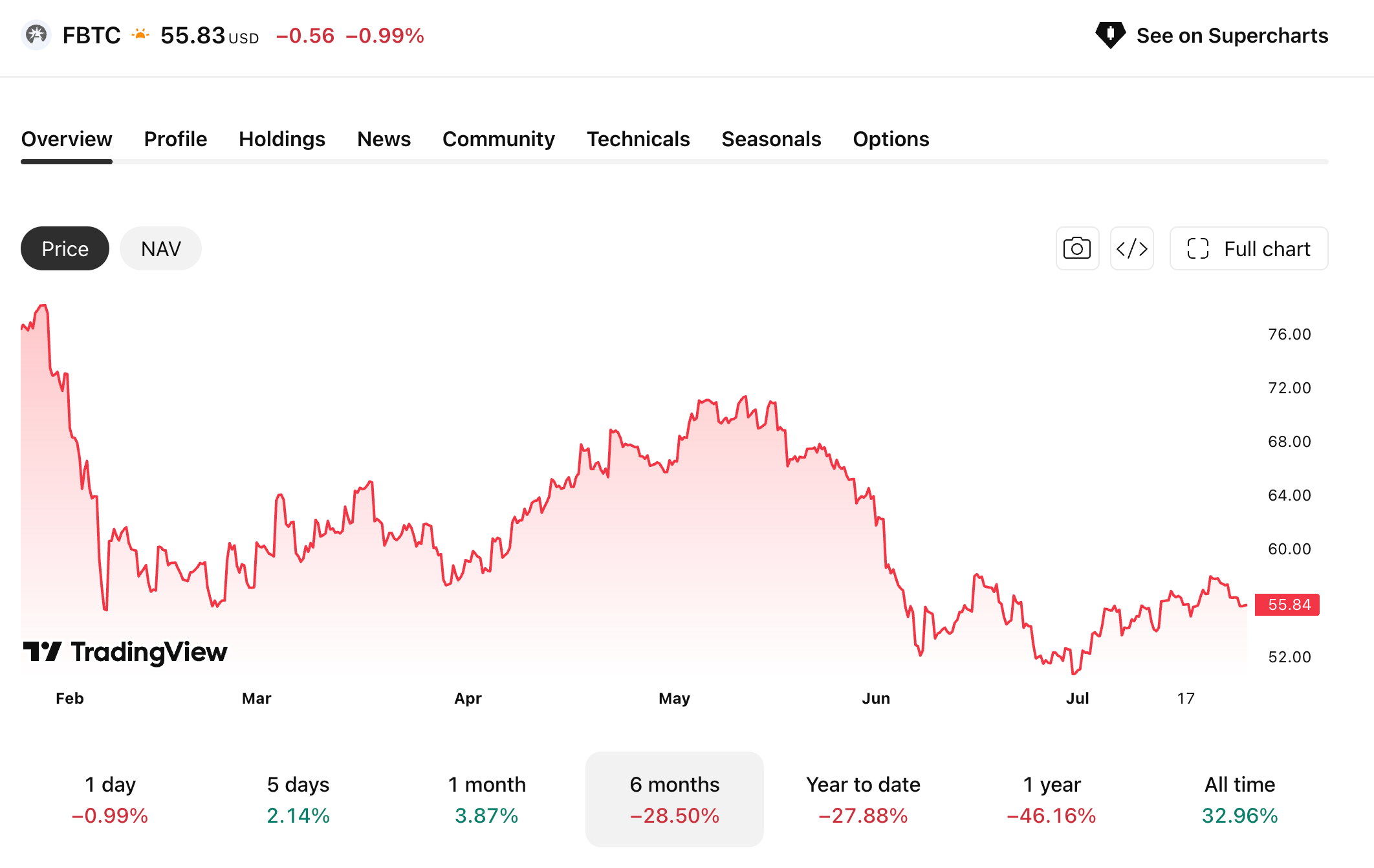
eneral direction, but they are different instruments with different rules, risks, and user responsibilities.
FBTC vs BTC: Key Differences
| Feature | FBTC | Bitcoin (BTC) |
|---|---|---|
| Asset Type | Bitcoin ETF-style fund share | Native cryptocurrency |
| Ownership | Shares of a fund | Direct BTC ownership |
| Custody | Handled by fund/custody providers | Self-custody or exchange custody |
| Trading Hours | Traditional market hours | 24/7 crypto markets |
| On-Chain Use | Not usable on-chain | Can be transferred on-chain |
| Fees | Fund expense ratio applies | Exchange, spread, and network fees may apply |
| Best For | Brokerage investors seeking BTC exposure | Users who want direct crypto ownership |
How Fidelity Bitcoin ETF Exposure Works
A spot Bitcoin ETF-style product aims to give investors price exposure to Bitcoin without requiring them to manage wallets, seed phrases, or blockchain transactions. The fund structure is designed to track Bitcoin through professional custody, share creation and redemption mechanisms, and public market trading.
This structure can reduce some operational friction, especially for traditional investors. However, it also introduces fund-specific considerations. Share prices may reflect market demand, trading spreads, operating expenses, and the mechanics of the ETF market. Retail investors also generally cannot redeem FBTC shares for actual Bitcoin.
Why Some Investors Choose FBTC Instead of Buying BTC
FBTC can appeal to investors who already use traditional brokerage accounts and want Bitcoin exposure without learning crypto wallet management. It may also fit better within some institutional workflows, portfolio reporting systems, and tax documentation processes.
For these users, the main advantage is convenience. They can buy and sell a Bitcoin-linked product in the same environment where they manage stocks, ETFs, and other securities. That said, convenience comes with trade-offs. The investor is relying on the fund structure and custody chain instead of directly holding Bitcoin.
Why Some Investors Prefer Holding Real BTC
Buying BTC directly gives users the ability to withdraw to a personal wallet, transact on the Bitcoin network, and hold the asset without depending on an ETF wrapper. For crypto-native users, that direct ownership is the point of Bitcoin.
Direct BTC ownership also gives access to 24/7 market activity. Bitcoin does not close after the stock market session ends. This can be useful for active traders, but it also means volatility never fully pauses. Users must understand wallet security, private keys, exchange risk, and network fees before choosing direct ownership.
FBTC Fees, Tracking, and Liquidity Considerations
FBTC investors should review the current expense ratio, fund documents, bid-ask spreads, and trading volume before buying. Even if the fund tracks Bitcoin closely, costs and market structure can affect investor returns over time.
Tracking difference is another area to watch. A well-functioning spot Bitcoin fund should generally follow Bitcoin's price closely, but short-term premiums or discounts can appear depending on market conditions. Investors should compare the fund's share price behavior with the underlying Bitcoin market rather than assuming perfect one-to-one movement.
FBTC vs Bitcoin: Which Is Better for Beginners?
There is no single answer. FBTC may be easier for beginners who already understand brokerage accounts and simply want Bitcoin price exposure. BTC may be better for users who want direct ownership, self-custody, and access to the broader crypto market.
A practical beginner framework is to ask three questions. Do you want to own Bitcoin directly? Are you comfortable managing wallet security? Do you need the asset inside a brokerage account? If the answer is yes to direct ownership, BTC may make more sense. If the answer is yes to brokerage convenience, FBTC may be easier to understand.
Risks of FBTC and Bitcoin
Both FBTC and BTC are exposed to Bitcoin volatility. Bitcoin can move sharply because of macroeconomic conditions, ETF flows, regulation, liquidity, leverage, mining economics, and investor sentiment. A regulated product wrapper does not remove Bitcoin price risk.
FBTC also carries fund-specific risks, including fees, potential tracking differences, market-hour limitations, and reliance on the fund's custody and operational structure. BTC carries different risks, including wallet loss, private-key mismanagement, exchange counterparty risk, blockchain transaction mistakes, and market manipulation on less liquid venues.
Conclusion
FBTC is not the same as Bitcoin. It is a convenient financial product that gives investors exposure to Bitcoin's price through a traditional market wrapper. Bitcoin is the underlying digital asset itself.
For investors, the choice depends on what they actually want. FBTC may suit users who want brokerage-based Bitcoin exposure. BTC may suit users who want direct ownership, 24/7 market access, and on-chain control. In either case, Bitcoin exposure remains volatile and should be approached with careful risk management.
FAQ
Is FBTC backed by Bitcoin?
FBTC is designed to provide spot Bitcoin exposure through a fund structure. Investors should review the latest Fidelity fund documents for custody, holdings, and fee details.
Can I redeem FBTC for real Bitcoin?
Retail investors generally buy and sell FBTC shares through the market. They typically do not redeem ETF shares directly for BTC.
Does FBTC move exactly like Bitcoin?
FBTC is intended to track Bitcoin price exposure, but fees, spreads, market hours, and premiums or discounts can create differences.
Is FBTC safer than Bitcoin?
FBTC may reduce wallet-management risk, but it does not remove Bitcoin price volatility or fund-specific risks.
Should beginners buy FBTC or BTC?
Beginners who want brokerage convenience may prefer FBTC, while users who want direct crypto ownership may prefer BTC. The better choice depends on custody preference, risk tolerance, and investment goals.


