

The Layer 2 wars are effectively over. While the rest of the market spent the last year farming fake metrics and chasing temporary meme pumps, Coinbase’s Base network quietly swept the board. We are looking at the desk data this morning, and the numbers are definitive: Base just crossed $4.644 billion in Total Value Locked (TVL).
But if you only look at the TVL, you're missing the real story. This isn't just yield-farming capital parked for a quick return. It's a massive, structural rotation of money into compliant stablecoins and functioning AI applications. Here is a direct look at the data driving this cycle and how Base built a moat that other networks simply can't cross.
The Volume: 13% Global DEX Dominance

Base isn't just a vault for idle crypto; it’s a highly active trading engine. Looking at the raw exchange data, Base currently commands 13.0% of all DEX volume across the entire blockchain space.
That translates to $862 million traded in just the last 24 hours, and a massive $5.123 billion over the past 7 days. You don't get those numbers from retail traders swapping $50 worth of meme coins. This is deep, institutional-grade liquidity anchored by heavy-hitting platforms like Aerodrome and Uniswap V3.
This aggressive volume is exactly why Base was able to swallow 46% of the L2 DeFi TVL market share, officially flipping Arbitrum One. Liquidity attracts liquidity. For market makers and large funds, Base now has the order book depth required to execute major trades without wrecking the chart with slippage.
AI Agents: Where the Smart Money is Flowing
Let’s talk about where the aggressive capital is actually going. While competing chains are still stuck in a PvP (Player vs. Player) casino of recycled tokens, Base successfully captured the "AI Agent" narrative. And we aren't talking about vaporware pitch decks—these are active, on-chain applications.
VIRTUAL is the undisputed heavy hitter here. We watched its market cap rip past half a billion, currently sitting around $589.15 million with the token priced near $0.90. The 24-hour volume is pushing $244.35 million. That kind of sustained buying pressure points to serious accumulation, not just a weekend retail pump.
The fundamentals back up the price action. Virtuals Protocol has already deployed over 11,000 active AI agents—ranging from autonomous trading bots to virtual influencers. There is a clear "capital gap" forming between tier-one assets like VIRTUAL and the rest of the pack. Smart money is consolidating into the sector leaders, leaving the smaller, narrative-chasing tokens behind.
The Institutional Safe Harbor: Circle (CRCL)
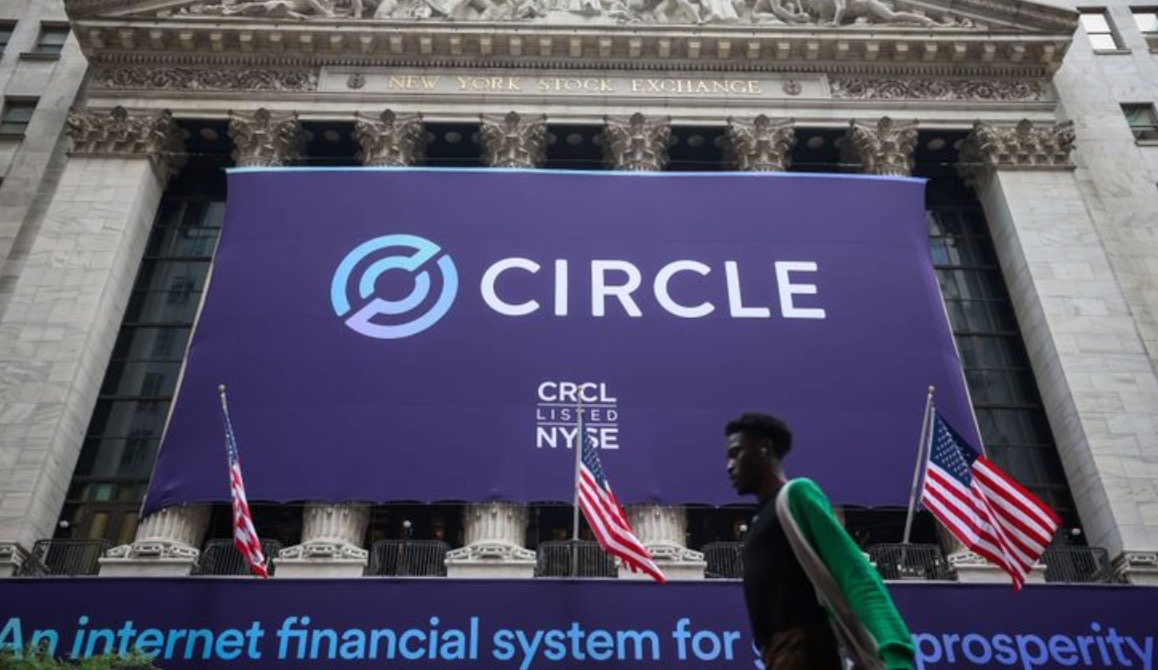
You can’t build a multi-billion dollar DeFi ecosystem without a bulletproof settlement layer. For Base, that layer is USDC, and the ultimate catalyst was Circle's landmark IPO on the NYSE (Ticker: CRCL) back in June 2025.
Circle now boasts a market cap fluctuating between $25.7 billion and $29.5 billion. Because Coinbase is the primary pipeline for USDC, they are seamlessly routing this institutional, compliance-first capital straight onto the Base network.
The results are obvious. USDC supply has swelled by over 30% in the last year. Institutional funds looking to deploy capital into Real World Assets (RWA) or stable yields aren't going to take chances on experimental chains with regulatory baggage. They go where the compliance risk is lowest, making Base the default settlement rail for big money.
Zero Friction: Activating 120 Million Users
Tech doesn't matter if nobody uses it. Base’s ultimate trump card is its direct integration with Coinbase’s 120 million monthly active users. No other Layer 2 has a built-in user acquisition funnel of this magnitude.
Coinbase has completely removed the friction of entering Web3. Thanks to the Smart Wallet integration, users don't have to wrestle with seed phrases or complex bridging steps. The standalone Coinbase Wallet alone has hit 3.2 million monthly active users, acting as a firehose of fresh retail capital directly into Base applications.
Combine that ease of use with network fees plummeting to a median of just $0.0005. When transactions are practically free, user behavior changes. It completely unlocks micro-transactions and automated agent trading, which perfectly explains the insane 1,280% spike we just saw in active Base NFT wallets.
The Tapbit Playbook: Trading the Rotation
The trade here is straightforward: follow the value migration. Capital is leaving purely speculative networks and moving toward chains with real utility and institutional backing. Don't fight the trend by trying to catch falling knives on abandoned L2s. Focus your liquidity on the Base ecosystem leaders like VIRTUAL and core DEX infrastructure.
Ready to execute?
-
New Users: Register on Tapbit today and claim your welcome rewards up to 5000 USDT.
-
Pro Traders: Log in to Tapbit to trade top-tier Base assets with zero gas fees and institutional-grade liquidity.
-
Track the Market: Keep an eye on live order books and funding rates directly on the Tapbit Homepage.
Frequently Asked Questions (FAQ)
How did Base overtake Arbitrum so quickly?
Distribution beats pure tech. Arbitrum has great technology, but Base leveraged Coinbase’s 120 million user base and positioned itself as the compliant home for Circle's USDC. That combination of retail access and institutional trust pushed its L2 market share to 46%.
Is the volume on VIRTUAL real?
Yes. A $244 million daily volume is incredibly difficult to fake organically. It’s being driven by actual utility—over 11,000 AI agents are actively executing smart contracts on the network, creating a constant baseline of transactional demand.
Why do $0.0005 fees matter so much?
When fees drop to fractions of a penny, it makes entirely new business models possible. You can't run high-frequency AI trading bots or execute micro-payments if every transaction costs $2. The $0.0005 fee structure is the exact reason Base saw a 1,280% explosion in active NFT and retail wallets.


