

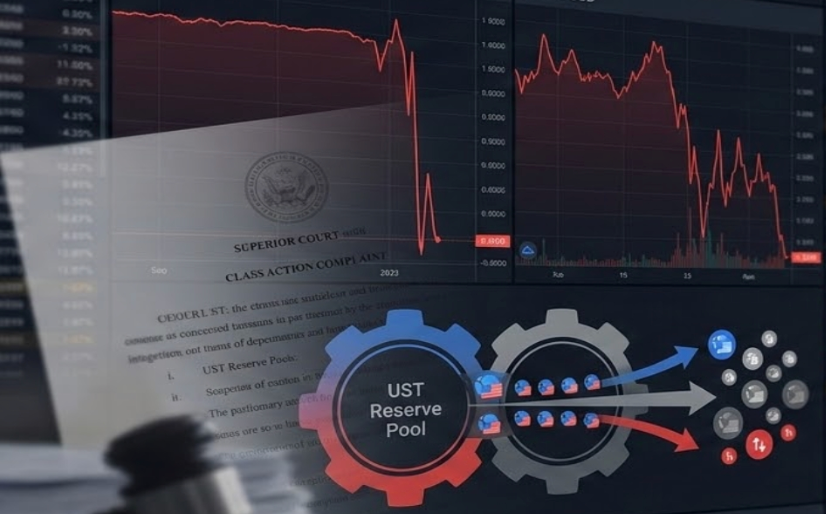
The Terra collapse is back in the conversation, and this time the spotlight is not only on Do Kwon or algorithmic stablecoins. It is now reaching into Wall Street, after a new lawsuit accused Jane Street of using nonpublic information to trade around the early stages of the 2022 UST breakdown.
According to reporting from CoinDesk, citing the Financial Times, Terraform’s court-appointed wind-down administrator sued Jane Street in Manhattan federal court, alleging the firm used material nonpublic information to front-run trades that worsened the collapse of TerraUSD and LUNA. Jane Street has denied the claims and called them baseless.
The key allegation
The reported complaint focuses on a narrow but critical window on May 7, 2022. The suit alleges that Terraform quietly withdrew roughly 150 million UST from Curve’s 3pool, and that within minutes, a wallet linked to Jane Street withdrew or sold another roughly 85 million UST from the same pool. The administrator argues that this further weakened liquidity and helped accelerate UST’s loss of its dollar peg.
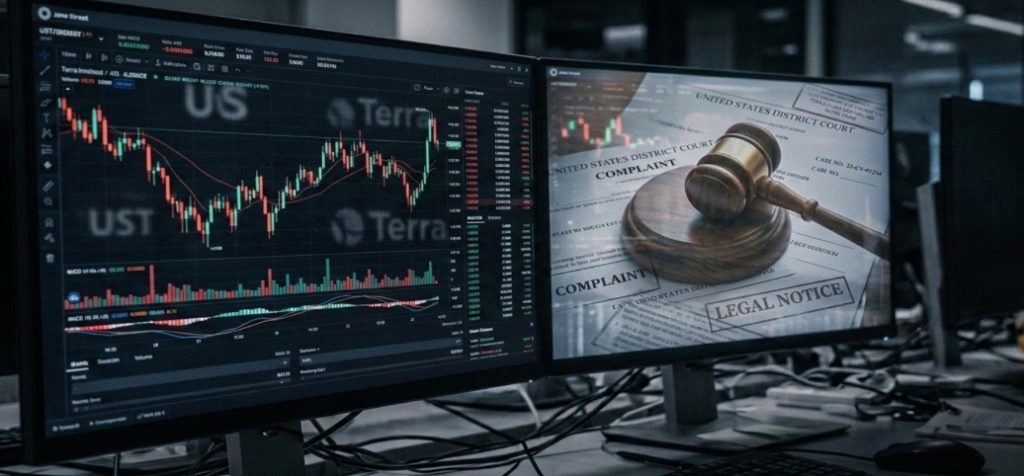
At this stage, those claims remain allegations in active litigation, not findings of fact. But the filing is already reshaping how the market talks about Terra. What used to be framed mainly as a stablecoin design failure is now being discussed again through the lens of liquidity, counterparties, and timing.
Why this is resonating again
Terra was one of crypto’s defining collapses. It wiped out an estimated $40 billion in value, triggered forced liquidations across the market, and became a lasting symbol of how quickly confidence can vanish when liquidity breaks. Reuters later reported that Terraform was approved to wind down after settling with the SEC, while the U.S. Department of Justice said Do Kwon pleaded guilty and was sentenced in the related fraud case.
That is why this lawsuit has traveled so quickly online. It does not just revisit Terra as an old scandal. It raises a more uncomfortable question: was the collapse only about flawed design, or was it also about who had better information and moved first?
What X is saying
On X, the story has clearly broken out beyond niche legal coverage. The platform’s own trending topic page grouped the lawsuit under the headline “Lawsuit Accuses Jane Street of Insider Trading in TerraUSD Collapse”, summarizing the case as a fresh allegation that Jane Street and individual traders used insider tips to front-run trades as UST depegged.
Terraform’s official account also amplified the complaint, stating that the filing alleges Jane Street traded on material non-public information and executed a concentrated $85 million UST sale shortly after Terraform’s own liquidity move. That post helped anchor the most widely shared version of the plaintiff’s narrative.
The broader reaction on X has been predictably emotional. Several crypto commentary and news accounts framed the lawsuit as a major missing piece in the Terra story, using language like “this is genuinely wild,” “explains everything,” or directly claiming Jane Street “front-ran” the collapse. That does not make those takes authoritative, but it does show where sentiment is leaning: social reaction is far more focused on assigning blame than on waiting for the legal process to play out.
What matters for traders
The most useful takeaway is not the courtroom drama itself. It is the reminder that in stressed crypto markets, price rarely breaks first in isolation. Liquidity usually breaks first, and by the time the chart looks obvious, the real damage may already have happened under the surface.
That is the deeper reason this story still matters in 2026. Terra may be an old event, but the structural risks behind it are not gone: concentrated liquidity, opaque relationships, uneven information, and fast counterparties can still turn weakness into collapse faster than most traders expect.
Tracking market risk in real time
In volatile markets, reaction speed matters, but so does discipline. If you are following fast-moving crypto stories and managing positions in real time, you can monitor the market on Tapbit. Existing users can access their accounts through the Tapbit login page, while new users can get started on the Tapbit registration page.
Final word
Terra’s collapse is no longer just a closed chapter about a failed algorithmic stablecoin. It is turning into a broader argument about liquidity, timing, and responsibility. Jane Street says the allegations are groundless. Terraform’s wind-down team says the firm helped speed up one of crypto’s most infamous meltdowns. The courts will decide what can actually be proven. But in the market, the debate has already restarted.
Disclaimer: This article is for informational and educational purposes only and does not constitute investment advice. Markets can move sharply during geopolitical events, and both commodities and crypto assets carry risk.