Restaking gold rush cools as thin-margin squeeze forces five leading protocols to pivot collectively
 Tapbit Wire
LRT (liquid restaking) protocols, once hailed as the "yield engine of Ethereum," are undergoing a collective transformation.
On September 29, an announcement from LRT leader ether.fi poured cold water on the restaking market. The protocol, once regarded as a benchmark for the track, announced it would formally divest its restaking business by the end of the quarter and pivot fully toward becoming a Neobank (crypto neobank). CEO Mike Silagadze put it bluntly: restaking no longer offers meaningful yield opportunities and carries non-negligible security risks, so exiting is the rational choice.
As of September 30, the entire liquid restaking market had a total value locked (TVL) of roughly $1.45 billion, yet the protocol revenue generated across the whole track in a single week was only about $100,000.
ether.fi is not the first to turn away, and it won't be the last. The five leading protocols in the liquid restaking track—Kelp, Renzo, Swell, Puffer and Bedrock—are all successively tearing off the single "LRT label" and embarking on a second act that is a matter of survival.
Kelp: A year rewritten by hackers, from earning spreads to selling liquidity
As the leading LRT protocol second only to ether.fi, Kelp's pivot carries a strong sense of being forced.
The cross-chain bridge attack on April 18 was a black swan for Kelp and for the entire LRT market. By forging cross-chain messages, the attacker minted roughly 116,500 rsETH out of thin air, worth about $293 million. The incident not only dealt a heavy blow to Kelp's balance sheet but also sounded a security alarm for the restaking business across the industry.
Having survived the ordeal, Kelp began proactively tightening its front. In May, it announced it would scale back rsETH's cross-chain footprint, concentrating support on networks with higher security and ecosystem integration, and successively shut down rsETH bridging on multiple chains. Even earlier, Kernel, a BNB restaking product under the same KernelDAO ecosystem as Kelp, was wound down ahead of schedule, with new deposits fully suspended since March.
However, Kelp did not exit the yield market—it simply switched tracks: from selling "restaking yield" to selling "short-term credit liquidity."
Its focus has shifted to two new businesses: the Gain strategy vault and the KUSD stablecoin. KUSD is a new product that has not yet launched. According to official disclosures, it is an institutional-oriented short-term settlement liquidity tool: institutions obtain short-term funds for payments, remittances and cross-border settlement, then repay with interest after completing transactions, with yield coming mainly from real settlement activity.
After the hack, Kelp's TVL slid from close to $1.5 billion to just over $1.1 billion today, a drop of about 25%. Even so, apart from ether.fi, Kelp remains the protocol with the highest TVL in the LRT track. This year, Kelp's cumulative gross revenue is $26.52 million. However, the vast majority of that gross revenue consists of ETH staking and EIGEN token rewards that must be distributed to users, with only 5% actually attributable to the protocol as disposable income. As a result, protocol profit is only $1.41 million.
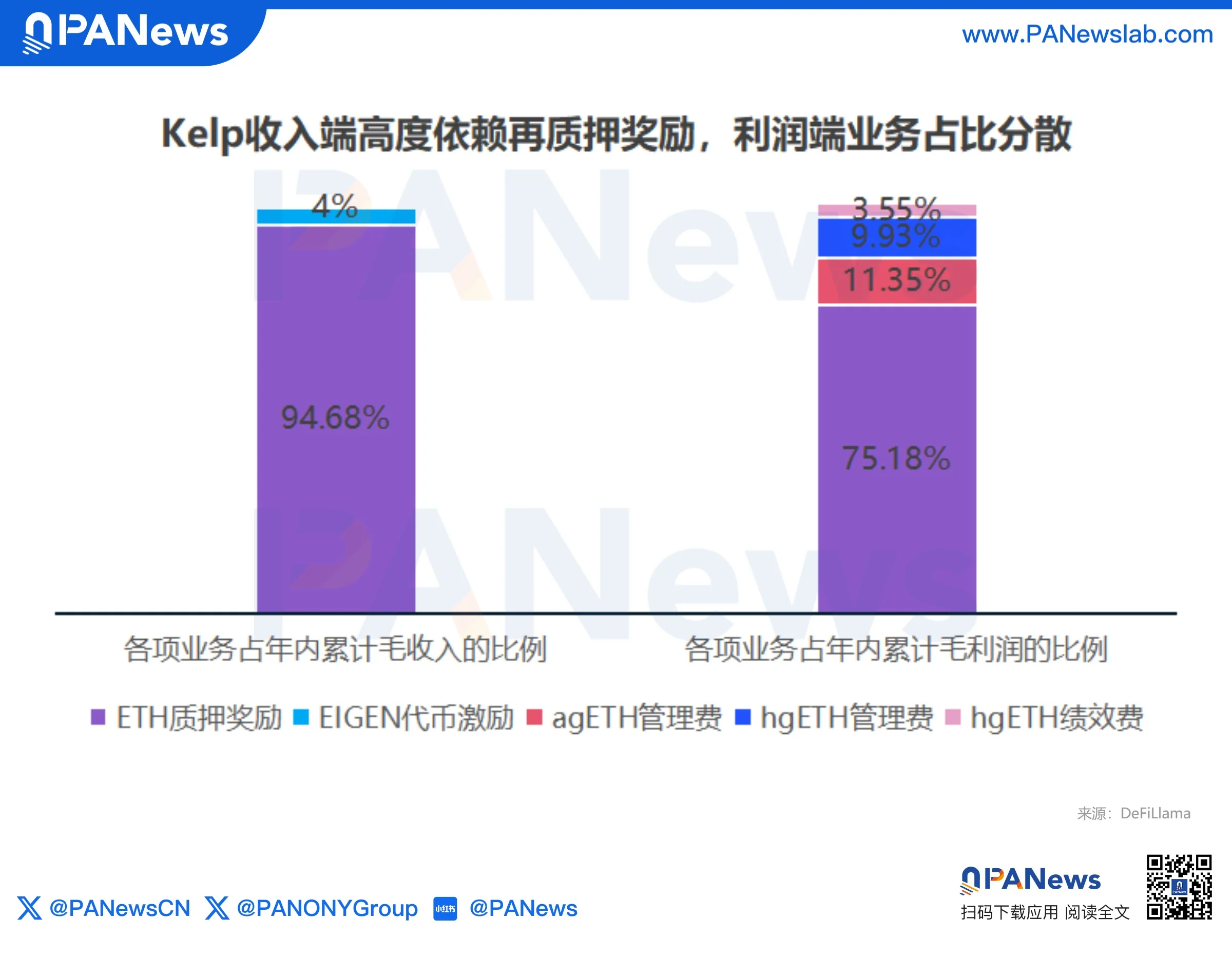
Notably, the management fee retention rate for Gain-series products such as agETH and hgETH is 100%, and their TVL is only about $30 million. In other words, the strategy vaults generate nearly 25% of profits with only about 2.5% of TVL and 1.3% of revenue.
Renzo: From LRT issuer to on-chain structured products
Compared with Kelp's reactive shift, Renzo is pivoting proactively.
On September 9, Renzo Protocol officially rebranded as Renzo Finance, upgrading its positioning from an "LRT protocol" to an "on-chain structured yield platform." Its product system was split into three modules: Staking Suite, Reserve Vaults and Enterprise Suite.
Behind the name change is a switch in business logic. In the past, ezETH was the absolute mainstay, and all business revolved around issuing LRTs; now, LRTs will gradually become an asset entry layer and a stock base, with the growth focus shifting to actively managed structured yield products.
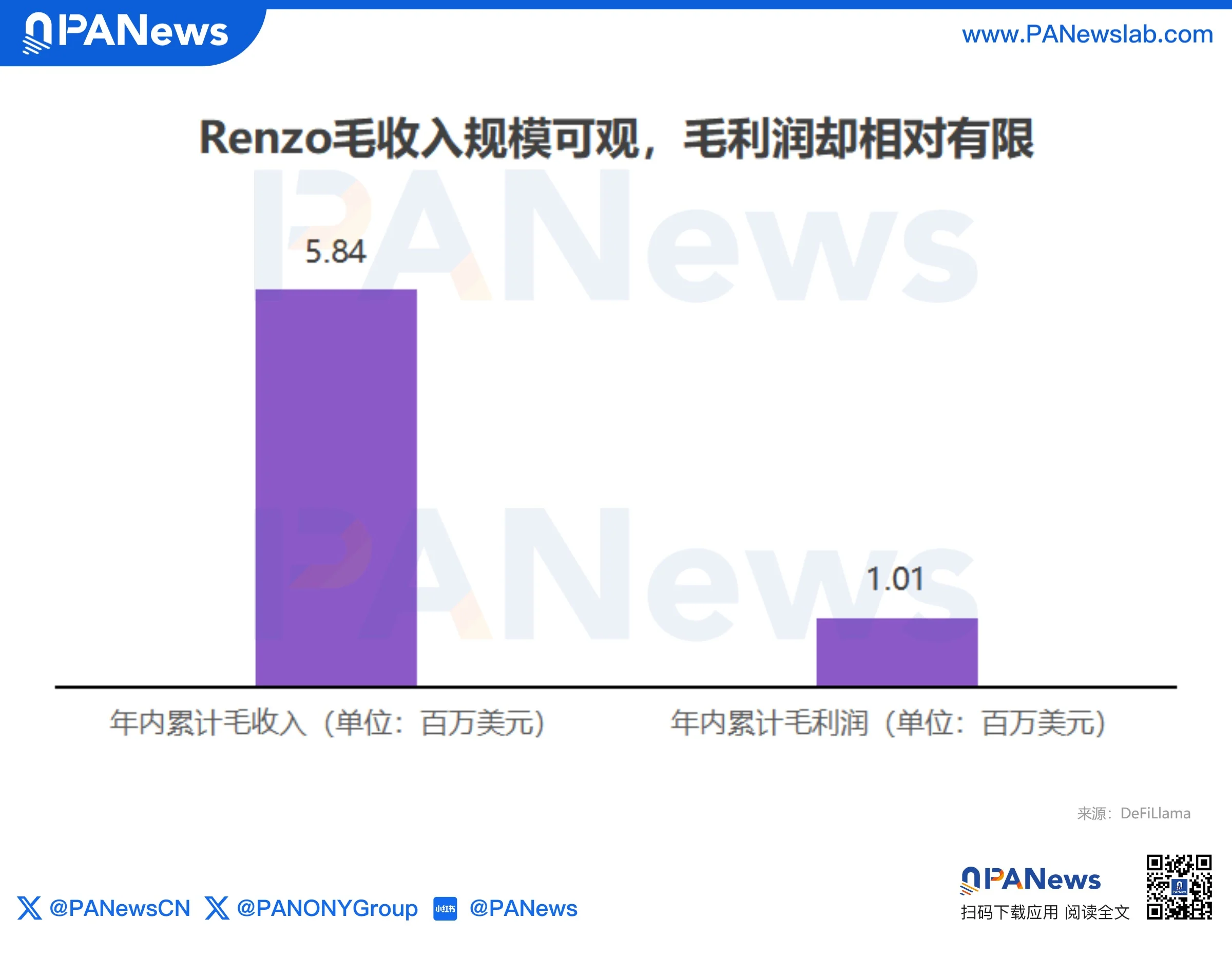
This year, Renzo's cumulative gross revenue is $5.84 million, with gross profit of $1.01 million. The protocol's revenue has reached a certain scale, but its profit conversion efficiency is on the low side.
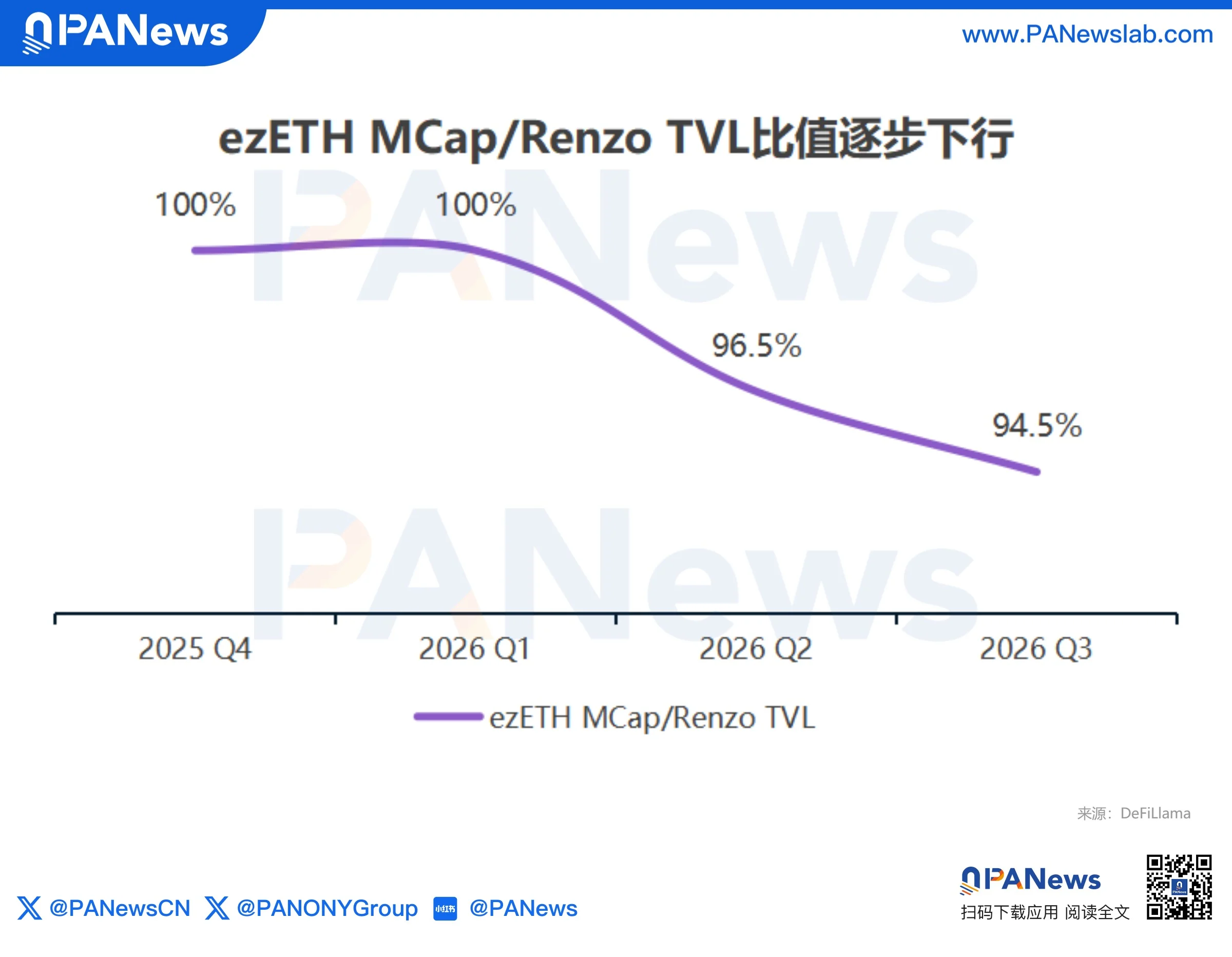
In addition, since Q4 last year, the ratio of ezETH market cap to Renzo TVL has been steadily weakening. Although the share remains extremely high, it has now fallen to 94.5%, indicating that ezETH is no longer the protocol's main growth driver.
The pivot is also landing at a rapid pace. On the same day as the rebrand, Renzo launched "Renzo Basis," a delta-neutral basis yield vault on Hyperliquid, specifically designed to capture arbitrage opportunities between funding rates and spot basis; a week later, the protocol announced it would expand to Lighter on Robinhood Chain, positioning itself for basis trading in on-chain stock perpetuals.
In essence, this resembles the "structured products" model of the traditional asset management industry: Renzo acts as a strategy manager, screening and constructing trading strategies with different risk-return profiles, packaging them into standardized vault products for users to subscribe to, and earning management fees and performance fees. ezETH no longer needs to shoulder the entire growth mission—it is merely one of the underlying assets.
Swell: Shutting down its L2 and betting on an AI trading terminal
Swell's pivot is the most aggressive.
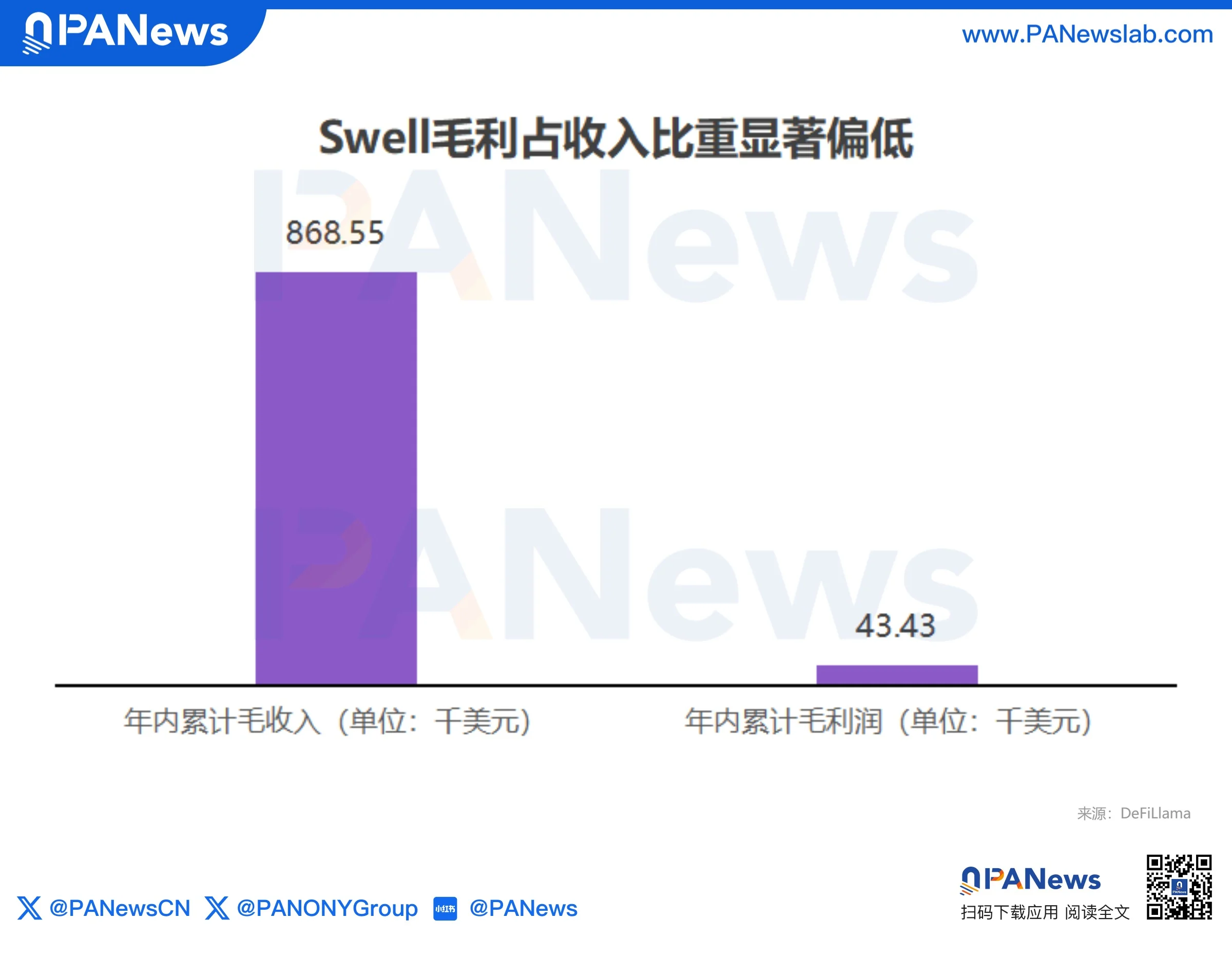
This year, Swell's cumulative gross revenue is $868,600, with gross profit of only $43,400. Costs are eroding revenue significantly, indicating weak revenue conversion capability and pressure on earnings quality.
In fact, Swell announced the shutdown of Swellchain as early as April 28. This Layer 2, built on the Optimism Superchain and once pinned with high hopes as a "restaking-dedicated chain," was declared dead less than a year after launch. The team explained that the restaking ecosystem matured far slower than expected, while Ethereum's L1 scaling and low transaction fees also reduced the necessity of deploying an L2. Rather than grinding it out in a red ocean, it was better to concentrate engineering and business resources on the team's other business line, Faro.
And Faro has nothing to do with LRTs anymore.
Faro is a non-custodial AI trading intelligence application built on Hyperliquid. It aggregates multi-dimensional information such as on-chain data, social sentiment and market indicators, generates trading strategies, and allows users to execute trades directly through Hyperliquid with one click.
Simply put, Swell is shifting from "providing yield assets" to "providing trading services." Its revenue model is also shifting from earning staking spreads to earning subscription fees, trade execution fees, and future ecosystem value capture.
However, the pivot is still in its early stages, and whether Faro can convert its trading volume on Hyperliquid into protocol cash flow remains to be verified.
Puffer: Escaping the yield rat race and betting on Ethereum execution infrastructure
While peers are seeking growth on the asset side and the user side, Puffer has chosen to put down roots: going deep into Ethereum's infrastructure layer and transforming into an infrastructure service provider.
Currently, Puffer's product matrix covers four modules: LRT, institutional services (Puffer Institutional), preconfirmations (Preconf) and UniFi Based Rollup. The LRT business still exists, but it is mainly a basic configuration for institutional clients. On March 12, Puffer partnered with Anchorage Digital, a regulated digital asset platform, to provide institutions with a compliant pufETH investment channel, taking a B2B route.
More noteworthy is UniFi Based Rollup. Puffer abandoned the centralized sequencer approach widely adopted across the industry and introduced a Rollup architecture in which Ethereum L1 validators directly execute transaction ordering, eliminating cross-chain composability barriers and the censorship risks of centralized sequencers at the foundational level, and enabling native atomic interaction and instant withdrawals between L2 and L1.
On September 23, Puffer announced a strategic partnership with Google Cloud, with the latter serving as the enterprise-grade gateway operator for its Preconf Gateway system, providing sub-second preconfirmation services for transactions; a week later, on September 30, Puffer once again joined hands with Anchorage Digital to bring institutional-grade custody and settlement infrastructure to Puffer UniFi. This marks Puffer's evolution from a single LRT protocol into an infrastructure service provider for Ethereum's execution layer.
This year, Puffer's cumulative gross revenue is $1.14 million, with gross profit of $57,200. Staking rewards contribute almost no profit, indicating that the protocol's actual earnings rely mainly on various service fees.
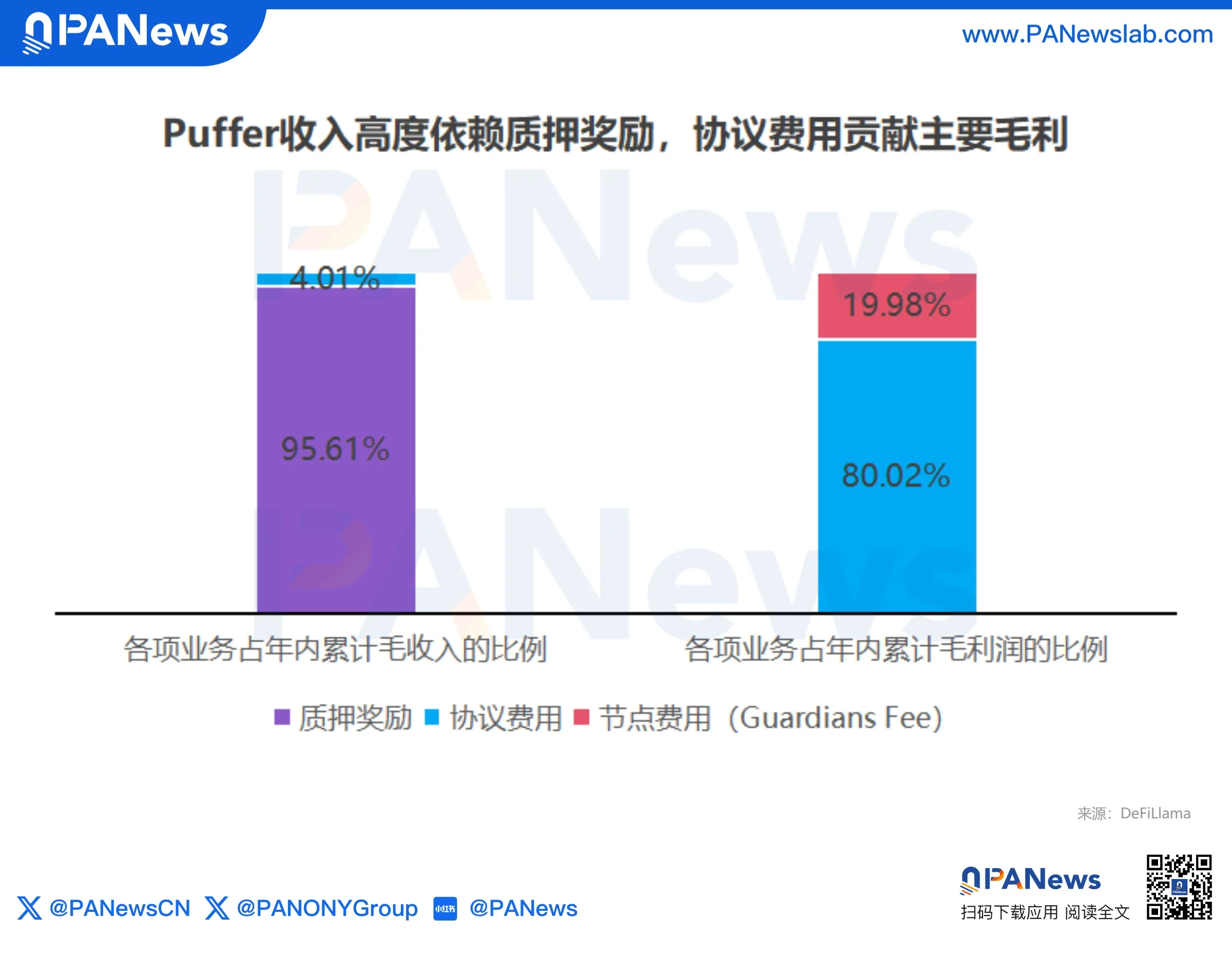
The profit from the restaking business is essentially zero, but if it becomes the clearing and settlement infrastructure for trading platforms, AI agents and institutional payments, its revenue sources would expand from meager service fees to multiple streams such as sequencing fees, preconfirmation fees and infrastructure fees.
Of course, the infrastructure story is easier to tell than to execute. The investment phase of the pivot is far from over, and commercial monetization will still take time.
Bedrock: Rebuilding the yield engine with Bitcoin and escaping the Ethereum cycle
Bedrock, by contrast, has taken a different path—a great migration of assets—using Bitcoin to replace Ethereum and building an independent yield system.
Among all leading LRT protocols, Bedrock has completed the most thorough shift in asset focus. Today, its official narrative has almost entirely turned toward BTC, and ETH is no longer the protagonist.
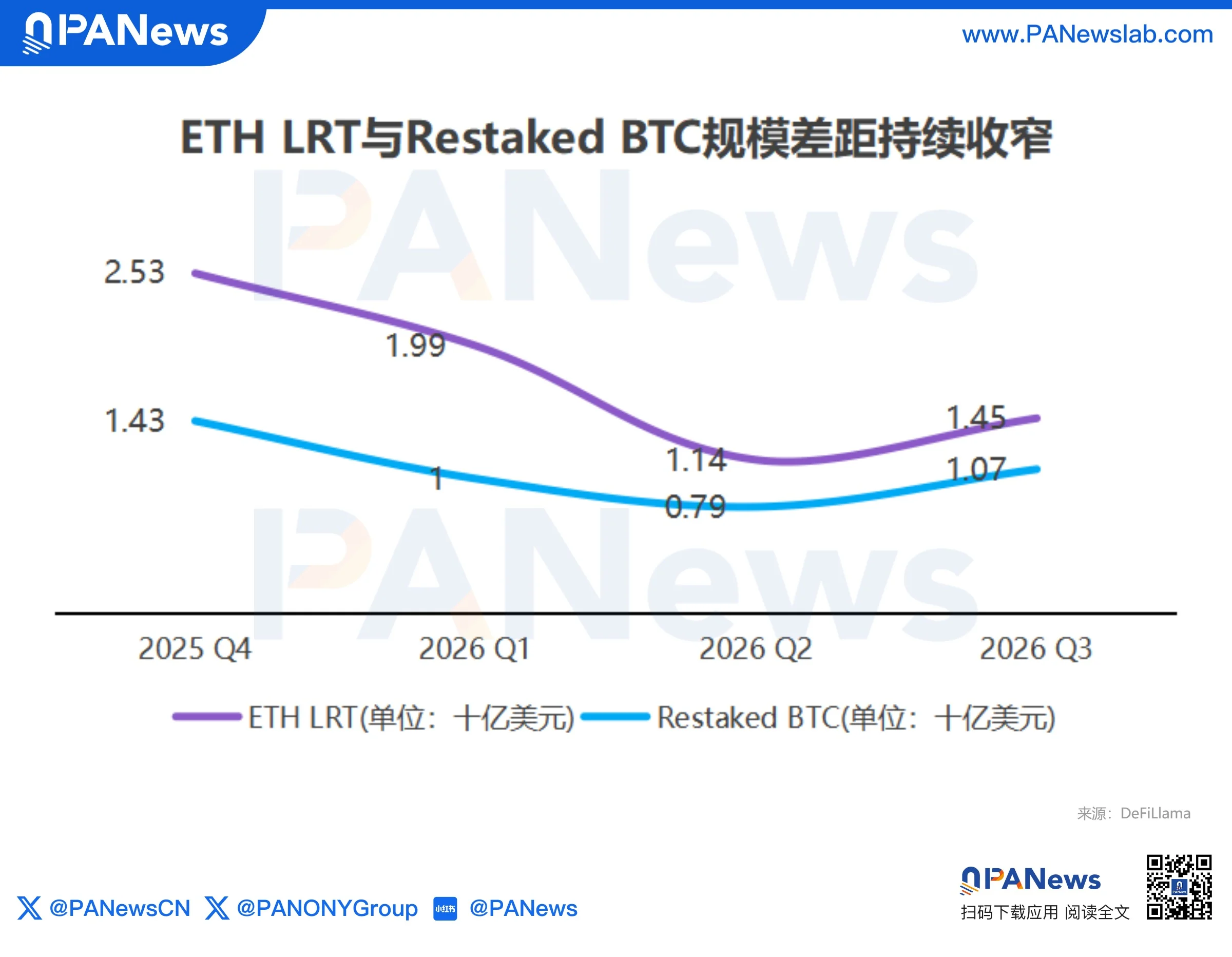
DeFiLlama data shows that the Restaked BTC track's TVL has surpassed $1 billion, while the ETH LRT track stands at about $1.4 billion. As one rises and the other falls, the gap between the two is steadily narrowing.
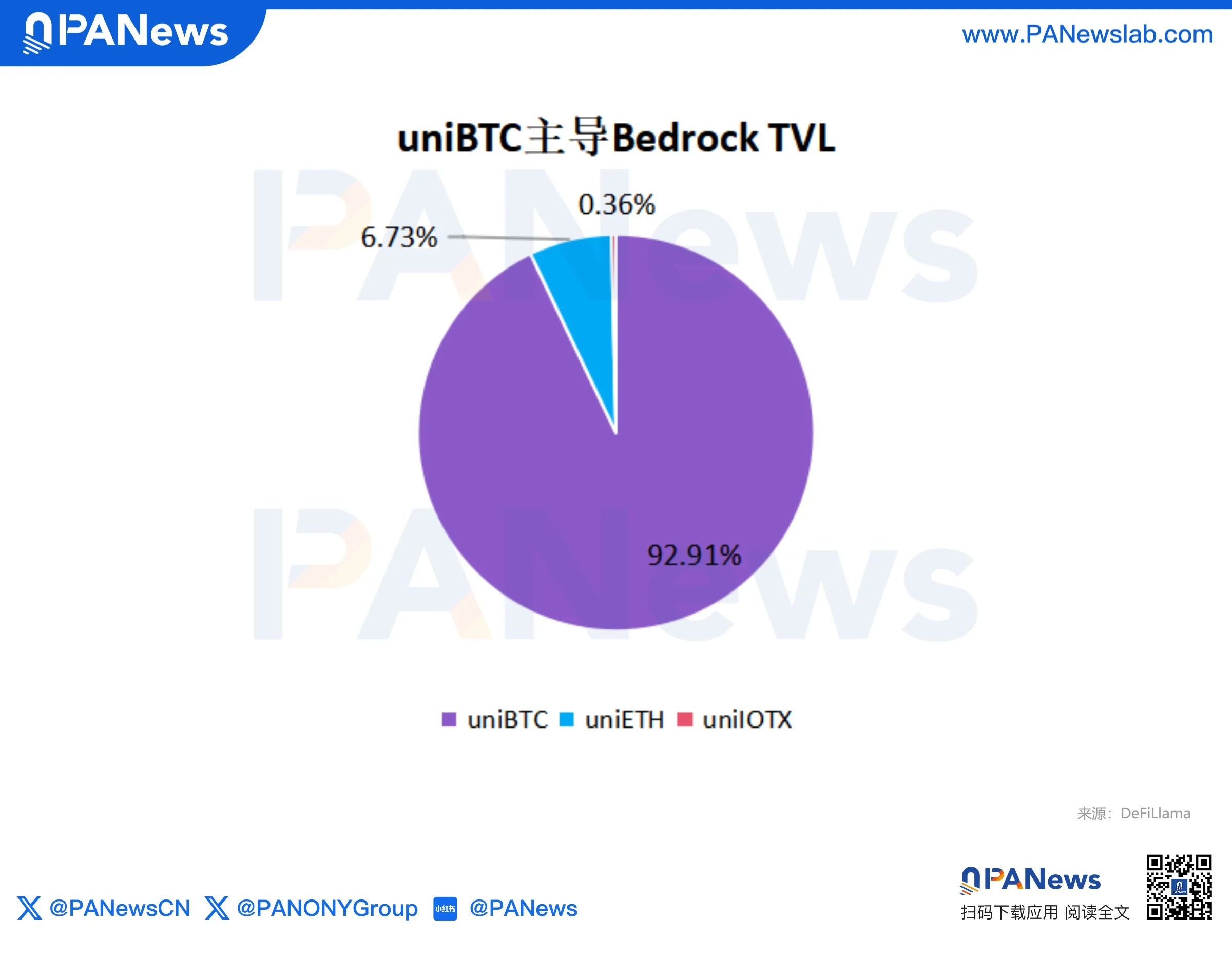
Returning to Bedrock, of its $408 million TVL, uniBTC alone accounts for $379 million, nearly 94%, making it the most important asset entry; the once-flagship product uniETH has only $27.5 million in TVL left, reduced to a secondary product.
On June 24, Bedrock's 2.0 version further clarified its strategic direction: building a "Smart Yield Engine" for Bitcoin capital. Through Yield Vaults, it allocates Bitcoin capital across diversified strategies such as institutional credit, delta-neutral basis, DeFi and RWA, attempting to build a profit moat independent of the Ethereum cycle.
Interestingly, the pillar of Bedrock's revenue and profit remains the uniETH staking business. This year, the protocol's cumulative gross revenue is $647,800, with gross profit of $76,800. Although uniBTC redemption fees contribute significantly more to profit than their share of revenue, showing higher profit-conversion elasticity, the protocol's revenue and profit still rely heavily on uniETH staking rewards.
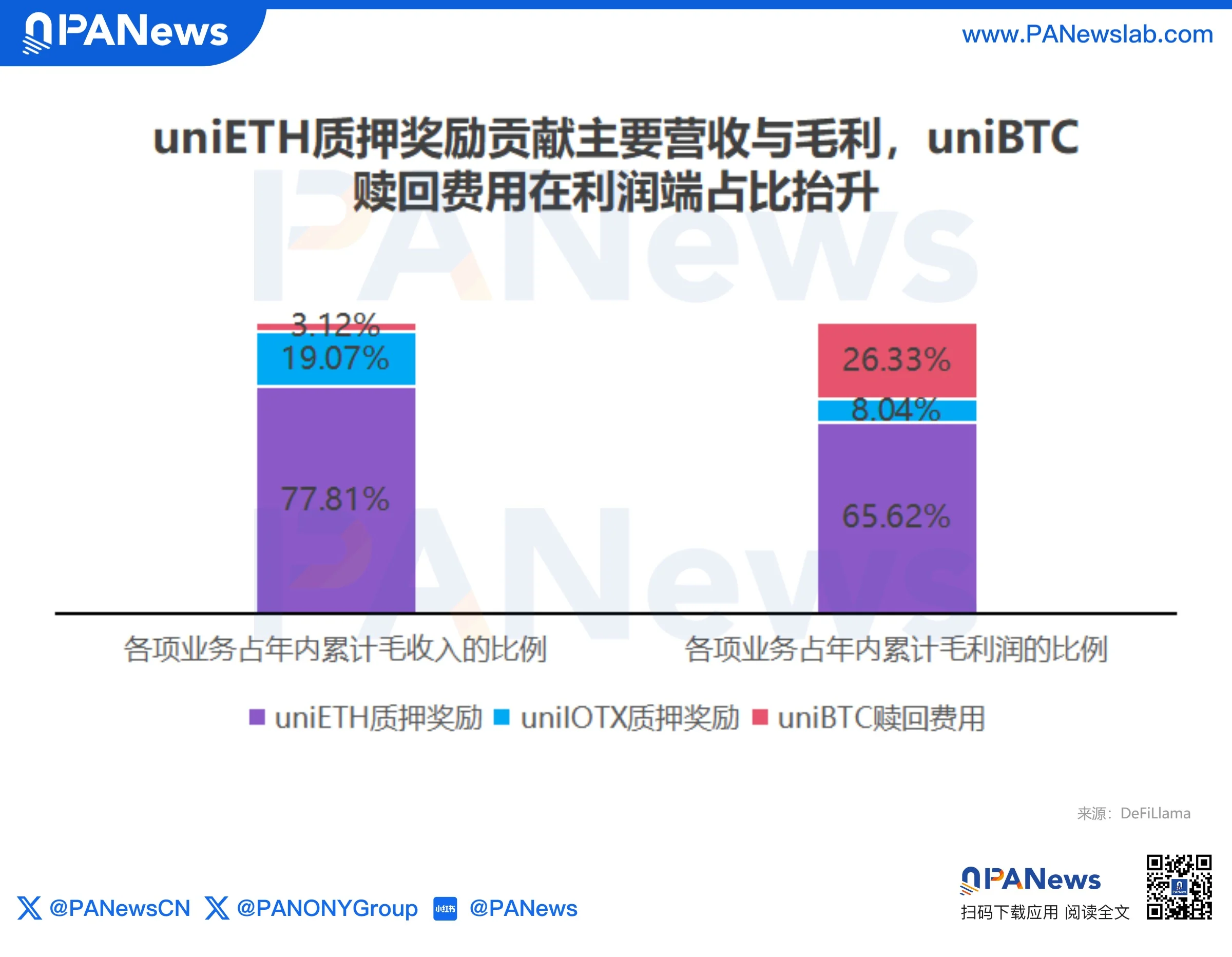
From a horizontal comparison, uniETH, now relegated to a secondary line, actually earns more revenue and profit with less TVL, while the flagship product uniBTC has slightly underperformed expectations. The challenge Bedrock will need to solve in the next phase may be how to make uniBTC generate a "profit leverage effect" similar to uniETH's.
The consensus of five protocols: turning LRT from a "product" into a "capital entry point"
Five leading players, five pivot paths, different directions—but the underlying logic is highly consistent.
First, the yield logic has changed. In the past, the selling point of LRTs was "triple yield": base staking yield + restaking yield + points airdrops. But when demand for AVS (actively validated services) fell short of expectations, points incentives receded, and slashing risks rose, the additional yield could no longer cover the new risk exposure, and the growth model of attracting locked capital through yield reached its end.
Second, protocols are shifting from asset issuance to asset management. Renzo's structured vaults, Kelp's Gain strategy vaults and Bedrock's Bitcoin yield vaults are all essentially trying to earn "management fees/performance fees on user capital allocation." Revenue efficiency per unit of capital will replace TVL as the new metric to watch.
Third, infrastructure has become another monetization path. Puffer is betting on Preconf preconfirmations and Based Rollup infrastructure, while Swell is pivoting to an AI trading terminal—both are moving away from the logic of "locking assets" toward the infrastructure demand of "processing transactions, serving orders and outputting capabilities." The revenue ceiling is no longer constrained by staking yield but depends on trading scale and product penetration.
Simply put, LRTs are degenerating into an underlying capital entry point: user funds obtain base yield and composability through restaking, while protocols generate revenue through the structured products, credit, trading and infrastructure services layered on top.
The stories of the new cycle are all chasing "explainable cash flow."