Argentina's President Milei "Exonerated": A Quick Look at How the LIBRA Case Began
 Tapbit Wire
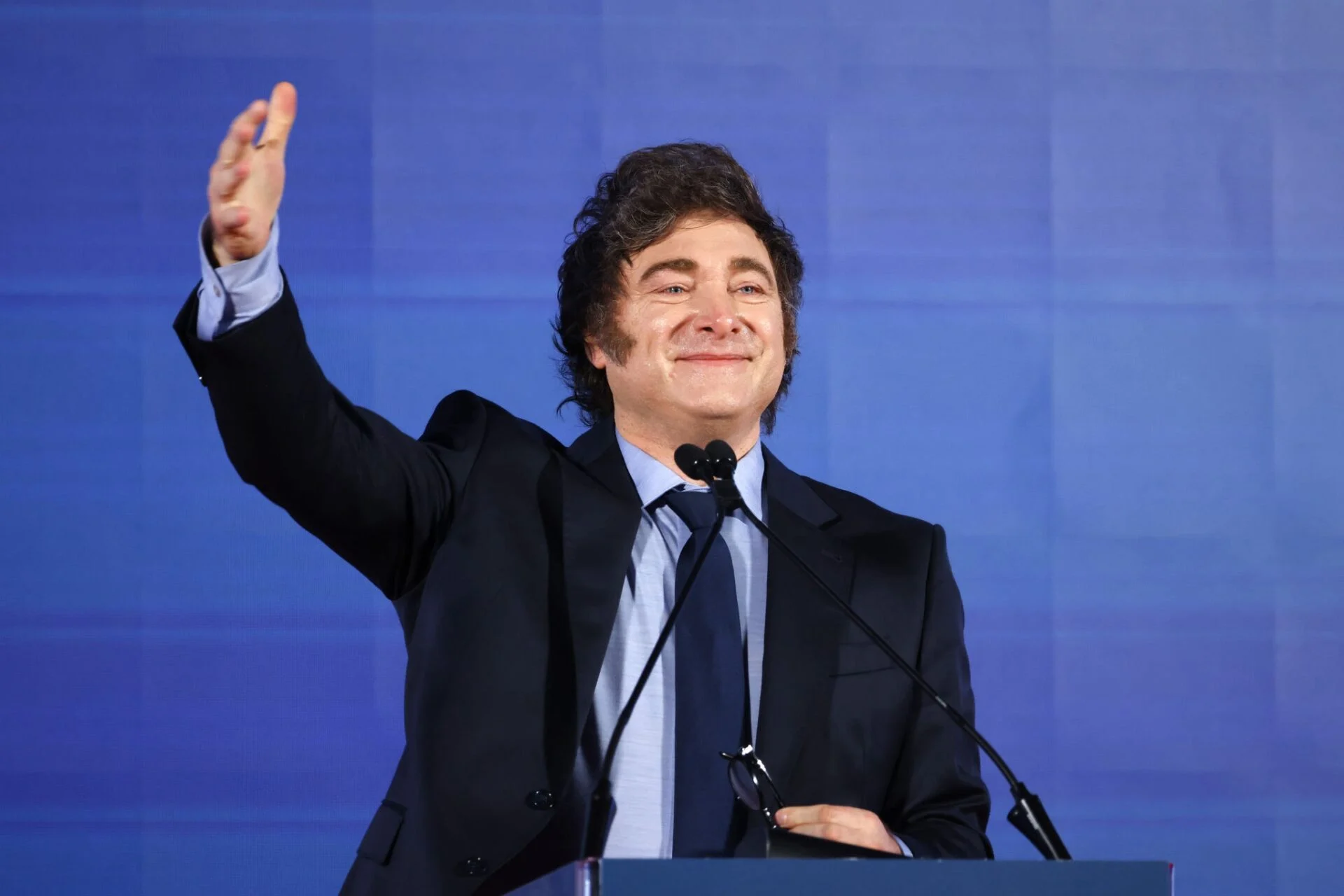
Argentine President Javier Milei, who was once engulfed in controversy for promoting the "presidential memecoin" LIBRA, has finally reached his moment of "exoneration."
On October 23, Argentine federal judge Marcelo Martinez de Giorgi, at the request of prosecutors, dismissed the criminal investigation into Milei and his sister Karina Milei, ruling that the reported events did not constitute a statutory crime. On the day of the ruling, Milei published a long post on X, lamenting the slander, lies and defamation he had endured over the past year, eight months and nine days, angrily aiming his fire at "political persecution" and shouting "Long live freedom" — seemingly echoing the theme of the LIBRA token.
On October 2, U.S. federal judge Jennifer L. Rochon also dismissed the class-action lawsuit against Libra project organizer Kelsier Ventures, decentralized finance platform Meteora and developer Benjamin Chow, and denied the plaintiffs' request to file an amended complaint.
Looking back at this February 2025 "political memecoin" saga, all the parties involved maneuvered this way and that and walked away unscathed, leaving only the retail investors who lost money buying LIBRA to weep helplessly.
LIBRA saga: more than 110,000 wallet addresses in the red, total losses above $250 million
Looking back at this episode, the hardest hit were undoubtedly LIBRA token investors. Data shows that LIBRA's market cap once surged to about $4.6 billion before plunging more than 90%; according to Nansen data, about 86% of traders recorded losses, involving about 114,000 wallets, with combined losses of about $251 million.
A $5 million payment agreement still does not prove Milei is guilty
A quick recap of how it all unfolded:
On February 14, 2025, after Trump issued TRUMP, Argentine President Milei posted on his personal X account to promote LIBRA — a project named "Viva la Libertad Project," said to be used to fund small businesses in Argentina. The token was deployed on Solana at 21:38 UTC that evening, and Milei tweeted the contract address at 22:01. The price was pushed up to about $4.5 in less than an hour, with the market cap briefly around $4.6 billion; then team-related wallets sold tokens and drained the USDC and SOL from the liquidity pool, and the price fell more than 94% in about 11 hours.
Soon afterward, Milei quickly deleted the tweet, saying he did not understand the details of the token issuance and had no connection to the project team. Argentina's opposition immediately pushed for impeachment, and Congress set up an investigative committee to launch a probe. On February 17, Milei responded publicly for the first time on TN television, claiming that "at most only 5,000 people were harmed, and the vast majority of investors were Chinese and Americans," and saying "I made no mistake, because I acted in good faith," hoping to use this to fend off the subsequent investigation. Cointelegraph's verification of on-chain data at the time found that more than 15,000 wallets had profits or losses of over $1,000 on LIBRA.
In April 2025, The New York Times published an investigative report disclosing that call records obtained by Argentine federal prosecutors showed that Milei himself spoke by phone seven times with Mauricio Novelli, the core intermediary of the LIBRA token project, on the night of February 14, 2025 — the very night he posted the LIBRA token contract address on X and set off this crypto scam. The calls took place before and after the promotional post was published, directly overturning Milei's earlier repeated claim that he "had no connection whatsoever with the project" (see "LIBRA Scandal Escalates: Argentine President's 7 Call Records and $5 Million Draft Agreement Exposed").
In May 2025, an Argentine federal judge ordered the freezing of assets of key figures in the LIBRA project, with the scope of the investigation covering the financial operations of Milei and his sister Karina. On May 19 of the same month, Milei and Justice Minister Mariano Cúneo Libarona signed a decree dissolving the special task force (UTI) that had been set up on February 19 to investigate the Libra scandal, on the grounds that it had "completed its duties" — at a time when the opposition was pressing for Congress to launch an investigative committee.
In August 2025, a U.S. court lifted the freeze on a total of $57.6 million in USDC belonging to Hayden Davis, head of Libra organizer Kelsier Ventures, and Meteora founder Benjamin Chow. Crypto KOL scooter, who had previously taken part in exposing the inside story of the LIBRA token, said of the matter that five hours after Hayden Davis's funds were unfrozen, YZY, a celebrity memecoin associated with well-known rapper Kanye West, was released immediately, and that this was probably no coincidence — this claim is currently not supported by evidence of fund flows.
A judicial update in March 2026 showed that forensic experts extracted a draft agreement from the seized phone of intermediary Mauricio Novelli, involving a $5 million arrangement related to LIBRA promotion, drafted three days before Milei's post. The draft specified payment in three tranches: first, $1.5 million (tokens or cash) as an advance; the second $1.5 million on the condition that Milei announce on social media that Hayden Davis is his adviser; and the final $2 million to be paid after Milei and his sister Karina sign in person a contract concerning blockchain or AI government consulting.
The case appears to be backed by conclusive, ironclad evidence, but what we got today is an Argentine federal judge, at the request of prosecutors, ruling that the criminal investigation into Milei and his sister will not be opened. Such an outcome will also hardly satisfy the victims who have waited so long.
The investigation result: Milei and his sister, plus 9 others, committed no crime, on grounds consistent with Argentine law
In the roughly 60-page ruling, Marcelo Martinez de Giorgi, judge of Argentina's Federal Criminal and Correctional Court No. 8, ruled that Milei, his sister (Secretary General of the Presidency) Karina Milei and nine others were all exempted from prosecution and the case archived, on the grounds that the reported facts did not constitute a statutory crime, accepting prosecutor Eduardo Taiano's request to drop the case.
The main grounds for the ruling are that, under Article 336, paragraph 3 of Argentina's Criminal Procedure Code, no "fraudulent deception" in the criminal-law sense was proven. The project itself really existed, the token was issued, the operations are traceable on-chain, and no fixed returns were promised; the president's promotion may have increased exposure and trust, but "institutional identity, public attention or trust itself does not constitute a fraudulent scheme." Price rises and falls and the final distribution of profits and losses are not in themselves sufficient to prove a crime; fraud cannot be inferred solely from the final distribution; no official acts, use of public resources, abuse of power or negotiations incompatible with public office were found, and the anti-corruption office's investigation results supported that the tweets were acts of a personal account. The judge wrote in the ruling: "Arranging a contact or helping to organize a meeting does not in itself constitute influence peddling." Investigators recovered unsigned documents and notes from Novelli's phone, but the judge concluded that evidence that Karina received payments was still insufficient.
It is worth noting that, in this 20-month-long investigation, none of those under investigation was ever summoned for a formal interrogation.
As the judge's ruling brought the matter to a close, Milei published a long post on X that day, calling the allegations the work of a "political insider group" and of journalists who take money to do the job, and demanding compensation: "Now who will compensate me for the harm I suffered over this year, eight months and nine days because of lies, slander and defamation?" He also wrote, "The truth itself will prevail over everything."
The facts prove that the law does not always side with the victims — especially when the opposing party is a country's president.