Anonymous interviews with frontline investors and entrepreneurs: Who exactly is pushing whom to chase consensus?
 Tapbit Wire
"VCs only invest in consensus now."
Over the past while, we've talked with quite a few founders, and this is a line many of them bring up. On the investor side, what we hear more often is "there are too few good projects."
These two statements sound like both sides blaming each other, but looking over a longer stretch of time, this kind of standoff isn't new to this industry. Group buying, shared bikes, new consumer, large models — every cycle has a direction everyone is investing in, and every cycle has a group of founders complaining they're not in the hot spot.
The difference is that this time there's more money, and the track is more crowded. According to statistics, in the first half of 2026, domestic AI track financing reached RMB 307.682 billion, already surpassing all of 2025, with about 80% flowing to large models and embodied intelligence. During the same period, many founders building AI applications can't clearly say what level their product needs to reach to raise the next round.
Why does money always rush in the same direction together? Why does a track go from hot to cold in just a few months? Who exactly is deciding what can be invested in?
These questions are hard to get candid answers to in public settings. Behind investors there are LPs, partners, and portfolio companies; in front of founders there's the next round, investors, and peers.
We wanted to hear what people on both sides of the table say privately. Besides one-on-one long conversations with several founders, at the end of October we held another offline Meetup, inviting some frontline investors to share anonymously.
After talking it through, it's hard to pin the blame on any one side. Young investors have their own KPIs, partners have their own fears, LPs need to see exits, and exits are almost down to the single path of going public; meanwhile founders, just to survive, can only gravitate toward the hot spots. Everyone made a reasonable choice from their own position, and stacked together, it becomes everyone chasing consensus from behind.
No one genuinely likes chasing consensus, but most people are doing it.
To let everyone speak freely and thoroughly, we anonymized all content, removing interviewees' names, institutions, and projects and details that could reveal their identities; quotes were edited without changing the original meaning.
Close your eyes, it's dark
"The entire capital world is one big game of passing the parcel."
"Many big-tech executives are forced into entrepreneurship. For them, the most important thing is to preserve their status."
"Has anyone here seen carry? The primary market is not a place where young people get rich."
"Miss the next super platform, and you won't secure a place in a top-tier institution in the next era."
"The biggest takeaway from my entire career is that every moment I feel the other side is deceiving me."
"Talent density doesn't change suddenly. It's just that capital's attention makes a group of people chosen at this point in time, becoming the chosen ones. It's really just a lottery."
"Financing and these things are fake metrics. For a company, only whether it can survive and how much value it can create matters most."
"The degree of FOMO among partners at every fund is more exaggerated than I thought."
"You always have to find a piece of shit-flavored chocolate to eat."
"In the large model wave, the funds that truly made big money probably number no more than 10."
Working for Love
In many institutions, young investors basically can't earn carry. An entrepreneur doing AI applications described this situation to us: in many institutions, promotion and year-end bonuses largely depend on how many projects one pushes to the investment committee and gets a TS for; investors themselves may not stay long at the institution, and even if the company goes public, they won't share much excess return.
"Push 10 projects and get TS for all of them, and this year's return is secured. As for how the company fares later, it's not much concern to him."
In this entrepreneur's view, under this incentive system, the best projects to push are those with the least resistance at the committee, that is, projects everyone recognizes. Going one level higher, most institutions have top-down sector research; institutions that truly only look at people are rare, and what sector research pursues is precisely "someone to take over later."
According to Carta statistics, as of the end of Q1 2025, for US VC funds established in 2017, the median DPI was only 0.27x; among funds established in 2019 and 2020, only 37% and 30%, respectively, had distributed any money to LPs. Preqin listed the top 10 USD VC funds established between 2015 and 2020 and mainly investing in China by DPI, and only 4 of them had returned more than principal to LPs.
The industry itself is also shrinking. Data from the Asset Management Association of China shows that as of the end of April 2026, there were 11,248 registered private equity and venture capital managers, more than 800 fewer than at the beginning of 2025. According to media reports, many institutions cut year-end bonuses first, citing inability to exit projects; some also cut salaries by 20% for junior staff and 30% for mid-level staff.
At the Beating Meetup, an investor asked the room if anyone had ever seen a carry, and after a few seconds, someone said they might have. In this investor's view, it's hard for young people to get rich in the primary market anymore; when asked what the point of investing in projects is now and what the original intention is, the answer was four words: "generating power for love."
Investors don't deny the pressure to deploy capital. Few institutions have explicit quotas on the number of deals, but the anxiety when peers are deploying densely is real—some directly admit that investing in projects with a resume-padding component "is the norm." The bar certainly exists, it just fluctuates with the heat of the track—if the track is important enough and the team barely clears the line, the trigger has to be pulled. One investor admitted that there are quite a lot of projects like this that they're not satisfied with but must deploy into: "You always have to find a piece of shit-flavored chocolate to eat."
The pressure isn't just on young people. The same investor candidly said that this round, the FOMO among founding partners at various firms is more severe than they had expected—the old guard actually want to gamble more. Reason one: fear of missing the super platform of the AI era—miss it, and you won't be able to stand among top-tier institutions in the next era. Reason two: being far from the front lines—the changes seen on the front lines always reach the partners with a delay.
What entrepreneurs see is the other side. One entrepreneur who spoke with roughly 30%–50% of top-tier USD funds felt that veterans who've been in the game for over a decade are mostly strong—they can see through to the underlying logic and give real feedback; those chasing hot trends are investment managers who've been in the industry a few years—"they don't understand business, don't understand product, they only understand deals."
Miss It and It's Gone
The consensus on the AI track roughly comes from four sources.
First, big names speaking out. One entrepreneur recalls that in February this year, a batch of OpenClaw-type Agent products suddenly got hyped—the starting point was Wang Huiwen saying on Jike that he really wanted projects like that.
Second, data seen by top-tier institutions—though "the data might be watered down." Last year, USD institutions noticed that a category of AI interactive content products had cheap customer acquisition and decent next-day retention, and soon companies were comparing themselves to the previous generation of short-video platforms in their investment committee materials.
Third, technology narratives—the world model wave is largely tied to Li Feifei and a group of recognized researchers.
Fourth, each VC's own industry research.
Once these forces stack together, from consensus forming to real money being deployed, "it might take as little as one month."
This year's OpenClaw is a good example. One entrepreneur's observation is that within a month, almost every VC had swept through teams in related directions—if the people are good and the direction is right, they'll get funded.
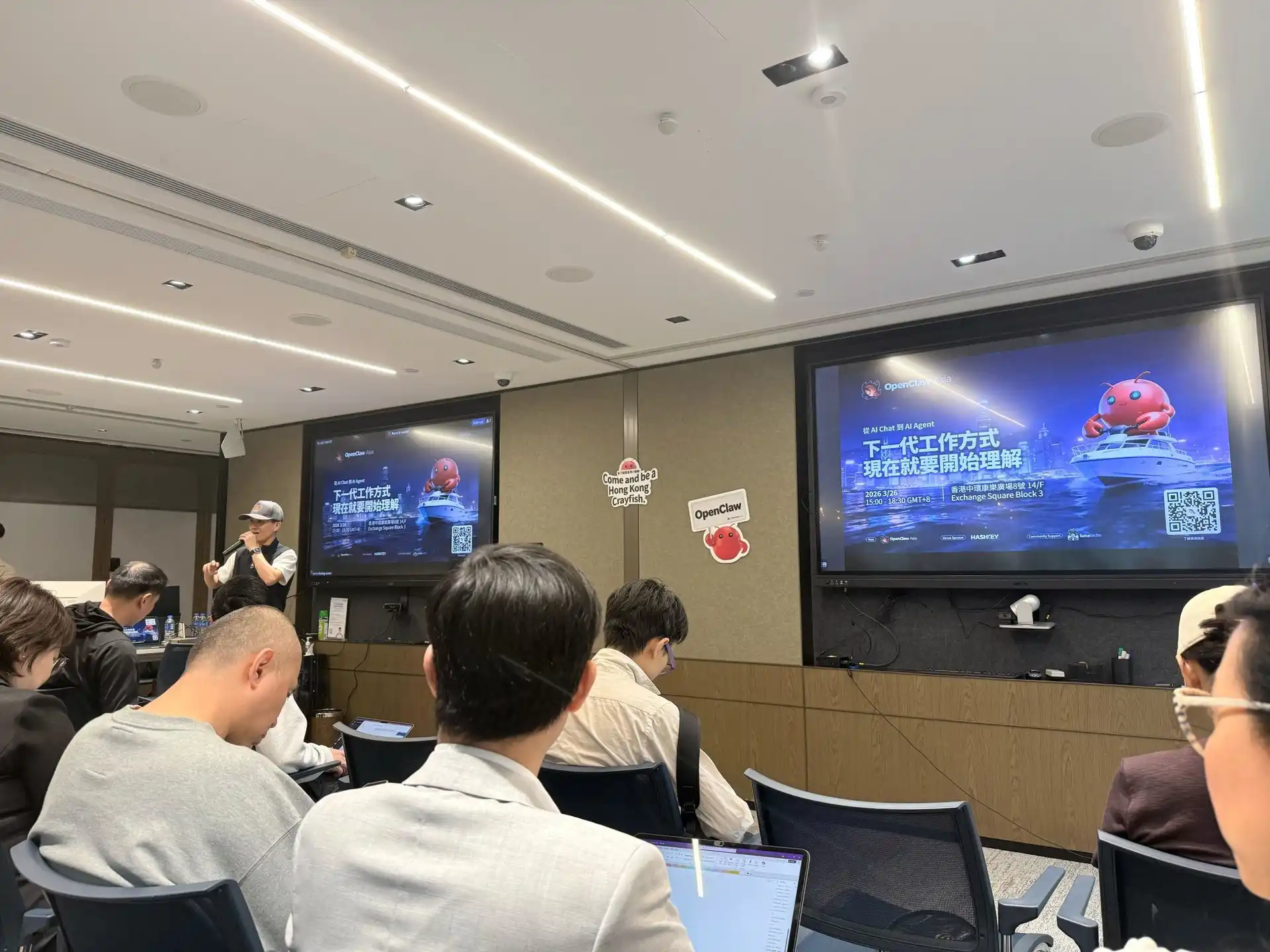
OpenClaw Hong Kong Meetup | Image source: X
But after the window closes, the situation for latecomers is completely different. The entrepreneur has a friend who started working on interactive content almost simultaneously with several "star projects" at the time, but the team was not based in Beijing, Shanghai, or Shenzhen and missed that round of financing. By the time those two companies became consensus picks, when the friend went to raise money, the question investors asked most often became "How do you beat them?"
In the "Thousand Group War" around 2010, group-buying sites once exceeded 5,000; in 2016, with shared bikes, about 80 bike apps could be found in Android app stores, and two years later, Mobike was acquired and long lines formed outside ofo to request deposit refunds; in 2021, new consumer brands raised 842 rounds totaling more than RMB 90 billion for the year, a Changsha snack brand's valuation rose about 500-fold in 10 months, and the next year it laid off 40% of its brand staff. Compared with these, AI's window opened faster and closed faster.
The window for AI applications closed at the end of April this year. That was the timing given by investors at the Meetup, while one entrepreneur's impression was that this year has the lowest enthusiasm for application investment. The reasons given on both sides were almost the same: there are no new stories, and model capabilities have become strong enough that many things applications need to do can be done by the models themselves. In addition, looking back at past investment returns in software applications, they are not attractive, and the rapid progress of AI Coding has further compressed the imaginative space for applications.
When the window tightens, even signed TS can very likely be withdrawn. Before this year's Spring Festival, a fund was preparing to invest in a video generation company. In mid-February, a major tech company released a new-generation video model, and a fund tore up the TS on the grounds that "it definitely can't win." During sector rotation, a project that one month earlier was still considered investable could be abandoned the next month. Externally, the explanation funds use most often is that their money has not yet arrived. One investor said: "Before the money is delivered, you can do whatever you want. Although entrepreneurs cannot afford the delay."
This is exactly the opposite of the pace a year ago. At the hottest time, some institutions wired funds the day after meeting the founder, and for some founders whose companies had not yet been registered, several million dollars had already been transferred to their personal names first. Now, signing an agreement quickly takes about one to two months, and payment may be delayed even longer.
Cheap and Good
"Dollar funds only move after consensus has formed," one entrepreneur judged. We brought this to the Meetup, and a dollar fund investor replied: "Overall, I think so."
The explanation this investor gave was the decision-making mechanism. The people who make the final call are partners, and the information, industry backgrounds, and projects each firm's partners have been exposed to are all similar, so it is not surprising that they reach similar conclusions.
But this investor does not see himself as chasing consensus.
"We are not looking for non-consensus; what we actually want is to lead consensus. If I can understand it today, and a few people can understand it, and in two months everyone can understand it and wants to invest—that is the best state." And if in two months people still do not understand it, the project is in trouble.
Consensus in this state is, plainly put, "consensus that is still cheap."
Benchmark co-founder Andy Rachleff once said that to make big money, you need to be non-consensus and right. Howard Marks of Oaktree also said that consensus is not necessarily wrong, and that excess returns come from the times when consensus is wrong and you happen to be right.
"Consensus that is still cheap" is different from both of these views. It is closer to the beauty contest Keynes wrote about in 1936, where judges had to guess which face others would consider the most beautiful.

1930 beauty contest group photo | Image source: Maurer
However, the reasons this situation forms are also very realistic. For an AI company to become big, it often has to raise several rounds in succession, and whether anyone will take the next round is more critical than whether this round was invested in correctly. In May this year, an entrepreneur met a senior investor who has never chased hot spots. The investor liked their team very much but offered a sober judgment: there are no more than 10 investors this year who can invest in AI to C applications. Even if this check goes in and the company does reasonably well, if the next round of money does not come in, the company will still die.
So entrepreneurs are left with only two paths. They can stick to their direction and leave financing to luck, betting that among dozens of VCs someone will take a liking to them; or they can move toward mainstream hot spots and reduce the probability of financing being blocked. Most people choose the latter.
That entrepreneur used examples from the consumer industry to explain the value of non-consensus. Pop Mart's earliest money came from angel investor Mai Gang and the first fund of Qifu Capital, which was only about RMB 100 million; Sequoia did not enter until Pre-IPO. Chagee's two rounds in 2021 totaled more than RMB 300 million, with investors including XVC, Fosun, and Congbi Qiushi. At the time, none of these investors counted as top-tier in the VC circle. Unable to win mainstream projects, they could only look for things outside consensus, and later they gained excess returns instead.

Chagee's giant opening cup in the Philippines
Investors at Meetup also admit that small funds and solo GPs are more likely to hit non-consensus investments, because consensus projects are too expensive for them and they cannot get in. As for institutions that publicly advertise that they "like investing in non-consensus," the entrepreneur disagreed: "He did not invest in non-consensus. Everything he invested in was consensus, just packaged as non-consensus."
The Chosen Ones
Every year, the AI industry has its favored groups. One entrepreneur's observation: this year it's PhDs from top labs; last year it was people doing smart hardware. Talent density doesn't change year to year—what changes is capital's attention; the batch that gets noticed becomes that year's chosen ones. In the end, it's more like drawing lots.
World models are a typical case. According to media statistics, by July this year, there were already more than 30 domestic startups with "world models" as their core concept, with cumulative funding exceeding $26 billion, 7 of which became unicorns, and at least 4 of the founders were born after 2000. In early October, Tian Keyu's company was reported to have completed nearly $30 million in funding at a post-money valuation of $200 million, also working on world models.

Li Feifei HAI Roundtable | Image source: Stanford
In one entrepreneur's view, VCs roughly divide entrepreneurs into three categories. One is people who reached high positions at big companies by age 25—whatever they do, they get funded; another is people who are decent but not strong enough to that degree—then the "project" becomes very important; and another is people who aren't capable—no matter how good the project, it's useless. Most entrepreneurs belong to the second category; whether they can get money depends largely on whether the direction they're pursuing overlaps with what mainstream investors are focused on.
Investors also admit it's a lot like drawing lots, except the market also rotates. When the market is good, entrepreneurs with academic backgrounds are more popular; when the market is cold, they are no longer the protagonists. Some investors suspect that some scholars who leave academia to start companies may not necessarily be motivated by building a career—they may simply have seen peers succeed and want that high valuation themselves. Someone at the table chimed in: "Some people see that even Tang Jie succeeded and think, why can't I?" Zhipu, co-founded by Tsinghua professor Tang Jie, listed on the Hong Kong stock exchange on January 8 this year at an issue price of HK$116.2, and by June had risen as high as HK$2,980.
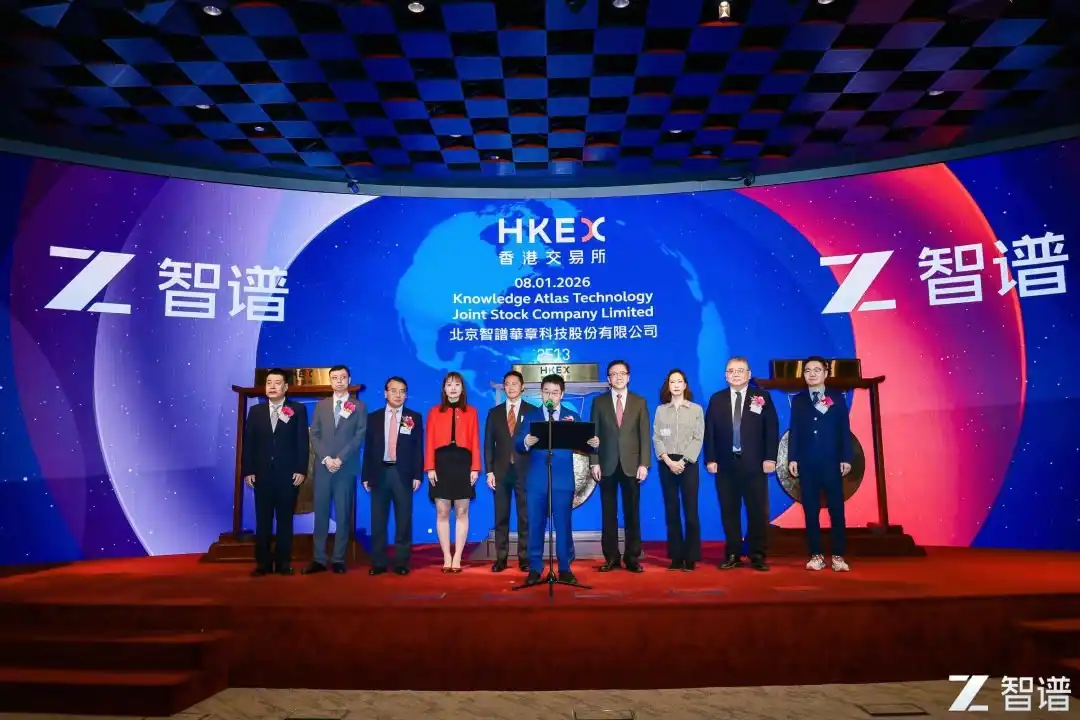
Zhipu rings the bell at the Hong Kong Stock Exchange
There's another concern: a fallback. If a professor's startup fails, they can return to school; many entrepreneurs who fail are left with nothing. Investors generally trust people with no fallback more, and some even treat insufficient determination as grounds for a veto. That entrepreneur put it more sharply: "A true entrepreneur is always starting companies; those who only come out to start a company when they see the right timing are often people with good backgrounds and a fallback."
A big-company background is seen by many as a plus. Investors' reasoning: some people from big companies are good at upward reporting and are better at explaining what they want to do to partners in an easy-to-understand way; moreover, this generation of AI hasn't yet broken away from the mobile internet—distribution is still in the hands of a few major platforms, and product methodology hasn't changed either.
But this bonus point is increasingly failing to add value. A USD fund investor commented on entrepreneurs from several major tech companies, saying that some companies have many people coming out, yet no one has done particularly well, and replicating the old employer's methodology ultimately leads to direct competition with the old employer; some people from certain companies are used to touting how many high-P employees are on their team as a selling point, "but how much of the achievements gained at big companies is given to you by the platform, and how much is your own?"; and some companies are too comfortable, with executives almost never voluntarily stepping out to start businesses.
An entrepreneur added another perspective, saying that many big-company executives are forced into entrepreneurship, unable to continue at the company or about to be laid off. For them, the most important thing is to preserve their status, and aligning with mainstream trends is a natural choice. High-P individuals with a track record have lower financing costs, while the biggest difficulty for young people is proving traction to investors.
The wolf is coming
Entrepreneurs and investors have very different views on "storytelling."
Some entrepreneurs think jargon is useless, investors are all very smart, and the ones who really need to work on narrative are those who don't want to build products properly and just want to raise money quickly. In this entrepreneur's classification, those riding hot trends are mainly "pseudo-entrepreneurs," whose task is to become famous and then raise funds.
Investors are much more guarded. One investor said his biggest takeaway from this industry is constantly being on guard against the other party lying. Both sides have clear goals, trust is inherently hard to build, and once the other party is found to have lied even once, they are directly blacklisted. Another investor put it more mildly: there are no perfect projects, and when it's really time to make a decision, there is always worry that some flaw will grow bigger and bigger; if a project leaves one with no concerns at all, either one has encountered a genius, or it is too good to be true.
And how to judge a person still has no standard answer. Some investors specifically ask entrepreneurs about the hardest moments they have experienced, to see whether they have truly reflected on them, and also ask what they want to become in ten years; but most of the time, the decisive feeling is simply "we hit it off" and being willing to talk together for hours. Top funds' investment decision materials all have frameworks item by item, but at the execution level, everyone adds their own understanding. That investor feels this is probably the only reason venture capital is very hard to replace with AI.
Technology is even harder to judge. In the more frontier directions of AI—world models, embodied intelligence, underlying infrastructure—fewer and fewer people at investment committee meetings can truly evaluate the technology path. An investor also shared an example from when she previously looked at hard tech: it was a nuclear fusion project that failed to pass the investment committee twice, and the reason had nothing to do with understanding the technology—"the partners didn't understand either; no one present was above undergraduate level." Peers in PE read a large number of papers and did a lot of research, but ultimately could not give a convincing judgment on route selection, and the decision still fell back to betting on people.
When investors can't understand the technology, the only two things they can rely on are the people and who else is investing. The latter is precisely the source of consensus.
One Road Only
Exit was the most discussed and heaviest topic this time.
One entrepreneur said the fundamental difference between Chinese and US VC lies in exits. The US has a large number of M&A and acquisitions—a young person builds a product, sells the company, and makes money; those who make money are willing to put it back into venture capital. Here, to exit, you basically can only rely on going public.

Nasdaq livestream room
According to PitchBook and NVCA statistics, among US VC-backed exits in 2025, there were 62 IPOs and 995 M&A deals; as of Q3, 75% of companies acquired that year had raised at most a Series A. AI companies in the US have an additional "acqui-hire" exit: Google brought Character.AI's founding team back into the company in 2024 with about $2.7 billion in licensing fees, and in 2025 spent $2.4 billion to take Windsurf's core team and technology license; Microsoft took away most of Inflection's team in 2024 for $650 million; Meta spent $14.3 billion in 2025 to buy 49% of Scale AI; at the end of September this year, AMD announced the acquisition of World Labs for about $8.2 billion.

Lisa Su and Fei-Fei Li sign the agreement | Source: World Labs
But Zero2IPO's data tells another story: in the first half of 2026, among 2,503 exit cases in the equity investment market, 1,732 were IPOs and only 368 were M&A.
The door to listing opens and closes not by one's own will.
In 2023, 313 companies listed on the A-share market, raising RMB 356.4 billion; on August 27 that year, the CSRC proposed a "phased tightening of IPO pace," and in April 2024 issued new capital market rules; that year new A-share listings dropped to about 100, raising about RMB 67.3 billion, a ten-year low, while 425 IPO applicants terminated their listings. Hong Kong stocks absorbed part of it: in March 2023, Chapter 18C of the HKEX took effect, allowing pre-revenue specialist technology companies to list; in 2025, Hong Kong raised HK$285.693 billion, returning to global No. 1; in January this year, Zhipu and MiniMax listed in Hong Kong successively.

HKVCA Venture Forum | Image source: HKEX × HKVCA Stage
But the price action in the secondary market has been equally brutal. We asked investors whether such stock prices would affect their continued investment in large models, and the answer was "absolutely yes."
On the M&A path, policymakers are working to open it up. In September 2024, the CSRC issued the "Six M&A Measures." In the first half of this year, M&A exits grew 94.7% year-over-year, but 368 deals still accounted for only about 20% of IPO exits. The cross-border M&A route was blocked again this year.
This exit structure directly determines what investors are willing to fund. At the Meetup, investors cited thresholds of at least several dozen times upside and valuations starting at $10 billion, reasoning that VC is inherently about investing in 100 projects and making 100x on just 1. Companies that have visible buyers from the start and are destined for valuations of only a few billion—such as those doing open-source software optimization or framework tools—struggle to pass investment committee even if they can deliver several times returns to investors.
"Just several times returns is not enough."
With IPO as the only exit left, listing requires $10 billion scale, $10 billion scale requires several consecutive rounds of large fundraising, and every round needs someone to take the other side. What founders call "passing the parcel" becomes, for investors, an exit path with no alternatives.
The Seven-Year Itch
The changes in USD funds are the other end of this chain.
Before the Meetup, we received an anonymous comment saying that USD funds are becoming increasingly "localized," with risk-bearing capacity and willingness different from the past. Investors present agreed this is a trend—more and more USD funds are raising RMB, and in terms of rules, pace, and boldness, they increasingly resemble RMB funds.
Under the "5+2" fund life, the batch of USD funds raised in 2021 and 2022 is about due to raise new funds again. This time, many LPs are looking at actual distributions, and internal divergence within the industry is significant. Someone at the table mentioned hearing of funds with 1,000x DPI, while others joked that they couldn't very well tell the outside world their DPI was only 0.1. Some investors estimate that truly big winners from the large model wave number no more than 10 funds.
The form of USD funds themselves has also changed. In June 2023, Sequoia announced a split by region, completed in March 2024; GGV Capital also completed its split in 2024, with Americas and Asia businesses renamed Notable Capital and Granite Asia respectively. Washington's outbound investment restrictions took effect on January 2, 2025, limiting U.S. capital from investing in semiconductors, quantum, and some AI companies here; the COINS Act signed on December 18, 2025, further codified this mechanism into law.
For funds that need USD LPs, AI should have been the best story to tell, but it is now also the most compliance-sensitive direction.
Fundraising data reflects the same change. According to Zero2IPO statistics, among the scale of newly raised funds in 2025, RMB funds accounted for 97.8%; only 33 foreign currency funds completed fundraising, totaling RMB 35.808 billion, down 36% year on year. According to Zero2IPO founder Ni Zhengdong's statement at the end of last year, foreign capital accounted for only about 2% of LPs. In the first half of this year, foreign currency fund fundraising was about RMB 45.260 billion, up 122.5% year on year, but only 19 funds completed fundraising, and the average size per fund rose 145.9%, with money concentrating in the hands of a few firms.
Some investors cannot understand why global LPs are still unwilling to bet more on this side; Europe is on the decline, no one in the Middle East wants to take heavy positions, and there are not many places that can absorb large amounts of money. Another person's explanation is simple: the core issue is still China-US relations, and LPs need to be able to withdraw their money when relations become tense.
When money becomes tight, FA business instead becomes easier. Investors say that 2024 and 2025 are the two most profitable years for FAs, with on-the-table commissions generally at 3% to 5%, and those with good relationships able to charge only 2%. When it comes to under-the-table rebates, everyone is tight-lipped; as for the names under which this money is taken, the answer is "all kinds of names. Friends, relatives, or relationships you cannot even describe."
Name Rectification
In this interview, the only judgment on which entrepreneurs and investors are completely aligned falls on "world models."
One entrepreneur listed world models as the track "most full of narratives" and described the process of a bubble bursting: everyone discovers that this thing cannot be done, then strong evidence appears, and the bubble bursts.
At Meetup, when asked about the most overvalued track and the direction they resolutely will not invest in, several investors gave the same answer: world models. Their dissatisfaction centers on the name not matching reality; a large number of companies doing 3D generation and real-time generation all call themselves world models, and opening their mouths means valuations of hundreds of millions of dollars.
Someone asked whether real-time video models really count as world models, and whether they would consider investing if the companies did not say they were doing world models. One investor replied: "If you do not call it a world model, then do not ask for such a high valuation."
After news of Tian Keyu's financing came out, one investor said that some people had originally expected world models to "have another wave," but now the brakes have basically been fully applied.
However, the good news is that investors still believe there will be a next killer app. Without applications, models, computing power, and Infra will all become worthless; "if you do not believe that, then AI cannot be invested in."
Keep the Fire Burning
Someone on Meetup once asked a question that at first seemed unrelated to consensus: "The feedback cycle in the primary market is so long—doesn't that make people uncomfortable?"
For an early-stage investment, seven or eight years from deployment to exit is common, and ten years is not unusual. A relatively new investor said no—this industry is inherently long-term. The questioner pressed: a long feedback cycle means you learn from your last failure very slowly. The answer was even more unexpected: you can't learn much from failure anyway—there are too many causes, and the more you review, the messier it gets.
If in an industry where right and wrong take ten years to be determined, and failure teaches almost nothing, what do the people in it rely on to judge whether they're doing the right thing today? The most recent and fastest signal left is other people's reactions—whether anyone invests in the next round, whether the valuation gets marked up, whether peers are moving in the same direction.
In an industry where it takes ten years to know right from wrong, consensus is one of the few feedback signals you can get quickly.
It makes people feel secure, and it is also the easiest thing to misread.
Paul Graham wrote in his 2012 essay "Black Swan Farming" that the best startup ideas often look like bad ideas at first—if it were obviously a good idea, someone would already be doing it. By this logic, the few investments that truly determine a fund's success or failure are mostly unloved at the moment of deployment.
Silicon Valley's Bessemer Venture Partners maintains an Anti-Portfolio on its website, specifically listing companies it missed—Google, Facebook, Apple, and eBay are all on it, with a note after each entry explaining why they didn't invest at the time. In an industry where everyone fears missing out, writing your misses into a public list takes a bit of humor and a bit of confidence.
Entrepreneurs face the same question, just in reverse.
When one entrepreneur first started out, he treated VC opinions as the only exam paper—meeting one firm, noting their feedback, and adjusting direction accordingly. Nine months later, the exam paper changed—it became about user experience and data performance.
"If you do well and the feedback is good, maybe I can go create consensus."
There's a bit of ambition in that statement—someone has to create consensus first, and the creator often has to endure a period when no one believes; and the prerequisite for enduring, in this entrepreneur's words, is "you have to make sure you're still at the table before the cycle comes."
The young investor who once said "failure teaches you nothing" was later asked about his most proud investment since entering the industry.
He said there hasn't been one yet.
"I do investment because I believe investment can accomplish something. If I didn't believe that, I wouldn't do it."