
What Is Altcoin Season — and Where Are We Now?
Altcoin season is a period when altcoins broadly outperform Bitcoin. The most widely used benchmark: 75% or more of the top 50 cryptocurrencies (excluding stablecoins and wrapped Bitcoin) beat BTC over a trailing 90-day window — confirmed by the Altcoin Season Index from BlockchainCenter.
As of early June 2026, the index sits near 35 — squarely in Bitcoin Season territory. Bitcoin dominance, measuring BTC's share of total crypto market capitalization, is running near 60–61%. Capital is still favoring Bitcoin.
One nuance worth holding: altseason does not mean every altcoin rises. Even during the September 2025 altseason peak — when the index briefly touched 78 — individual sectors moved very differently. Altseason is a broad market condition, not a rising-tide event for every asset.

Why 2026 Feels Different From Past Altseasons
The 2020–2021 altseason arrived when institutional Bitcoin demand was still building. Capital flowed from BTC into ETH, then into DeFi, NFTs, and L1 alternatives in a relatively compressed timeframe.
The 2026 cycle is structured differently. Over $80+ billion in spot Bitcoin ETFs has kept institutional capital concentrated in BTC for an unusually extended period. Bitcoin dominance broke out of an eight-month consolidation range in April 2026 and has continued climbing — the opposite of the pattern that typically precedes a broad altseason.
The 2026 market is also sector-driven rather than broad-based. AI blockchain infrastructure, RWA tokenization, and restaking protocols have attracted institutional rotation on their own independent timelines. Sector-specific moves have occurred even while the headline index remained in Bitcoin Season territory.
Set realistic expectations: a sector-specific mini-rotation remains more likely in the near term than a market-wide altcoin rally. For context on how fear and sentiment metrics look alongside altseason data, see our Crypto Fear and Greed Index breakdown.
Indicator 1 — Bitcoin Dominance Rolling Over
BTC dominance is the most-watched altseason signal. When Bitcoin's share of total crypto market cap falls on a sustained basis, capital is historically rotating into altcoins.
The specific level traders watch in this cycle: a sustained break below 59.63% — a Fibonacci retracement level that has acted as support and resistance repeatedly since mid-2025. As of early June 2026, dominance is running near 60–61%. A single week of falling dominance is not confirmation. Traders watch for sustained weekly closes below key levels.
| BTC Dominance Level | Historical Context |
|---|---|
| Above 60% | Bitcoin Season; capital in BTC |
| 59.63% | Key watch level for this cycle |
| Below 52–54% | Historically stronger altseason signal |
Indicator 2 — The Altcoin Season Index Crossing 50, Then 75
The index tracks what percentage of the top 50 alts have beaten Bitcoin over the past 90 days. Scale: 0 to 100.
- Below 25: Bitcoin Season (strong)
- 25–50: Bitcoin Season (moderate)
- 50: First confirmation threshold for incipient rotation
- 75+: Confirmed altcoin season
As of early June 2026, the index reads near 35. One important limitation: the 90-day lookback makes this a lagging indicator. A sector can be rallying strongly while the index still reads low, because the trailing window reflects the prior Bitcoin-dominant period. Track it live — a screenshot from weeks ago tells you nothing useful.
For broader context on what moves crypto markets broadly, see our guide to why crypto goes up or down.
Indicator 3 — ETH Leads, Then Large-Cap Alts Follow
Historically, capital rotates in sequence: BTC → ETH → large-cap alts → mid/small-cap alts. ETH usually moves first because it has the deepest liquidity and the most institutional recognition outside Bitcoin.
The signal to watch: the ETH/BTC ratio. When ETH begins outperforming BTC on a sustained basis, rotation out of Bitcoin has likely begun. As of early June 2026, the ETH/BTC ratio has been weak — reflecting continued BTC dominance rather than early rotation.
When rotation begins, large-cap sector narratives tend to move before thinner assets. Categories to monitor by type — not as recommendations: AI blockchain infrastructure, RWA tokenization platforms, DeFi blue chips, competing L1 networks, restaking protocols. Liquidity matters: higher-market-cap assets receive the first wave of rotating capital.
Indicator 4 — Market Breadth, Volume, and TOTAL2
TOTAL2 is total crypto market cap excluding Bitcoin. It measures whether altcoins as a group are gaining ground — a useful cross-check alongside BTC dominance data.
TOTAL2 reclaiming key structural levels has historically coincided with early altseason conditions. In early May 2026, TOTAL2 showed signs of rebounding from a key trend line, which some analysts cited as a structural setup similar to 2021. Whether that follows through depends on the broader conditions outlined in this article.
Additional breadth signals to watch: more altcoins simultaneously outperforming BTC on a weekly basis, rising spot trading volume across alt pairs, funding rates returning to neutral after extended negativity, and social attention spreading across multiple sectors. One memecoin spiking is noise. Ten sectors moving together on above-average volume is a signal worth tracking. Our overview of low-priced crypto market dynamics gives useful context on how smaller-cap assets behave during rotation cycles.
What Has to Happen Before a Real Altseason Begins
Traders are watching five conditions as a checklist:
- BTC dominance sustainably below 59.63% — monthly close, not just a few days
- Altcoin Season Index above 50 — first confirmation; above 75 signals full altseason
- Bitcoin at or near a new all-time high — altseasons historically follow BTC strength
- Macro risk-on environment — Fed rate cuts, easing dollar, declining safe-haven demand
- Fresh regulatory catalysts — additional ETF approvals, CLARITY Act passage
As of early June 2026, none of these five conditions are fully confirmed. That does not mean altseason cannot begin — market conditions can shift quickly. It means the structural setup is not yet in place based on current data.
Use this framework to reduce guesswork, not to time trades. For product fit, spot is better for straightforward supported-asset exposure, while futures may fit active traders watching rotation and volatility. Also see our altcoin season signals guide for additional indicator context. This article is for informational purposes only and does not constitute investment advice.
How to Trade Altcoin Pairs on Tapbit
📌 Altcoin season setups often move fast. Futures suit active traders watching rotation, while spot is cleaner for direct supported-asset exposure.
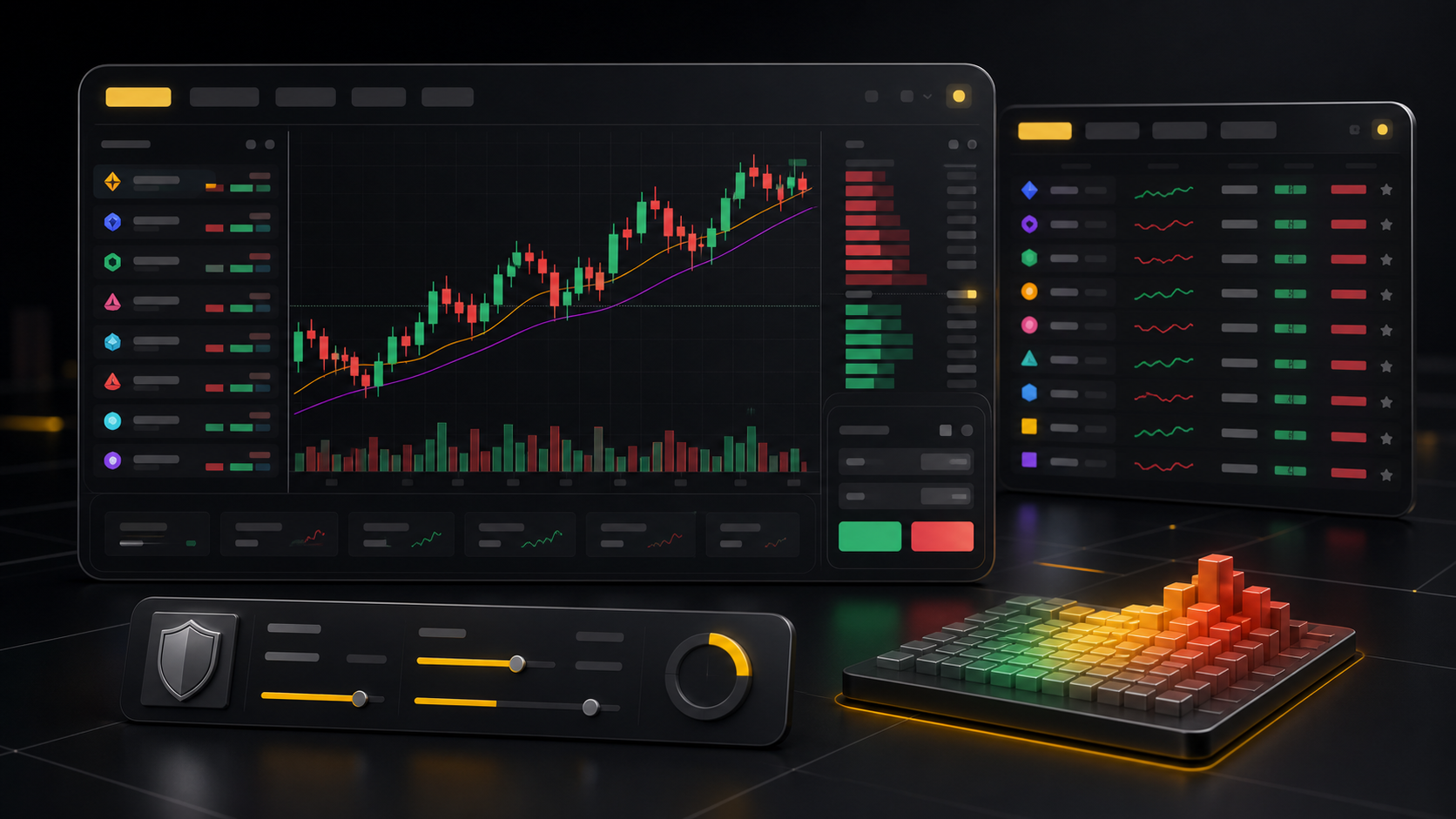
Altcoin Futures Steps
- Open a supported futures pair such as XRP futures or NEAR futures.
- Check funding, 24H change, volume, liquidity, and order-book depth.
- Choose margin mode, leverage, and order type based on your plan.
- Set TP/SL before opening a long or short position.
Altcoin Spot Steps
- Open a supported spot pair such as ETH spot.
- Check last price, 24H volume, spread, and sector momentum.
- Choose market or limit order based on your entry plan.
- Register on Tapbit, then review order details before confirming the trade.
FAQ
What is the Altcoin Season Index and where can I check it?
The Altcoin Season Index measures what percentage of the top 50 cryptocurrencies have outperformed Bitcoin over the past 90 days. A reading above 75 signals altcoin season; below 25 signals Bitcoin season. It is published by BlockchainCenter and several major exchange data platforms.
Is Bitcoin Season or Altcoin Season happening right now?
As of early June 2026, the index sits near 35 and Bitcoin dominance is near 60–61% — firmly Bitcoin Season territory. The broad market is not in altcoin season. Sector-specific rotations have occurred, but a broad altseason has not started.
Will there be an altcoin season in 2026?
Possibly, but no one can say with certainty or tell you when. The structural setup — BTC dominance rollover, index above 50, Bitcoin at highs, macro risk-on — has not yet confirmed. Watch the indicators rather than the predictions.
Why is BTC dominance still high in 2026?
Institutional Bitcoin ETF inflows have kept capital concentrated in BTC for an unusually long period. Over $80 billion in spot Bitcoin ETF assets under management acts as a gravitational force. Risk-off macro conditions in early 2026 also pushed capital toward BTC over altcoins.
Can altcoin season happen sector by sector instead of all at once?
Yes. The 2026 market has increasingly shown sector-specific rotations — AI, RWA, and restaking have moved on independent timelines. A sector-specific mini-season is different from a broad altseason, but it can still produce significant moves within focused narratives.
Does Bitcoin dominance predict altcoin season reliably?
It is a useful leading indicator but not a perfect predictor. Dominance can fall for different reasons — capital can exit crypto entirely rather than rotate into altcoins. Use dominance alongside the Altcoin Season Index, TOTAL2, and volume data for a more complete picture.


