
What Is Polygon (MATIC)?
Polygon is a blockchain scaling ecosystem built to make Ethereum-compatible transactions faster, cheaper, and easier to use. Ethereum is one of the most important smart contract networks, but it can become expensive when activity is high. Polygon was created to help users and developers access Ethereum-style applications without paying high mainnet fees for every transaction.
MATIC was the original native token of Polygon. For years, people used “Polygon” and “MATIC” almost interchangeably. When users searched for Polygon crypto, they were usually looking for MATIC coin, the token used across Polygon’s earlier network structure.
For users who want to follow major crypto assets, compare market trends, and explore trading tools, the Tapbit registration page can be used as a general market entry point. Users can also visit Tapbit rewards to explore platform campaigns and account benefits. This is a general platform reference and does not necessarily mean MATIC or POL is available in every Tapbit market or region.
What Is MATIC Coin Used For?
MATIC was historically used for transaction fees, staking, validator incentives, and network participation on Polygon. Users paid fees in MATIC when interacting with Polygon PoS, while validators and delegators used the token in staking-related activities.
The token became popular because Polygon solved a real pain point. It allowed users to swap tokens, mint NFTs, play blockchain games, and use Web3 apps at a much lower cost than Ethereum mainnet. That made MATIC one of the most recognized Ethereum scaling tokens during previous market cycles.
MATIC vs POL: What Changed?
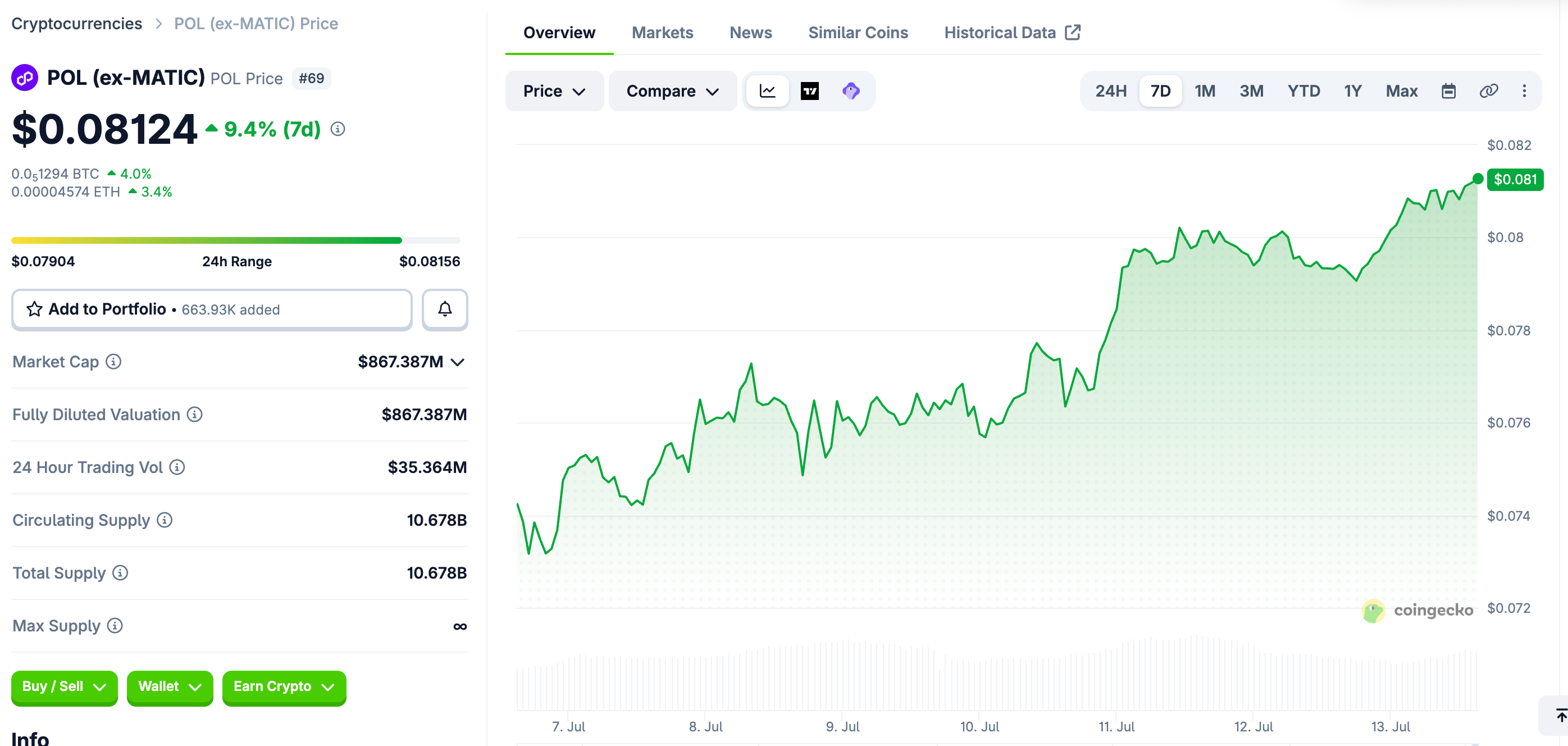
The biggest update beginners need to understand is the shift from MATIC to POL. POL is the upgraded token introduced through Polygon 2.0, a broader roadmap designed to support Polygon’s multi-chain and zero-knowledge scaling vision.
MATIC is the legacy token name many users still recognize. POL is the upgraded token intended to support the next stage of the Polygon ecosystem. Depending on the exchange, wallet, or network, users may see different support for MATIC or POL during the transition period.
Before depositing, withdrawing, or trading, users should always check the ticker, contract address, supported network, and platform instructions. Confusing MATIC and POL can lead to failed transfers or asset loss.
Why Polygon Became Popular
Polygon became popular because it made crypto easier to use. Ethereum mainnet fees can be too expensive for small transactions, especially during high-demand periods. Polygon offered a cheaper environment where users could interact with DeFi apps, NFT markets, games, and payment tools more comfortably.
Developers also benefited because Polygon is Ethereum-compatible. That means many teams could use familiar Ethereum tools while reaching users who wanted lower fees and faster execution. This helped Polygon build one of the larger ecosystems in Web3.
Is Polygon a Layer 2?
Polygon is often called an Ethereum scaling solution, but the ecosystem includes several technologies. Polygon PoS is not exactly the same as an Ethereum rollup, while Polygon’s zk-based products are closer to the Layer 2 scaling category.
For beginners, the simple explanation is enough: Polygon is built to scale Ethereum and reduce transaction costs. It helps applications process activity more efficiently while staying connected to the broader Ethereum ecosystem.
What Is Polygon Used For?
Polygon is used across DeFi, NFTs, gaming, payments, and consumer Web3 products. Users can trade tokens, provide liquidity, borrow and lend assets, buy NFTs, and interact with blockchain-based apps.
Polygon has also attracted brands and companies testing blockchain products because low fees make it easier to experiment at scale. If an application expects frequent user actions, Polygon can be more practical than using Ethereum mainnet directly.
Is MATIC Coin a Good Investment?
MATIC, or its upgraded POL version, may be interesting for investors who believe in Ethereum scaling and long-term Web3 adoption. The bull case is that Polygon continues to attract users, developers, liquidity, and enterprise-style adoption.
The investment case is not only about past popularity. Investors should look at current network activity, developer momentum, DeFi liquidity, token utility, and how successfully the POL upgrade strengthens the ecosystem.
If Polygon remains one of the leading Ethereum scaling networks, its token may continue to matter. If users and developers move to competing chains, the investment case becomes weaker.
Polygon MATIC Price Drivers
The main price drivers for MATIC or POL include network usage, DeFi activity, staking demand, exchange support, developer adoption, and the overall crypto market cycle.
Polygon may also benefit if Ethereum scaling remains a major market theme. However, token price can still fall during weak market conditions, even when the project continues building. Like most altcoins, MATIC and POL can be volatile.
Key Risks of MATIC and POL
The first risk is migration confusion. Users need to know whether they are holding MATIC or POL and whether their wallet or exchange supports the version they are using.
The second risk is competition. Polygon competes with Arbitrum, Optimism, Base, zkSync, Starknet, Solana, and other blockchain ecosystems. If Polygon loses user activity or developer attention, token demand may weaken.
The third risk is market volatility. Even strong crypto projects can experience large price declines during bear markets. Investors should avoid assuming that Polygon’s past success guarantees future returns.
How to Research Polygon Before Buying
Before buying MATIC or POL, users should review official Polygon updates, migration details, wallet support, exchange support, network activity, total value locked, and developer growth.
It is also useful to compare Polygon with other Ethereum scaling ecosystems. A good investment decision should be based on current adoption and future competitiveness, not just recognition of the MATIC name.
Final Verdict
Polygon is one of the most important Ethereum scaling ecosystems, and MATIC was its original native token. The network became popular because it made blockchain transactions cheaper and faster for users and developers.
Today, the key thing to understand is the move from MATIC to POL. Polygon may remain relevant if it continues to attract real usage, developers, liquidity, and applications. But investors should pay close attention to migration details, competition, and broader market risk.
FAQ
What is Polygon MATIC?
Polygon is an Ethereum scaling ecosystem, and MATIC was its original native token used for fees, staking, and network incentives.
Is MATIC the same as POL?
No. MATIC is the legacy Polygon token, while POL is the upgraded token introduced as part of Polygon 2.0.
What is MATIC coin used for?
MATIC has historically been used for transaction fees, staking, validator incentives, and ecosystem participation on Polygon.
Is MATIC coin a good investment?
MATIC or POL may interest investors who believe in Polygon’s long-term role in Ethereum scaling, but it carries risks from competition, migration confusion, and market volatility.
Should beginners buy MATIC?
Beginners should first understand the MATIC-to-POL transition, check exchange support, and compare Polygon with other scaling networks before buying.


