
The Sui blockchain experienced another major network disruption on May 28, temporarily halting block production and causing the price of SUI to decline sharply. The incident marks the second significant outage for the Layer-1 network within the past five months, raising fresh concerns about reliability and validator coordination.
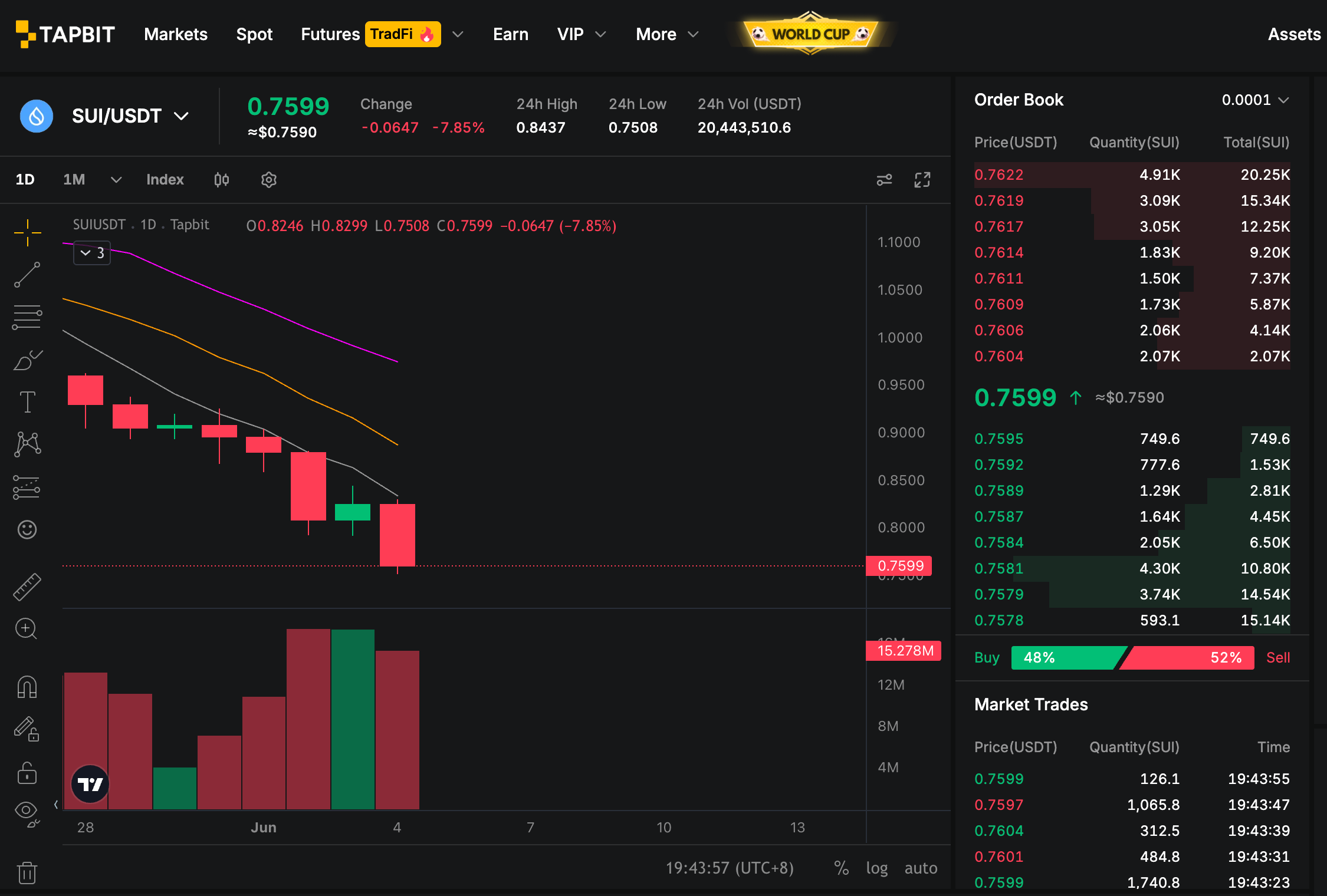
Following the disruption, SUI fell approximately 8% as users across the ecosystem were unable to receive transaction confirmations and decentralized applications experienced service interruptions.
| Event | Details |
|---|---|
| Network Status | Temporary blockchain stall |
| Date | May 28, 2026 |
| Token Impact | SUI fell roughly 8% |
| Main Issue | Block production halted |
| User Funds | No reported loss of assets |
| Response | Core team deployed a network fix |
Although the issue was resolved relatively quickly, the repeated outages have intensified discussions about network stability and long-term scalability.
What Happened to the Sui Network?
According to the Sui development team, the network experienced a temporary stall that prevented new blocks from being produced.
During the disruption, transaction processing paused across the ecosystem, affecting decentralized applications, wallet activity, and other blockchain services that rely on block finality.
Blockchain explorers showed that no new checkpoints were generated for an extended period, creating delays for users attempting to send assets or interact with smart contracts.
Engineers reportedly identified the source of the problem within a short period and immediately began deploying a fix.
The team reassured users that while transaction processing was temporarily interrupted, user funds remained secure throughout the incident.
Why Does a Network Stall Matter?
For blockchain networks, continuous block production is essential.
Every transaction, smart contract interaction, and decentralized application depends on validators reaching consensus and adding new blocks to the chain.
When block production stops, several issues emerge:
-
Transactions cannot be finalized
-
DeFi protocols may experience interruptions
-
Trading activity slows down
-
User confidence can weaken
-
Market volatility often increases
Even if assets remain safe, prolonged outages can damage trust and create uncertainty among users and investors.
SUI Price Reacts to the Outage
The market reacted quickly following news of the disruption.
SUI declined approximately 8% during the incident as traders reassessed short-term risks associated with the network.
| Market Reaction | Impact |
|---|---|
| Token Price | Sharp decline |
| Investor Sentiment | Increased caution |
| Trading Activity | Higher volatility |
| Network Confidence | Temporary pressure |
Crypto markets often react negatively to infrastructure disruptions because reliability remains one of the most important factors for blockchain adoption.
A Pattern of Network Disruptions
The latest outage is not the first time Sui has faced operational challenges.
Earlier this year, the network experienced a separate consensus-related issue that temporarily disrupted activity. Prior incidents have also raised questions about how the network handles validator coordination during unusual conditions.
| Date | Incident |
|---|---|
| November 2024 | First major network outage |
| January 2026 | Consensus-related disruption |
| May 2026 | Latest network stall |
While the network has generally recovered quickly from each event, repeated interruptions can influence how developers, investors, and institutions evaluate long-term infrastructure reliability.
Why Reliability Matters for Layer-1 Blockchains
Competition among Layer-1 blockchains continues to intensify.
Networks are no longer judged solely on transaction speed or theoretical throughput. Stability, uptime, security, and consistency have become equally important metrics.
Sui has attracted attention because of its object-centric architecture and parallel transaction processing model, which are designed to improve scalability and efficiency.
However, investors increasingly expect high-performance networks to maintain strong reliability even under unusual operating conditions.
| Evaluation Factor | Importance |
|---|---|
| Scalability | High |
| Transaction Speed | High |
| Security | Critical |
| Reliability | Critical |
| Ecosystem Growth | High |
Repeated outages may not directly threaten user funds, but they can affect confidence in a network's ability to support large-scale adoption.
Additional Challenges Facing the Ecosystem
The network stall arrives during a period when Sui is already facing broader market challenges.
Over the past year, the ecosystem has experienced periods of increased scrutiny following security incidents and market volatility. Combined with the latest outage, these factors have contributed to a more cautious sentiment among some investors.
Despite these challenges, the Sui ecosystem continues to maintain active development, growing DeFi activity, and ongoing infrastructure upgrades.
The coming months will likely determine whether recent disruptions are viewed as temporary setbacks or signs of deeper technical challenges.
Where to Follow Blockchain Market Developments
Network incidents such as the recent Sui outage highlight the importance of staying informed about blockchain infrastructure, ecosystem developments, and market sentiment.
Investors who regularly monitor blockchain news, token performance, and broader crypto trends are often better positioned to understand how technical events may impact digital asset markets.
Users interested in tracking cryptocurrency developments and exploring market opportunities can get started through the official Tapbit registration page.
Conclusion
Sui's latest network stall has once again placed blockchain reliability in the spotlight.
While the development team was able to identify and address the issue relatively quickly, the incident represents the second major disruption within a five-month period. The resulting 8% decline in SUI reflects investor concerns about operational stability and validator coordination.
Moving forward, market participants will be watching closely for the project's official post-mortem report and any measures designed to reduce the likelihood of future outages.
For Sui, continued ecosystem growth may ultimately depend not only on scalability and innovation but also on demonstrating consistent reliability under real-world conditions.
FAQ
Why did SUI fall after the network stall?
SUI declined because the blockchain temporarily stopped producing blocks, creating uncertainty and increasing investor caution.
Were user funds affected during the outage?
According to the development team, user funds remained secure despite the interruption in transaction processing.
How long did the Sui network stall last?
Block production was interrupted for nearly an hour before engineers began deploying a solution.
Has Sui experienced outages before?
Yes. The network has experienced multiple disruptions since launch, including incidents in late 2024 and early 2026.
What causes blockchain network stalls?
Network stalls can occur due to validator coordination issues, consensus problems, software bugs, or unexpected technical conditions.
Is Sui still growing despite these challenges?
Yes. The ecosystem continues to support active development, decentralized applications, and ongoing infrastructure improvements despite recent disruptions.


