
SpaceX going public would be a huge story even if it were only a rocket company.
But that is not the story anymore.
The market is no longer looking at SpaceX as just a launch business with reusable rockets. It is looking at a company that now sits across three very different worlds: space transportation, satellite internet, and artificial intelligence.
That makes the IPO exciting. It also makes it difficult to price.
A rocket company has one valuation logic. A global internet network has another. An AI infrastructure business has a third. SpaceX is asking the market to understand all of them at once.
That is why this IPO could become one of the most important listings of the cycle.
Starlink Is the Part Investors Can Actually Underwrite
SpaceX may be famous for rockets, but Starlink is probably the cleaner business story.
Launches show the company’s engineering power. They prove SpaceX can do things that most aerospace companies cannot. But launch revenue is still tied to contracts, missions, schedules, and execution risk.
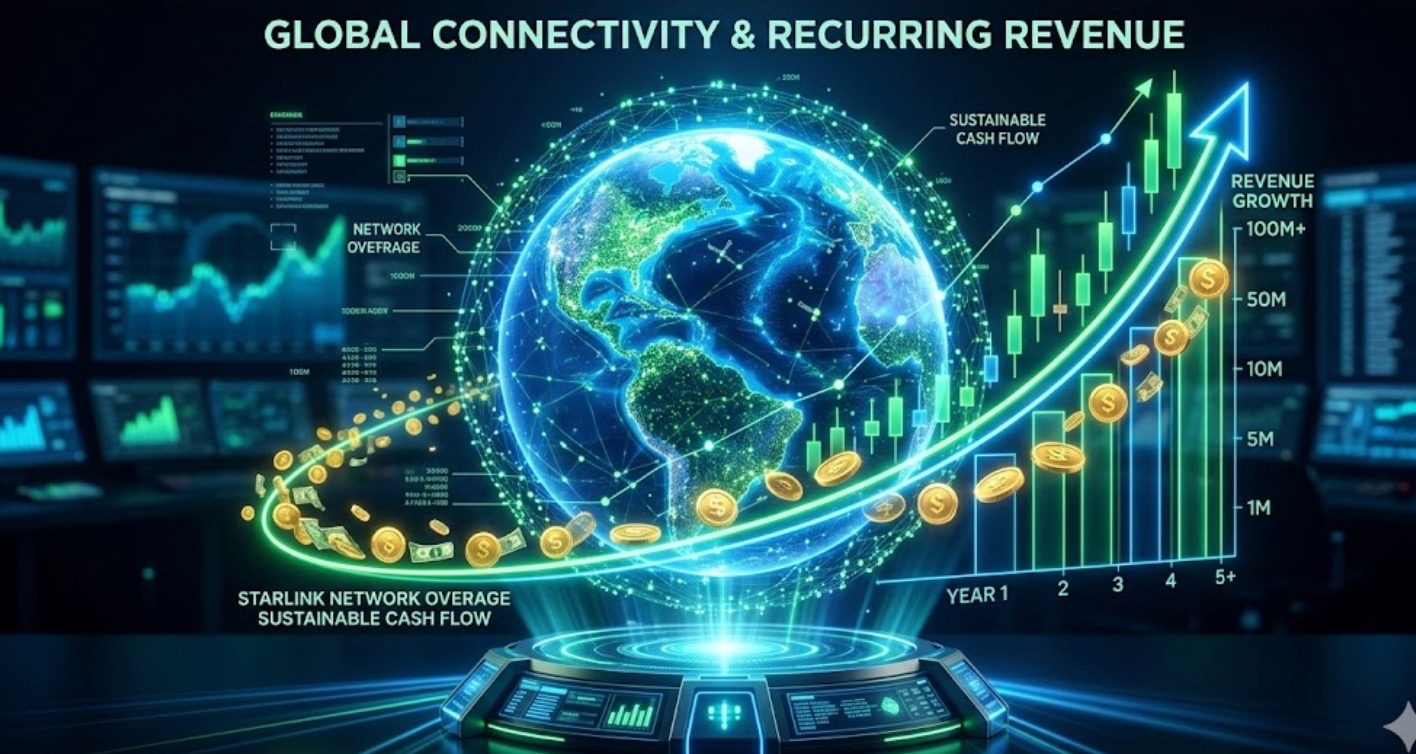
Starlink looks different. It has subscribers. It has recurring revenue. It has a global addressable market. It gives SpaceX something closer to a platform business, not just a project business. That matters because public investors usually like revenue they can model.
If Starlink keeps growing users and improving margins, it gives SpaceX a financial base that is easier to defend. It also changes how investors think about the company. SpaceX becomes not only the company that sends rockets into orbit, but the company that sells internet access from orbit.
That is a much bigger business conversation.
xAI Makes the Story Bigger, and Messier
Then there is xAI.
AI gives SpaceX the kind of upside story investors love right now. It makes the company feel less like aerospace and more like a future infrastructure platform. Satellites, connectivity, data, models, and compute all start to sound like parts of one larger system.
That is the dream.
But AI is not cheap. It eats chips, power, data centers, engineers, and capital. The companies winning in AI are spending enormous amounts of money just to stay in the race. So xAI makes SpaceX more exciting, but also more complicated.
Investors will not only ask how big the AI opportunity is. They will ask how much it costs to chase it. They will ask whether revenue can grow fast enough to justify the spending. They will ask whether the chip supply is reliable. They will ask whether the AI business helps SpaceX, or simply makes the financial picture harder to read.
That is the real tension. Starlink helps investors understand the cash flow. xAI stretches the valuation.
The Valuation Will Be the Fight

The reported valuation range around SpaceX is enormous. If the company prices anywhere near the top of market expectations, investors will be asked to pay for a lot of future success upfront.
That does not mean the valuation is impossible.
SpaceX is not a normal company. It has a launch moat, a satellite network, a consumer internet business, a government and defense angle, an AI angle, and Elon Musk’s ability to keep investors focused on very large futures.
But the higher the valuation, the less room there is for disappointment.
If Starlink growth slows, the story weakens. If AI spending keeps rising without a clear payoff, the story becomes harder to defend. If Starship timelines slip or regulatory friction increases, the long-term space economy argument gets pushed further out.
That is what public markets will test. Private markets can be patient with grand visions. Public markets can be enthusiastic too, but they are less forgiving when the numbers miss.
This IPO Matters Beyond SpaceX
For crypto traders, SpaceX is not directly a crypto story.
But it is absolutely a risk-appetite story.
If SpaceX lists at a high valuation and trades well, it could strengthen the market’s willingness to pay up for long-duration technology themes. That would matter for AI infrastructure, DePIN, decentralized compute, satellite-related networks, and other crypto narratives built around future infrastructure.
If the IPO struggles, the message could be different. Investors may become more cautious toward expensive growth stories, especially those tied to AI and infrastructure.
That is why the listing will be watched far outside the equity market.
SpaceX sits in the same broad imagination zone as many crypto infrastructure projects: physical networks, compute, connectivity, automation, and global-scale systems. It does not validate those projects directly, but it can influence how investors feel about the category.
When one of the world’s most ambitious infrastructure companies comes public, risk markets pay attention.
What the Market Needs to See
The first thing is Starlink.
Can it keep growing revenue? Can it improve margins? Can it scale without requiring endless capital? This is the part of SpaceX that can make the IPO feel financially grounded.
The second is xAI.
Investors will want a clearer view of how much cash the AI business consumes and what kind of revenue it can generate. AI can support a premium valuation, but only if the market believes the spending has a path to returns.
The third is launch execution.
SpaceX still needs to keep doing what made it famous: reliable launches, lower costs, progress on Starship, and continued leadership in space transportation.
The fourth is IPO pricing.
A great company can still be a difficult stock if the IPO price leaves no upside for new investors. SpaceX may be exceptional, but valuation still matters.
Bottom Line
SpaceX’s IPO is not just about rockets reaching public markets.
It is about whether investors are ready to value SpaceX as a platform built on space access, global connectivity, and AI infrastructure.
Starlink is the business that pays the bills.
xAI is the business that sells the dream.
The rocket business is the foundation that made both possible.
That combination is powerful. It is also hard to price.
If SpaceX can show that Starlink keeps generating real growth while xAI becomes more than a capital-intensive promise, the market may accept a huge premium. If not, investors may start asking whether the IPO valued too much of the future too early.
SpaceX may be one of the defining listings of this cycle. The real question is whether public markets are buying the company’s current infrastructure business, or paying too much for the future it wants to build.
Traders can follow more market updates on Tapbit, log in to explore market tools, or register to stay connected with global market opportunities.
Frequently Asked Questions
Why is the SpaceX IPO attracting so much attention?
SpaceX is not being viewed as a normal aerospace IPO. Investors are looking at it as a company that combines launch services, Starlink satellite internet, and xAI-driven artificial intelligence infrastructure. That mix makes the valuation debate much larger than a traditional space company listing.
Is SpaceX only a rocket company?
No. Rockets are still the foundation of SpaceX’s business, but the company’s story has expanded. Starlink gives it a recurring revenue engine through satellite internet, while xAI adds a new AI infrastructure and model-development angle.
Why is Starlink so important to the IPO story?
Starlink is important because it provides a clearer revenue and cash-flow story than launch services alone. It has subscribers, recurring payments, global coverage potential, and the possibility of margin improvement as the network scales.


