
D-Wave Quantum Tokenized Stock (Ondo), commonly shown as QBTSON, has drawn attention because it is linked to D-Wave Quantum Inc., a U.S.-listed company focused on quantum computing.
The key question for traders is simple: can QBTSON reach $30 in 2026?
Recent market data shows that D-Wave’s underlying stock, QBTS, remains below that level but close enough for the target to stay in focus. However, QBTSON is not a typical crypto token, and its price outlook depends heavily on D-Wave’s stock performance, the company’s business progress, market appetite for quantum computing, and liquidity conditions in tokenized stock trading.
For users following tokenized assets and broader market opportunities, Tapbit provides access to digital asset markets, trading tools, and educational resources designed to help users better understand fast-moving market trends.
QBTSON Price Context: Why the $30 Level Matters
D-Wave Quantum Tokenized Stock (Ondo), commonly shown as QBTSON, has become one of the more closely watched tokenized stock assets as interest in quantum computing returns to the market.
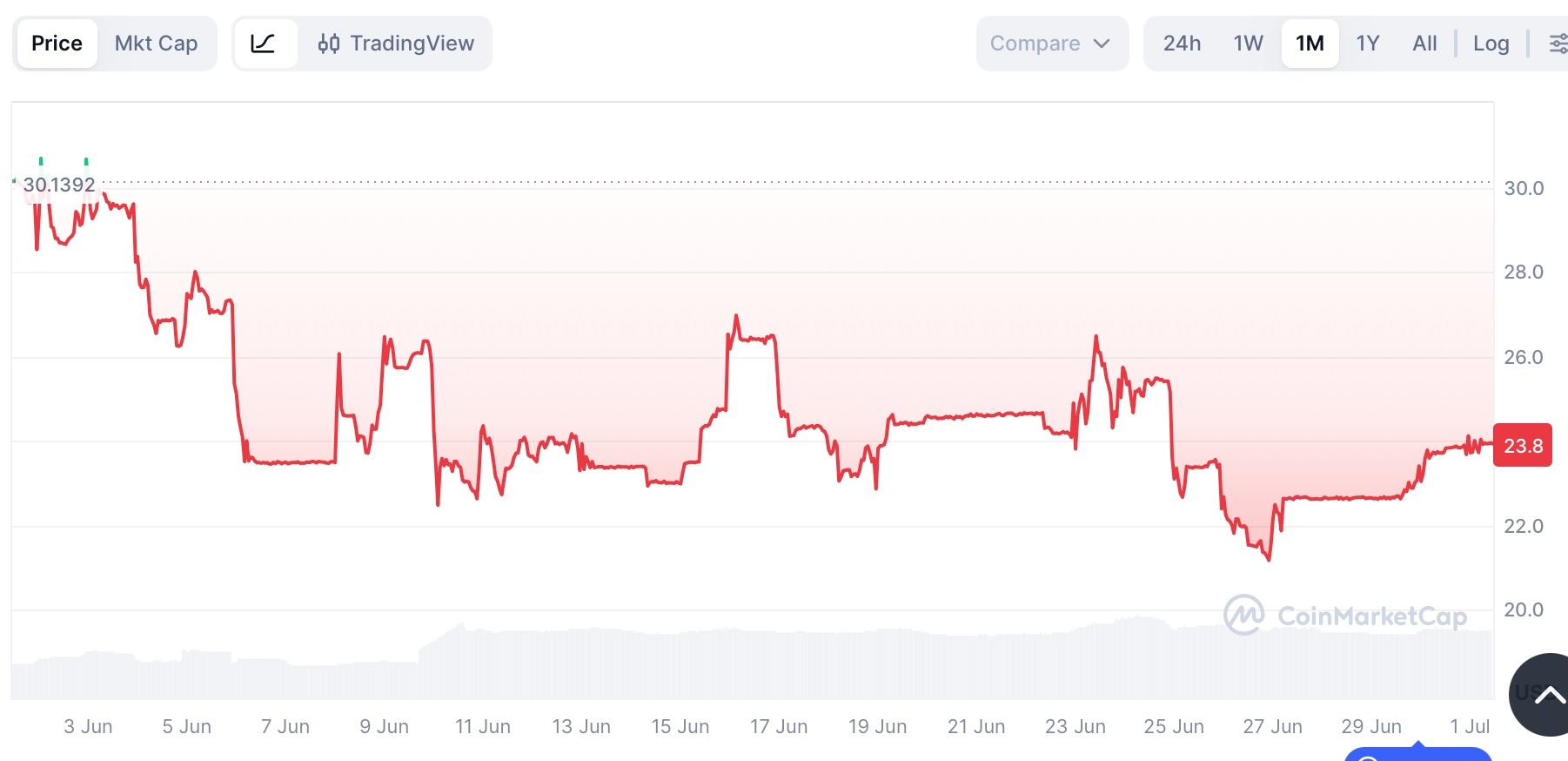
As of the latest available market data, D-Wave Quantum Inc. stock, QBTS, traded around the mid-$20 range, while QBTSON showed a similar price area across market data platforms. That means a move toward $30 would require meaningful but not unrealistic upside from recent levels.
That target is not extreme by growth-stock standards, especially in a sector as speculative as quantum computing. But it is not automatic either. The next move will likely depend less on crypto market hype and more on the underlying performance of D-Wave as a listed company.
What Is QBTSON?
QBTSON is a tokenized stock product linked to D-Wave Quantum Inc., a U.S.-listed quantum computing company trading under the ticker QBTS. In simple terms, it gives users price exposure to the underlying stock through a tokenized format.
This distinction matters. QBTSON should not be treated like a meme coin or a utility token. Its price is mainly influenced by QBTS market movement, liquidity conditions, and how closely the tokenized product tracks the underlying equity.
For users who already have a Tapbit account, they can log in to Tapbit to explore available market tools and follow digital asset trends. New users can also register on Tapbit to get started.
D-Wave’s Latest Fundamentals: Strong Bookings, Small Revenue Base
The most important reason traders are watching QBTSON is D-Wave’s changing business profile.
In its first-quarter 2026 results, D-Wave reported a sharp increase in bookings, suggesting that commercial interest in its quantum computing solutions is growing. At the same time, its current revenue base remains small, and the company continues to operate at a loss.
This creates a mixed setup for investors. The bullish case is that bookings and customer activity may translate into stronger future revenue. The cautious view is that the market still needs to see clear execution before assigning too much weight to long-term growth expectations.
In other words, D-Wave’s story is promising, but still early.
The Quantum Roadmap Is Becoming a Bigger Catalyst

Another reason QBTS and QBTSON have attracted attention is D-Wave’s shift toward a broader quantum computing strategy.
D-Wave has long been known for quantum annealing, a technology often used for optimization problems. More recently, the company has also emphasized its gate-model quantum computing roadmap, which could broaden its future market opportunity if development milestones are achieved.
That matters because gate-model quantum computing is often seen as a more general-purpose path for future quantum applications. By positioning itself across both annealing and gate-model approaches, D-Wave is trying to expand its role in the quantum computing sector.
This roadmap has also helped shape market sentiment. As quantum computing remains connected to broader technology themes such as AI, advanced computing, national research funding, and enterprise optimization, investor interest in companies like D-Wave can rise quickly when momentum improves.
Can QBTSON Reach $30 in 2026?
A move to $30 is possible, but it would likely require several conditions to line up.
First, QBTS needs to hold momentum above the low-$20 range and rebuild confidence near the $25–$27 area. Since QBTSON tracks exposure to D-Wave stock, the tokenized product is unlikely to reach $30 sustainably unless the underlying equity moves in the same direction.
Second, D-Wave needs to show that its bookings are not just headline numbers. The market will want to see future quarters confirm delivery, installation, revenue recognition, and stronger customer adoption.
Third, the broader market needs to remain friendly toward high-growth technology stocks. Quantum computing is still an early-stage industry. When investors are willing to price future innovation aggressively, names like QBTS can move fast. When risk appetite fades, the same stocks can sell off sharply.
Fourth, QBTSON needs enough liquidity. Tokenized stocks may trade differently from the underlying equity, especially outside regular U.S. market hours. Wider spreads, lower depth, and tracking differences can all affect execution.
Main Risks to Watch
The biggest risk is valuation. D-Wave is an exciting company in an exciting sector, but its revenue base remains small compared with its market value. If future results do not support the growth narrative, QBTS and QBTSON could face sharp corrections.
The second risk is commercialization timing. Quantum computing has strong long-term potential, but the industry is still developing. Technical roadmaps can take years to translate into scalable revenue.
The third risk is tokenized stock structure. QBTSON gives price exposure, but it is not the same as directly holding listed shares. Traders should understand platform rules, liquidity, market hours, custody structure, and possible tracking differences before trading.
The fourth risk is sector volatility. Quantum computing stocks often move together. Good news from one company can lift the whole group, but negative sentiment can also drag multiple names down at once.
Final Thoughts
QBTSON reaching $30 in 2026 is a realistic scenario, but not a guaranteed one.
The bullish case is supported by D-Wave’s stronger bookings, commercial customer activity, and broader quantum computing roadmap. The cautious view is that revenue remains small, losses continue, and the market is already pricing in a lot of future success.
For traders, the cleaner way to look at QBTSON is this: it is a tokenized route into the D-Wave quantum computing story. If QBTS continues to gain momentum and D-Wave proves that demand is turning into revenue, $30 could come back into focus. If execution disappoints or risk appetite cools, the token could remain volatile below that level.
To follow more digital asset market updates, visit Tapbit. Existing users can log in, while new users can create a Tapbit account to explore available trading features.
Frequently Asked Questions (FAQ)
What is QBTSON?
QBTSON refers to D-Wave Quantum Tokenized Stock (Ondo), a tokenized stock product linked to D-Wave Quantum Inc., a U.S.-listed quantum computing company. It is designed to provide price exposure to the underlying QBTS stock through a tokenized format.
Is QBTSON a cryptocurrency?
QBTSON is not a typical cryptocurrency like Bitcoin, Ethereum, or a meme coin. It is a tokenized stock product, meaning its price is mainly influenced by the underlying D-Wave stock, market liquidity, and how closely the tokenized asset tracks the equity market.
Can QBTSON reach $30 in 2026?
QBTSON could reach $30 in 2026 if D-Wave’s stock gains enough momentum, the company shows stronger business execution, and market sentiment toward quantum computing remains positive. However, the target is not guaranteed and depends on both company-specific and broader market conditions.


