

PONS price became a high-interest search after the token rose more than 21% in the user-provided market snapshot. Recent coverage linked the move to a Binance Alpha debut and cited a new high near $0.52, while other reports described cumulative launchpad volume of about $4.54 billion. Those figures need a timestamp and source label because a fast-moving token can show very different prices across venues.
The right editorial approach is a verification and risk check, not a “buy now” forecast. PONS is associated with the Robinhood Chain launchpad narrative, but attention, cumulative volume and token value are separate variables. A token can trend because of a listing or a small liquidity pool, then retrace sharply when new buyers stop arriving.
Why Is PONS Price Up More Than 21%?
Exchange visibility is the clearest short-term catalyst. A Binance Alpha debut can place a small token in front of a much larger audience and create a rapid increase in searches, turnover and speculative positioning. Robinhood Chain activity adds a second narrative because traders may interpret PONS as a way to express the growth of the new ecosystem.
Neither factor proves fundamental value. The price move may also reflect thin order books, market-maker activity, leverage or traders rotating from other meme assets. Before stating a precise percentage, check the venue, quote currency, high-low range, circulating supply and whether the reported figure is spot price or an index.
What Is PONS and How Does the Launchpad Fit Robinhood Chain?
The article should first verify the official PONS project identity, contract address, chain and stated utility. Search results can mix similarly named assets, translated pages and unofficial social accounts. A verified project page and a block explorer record are more reliable than a logo or a ticker alone.
If PONS is used as a launchpad or ecosystem token, explain what the token actually does. Does it provide access, governance, fee discounts or only a market narrative? A launchpad’s cumulative volume can be impressive while the token itself has no direct claim on all fees generated by the platform.
PONS Price Data: Liquidity, Volume and Market-Cap Checks
Market capitalization is calculated from price multiplied by a supply figure, but a thinly traded token can show a large headline value without supporting large exits. Compare liquidity depth near the current price, the spread, top-holder concentration and the share of volume produced by the largest wallets.
Also separate daily volume from cumulative volume. A $4.54 billion cumulative figure describes activity across a period; it does not mean that $4.54 billion of capital remains in the token or that the project earned that amount as revenue. The distinction should appear clearly in any table or chart.
Price prediction language should be equally precise. A scenario can describe what might happen if liquidity expands or contracts, but it cannot turn a volatile chart into a reliable target. Avoid extrapolating a 21% daily move into a monthly return. Instead, explain the conditions that would support continuation and the signals—such as falling depth or concentrated selling—that would warn of a reversal.
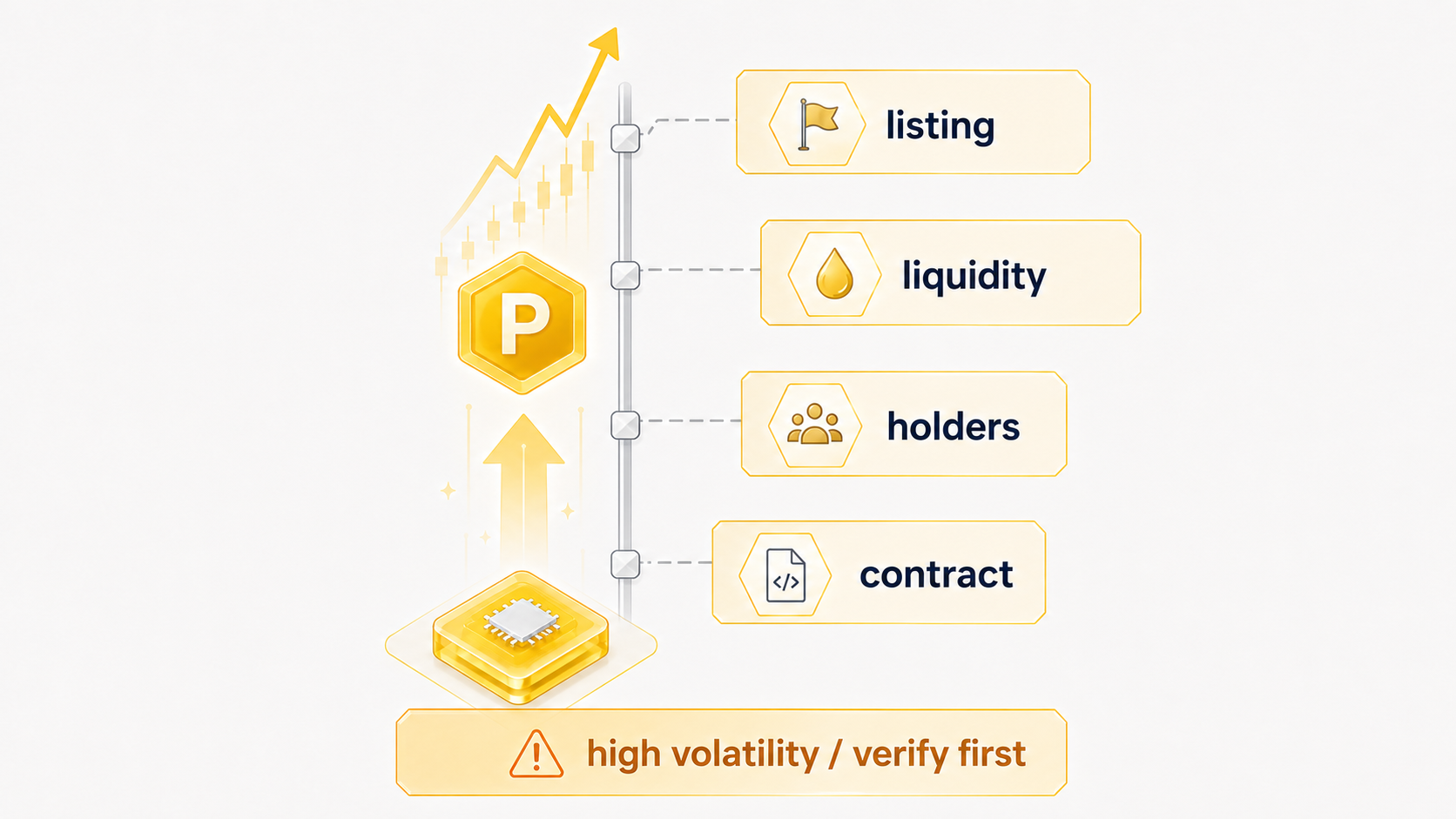
PONS Risk Check Before Any Price Prediction
- Confirm the contract address and chain against an official source.
- Review mint, pause, blacklist and upgrade permissions.
- Check holder concentration, unlocks and liquidity-lock information.
- Compare reported volume with on-chain transactions and depth.
- Verify whether the asset is listed, restricted or unavailable on each exchange.
PONS Price Scenarios
Bull scenario: Additional listings bring organic users, liquidity deepens and launchpad usage remains high. Price can stay elevated, but the thesis still depends on verified utility and transparent supply.
Base scenario: The listing-driven spike retraces, then price trades in a wide range as volume normalizes. This is common when a token receives sudden attention before recurring demand is established.
Bear scenario: Liquidity exits, contract concerns appear or speculative volume fades. A thin market can produce large downside gaps and make exits difficult.
Similar Tapbit Ecosystem Proxies (Not PONS Exposure)
Tapbit’s current PONS page states that the asset is not available, so this article should not include a PONS trading link or registration call-to-action. Readers researching related ecosystems may review ARB-USDT perpetual futures as an Arbitrum-related proxy or UNI-USDT perpetual futures as a DeFi-liquidity proxy. Neither contract tracks PONS price, ownership or launchpad fees.
Those contracts are separate leveraged derivatives with their own funding, margin and liquidation risks. A rise in PONS does not guarantee a move in ARB or UNI, and a decline in either proxy does not prove anything about PONS. Keep the instruments clearly separated in the article.
Bottom Line
PONS price momentum reflects exchange visibility and Robinhood Chain speculation, but the most important work is verification. Confirm the contract, liquidity, supply and actual utility before discussing any forecast. Tapbit currently reports that PONS is unavailable, so related ARB-USDT and UNI-USDT contracts may be mentioned only as clearly labeled ecosystem proxies.
FAQ
What is PONS?
PONS is a token associated in recent coverage with the Robinhood Chain launchpad narrative. Its exact utility, contract and supply should be confirmed from official sources.
Why is PONS price rising?
The reported move was associated with a Binance Alpha debut, increased visibility and speculative Robinhood Chain activity.
Is PONS available on Tapbit?
Tapbit’s current PONS page states that the asset is not available. Do not imply that Tapbit supports PONS trading.
Are ARB-USDT and UNI-USDT the same as PONS?
No. They are separate ecosystem-related futures proxies and do not provide PONS price exposure or ownership.


