
Meta is in a strange but familiar spot. The business looks strong. The stock is back near $600. Advertising is growing, Instagram and Facebook are still printing money, and AI is making Meta’s recommendation and ad systems more effective.
On paper, that sounds like a clean bullish story.
But META is not trading on the ad business alone anymore. The market is also trying to decide how much money Meta can pour into AI infrastructure, data centers, Reality Labs, and new products before investors start asking whether the spending is getting too aggressive.
That is the real tension in the stock right now.
Meta has the cash flow to spend. The question is whether the payoff will be visible enough to keep Wall Street comfortable.
The Core Business Is Not the Problem

Meta’s advertising machine is still doing what investors want it to do.
The company continues to benefit from massive user attention across Facebook, Instagram, Reels, WhatsApp, and Messenger. More importantly, it is getting better at turning that attention into revenue. AI-powered recommendations have helped improve engagement, while better ad targeting and measurement keep advertisers coming back.
That is why Meta still deserves to trade like one of the strongest digital advertising companies in the world.
This part of the story is not especially complicated. If people keep using Meta’s apps and advertisers keep seeing returns, the company can keep generating huge cash flow. That cash flow gives Meta room to buy back stock, invest in AI, and fund long-term bets that smaller competitors could not afford.
The problem is not whether Meta can make money.
The problem is how much it plans to spend.
AI Is Helping Meta — And Raising the Bar
Meta’s AI story is different from the usual “AI chatbot” headline. A lot of the value is happening quietly inside the products people already use. AI decides what users see in their feeds. It improves Reels recommendations. It helps advertisers find the right audience. It can make WhatsApp and Messenger more useful for businesses. These are practical improvements, not just flashy demos.
That is why investors are willing to give Meta credit for AI.
But there is a cost. AI infrastructure is expensive. Data centers, chips, energy, engineers, and long-term research all require serious capital. Meta has already raised its capex expectations, and the market is paying attention.
For now, investors seem willing to accept the spending because the ad business is strong. But patience is not unlimited. If AI investment keeps rising while the revenue payoff looks vague, the stock could become more sensitive to every expense line.
That is where META becomes a harder trade. The company may be doing the right thing strategically, but the stock still has to live quarter by quarter.
Reality Labs Still Hangs Over the Story
Meta has been here before.
Reality Labs was supposed to be the future. It may still matter one day, but for investors it has mostly been a reminder that long-term vision can be expensive. The losses are still large, and every quarter the market has to decide how much patience it wants to give the company.
AI spending is easier for investors to understand than the metaverse was. It connects more directly to ads, engagement, and platform efficiency. That makes the case stronger.
Still, the lesson from Reality Labs has not disappeared. Meta can be brilliant at building platforms, but it can also spend heavily for years before investors see a clear return.
That is why traders should watch management’s tone closely. If Meta can explain how AI spending supports revenue and margins, the stock can hold its premium. If the message becomes too abstract, the market may start treating capex as a risk instead of an advantage.
Around $600, Expectations Matter
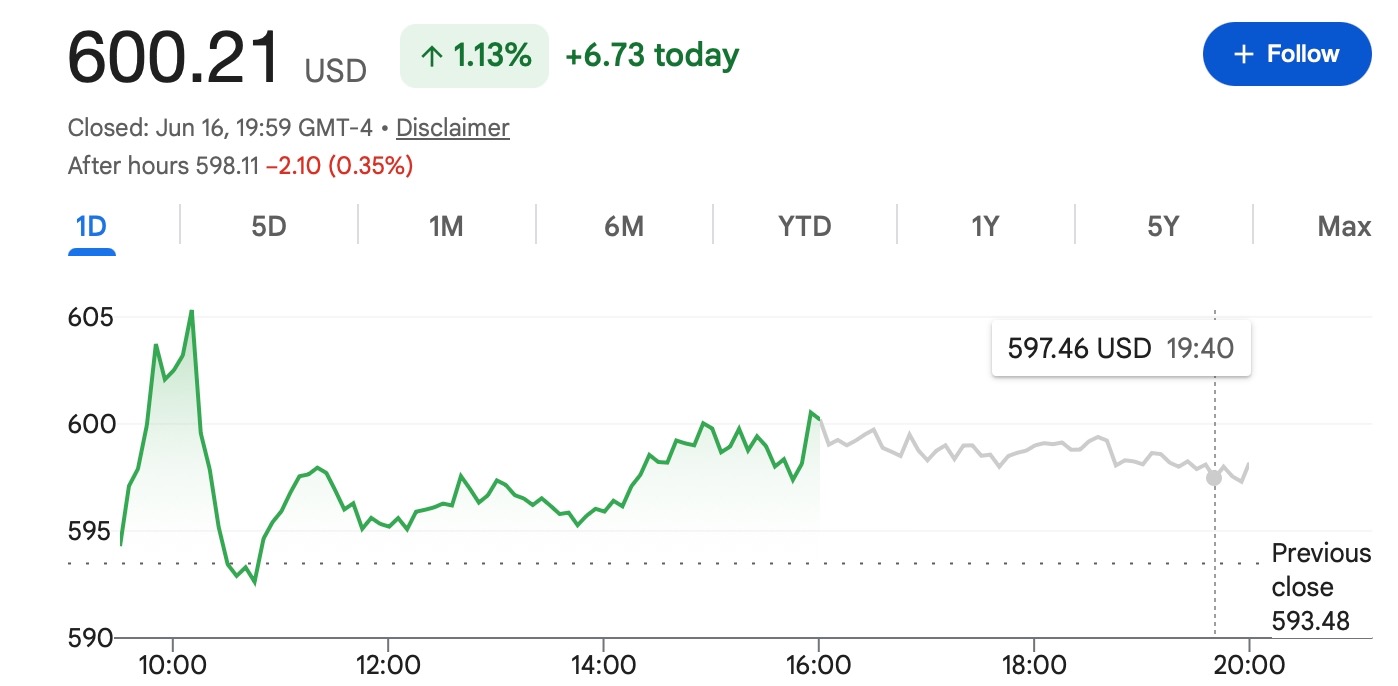
META near $600 is not a cheap, forgotten stock. It is a stock that already has a lot of confidence built in.
That does not mean it cannot go higher. It can. Strong ad growth, better AI monetization, stable margins, and a healthy Nasdaq backdrop could all support another move.
But the setup is not one where traders can ignore price. When a stock already reflects optimism, the next leg higher usually needs proof. Not promises. Proof.
For short-term traders, the $580 to $600 area is worth watching. If buyers defend that zone, it suggests the market still trusts the story. If META loses it, the conversation may shift quickly toward whether a deeper pullback is needed before the stock becomes attractive again.
The cleaner entry may not be the most exciting one. Sometimes waiting for support is better than chasing a good company at a crowded price.
Regulation Is Still in the Background
There is also the regulatory angle, which never fully goes away with Meta.
Privacy, competition, content rules, platform control, and now AI distribution are all part of the risk picture. WhatsApp is a good example. It is no longer just a messaging app. It could become a major gateway for AI assistants, business messaging, payments, and customer service.
That makes regulators more interested in how Meta uses its platform power.
This does not mean regulation will derail the company. Meta has dealt with regulatory pressure for years. But it can affect sentiment, especially when the stock is already priced for strong execution.
For traders, regulation is rarely the main reason to buy or sell META on a normal day. But it can become the headline that hits the stock when positioning is too comfortable.
Bottom Line
Meta is still one of the strongest advertising businesses in the market. Its platforms have scale, its AI tools are improving monetization, and its cash flow gives it room to invest aggressively.
But the stock is no longer just a bet on digital ads.
At this stage, META is a test of whether Meta can turn massive AI spending into visible returns without letting costs damage the margin story. Reality Labs losses and regulatory pressure add extra weight to that question.
Near $600, the market is not ignoring Meta’s strengths. It is already pricing many of them in.
For traders, that means discipline matters. Wait for cleaner levels. Watch spending. Watch margins. Watch whether AI is actually improving the business, not just the narrative.
Meta can still be a great company. That does not mean every META trade is a good one.
Explore the latest markets on Tapbit, log in to trade, or create an account to get started.
Frequently Asked Questions (FAQ)
Why is META trading near $600 important?
The $600 area is important because it shows the market is already pricing in a lot of confidence around Meta’s advertising business, AI strategy, and margin strength. It is not a distressed level, but it is also not a risk-free entry. Traders should watch whether META can hold around this zone or starts to lose momentum.
Is Meta still mainly an advertising company?
Yes. Advertising is still the core of Meta’s business. Facebook, Instagram, Reels, WhatsApp, and Messenger give the company massive user attention, and Meta turns that attention into revenue through its ad system. AI is becoming more important, but the ad engine remains the foundation.
How is AI helping Meta’s business?
AI helps Meta improve feed recommendations, Reels discovery, ad targeting, measurement, and business tools across its platforms. For Meta, AI is not only about chatbots. A lot of the value comes from making existing products more engaging and more profitable.


