
United States Uranium Reserve, or USUR, uses branding that can sound like an official American energy asset. The evidence points somewhere else. The project’s own disclaimer describes USUR as a community token created for entertainment and cultural commentary and says it has no connection to the U.S. government, the Department of Energy, or any public official. It also says references to public policy are narrative rather than proof of physical-commodity backing.
That does not automatically prove USUR is a scam. It does mean buyers should not treat the token as government-issued, uranium-backed, or equivalent to an investment in a regulated uranium company or fund. If you prefer established markets with clearer execution tools, you can create a Tapbit account and compare supported crypto assets before taking exposure to an unverified small-cap token.
What Can Be Verified About USUR?
The USUR project website presents the token as a Solana SPL asset with a claimed fixed supply of one billion tokens, a 0.10% transaction tax, no team allocation, burned liquidity and revoked mint authority. These are project claims, not substitutes for an independent smart-contract audit or an on-chain review tied to a confirmed contract address.
The most important verifiable statement appears in the site’s disclaimer: USUR is not endorsed by the United States government and does not represent ownership of uranium reserves. In practical terms, a holder appears to receive a transferable crypto token—not a legal claim on uranium, government inventory, mining revenue or commodity redemption.
The Branding and Disclaimer Do Not Match
USUR’s name, reserve language and uranium-themed imagery create an institutional impression. Yet the legal disclaimer frames it as an entertainment and cultural-commentary token. That gap matters because buyers may price the token as though it has sovereign support even when the issuer explicitly denies such a relationship.
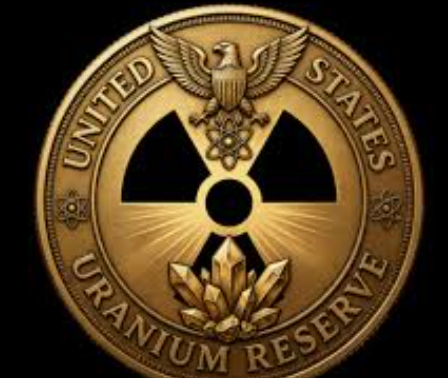
A logo can communicate a narrative, but it cannot establish ownership rights or official sponsorship. Investors should look for a named legal entity, audited reserve records, custody arrangements, redemption terms and regulator-facing disclosures before accepting any commodity-backing claim.
Why the USUR Contract Is the First Problem
Contract verification is unusually important here. Public market pages show several Solana tokens using the USUR name or ticker, with different contract addresses, holder counts, prices and liquidity pools. Meanwhile, the project website has displayed “contract address to be announced” language rather than one clear, permanently published address.
This prevents a confident answer to basic questions such as which pool is official and which holder distribution belongs to the intended asset. A ticker is not a unique identifier. Anyone considering USUR should verify the exact mint address through several official channels and compare it character by character before connecting a wallet or swapping.
Liquidity and Holder Data Need Context
| Signal | What Is Visible | Why It Matters |
|---|---|---|
| Liquidity | Different USUR pools show sharply different liquidity levels | Small pools can produce severe slippage and failed exits |
| Holder concentration | One public snapshot for a USUR contract showed a top wallet near 21% | A large holder can create sudden sell pressure |
| Market cap | Some pages display sizable headline valuations | Valuation does not equal cash available for sellers |
| Contract identity | Multiple assets share the same ticker | Statistics may describe the wrong token |
These figures are point-in-time observations for specific contracts, not proof about an official USUR token. Ownership labels are also incomplete: a large wallet could belong to a deployer, exchange, pool or unrelated holder. Without a confirmed contract and transparent allocation data, concentration cannot be assessed reliably.
Liquidity deserves equal attention. A token can show a multimillion-dollar fully diluted valuation while holding only a small amount of tradable liquidity. Under those conditions, the displayed price reflects the latest marginal trade. A modest sell order may move the market sharply, and a large holder may be unable to exit near the quoted price.
Main Downside Risks
The biggest risk is identity confusion: buying the wrong USUR contract may leave a trader holding an unrelated or malicious token. The second is narrative risk. The uranium-reserve theme may attract attention, but the official disclaimer removes the strongest implied value proposition—government or physical-asset backing.
Other weaknesses include uncertain holder concentration, limited liquidity, unverified claims about burned liquidity or revoked authorities, possible transaction taxes and dependence on social momentum. Even if technical controls are genuine, they do not guarantee demand, fair distribution or a liquid exit. “Liquidity burned” is not the same as “price protected,” and no contract setting can prevent holders from selling.
Conclusion
USUR should be treated as a high-risk Solana community token, not as a U.S. government security or a tokenized uranium reserve. Calling it a scam requires evidence of deliberate fraud that is not established by the branding alone. However, the contradiction between sovereign-style marketing and the project’s disclaimer, combined with multiple same-ticker contracts and uncertain liquidity, creates substantial verification and downside risk. Until one official contract, audited token data and clear legal rights can be independently confirmed, cautious investors have strong reasons to stay on the sidelines.
FAQ
Is USUR backed by the U.S. government?
No. The project’s own disclaimer says USUR is not affiliated with or endorsed by the U.S. government, the Department of Energy or any public official.
Is USUR backed by physical uranium?
The website says public-policy references are narrative, not physical-commodity backing. It does not establish a redeemable claim on uranium.
Which USUR contract is official?
That cannot be confidently verified from the project website at the time of review. Several Solana assets use the USUR name, so do not rely on the ticker alone.
Does burned liquidity make USUR safe?
No. Burning liquidity tokens may restrict one type of withdrawal, but it does not remove price volatility, concentrated holdings, contract risk or weak demand.
Is USUR available on Tapbit?
No verified USUR trading pair is referenced here. Users should check Tapbit’s current market list directly and never assume a token is supported from an article mention.


