You can master technical analysis, use the best indicators, and manage your leverage perfectly. But if someone is silently recording your keyboard, none of it matters.
In crypto, you are your own bank. If a hacker gets into your device and records your passwords or seed phrases, no amount of blockchain cryptography is going to reverse that transaction. The most common tool they use to do this is a keylogger.
Here is a look at what keyloggers actually are, what the threat landscape looks like right now, and how to lock down your trading setup before you lose your capital.
What Exactly Is a Keylogger?

A keylogger does exactly what it sounds like: it records every single keystroke you make.
While corporate IT departments sometimes use them legally to monitor company laptops, the cybercrime underground uses them to steal credentials and drain wallets. They generally come in two forms:
-
Software Keyloggers: This is the malware you accidentally download. It runs silently in the background of your operating system, tracking what you type and monitoring your clipboard (what you copy and paste). Usually, this gets onto your machine through phishing links, shady Discord downloads, or unverified browser extensions.
-
Hardware Keyloggers: These are physical devices. They look like a standard USB thumb drive or a tiny adapter plugged in between your keyboard and your computer tower. Because they sit entirely outside your operating system, your antivirus software can't see them. If you ever trade from a hotel business center, an internet cafe, or a shared office, you need to physically check the back of the computer.
Why Hackers Target Crypto Traders
Why go after a crypto trader instead of a traditional bank account? It comes down to chargebacks.
If a keylogger steals your traditional banking login, the bank's fraud department can usually freeze the account or reverse the transfer. Blockchain transactions, however, are permanent. The moment a hacker accesses your wallet, the funds are drained and routed through decentralized mixers. There is no help desk to call.
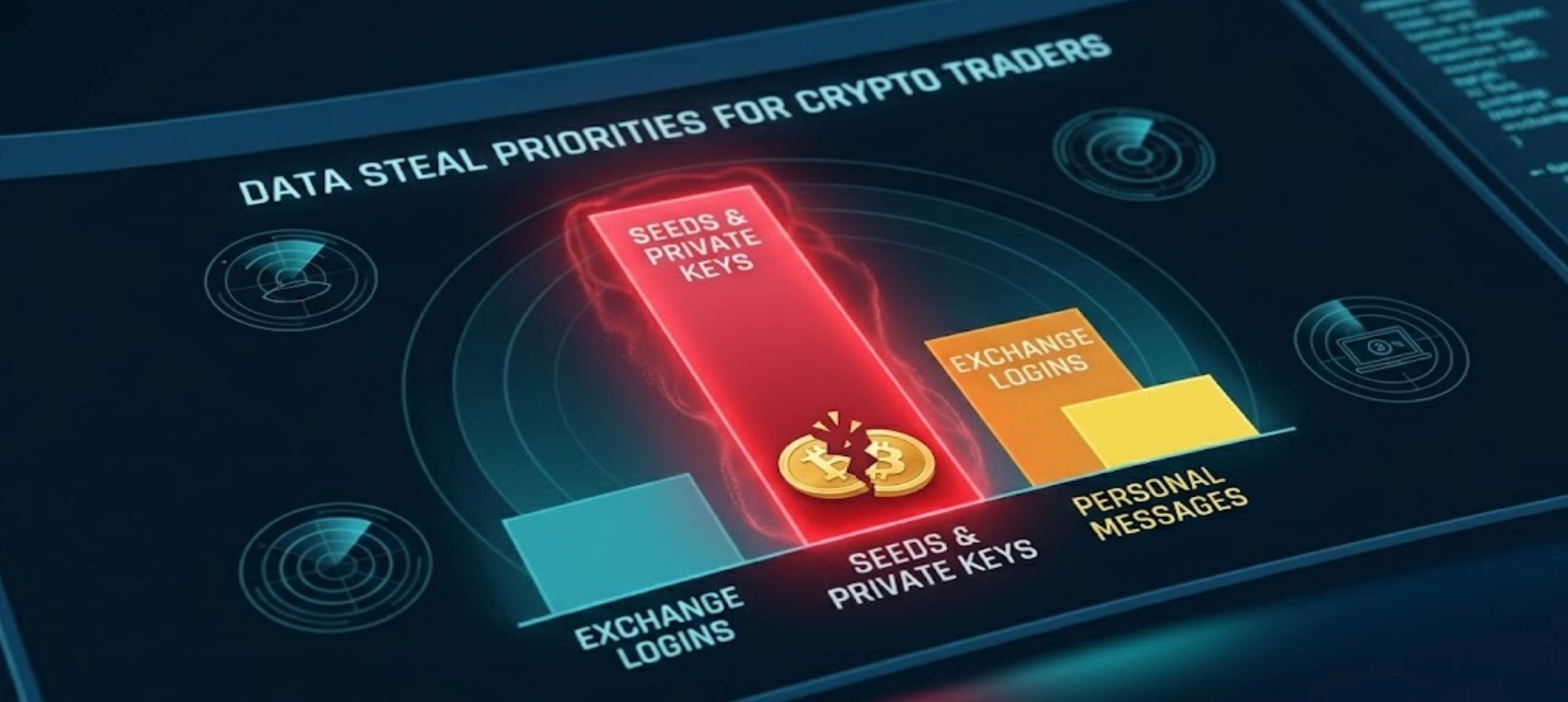
When a keylogger is on your machine, hackers are hunting for three specific things:
-
Your Seed Phrase: This is the jackpot. If you ever type your 12- or 24-word recovery phrase on your keyboard—even if you're just typing it into a local Word document to print it—the keylogger captures it. The attacker now owns your wallet forever.
-
Hot Wallet Passwords: Keyloggers watch for you to open browser extensions like MetaMask or Phantom. They log the password you type to unlock it, allowing them to hijack the session.
-
Your Clipboard: Modern keyloggers aren't just watching your keys; they are watching your copy-paste function. When you copy a legitimate deposit address, the malware instantly swaps it out for the hacker's address in your clipboard. You hit paste, click send, and the money goes to the attacker.
The 2026 Reality: It’s Not Just Windows Anymore
If you think you are safe just because you use a Mac or avoid shady websites, you are underestimating the current malware landscape. Keyloggers have evolved into highly targeted crypto-stealing networks. Take a look at what security researchers have flagged in just the first few months of 2026:
-
GlassWorm RAT: Discovered in March, GlassWorm hides inside fake Chrome extensions. It doesn't just log keys; it is specifically programmed to hunt down 71 different browser wallets. It even scans your desktop for screenshots that might look like a seed phrase.
-
Torg Grabber: Another recent infostealer, Torg Grabber, casts an incredibly wide net. It is hardcoded to intercept credentials and keystrokes for 728 distinct crypto wallets.
-
The "Safe Mac" Myth: For years, Mac users felt immune to this stuff. That is over. Microsoft’s security team recently warned that hackers are heavily using cross-platform languages (like Python and Rust) to build infostealers (like AMOS) that easily bypass macOS defenses using fake software update pop-ups.
How to Lock Down Your Setup
Since crypto transactions are final, your security has to be proactive. Whether you are trading on the main Tapbit platform or managing your own self-custody wallets, follow these steps to harden your environment:
1. Clean Up Your Extensions Third-party plugins are a massive attack vector. Delete any browser extension you do not use daily. Never give a random extension permission to "read and change all your data on the websites you visit."
2. Stop Typing Your Seed Phrase Never type your recovery phrase on a computer or phone. If you use a hardware wallet (like a Ledger or Trezor), your private keys stay on the physical device. You verify everything on the device's screen, meaning a keylogger on your PC can't steal the keys.
3. Use Hardware-Based 2FA on Tapbit SMS texts and email codes can be intercepted. If you are new to the platform, make sure to register your Tapbit account using a secure, dedicated email. If you are an existing user, log in to Tapbit right now to upgrade your security settings. Secure your account using an Authenticator App (like Google Authenticator) or a physical security key (like a YubiKey). Even if a keylogger steals your Tapbit password, the attacker can't log in without holding your physical phone or YubiKey.
4. Check Your Addresses Manually To beat clipboard hijackers, build a habit: always manually verify the first four and last four characters of any wallet address after you paste it, right before you hit send.
5. Upgrade Your Antivirus Basic, built-in firewalls often miss modern Rust-based malware. Use a dedicated, premium endpoint protection tool (like Malwarebytes) that looks for behavioral anomalies and weird network traffic, not just outdated virus signatures.
Frequently Asked Questions (FAQ)
Will my standard antivirus definitely catch a crypto keylogger?
No. Standard antivirus looks for known files. Malware developers are constantly tweaking their code so it looks "new" and bypasses basic scans. You need behavioral endpoint protection that flags a program acting suspiciously (like trying to read your keystrokes or sending unauthorized data out to the internet).
If they steal my Tapbit password, are my funds gone?
If you have Two-Factor Authentication (2FA) and Whitelisted Withdrawal Addresses enabled on your Tapbit account, a stolen password isn't enough. The hacker would also need to physically steal your phone to approve the withdrawal.
Can a keylogger actually see my screen?
Yes. Many modern software keyloggers are bundled with Remote Access Trojans (RATs). This means they can take periodic screenshots or even record your monitor. This is exactly why you should never display your private keys or seed phrase on your computer screen.


