
The sell-off started with a jobs report, but it quickly became something bigger. After stronger-than-expected U.S. nonfarm payrolls, markets were forced to rethink the interest-rate path. Yields moved higher, the dollar strengthened, and investors rushed to cut exposure across risk assets. The hardest hit area was also the most crowded one: AI chip stocks.
Crypto went down with the rest of the market. Bitcoin and Ethereum both sold off sharply as traders reduced risk and leverage was flushed out. For a few hours, the market looked familiar: when tech falls, crypto falls harder.
Then Bitcoin began to recover. BTC’s move back toward the $63,000 area does not mean crypto has fully separated from U.S. equities. That would be too strong. But it does suggest the market is no longer pricing digital assets only as a high-beta version of the Nasdaq. ETF flows, leverage resets, regulatory headlines, and institutional positioning are now playing a bigger role in how crypto trades.
A strong jobs report changed the mood
The June 5 market reaction was not random. The U.S. labor market came in stronger than expected, and that changed the rate conversation almost immediately.
For investors, stronger jobs data means the Federal Reserve has less reason to ease policy quickly. It can also bring rate hikes back into the discussion if inflation stays sticky. That is a problem for assets priced on future growth.
AI stocks were the obvious place to take profit. They had already delivered huge gains, positioning was crowded, and valuations left little room for disappointment. When yields rose, investors did not wait around to debate the details. They sold first.
Crypto was pulled into the same move. Bitcoin remains sensitive to liquidity, and Ethereum is even more exposed when leverage starts unwinding. Once risk appetite drops, crypto usually feels it quickly.
AI stocks were vulnerable because the trade was crowded

The AI story is not dead. But the sell-off showed how fragile crowded trades can become.
For months, chips, memory, data centers, cloud infrastructure, and AI spending have been the strongest parts of the market. That created real momentum, but also high expectations. In that kind of setup, even small disappointments can become large price moves.
Broadcom’s weaker-than-hoped AI signals added pressure. Other semiconductor names were hit as traders locked in gains and reduced exposure. Nvidia also came under pressure, even though the long-term AI infrastructure story remains strong.
This was less a rejection of AI and more a reminder that price matters. A great theme can still be too crowded. A strong sector can still correct hard when rates move against it.
Bitcoin fell with risk assets, then found buyers
Bitcoin’s first move was not surprising. Risk assets sold off, and BTC sold off too.
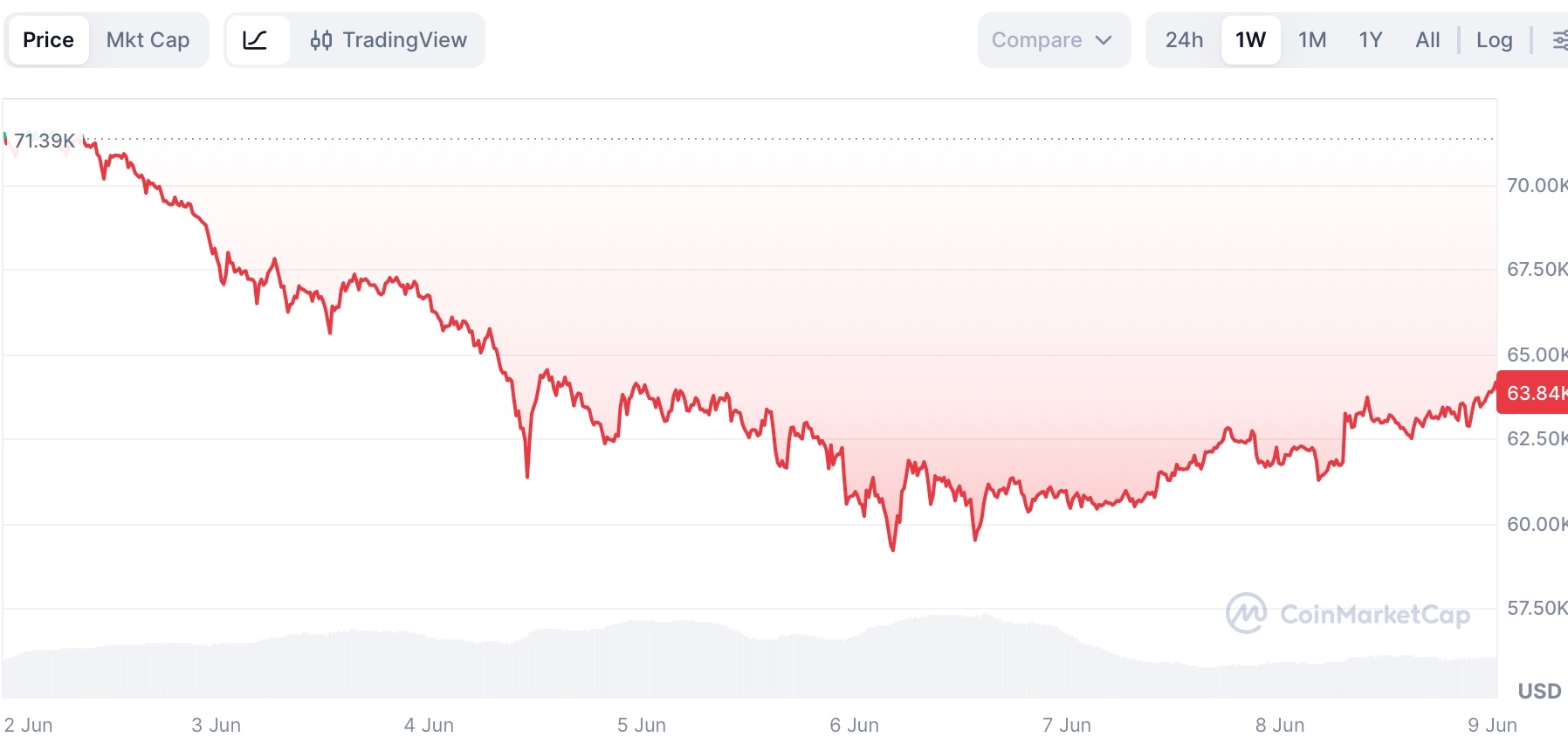
The rebound was the more important part.After the forced selling faded, Bitcoin pushed back toward $63,000. Some of that recovery likely came from short liquidations and traders buying the dip. But there was also a crypto-specific element to the move.
The market is still watching spot Bitcoin ETF flows closely. Recent outflows have been large enough to keep sentiment cautious, which is why the rebound should not be treated as clean confirmation of a new uptrend. Still, the fact that BTC stabilized while AI stocks were still digesting the shock tells us something.
Crypto has its own drivers now.
A chip stock trades on earnings, margins, capital spending, and discount rates. Bitcoin does not. BTC trades on liquidity, ETF demand, institutional adoption, regulation, scarcity, and market positioning. Those forces can overlap with tech stocks, but they are not identical.
Is crypto really decoupling?
Not yet. Bitcoin still reacts to Treasury yields, the dollar, Fed expectations, and broad risk appetite. When markets panic, BTC is still treated like a volatile risk asset. That has not changed.
What may be changing is the degree of dependence. In earlier cycles, crypto often looked like a leveraged Nasdaq trade. If tech rallied, crypto rallied harder. If tech sold off, crypto sold off harder. That relationship still exists, but it is no longer the whole story.
The latest rebound suggests investors are also looking at crypto through its own lens. ETF flows, regulatory progress, leverage conditions, and institutional demand can all create a different path from tech equities.
That is not full decoupling. It is partial separation. And for now, that is the more honest read.
Regulation could become the bigger difference
One reason crypto may trade differently from AI stocks is the policy backdrop.
AI stocks are waiting for earnings proof. Investors want to know whether the massive spending on chips, data centers, and cloud infrastructure can turn into profits big enough to justify the valuations.
Crypto is waiting for something else: clearer rules. Market structure legislation, regulatory clarity, and institutional access could become stronger pricing anchors for digital assets over time. If investors get a clearer framework for how crypto will be regulated, larger pools of capital may become more comfortable entering the market.
That does not mean regulation will automatically push prices higher. Policy takes time, and markets often price in optimism before laws are actually passed. But it does give crypto a different kind of catalyst from AI equities.
AI needs earnings to confirm the story. Crypto needs flows, rules, and adoption to confirm its own.
The rebound still needs proof
Bitcoin’s recovery toward $63,000 is encouraging, but it is not enough by itself.
ETF outflows remain a concern. Rate pressure has not disappeared. If Treasury yields keep rising or the dollar strengthens further, crypto could face another round of selling. A rebound driven mainly by short liquidations can fade quickly if fresh demand does not follow.
The next test is flows.
If spot Bitcoin ETF demand stabilizes, if stablecoin liquidity improves, and if BTC holds higher levels without relying only on forced short covering, the rebound will look more convincing. If not, the move may prove to be just a relief rally after a crowded sell-off.
Tapbit View
The latest market shock showed both sides of crypto’s current position.
On one hand, Bitcoin is still exposed to macro pressure. A strong jobs report, higher yields, and a sharp reset in AI stocks were enough to drag BTC and ETH lower with the rest of the market.
On the other hand, the rebound showed that crypto is no longer moving only because tech stocks move. Bitcoin’s recovery suggests traders are paying more attention to crypto-specific factors, including ETF flows, leverage resets, regulatory progress, and institutional adoption.
That does not mean crypto has fully decoupled. It means the old explanation — “crypto is just leveraged Nasdaq” — is becoming too simple.
For traders, the focus now should be clear: watch ETF flows, watch rates, watch liquidity, and watch whether buyers return after the first rebound. Crypto has shown resilience. The next question is whether the flows can confirm it.
Trade verified order books with institutional-grade deep liquidity.
-
Execute the Strategy: Log in to Tapbit to access highly liquid spot markets and professional futures pairs with zero execution latency.
-
Secure Your Setup: Register on Tapbit today to access our full trading suite and claim your verified welcome rewards package.
-
Track Global Capital: Monitor real-time volume depth and verified asset flows directly on the Tapbit Homepage.
Frequently Asked Questions (FAQ)
Why did crypto sell off after the U.S. jobs report?
The jobs report came in stronger than expected, which pushed markets to rethink the path of U.S. interest rates. Higher rate expectations usually hurt risk assets because they make investors less willing to pay for future growth or high-volatility exposure. Bitcoin and Ethereum were pulled into that broader risk-off move.
Why were AI chip stocks hit so hard?
AI chip stocks had become one of the most crowded trades in the market. After months of strong gains, valuations were stretched and investor expectations were high. When yields rose and traders started reducing risk, AI-related names became an obvious place to take profit.
Did Bitcoin fall because of the AI stock sell-off?
Partly, but not entirely. Bitcoin fell alongside other risk assets as liquidity tightened and traders cut exposure. The AI sell-off added pressure because many investors treat crypto and high-growth tech as part of the same risk bucket. However, Bitcoin’s later rebound showed that crypto also has its own drivers.


