
Most retail traders treat Dogecoin (DOGE) purely as a sentiment-driven meme coin, trading it based on social media trends and Elon Musk tweets. While sentiment drives short-term volatility, the long-term price floor and structural resistance are dictated by industrial mining mechanics.
If you are trading DOGE without understanding the production costs of the miners who create it, you are trading blind. Miners are the ultimate whales; they control the fresh supply, and their operational costs dictate when they are forced to sell.
We now break down the 2026 Dogecoin mining landscape and shows you how to use mining metrics to build profitable trading setups.
The Break-Even Metric: Trading the $0.08/kWh Survival Line
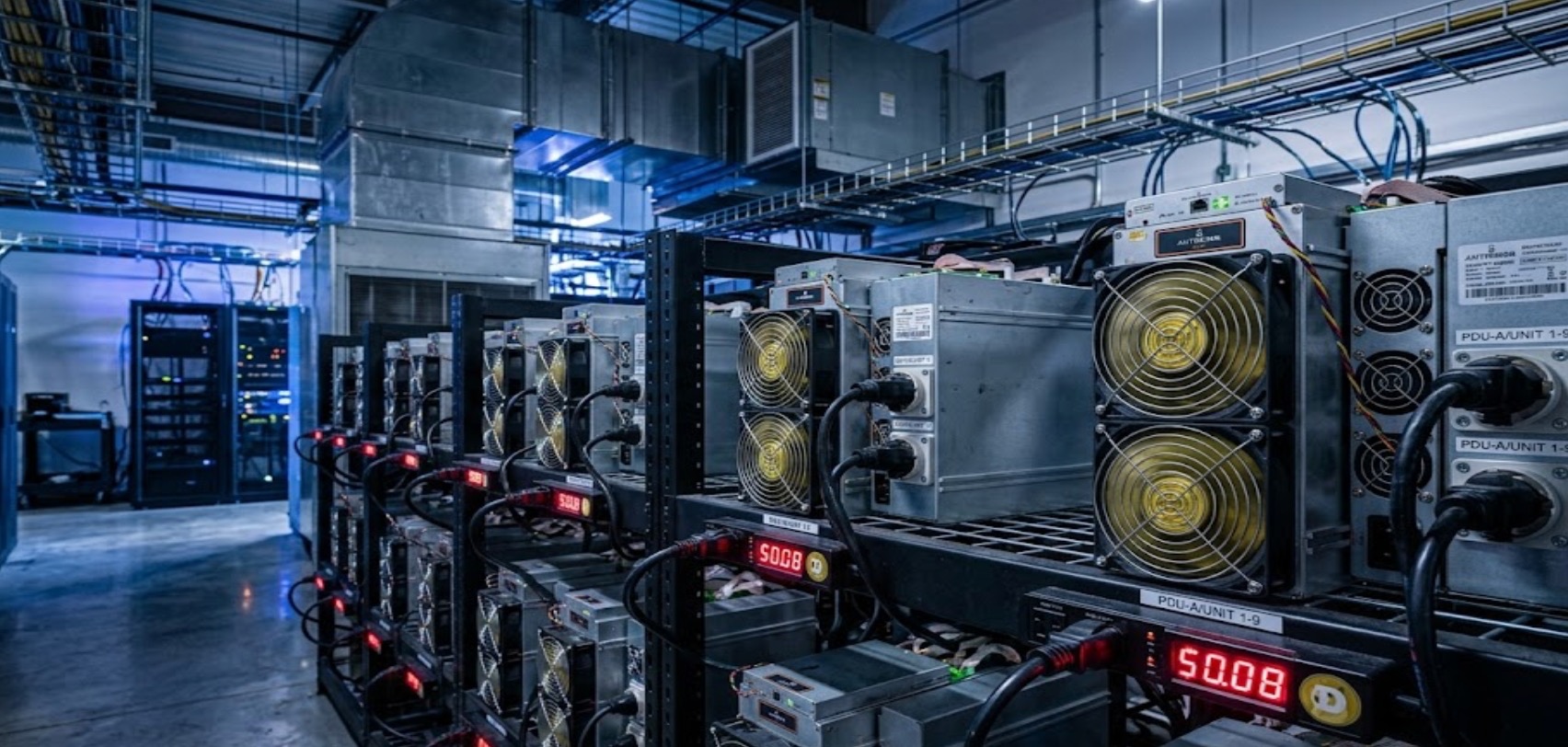
To understand where DOGE price support lies, you must understand the "Cost of Production."
In 2026, DOGE mining is dominated by massive industrial farms using ASIC rigs (like the Antminer L7). These farms have massive fiat liabilities: they must pay for electricity, cooling, and facility debt in USD.
Based on current network difficulty and the 10,000 DOGE block reward, the average electricity break-even point for a top-tier mining farm is roughly $0.08 per kWh. How to Trade This Data:
-
The Capitulation Floor: When the spot price of DOGE falls close to the average production cost, miners begin operating at a loss. To keep the lights on, they are forced to liquidate their entire daily yield (and sometimes their reserves). This creates massive, localized sell pressure.
-
The Setup: For swing traders, identifying the price point where miners become unprofitable is crucial. Historically, "miner capitulation" phases—where inefficient miners unplug their machines and sell off reserves—often mark macro market bottoms. Once the weak miners are flushed out, sell pressure vanishes, paving the way for a supply-shock rally.
The Merged Mining Correlation: LTC and DOGE Pairs Trading
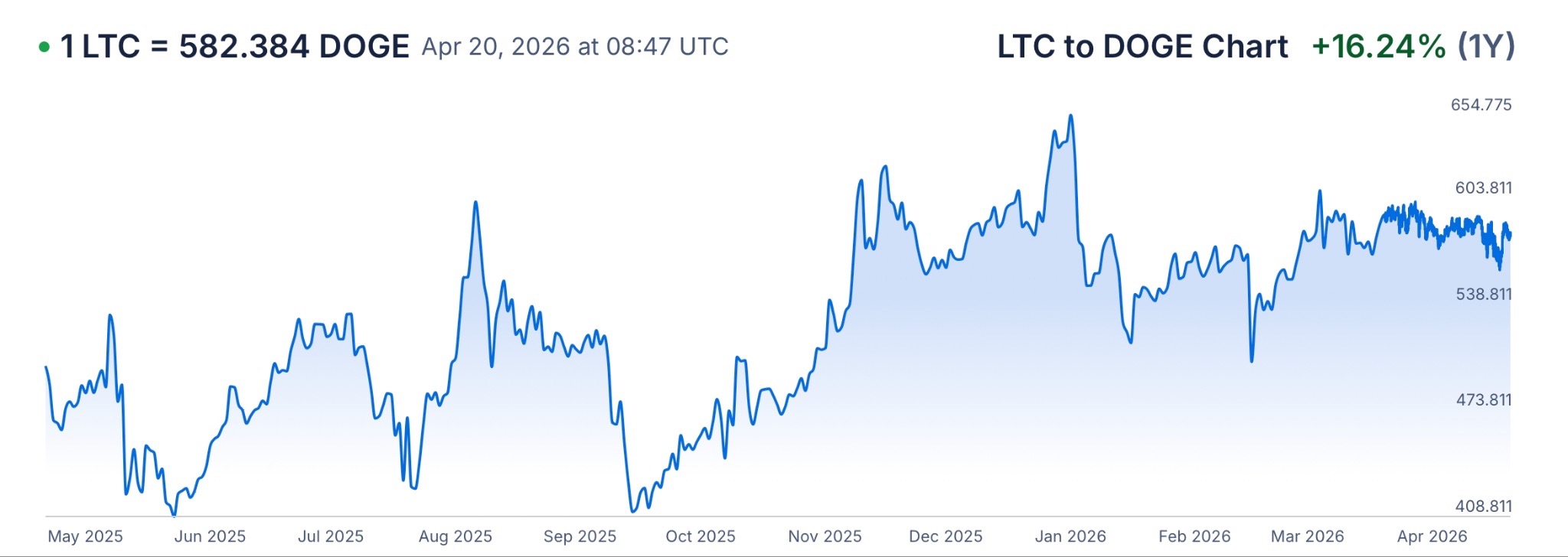
You cannot trade DOGE effectively without watching the Litecoin (LTC) chart.
Because both networks use the Scrypt algorithm, miners engage in "Merged Mining." They process blocks for Litecoin and submit the same computational work to the Dogecoin network, earning both LTC and DOGE simultaneously for the same electricity cost.
How to Trade This Data:
-
Pairs Trading (Statistical Arbitrage): Because LTC and DOGE are produced by the exact same industrial entities at the exact same time, their supply emissions are permanently linked. This creates a strong historical price correlation.
-
The Setup: Professional traders monitor the LTC/DOGE ratio. If DOGE spikes aggressively due to retail meme hype while LTC remains flat, the ratio becomes overextended. Institutional miners will often sell their overvalued DOGE and hold their undervalued LTC. Traders can capitalize on this by executing a pairs trade: shorting the overextended asset (DOGE) and going long on the lagging asset (LTC), betting on the ratio returning to its historical mean.
Supply Overhang: Why Breakouts Fail
Have you ever noticed DOGE breaking out of a bullish chart pattern, only to get slammed down by an invisible wall of sell orders? That is miner distribution.
Unlike retail holders who wait for "the moon," industrial miners are running a business. When DOGE experiences a sudden 20% pump, miners use that liquidity to aggressively sell their freshly mined supply to secure profit margins for the quarter.
How to Trade This Data:
-
Avoid buying late into breakout candles. If DOGE is approaching a major resistance level after a prolonged rally, assume that industrial miners have resting limit orders waiting to absorb retail buying pressure.
-
Use Volume Profile indicators to identify where these heavy distribution blocks sit, and take your profits before the price hits the miner liquidity walls.
Execute Your Strategy on Tapbit
Trading based on mining fundamentals requires precision. When miner capitulation hits, or when a pairs trading ratio diverges, you need an exchange with zero latency and deep order books to execute your positions without slippage.
Put this guide into practice on Tapbit. Register for an institutional-grade account today to access our deep liquidity pools, or log in to your trading terminal to set up your LTC/DOGE hedges on our advanced derivatives platform.
Frequently Asked Questions (FAQ)
Why don't miners just hold their DOGE until the price goes higher?
Industrial miners cannot afford to hold everything. They have strict monthly cash-flow requirements to pay for electricity, facility leases, and hardware loans. Even if they are bullish long-term, they must sell a significant portion of their daily mined DOGE to cover their USD-denominated operational expenses (OpEx).
Can I use Bitcoin's mining metrics to trade DOGE?
No. Bitcoin uses the SHA-256 algorithm, while Dogecoin uses Scrypt. They have completely different hardware ecosystems, different network difficulties, and different block emission schedules. You must look specifically at Scrypt ASIC profitability and the LTC/DOGE merged mining data.
What happens to the price if a lot of DOGE miners turn off their machines?
Initially, it signals a bearish phase ("miner capitulation") as miners sell their reserves to cover losses. However, once those machines are off, the network difficulty adjusts downward, making it cheaper for the remaining miners to produce DOGE. This usually reduces the overall daily sell pressure, often setting the stage for a price recovery.


