

The AI trade is no longer only about chips.
For much of the AI boom, investors focused on Nvidia, AMD, memory, networking and semiconductor equipment. But as AI infrastructure expands, the market has started to price another critical layer: electricity.
AI data centers require large amounts of stable power. Training and running advanced models depends not only on GPUs, but also on grid capacity, cooling, power delivery and long-term electricity supply.
That is why Constellation Energy, traded under the ticker CEG, has become one of the most watched names in the AI power trade.
Constellation is not a software company or a chipmaker. It is a major U.S. power producer with a large nuclear fleet. But the market increasingly sees that as a strategic advantage in a world where AI data centers need reliable, low-carbon electricity at scale.
The key question for traders is simple: can CEG turn AI power demand into durable earnings growth, or has the market already priced in too much optimism?
Why AI Is Becoming a Power Story
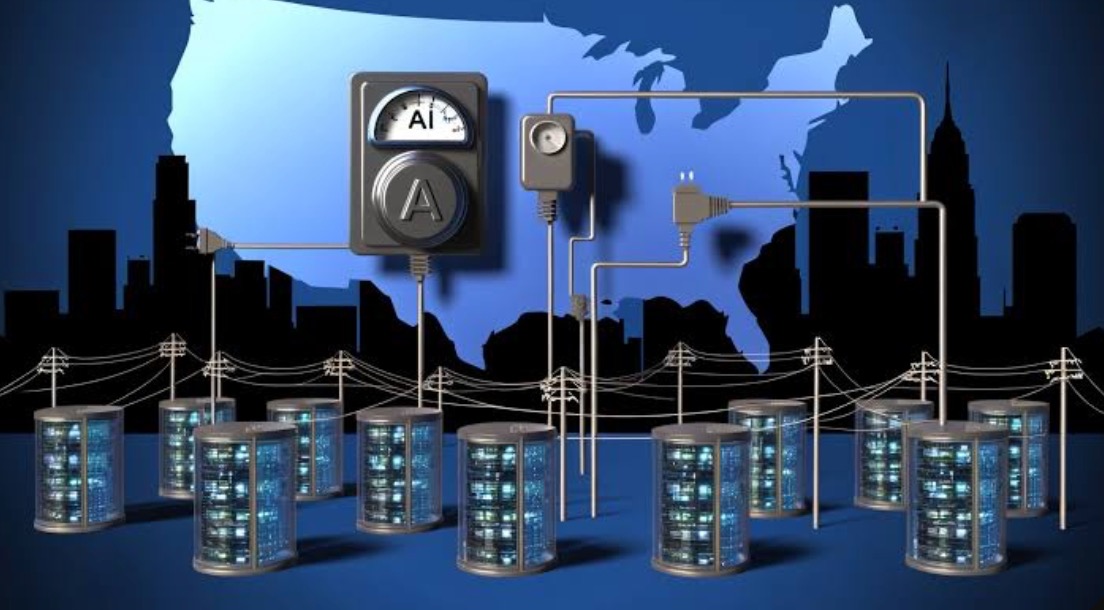
AI infrastructure is electricity-intensive.
A 2026 research paper on AI data center power-system stress projected that electricity consumption by six leading technology firms could rise from roughly 118 TWh in 2024 to 239–295 TWh by 2030, equivalent to about 1% of global power demand. The study also noted that new AI infrastructure is heavily concentrated in North America, Western Europe and Asia-Pacific, which together represent more than 90% of projected compute capacity.
This matters because electricity demand is not evenly distributed.
A data center cluster can place heavy pressure on local grids, especially in regions where interconnection queues, transmission constraints and power generation capacity are already tight. AI does not only create demand for chips. It creates demand for power plants, grid upgrades, cooling systems and long-term electricity contracts.
This is where companies like Constellation Energy enter the AI conversation.
What Makes Constellation Energy Different?
Constellation Energy is one of the largest U.S. power producers and the top operator of nuclear reactors in the United States.
Investor’s Business Daily reported that Constellation operates 21 reactors across 12 locations, giving it a major position in U.S. nuclear generation. The same report noted that the company reaffirmed its 2027 goal to restart Unit 1 at Three Mile Island’s Crane Clean Energy Center, which is tied to a long-term power deal with Microsoft.
Nuclear power has become attractive to AI data center customers for three main reasons.
First, it provides baseload electricity. Unlike wind or solar, nuclear plants can generate power continuously.
Second, it is low-carbon. Large technology companies have carbon reduction goals, and nuclear power can support those commitments.
Third, it offers long-term supply visibility. Data center operators need power contracts that can support multi-year infrastructure planning.
This combination makes Constellation different from a traditional utility stock. It is increasingly being valued as an AI infrastructure power supplier.
The Microsoft and Three Mile Island Deal
The Microsoft power agreement is one of the strongest examples of how AI is changing the power market.
AP reported that Constellation plans to restart the closed Unit 1 reactor at Three Mile Island under a 20-year agreement with Microsoft. The project is expected to require about $1.6 billion of investment and is intended to support Microsoft’s data center electricity needs with carbon-free power, subject to regulatory approval.
This deal is important because it connects three major themes: AI data center growth, clean power demand, and the return of nuclear energy as a strategic infrastructure asset.
For CEG stock, the Microsoft agreement helps validate the idea that hyperscale technology companies may be willing to sign long-term power purchase agreements, or PPAs, with nuclear power providers.
But traders should remember that the project is not risk-free. Restarting a nuclear reactor requires regulatory approval, capital investment, operational execution and timeline discipline.
Strong Financial Results Support the Story
CEG’s AI power narrative is not only theoretical. Recent financial results have also supported investor interest.
Investor’s Business Daily reported that Constellation’s Q1 2026 earnings per share rose 28% year over year to $2.74, while revenue jumped 64% to $11.122 billion, beating analyst expectations. The company also maintained its full-year 2026 earnings guidance of $11–$12 per share.
These numbers matter because they show that Constellation is not just trading on a future story. The company is already delivering stronger earnings and revenue growth.
However, the market will likely demand continued execution. When a power company starts trading with an AI infrastructure premium, good results may not be enough. Investors may want to see stronger PPA momentum, nuclear project progress and evidence that data center demand is translating into long-term contracted revenue.
Calpine Expands Constellation’s Power Platform
Constellation has also expanded its generation base through Calpine.
MoneyWeek reported that Constellation operates a 55 GW fleet after acquiring Calpine, serving power needs equal to about 27 million homes, with assets across nuclear, gas, hydro, wind, solar and geothermal power. The same report described Constellation as generating about 10% of U.S. clean energy and noted a 92.3% nuclear capacity factor.
This larger power platform matters because AI data center demand is not only about nuclear energy. Data centers need reliability. That may involve nuclear, natural gas, renewables, storage, transmission and grid services. The Calpine acquisition gives Constellation broader exposure to dispatchable power and competitive electricity markets, which may help it serve large commercial and industrial customers.
For traders, the takeaway is that CEG is not only a nuclear story. It is becoming a broader power infrastructure story.
Why Nuclear Power Fits the AI Data Center Theme
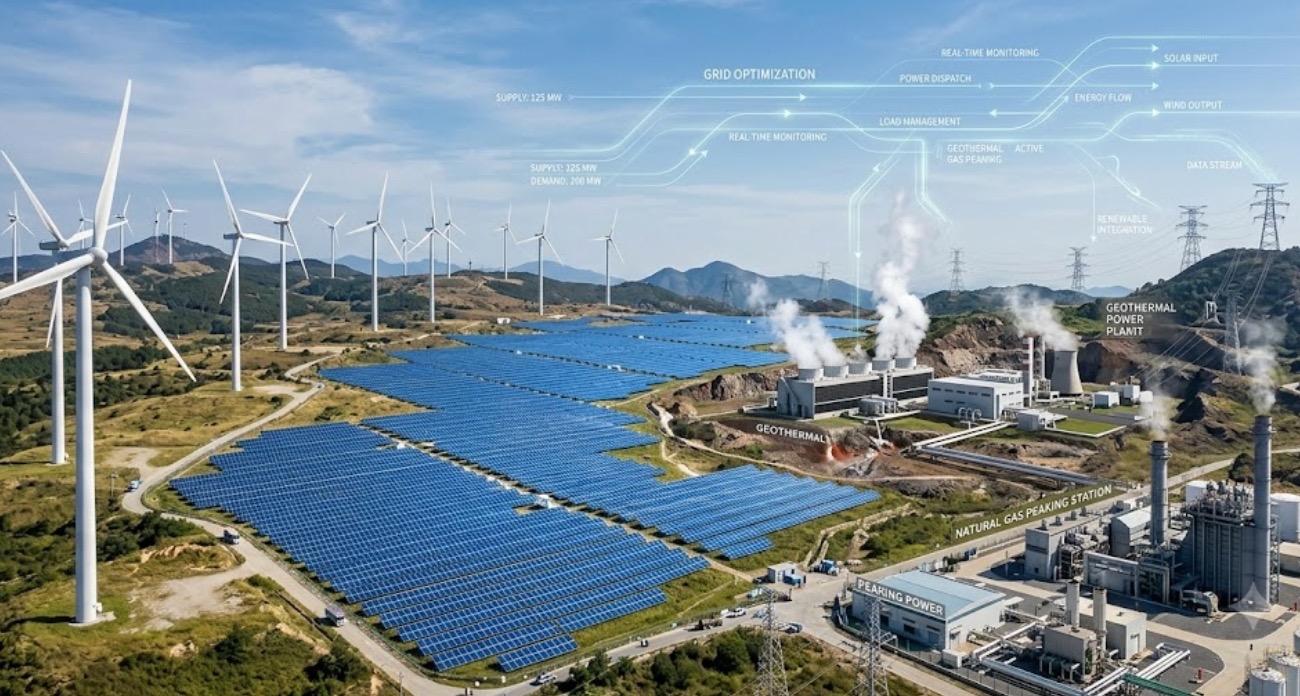
AI data centers need electricity that is available when workloads demand it.
Renewables are important, but intermittent generation alone may not be enough for data centers that require constant uptime. Batteries can help, but storage duration and scale remain important constraints. Natural gas can provide reliable power, but it may conflict with some corporate decarbonization targets.
Nuclear power fits the AI theme because it offers reliable, low-carbon baseload power.
This is why major technology companies are looking more seriously at nuclear energy, long-term PPAs and dedicated clean power supply. For Constellation, that creates a potential opportunity to sign long-duration agreements with large customers that need dependable power.
Still, nuclear power is not simple. Projects can face regulatory review, public scrutiny, high capital costs and long timelines. That is why CEG’s nuclear position is valuable, but also why execution risk remains important.
Valuation Risk: When a Utility Gets an AI Premium
The biggest risk for CEG stock is not that the AI power story is fake. The risk is that the market may price the story too aggressively.
When a traditional power company becomes linked to AI infrastructure, investors may begin valuing it less like a utility and more like a growth stock. That can create upside when sentiment is strong, but it can also create sharper downside if expectations fade.
The same pattern has appeared across the AI trade. GPU stocks, memory stocks, semiconductor equipment names and power infrastructure companies have all seen periods of rapid repricing followed by volatility.
This is why traders should separate the long-term theme from the short-term price setup.
Key Risks for CEG Stock
CEG stock carries several risks.
The first is regulatory risk. Nuclear projects require approvals and ongoing compliance. Any delay in Three Mile Island’s restart could affect investor confidence.
The second is execution risk. Restarting nuclear capacity and integrating Calpine both require operational discipline.
The third is customer concentration risk. Long-term PPAs with major tech companies can be valuable, but reliance on a small group of hyperscale customers may create exposure to their capital spending cycles.
The fourth is interest rate risk. Power generation and infrastructure assets are capital-intensive. Higher rates can pressure financing costs and valuation multiples.
The fifth is valuation risk. If CEG trades with an AI premium, the stock may become more sensitive to sentiment shifts.
The sixth is energy mix risk. AI data centers may use a combination of nuclear, gas, renewables, storage and grid services. Nuclear is important, but it is not the only solution.
Tapbit View
CEG stock shows how the AI trade is expanding beyond chips.
AI infrastructure needs GPUs, memory and networking, but it also needs power. Without electricity, there is no AI data center. Without grid capacity, there is no scalable AI infrastructure.
Constellation Energy has become important because it owns assets that match this demand: nuclear generation, long-term power supply capability and a growing platform after Calpine. The Microsoft and Three Mile Island agreement gives the market a clear example of how AI companies may secure clean electricity through long-term PPAs.
For Tapbit users, the broader lesson is simple. Markets often move from the obvious beneficiary to the hidden infrastructure layer. In AI, that means the trade can move from chips to memory, from memory to equipment, and from equipment to power.
But infrastructure stories still need proof. CEG must show that AI power demand can become contracted revenue, that nuclear projects can be executed on time, and that valuation remains supported by real earnings growth.
Users can visit Tapbit to explore supported crypto services. Existing users can access their accounts through Tapbit Login, while new users can start through Tapbit Register.
Frequently Asked Questions (FAQ)
What is CEG stock?
CEG stock refers to Constellation Energy, a major U.S. power producer and leading nuclear generation operator.
Why is Constellation Energy linked to AI?
Constellation is linked to AI because AI data centers need large amounts of reliable electricity, and nuclear power can provide stable, low-carbon baseload supply.
What is the Microsoft and Three Mile Island deal?
Constellation plans to restart Unit 1 at Three Mile Island under a 20-year power agreement with Microsoft. AP reported that the project is expected to require about $1.6 billion of investment and is intended to support Microsoft data center power needs.


