
Let’s be real. When a major Layer-1 asset sits under heavy price pressure, on-chain governance stops being a theoretical exercise and becomes a brutal battle over capital allocation. Right now, with ADA floating around the $0.241 mark, the Cardano ecosystem is trapped in a massive treasury standoff.
This isn't just a minor squabble over protocol upgrades; it’s a live stress test to see if decentralized budget accountability can actually coexist with slow, academic research. At the Tapbit desk, we watch these on-chain budget fights closely because how a community handles its money dictates where its long-term development momentum goes. Here is the straight breakdown of what’s going down.
The "Life's Work" Defense and the 2026 Vision
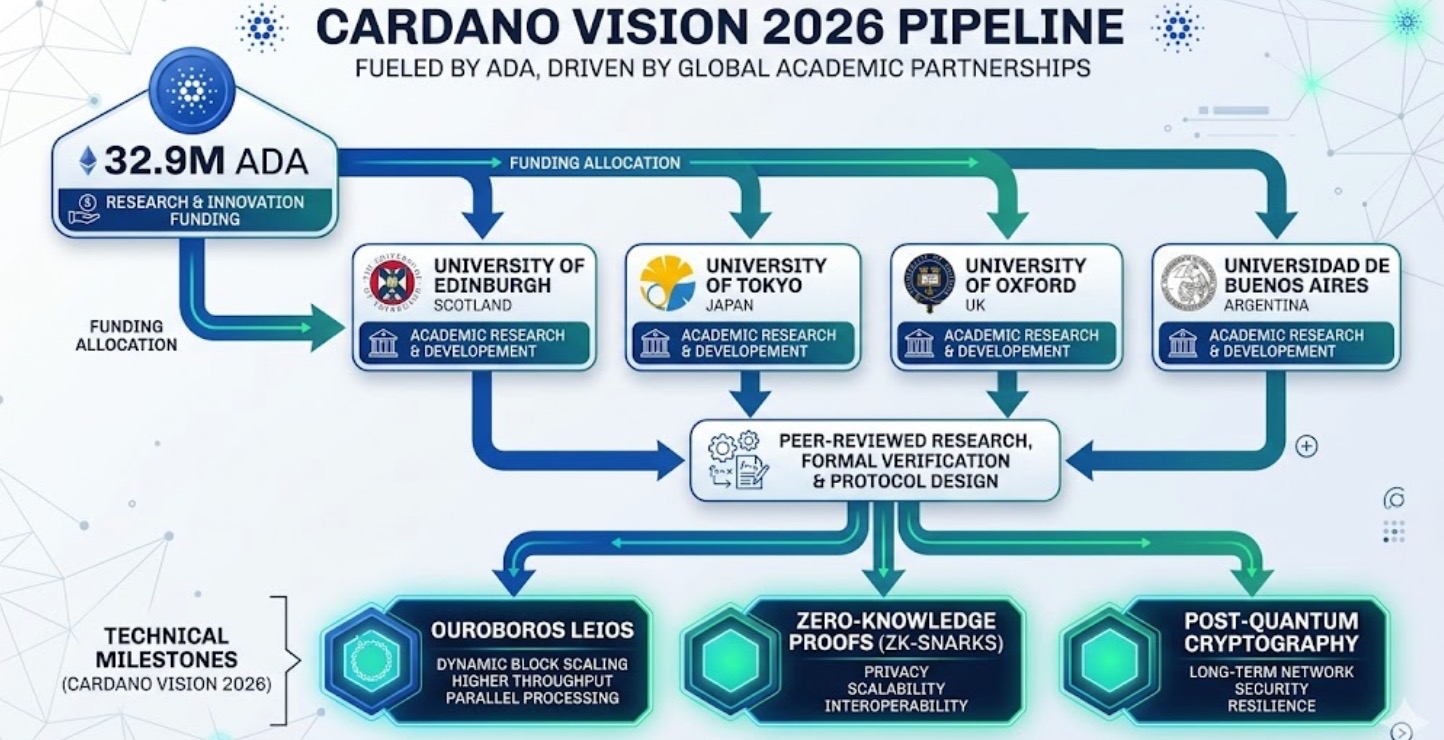
The match that lit this fire is a massive treasury withdrawal proposal called “Cardano Vision 2026: Human Centred, Scalable, Post Quantum Secure – IO Research”.
-
Dropped on May 7, 2026, the proposal is asking for a hefty 32.916 million ADA (roughly $7.9 million) straight out of the network's treasury.
-
The capital is earmarked to fund a nine-partner research alliance that includes global universities like Edinburgh, Tokyo, Oxford, and Buenos Aires.
-
The tech goals are heavy: pushing forward on Ouroboros Leios/Peras consensus, zero-knowledge proofs, and post-quantum security.
Sensing a massive wall of community pushback, Cardano founder Charles Hoskinson jumped onto an X Spaces session around May 20 to aggressively defend the funding. He stated flatly that "Cardano is my life’s work" and reiterated that he desperately wants ADA to succeed. He also reminded everyone that his own financial interests are completely tied to the network because he still holds a massive stack of ADA. Hoskinson didn't mince words, framing the vote as an existential crisis: will Cardano stick to its identity as a peer-reviewed "science coin," or will it abandon its roots?
The Rapidly Flipping Vote
When the proposal first hit, it looked completely dead in the water.
-
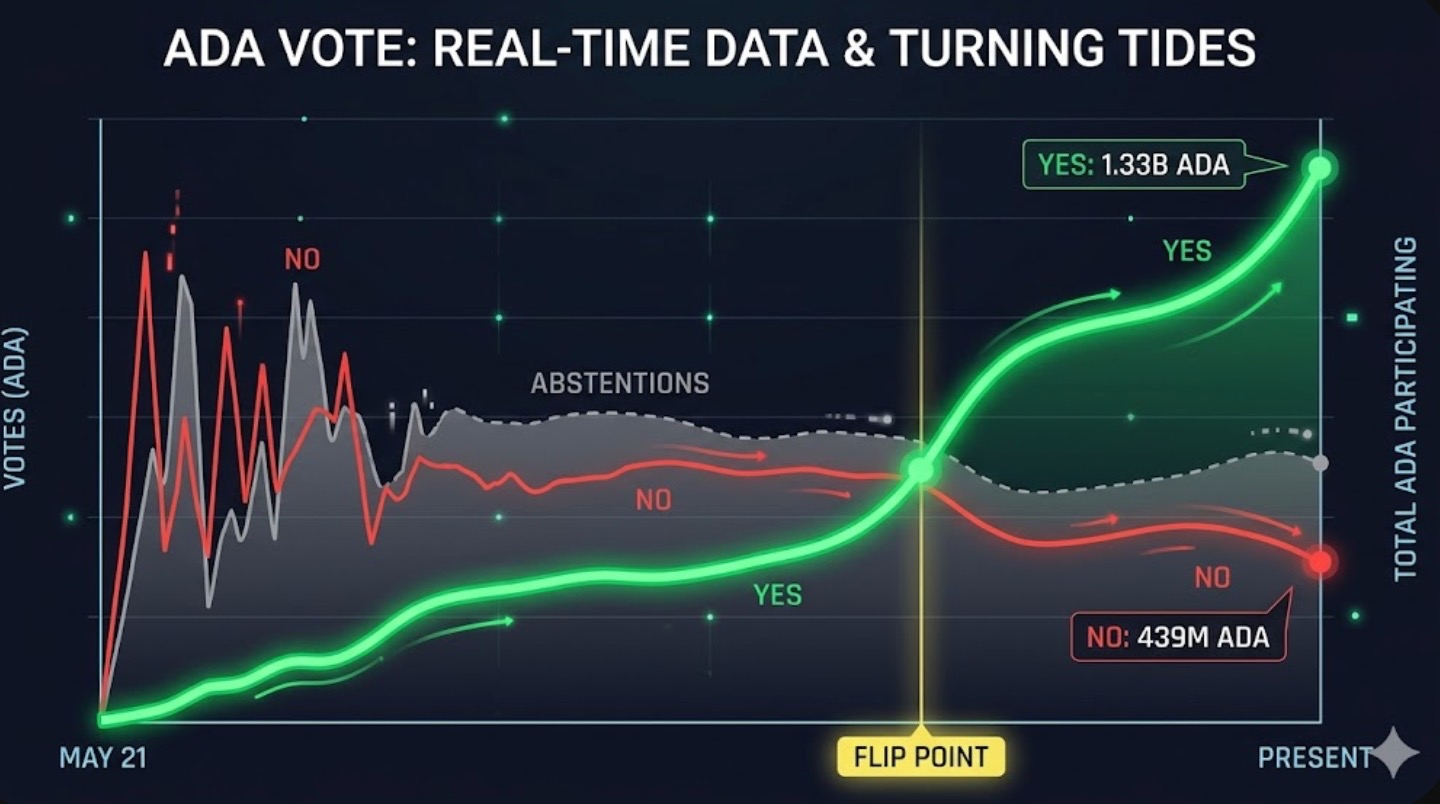
Early media reports coming out around May 21 and 22 painted a grim picture, showing that anywhere from 81% to 86.72% of active dRep voting power was voting "No".
-
But things have changed fast. Real-time data from Governance Space shows that the early wave of panic has dramatically turned around.
-
Out of roughly 2.41 billion ADA in active DRep voting power that has participated so far, "Yes" votes are actually leading with 1.33 billion ADA (55%).
-
"No" votes have shriveled to 439.32 million ADA (18%), while abstentions sit at 642.23 million ADA (27%).
But don't pop the champagne just yet. Under Cardano's governance rules, hitting 55% isn't enough to pass. Treasury withdrawals require a strict 67% supermajority from active dReps, plus formal approval from the Constitutional Committee, before the final deadline hits on June 8, 2026.
The Core Friction: Academic Research vs. Hard ROI
The pushback from the community isn't necessarily an attack on the science itself; it’s a fight over transparency and how the core teams get audited.
Opposing dReps are complaining that this proposal feels like a massive, bundled "annual budget package" rather than a set of sharp, auditable deliverables with clear milestones. A lot of people in the ecosystem want to see a competitive RFP (Request for Proposals) process, giving outside teams a chance to build, instead of just defaulting millions of dollars back to Input Output Global (IOG).
Hoskinson’s reaction to this demand for granular metrics was uncompromising. He warned that if the community shoots this down, Cardano risks losing its core scientists and could be forced to shut down its research labs. He even went a step further, stating that if it fails, IOG will not rewrite or resubmit the proposal. For him, this vote directly impacts payroll, team stability, and the network’s long-term survival.
The Desk Verdict
This entire standoff perfectly sums up the messy growing pains of decentralized governance. With ADA prices feeling the macro squeeze—hitting intraday lows of $0.239 while Bitcoin holds strong at $77,090—everyday users are heavily focused on immediate returns.
The community wants to see treasury money spent on things that bring in actual users, expand DeFi liquidity, and support the price today. Meanwhile, Hoskinson and IOG are playing the long game, arguing that cutting the research budget ruins Cardano's structural competitive edge. Pass or fail, the final tally on June 8 will set a massive precedent for who controls the money in decentralized networks.
Trade verified order books with institutional-grade deep liquidity.
-
Execute the Strategy: Log in to Tapbit to access highly liquid spot markets and professional futures pairs with zero execution latency.
-
Secure Your Setup: Register on Tapbit today to access our full trading suite and claim your verified welcome rewards package.
-
Track Global Capital: Monitor real-time volume depth and verified asset flows directly on the Tapbit Homepage.
Frequently Asked Questions
What exactly is the "Cardano Vision 2026" treasury proposal requesting?
Submitted on May 7, 2026, the proposal officially titled “Cardano Vision 2026: Human Centred, Scalable, Post Quantum Secure – IO Research” is requesting a withdrawal of 32.916 million ADA (approximately $7.9 million) from the network's decentralized treasury. The requested capital is designed to fund a nine-partner academic and research consortium—including major global universities in Edinburgh, Tokyo, Oxford, and Buenos Aires—to push forward development on Ouroboros Leios/Peras consensus, zero-knowledge proofs, and post-quantum security.
Why did Charles Hoskinson come out so strongly to defend the proposal?
Sensing intense pushback from the community, Cardano founder Charles Hoskinson hosted an X Spaces session on May 20 to defend the funding request. He stated flatly that "Cardano is my life’s work" and emphasized that his personal financial interests remain completely tied to the ecosystem because he still holds a massive stack of ADA. Hoskinson framed the vote as a defining moment for the network's identity, arguing that defunding these initiatives threatens Cardano’s core position as a peer-reviewed "science coin".
What are the primary objections being raised by the opposing dReps?
The dReps (decentralized representatives) voting against the measure are not necessarily attacking the scientific research itself, but rather the way the funding is structured and audited. Critics argue that the proposal feels like a massive, bundled "annual budget package" rather than a set of granular, transparent, and easily auditable milestones. Furthermore, many in the community believe large sums of capital should not default straight to Input Output Global (IOG), advocating instead for an open, competitive RFP (Request for Proposals) process where multiple teams can pitch for the work.


