

TAO kept flirting with $200 in July, but couldn't stick the landing. By August 12, it was back near $190.
That seesaw tells us everything about Bittensor right now. The decentralized AI hype is still buzzing, and the network is tweaking its subnet economics. But the big question hanging over it all: does any of that actually drive demand for TAO?
It's not one headline that brought traders back. It's a mix — AI sentiment, protocol upgrades, institutional access, and that round number everyone's watching.
What Is Bittensor?

Bittensor is a decentralized network designed to support markets for machine intelligence. Developers can create specialized subnets for tasks such as AI inference, data collection, model training and forecasting.
Miners perform the work defined by each subnet, while validators evaluate their output. Network incentives are distributed through TAO and subnet-specific Alpha tokens.
This structure makes Bittensor different from crypto projects that simply attach an AI label to a token. AI services are built into the network’s incentive system. That does not guarantee commercial success, but it gives investors something concrete to evaluate: the quality, usage and economics of individual subnets.
TAO is the network’s base asset. It is used for staking, subnet liquidity and the allocation of incentives across the ecosystem.
Why Is TAO Receiving Attention Again?
TAO’s recent activity does not appear to be tied to a single announcement. Instead, several parts of the Bittensor story are attracting attention at the same time.
AI remains a major theme across both technology stocks and digital assets, and Bittensor offers crypto traders exposure to a network built around AI models, data and computing services. Interest has also been supported by changes to the subnet economy, including updates to emissions, subnet owner accountability and the way participants support individual projects.
Institutional access is another factor to watch. Grayscale is seeking approval to convert its existing Bittensor trust into an exchange-traded product, although the outcome remains uncertain.
These developments have kept TAO on traders’ watchlists, but they have not yet helped the token hold convincingly above $200.
Bittensor Is Changing How Subnets Compete
One of the most important recent developments is Bittensor’s V431 upgrade.
Under the revised model, emissions between subnets are tied more directly to their moving-average prices. The upgrade also introduced a system known as conviction, through which participants can lock Alpha tokens and build time-weighted support for a subnet operator.
For eligible subnets that have operated for more than a year, ownership may eventually become contestable if enough Alpha is locked behind another operator. The purpose is to make subnet ownership less permanent and give the market a way to respond when a team is no longer delivering value.
Bittensor also outlined the V440 “Emission Gate” model. Under this approach, higher-ranked subnets continue to receive meaningful emissions, while rewards for lower-ranked subnets decline sharply.
The goal is straightforward: inactive or weak subnets should not receive the same continuing support as projects attracting genuine market demand.
This may improve capital efficiency, but it also creates a new issue. Emissions and liquidity could become concentrated among a small group of leading subnets. A high Alpha price may reflect market confidence, but it does not automatically prove that the underlying AI service has customers or revenue.
Why the Emission Model Matters for TAO
When users stake into a subnet, they gain exposure to that subnet’s Alpha token. Market demand helps determine its price, and that price influences how much TAO emission the subnet receives. Mature subnets may also experience protocol-driven Alpha purchases under certain conditions.
The model creates a feedback loop. A subnet attracting capital can receive more emissions, which may draw additional miners, validators and investors.
That loop can support productive projects, but it can also amplify speculation. If capital enters because traders expect higher emissions rather than because users need the subnet’s service, prices may rise faster than the underlying business develops.
For TAO holders, the relevant question is therefore not how many subnets exist. It is whether the strongest subnets are producing AI services that people or companies are willing to use.
Is a Grayscale Bittensor ETF Coming?
Grayscale filed an amended S-1 registration statement with the US Securities and Exchange Commission on April 2, 2026. The filing describes plans to rename the existing Grayscale Bittensor Trust as the Grayscale Bittensor Trust ETF and list its shares on NYSE Arca.
If approved, the product could give eligible investors access to TAO through a traditional brokerage account. It could also improve Bittensor’s visibility among institutions that cannot hold tokens directly.
However, the filing remains preliminary. The SEC document states that the registration statement must become effective before the shares can be offered under the proposed structure.
An application is not an approval, and possible future inflows should not be counted as existing demand. The Grayscale process is an important development for TAO, but it is not evidence that an ETF launch is guaranteed.
Why Has TAO Struggled to Hold $200?
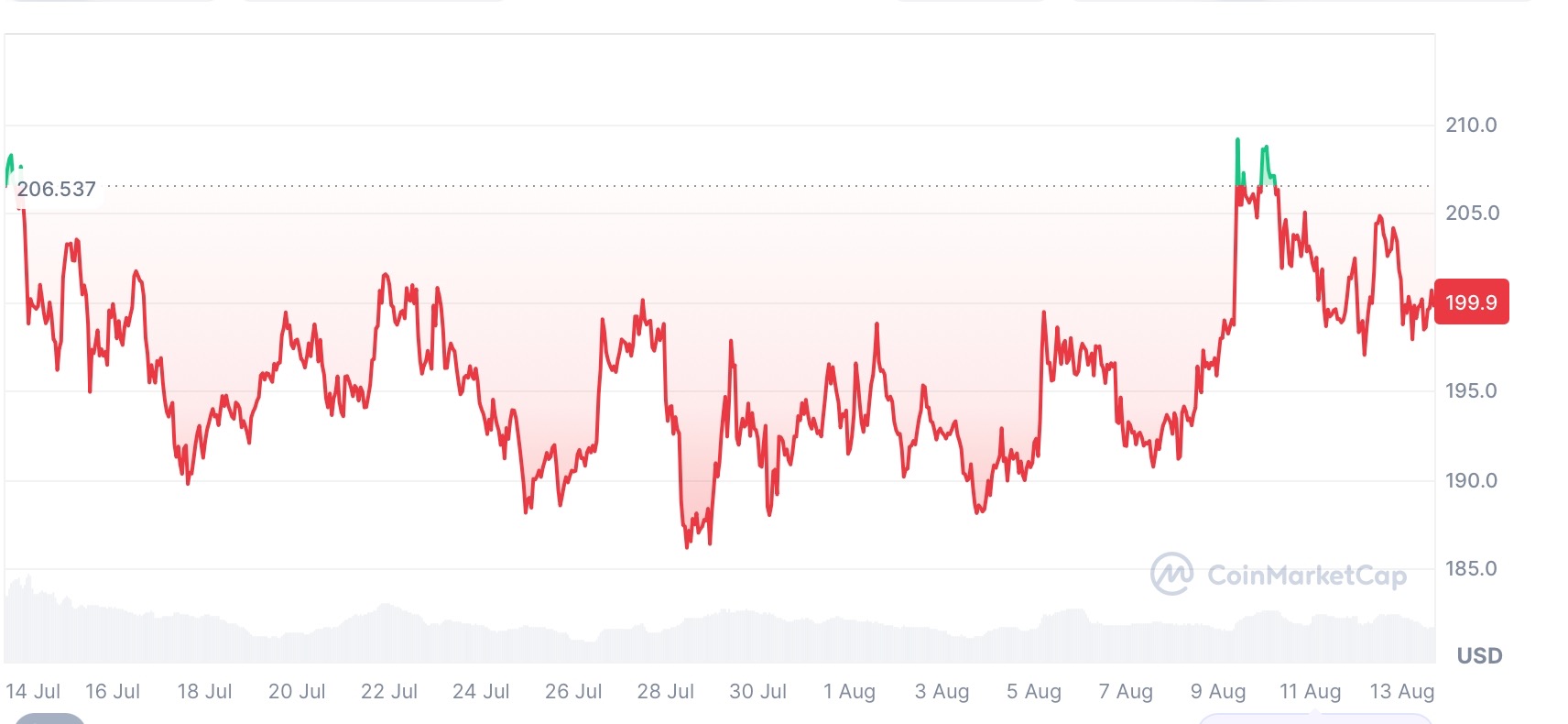
TAO traded above $200 several times in July but repeatedly returned below the level. Data shows closes above $200 around July 10, 12, 14 and 21, followed by a decline toward $187 by July 27.
This suggests that $200 has become an area where buyers and sellers disagree sharply.
For short-term traders, a move above the level is less meaningful without sustained volume and a successful retest. For longer-term observers, the price itself matters less than whether network improvements lead to stronger demand.
The failure to hold $200 does not invalidate the Bittensor thesis. It does show that protocol upgrades and the AI narrative have not yet produced enough buying pressure to establish a clear new trend.
The Adoption Question
Bittensor’s investment case ultimately depends on usage.
Subnet market value, staking activity and emissions are visible on-chain, but they do not tell the entire story. A subnet may attract speculative capital without developing a competitive product.
Useful evidence would include paying customers, recurring AI requests, verifiable revenue, active developers and performance that compares favorably with centralized alternatives. These measures are harder to track than token prices, but they provide a better indication of whether a subnet is creating economic value.
The strongest case for TAO would be a network in which successful AI services increase demand for Alpha, which then creates sustainable demand for the TAO used throughout the subnet economy.
That process is still developing.
Tapbit View
Bittensor is attempting something more ambitious than launching another AI-themed token. It is building a market in which competing AI services receive incentives based partly on how participants allocate capital.
Recent upgrades are designed to make that market more selective. Weak subnets may receive fewer rewards, while operators can face greater pressure to maintain community support. These changes make Bittensor more interesting, but they also raise difficult questions about concentration, speculation and how the network measures useful work.
TAO’s return to $200 would attract attention. Evidence that Bittensor subnets are gaining real users would matter more.
Readers can follow digital asset trends and market education through Tapbit. Existing users can log in here, while new users can create an account.
Frequently Asked Questions
What is Bittensor?
Bittensor is a decentralized network that rewards participants for providing and evaluating machine intelligence. Its specialized subnets can focus on services such as inference, data, model training and forecasting.
What is TAO used for?
TAO is the base asset of the Bittensor network. It is used in staking, subnet liquidity and the system that distributes incentives across the ecosystem.
Why is TAO receiving renewed attention?
Interest is being driven by the wider AI narrative, changes to Bittensor’s subnet emission model, speculation around the $200 price level and Grayscale’s proposed exchange-traded product.


