

Bitcoin has climbed back toward $80,000. Ethereum has recovered to around $2,500, and the total crypto market is worth roughly $2.75 trillion again.
That is a real rebound. But we can not assume a complete market recovery.
The strongest evidence comes from US spot Bitcoin ETFs, which attracted about $2.57 billion over seven consecutive trading sessions through August 25. The weaker evidence comes from the rest of the market: stablecoin supply has barely changed over the past month, DeFi trading activity remains subdued, and Bitcoin still accounts for almost 58% of total crypto value.
Capital is returning, but it is choosing its destination carefully.
The Rebound Is Larger Than a Normal Relief Rally
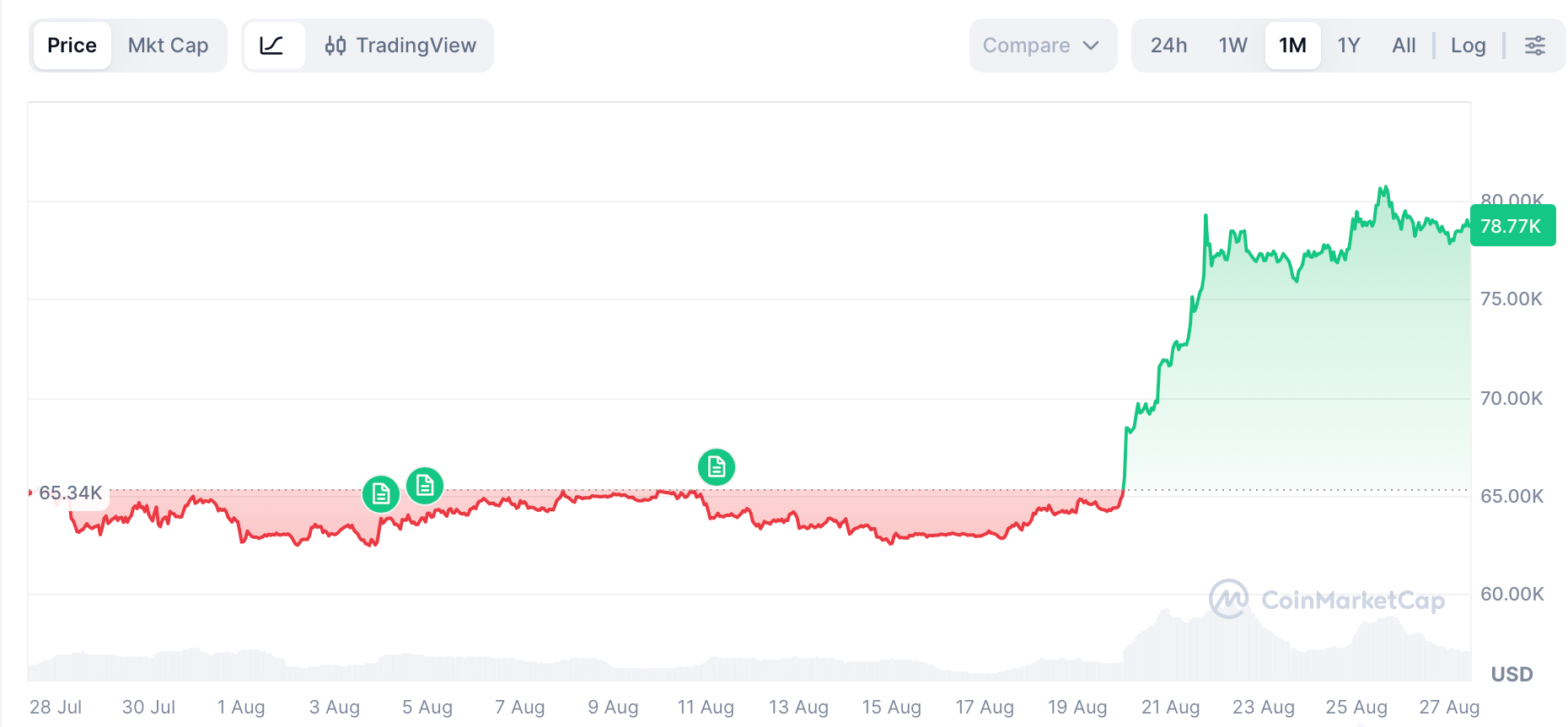
Bitcoin was trading near $63,000 in mid-August before briefly moving above $80,000. It now sits around $79,000, up more than 22% over seven days. Ethereum has gained approximately 29% over the same period.
The global crypto market capitalization has recovered from $2.1 trillion at the end of the second quarter to about $2.75 trillion. That represents an increase of roughly 31%.
Trading has also picked up. Daily centralized exchange volume doubled from its yearly low during the latest advance, reaching approximately $37 billion. The market is no longer as inactive as it was during the second-quarter decline.
These changes are too large to dismiss as noise. The question is whether the rally has enough new liquidity to continue once short covering slows.
Bitcoin ETFs Are Providing Real Demand
US spot Bitcoin ETFs recorded seven consecutive sessions of net inflows between August 17 and August 25. According to Farside Investors, the funds attracted approximately $2.57 billion during that period.
The strongest day was August 20, when net inflows reached $606.3 million. Another $314.3 million arrived on August 25. This is direct evidence that regulated investment products are buying into the recovery. It also helps explain why Bitcoin has led the market.
The demand is not evenly distributed. BlackRock’s IBIT supplied about 90% of the August 25 total, while most other funds recorded modest inflows or no activity. Institutional demand is strong, but concentrated.
ETF flows also say more about Bitcoin than they do about crypto as a whole. Money entering IBIT does not automatically provide liquidity for DeFi protocols, smaller tokens or on-chain lending markets.
Stablecoin Liquidity Has Not Caught Up
The clearest reason for caution is the stablecoin market. DefiLlama currently places total stablecoin capitalization near $303 billion. Supply has increased by about $2.4 billion over seven days, but its 30-day change is close to zero. The total also remains below the May peak of approximately $322 billion.
Stablecoins are the working capital of the crypto economy. They fund exchange trading, DeFi borrowing, derivatives collateral and on-chain settlement. When supply expands for a sustained period, more deployable capital is entering the ecosystem.
That expansion has not happened yet.
The contrast is important. Bitcoin ETF demand has recovered, while broad crypto-native liquidity remains flat. The rally therefore has a strong institutional Bitcoin component but less evidence of widespread capital returning to the rest of the market.
Market Breadth Remains Narrow

Bitcoin represents approximately 57.8% of the global crypto market, while ethereum accounts for another 10.8%.
Together, the two largest assets control more than two-thirds of total market value. Ethereum has recently outperformed Bitcoin, and some altcoins have posted strong gains, but the recovery is still concentrated near the top of the market.
Centralized exchange volume has improved from its yearly low, yet it remains far below the 12-month daily high of approximately $105 billion. August volume was also still tracking below July’s total as of August 24.
DeFi activity offers limited confirmation. Recent DefiLlama figures put total value locked near $76 billion, while seven-day DEX volume declined by about 6.6% and on-chain perpetual volume fell roughly 11%.
Dollar-denominated TVL can rise simply because crypto prices increase. Trading volume, borrowing and protocol revenue are better tests of whether users are returning. Those measures have not matched the speed of the price recovery.
The Federal Reserve Is Still a Constraint
The Federal Reserve held its target rate at 3.50%–3.75% in July, but three officials voted for an increase.
Minutes released in August showed that many policymakers believed further tightening could be necessary if inflation failed to ease. Markets currently lean toward another hold in September, though energy prices and upcoming inflation data could change that view.
A pause would remove an immediate threat. It would not deliver the kind of liquidity boost normally associated with rate cuts or balance-sheet expansion.
Crypto has rallied despite restrictive monetary policy. A renewed increase in bond yields or a surprise rate hike would test whether that strength can survive without easier financial conditions.
Regulation Is Not Yet a Confirmed Catalyst
The CLARITY Act has a procedural vote scheduled for September 15. The Senate will first decide whether to proceed with debate, a step requiring 60 votes.
It is not a final passage vote.
Disputes remain over stablecoin rewards, financial crime rules, developer protections and restrictions on public officials profiting from crypto ventures. Even if the Senate advances the bill, further votes and possible House approval would still be required.
Clearer US market rules could support institutional participation over time. Traders should not price the legislation as a completed event before the September vote.
A Recovery, but Not the Same Recovery for Every Asset
Bitcoin has institutional access, deep liquidity and a clear role in regulated portfolios. It can recover while large parts of the altcoin market remain weak.
That appears to be the structure of the current move.
ETF inflows and lower bearish leverage support the rally. Flat stablecoin supply, limited market breadth and softer DeFi activity argue against calling it a full crypto bull market.
The next phase will depend less on another dramatic daily candle and more on whether capital spreads beyond Bitcoin. If stablecoin issuance, spot volume and on-chain demand begin rising together, the recovery will have stronger foundations. If they remain flat, the market may continue to favor a small group of liquid assets.
Tapbit tracks the capital flows, market structure and macro signals shaping both crypto and global asset markets. Explore more analysis on Tapbit, access an existing account through the login page, or register here.
Frequently Asked Questions
Has the crypto market recovered in 2026?
Crypto prices have recovered substantially from their second-quarter lows. However, stablecoin growth, DeFi activity and market breadth have not fully confirmed a broad recovery.
Why did Bitcoin rise toward $80,000?
The move was supported by strong spot Bitcoin ETF inflows and a large short squeeze. Falling futures open interest suggests many bearish positions were closed as the price climbed.
How much money recently entered Bitcoin ETFs?
US spot Bitcoin ETFs recorded approximately $2.57 billion in net inflows over seven consecutive trading sessions from August 17 through August 25.


