

Bitcoin ETF Inflows Return as BTC Nears 63K
Bitcoin ETF inflows are back in focus after U.S.-listed spot Bitcoin ETFs reportedly pulled in roughly $221-$224 million in net inflows, ending a recent run of outflows. The move coincided with Bitcoin recovering toward the 63K zone, giving traders a clear question: is this the start of a stronger recovery or only a short-term bounce?
The headline matters because ETF flows have become one of the cleanest ways to read institutional demand for Bitcoin. When spot ETFs attract net inflows, more capital is moving into listed BTC exposure. When they show net outflows, capital is leaving that channel.
Bitcoin does not move only because of ETF flows. Macro conditions, rates, the U.S. dollar, derivatives positioning, stablecoin liquidity, and spot demand all matter. Still, ETF flow data can set the tone because it gives the market a daily signal that is easy to track.
Bitcoin ETF Inflow and Outflow: What Changed This Week?
The important change is direction. After several days of outflows, ETF flow data turned positive again. That shift can affect sentiment even before the total dollar amount becomes large.
When traders see repeated outflows, they may assume institutions are reducing exposure. When inflows return, the market may interpret it as renewed confidence or at least a pause in selling pressure. That can help BTC stabilize after a sharp decline.
There is also a timing effect. ETF inflows returned while Bitcoin was already trying to recover from support. A positive flow signal at a technical turning point can encourage traders to buy the rebound rather than fade it.
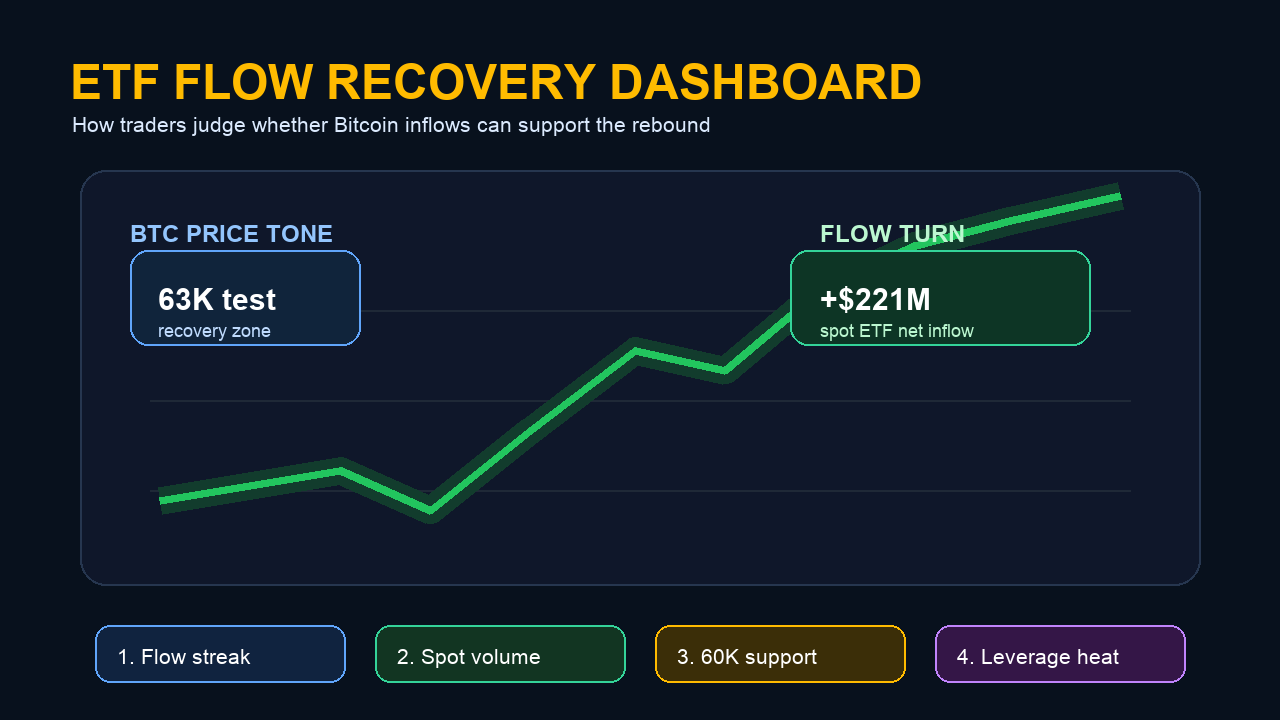
Why the Six-Day Outflow Streak Matters
Outflow streaks matter because they can create a negative feedback loop. If Bitcoin falls and ETFs lose assets, traders may worry that institutions are stepping back. That concern can increase selling pressure, especially if price is near a major support level.
Ending an outflow streak does not erase all risk, but it changes the conversation. Instead of asking whether ETF demand is disappearing, traders begin asking whether demand is returning.
The size of the inflow also matters. A small inflow may simply show stabilization. A larger inflow can suggest that buyers are taking advantage of lower prices. Reports of more than $200 million in net inflows were enough to draw attention because the market had just come through a period of pressure.
Bitcoin ETF Inflows Tracker: What Traders Should Watch
Traders should not look at one day in isolation. A better approach is to follow the trend.
| Signal | Bullish Reading | Cautious Reading |
|---|---|---|
| Daily net flow | Multiple inflow days | One-day inflow fades quickly |
| BTC price reaction | Holds above support | Rejects near resistance |
| Volume | Spot demand rises | Move driven by thin liquidity |
| Derivatives | Funding stays balanced | Leverage overheats |
The most useful signal is alignment. ETF inflows, spot volume, price structure, and macro sentiment should point in the same direction. If only one signal is positive, the recovery may be fragile.
Tapbit users can view market data to compare BTC with broader crypto conditions. New users can create an account before exploring live trading tools.
BTC Futures vs BTC Spot: How Traders Can React on Tapbit
If traders want to follow BTC after ETF flow headlines, Tapbit offers both futures and spot access. These are different tools.
BTC futures can be used to trade long or short with leverage, but leverage increases risk:
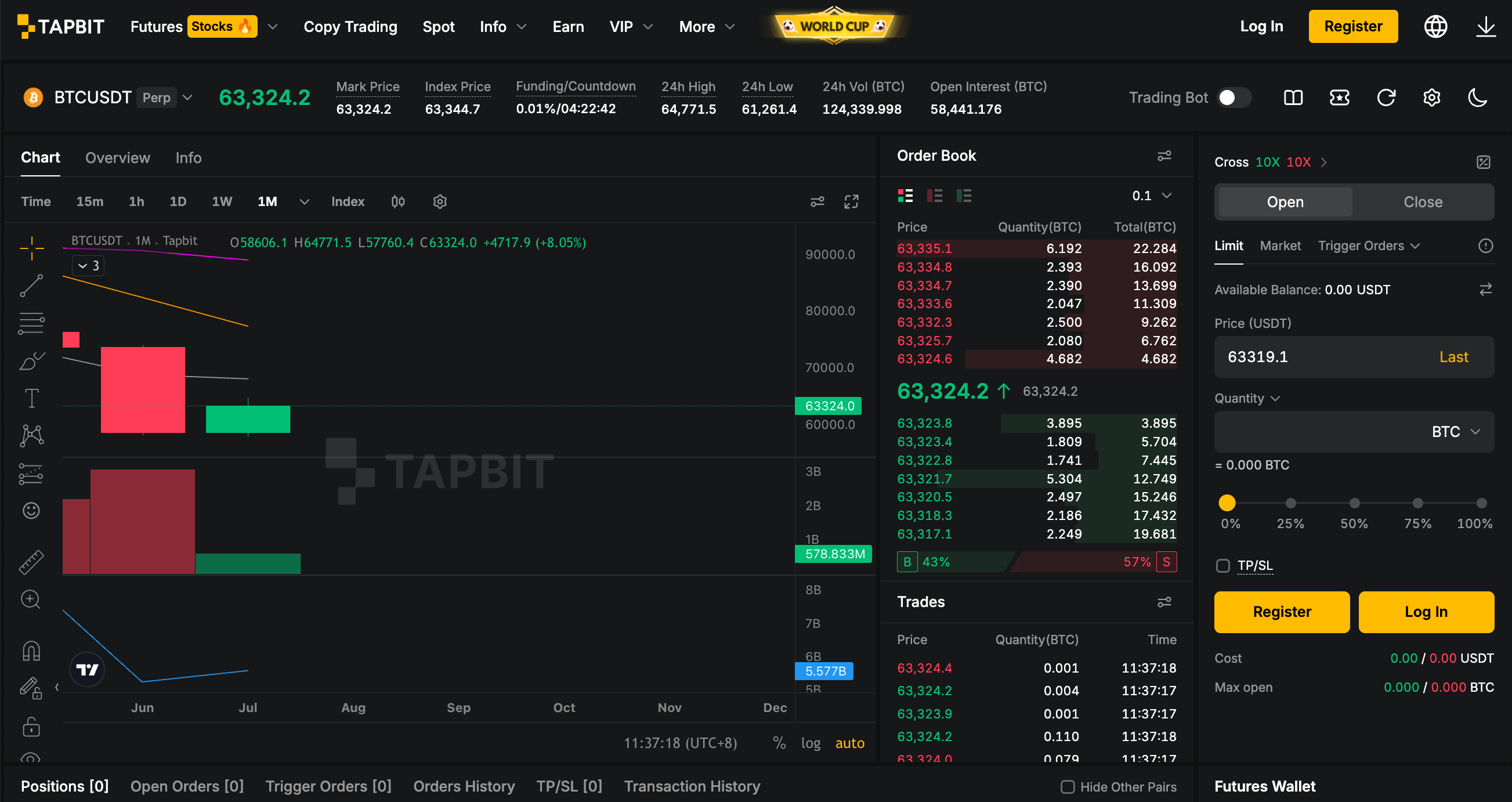
- Open BTCUSDT futures.
- Check price, funding, order book, 24H change, and volume.
- Choose margin, leverage, and order type.
- Set TP/SL before opening a long or short.
BTC spot is simpler because it involves buying or selling BTC against USDT without futures leverage:
- Open BTC/USDT spot.
- Check price, liquidity, and recent movement.
- Choose order type and amount.
- Confirm the order and monitor the position.
Futures are better suited for active directional trading. Spot is often easier for users who want direct BTC exposure without leverage. Traders should review trading fees before placing orders.
Is the ETF-Led BTC Recovery Sustainable?
The recovery becomes more sustainable if three things happen.
First, ETF inflows need to continue beyond one positive day. A single strong inflow can spark a rally, but a multi-day improvement is more convincing.
Second, Bitcoin needs to hold key levels. The 60K area is an important psychological support zone, while 63K-64K is the first test of whether the rebound can build acceptance. A move above 64K-65K with strong volume would make the recovery look stronger.
Third, macro conditions need to remain supportive. If rate fears ease and the dollar weakens, BTC may have more room to recover. If rates or the dollar move sharply higher, ETF inflows may not be enough.
For sentiment context, Tapbit Learn's Bitcoin dominance guide explains why BTC often leads the broader crypto market.
What Could Break the Rebound?
The biggest risks are renewed ETF outflows, a loss of 60K support, overheated leverage, and hawkish macro data. Any of these could turn a rebound into another failed rally.
Traders should also watch whether altcoins join the move. If BTC rises while the rest of the market stays weak, the recovery may be defensive. If ETH and large-cap altcoins also improve, risk appetite may be returning more broadly.
The key takeaway is that Bitcoin ETF inflows have improved the tone, but sustainability depends on follow-through. A real recovery needs continuing inflows, stronger volume, healthier positioning, and price acceptance above key BTC levels.
FAQ
What are Bitcoin ETF inflows?
Bitcoin ETF inflows happen when more capital enters spot Bitcoin ETFs than leaves them during a given period.
Where can traders track Bitcoin ETF flows?
Traders often follow ETF flow dashboards, issuer reports, and market-data platforms that publish daily net inflow and outflow data.
Why do ETF inflows matter for BTC?
They show whether listed institutional demand for Bitcoin is increasing or decreasing.
Are Bitcoin ETF inflows enough to sustain a rally?
Not by themselves. BTC also needs strong price structure, supportive macro conditions, and healthy volume.
What is the difference between BTC spot and BTC futures?
Spot trading involves buying or selling BTC directly. Futures trading uses derivatives and can include leverage, long positions, or short positions.


