
Coinbase and Circle are back in the spotlight, but not for the reasons investors usually like.
Both companies are central to the crypto market. Coinbase is one of the most important public crypto exchanges, while Circle is behind USDC, one of the largest stablecoins in the digital asset economy. In a stronger market, those positions can look powerful. They give investors exposure to trading activity, institutional adoption, stablecoin usage and the broader growth of crypto infrastructure.
But in a weaker market, the same exposure can cut the other way.
The recent pressure on Coinbase and Circle shows that crypto equities are still not ordinary tech stocks. They may trade on public exchanges and report earnings like traditional companies, but their valuations remain closely connected to Bitcoin, Ethereum, trading volumes, stablecoin flows, regulation and investor appetite for risk.
That is the real message from this selloff. The market is not only asking whether Coinbase and Circle are good companies. It is asking how much investors should pay for crypto businesses when the cycle turns less friendly.
Coinbase and Circle Are Not Moving Like Normal Tech Stocks

When the broader stock market pulls back slightly but crypto-related equities fall much harder, traders should pay attention.
Coinbase and Circle sit in a different category from most software or fintech companies. A normal tech stock may be judged mainly on revenue growth, margins, product adoption and enterprise demand. Crypto equities have to deal with all of that, plus another layer: the price and liquidity cycle of digital assets.
That makes them more sensitive.
When Bitcoin falls through a key level, investors start to think about weaker trading volume, lower retail activity and falling transaction revenue. When Ethereum loses momentum, it can raise concerns about onchain activity, DeFi demand and broader crypto participation. When regulation is unclear, investors apply a bigger discount to the sector.
For Coinbase and Circle, these forces show up quickly in share prices.
That does not mean the companies are broken. It means the market is treating them as high-beta crypto businesses, not as steady technology compounders.
Coinbase Still Depends on Market Activity
Coinbase has spent years trying to become more than a simple trading-fee business. It has built subscription and services revenue, institutional custody, staking products, payments tools and other business lines that may help smooth earnings over time.
But the market still sees Coinbase as one of the cleanest public-market ways to express a view on crypto trading activity. When Bitcoin is rising, retail traders return, institutions become more active and volumes increase. In that environment, Coinbase can look like a strong operating leverage story.
When the cycle weakens, the opposite happens. Lower trading activity can hit transaction revenue. Softer asset prices can reduce enthusiasm. Earnings become harder to forecast. Investors who once paid a premium for crypto exposure begin to ask whether that premium still makes sense.
This is why COIN often moves more aggressively than Bitcoin itself. It is not just a stock. It is also a sentiment gauge for the crypto exchange business.
Circle Has a Different Problem
Circle is not Coinbase. Its main story is USDC, stablecoin adoption and the future of digital dollars. That gives Circle a different kind of exposure. It is less directly tied to retail trading fees and more connected to stablecoin circulation, reserve income, interest rates, distribution partnerships and regulation.
That can be attractive. Stablecoins are one of the clearest real-world use cases in crypto. They are used for trading, payments, settlement, DeFi, remittances and cross-border transfers. If tokenized finance continues to grow, stablecoins will likely remain a key part of the system.
But Circle’s business still has risks. Stablecoin revenue depends heavily on the size of USDC in circulation and the yield earned on reserves. If interest rates fall, reserve income can come under pressure. If competition increases, distribution costs and margins may become more important. If regulation changes, the entire operating model may need to adapt.
That is why CRCL should not be treated as simply “the stablecoin stock.” It is a business tied to one of crypto’s strongest narratives, but it is still exposed to market cycles, policy risk and valuation resets.
Bitcoin Still Sets the Mood
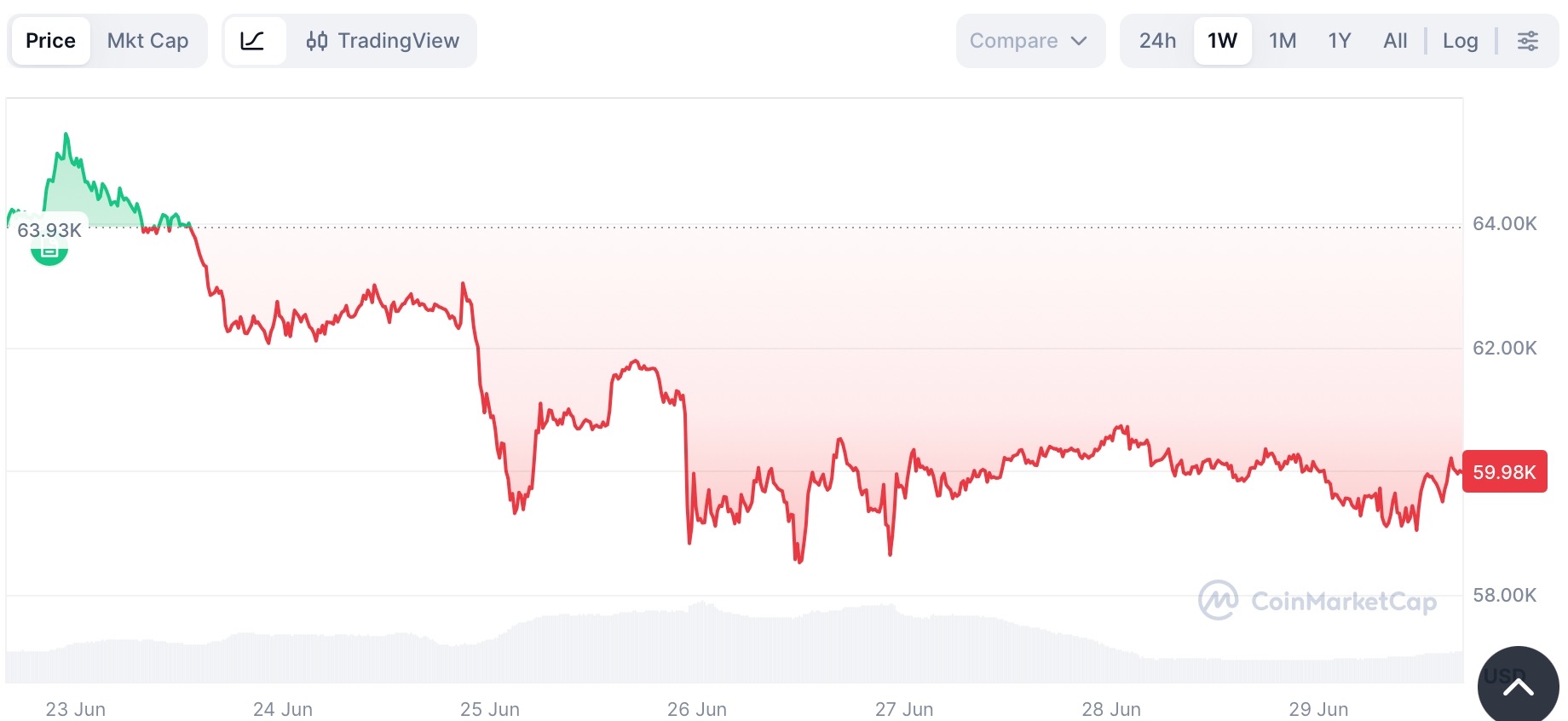
Institutional adoption has changed crypto, but it has not removed the cycle. Bitcoin ETFs, regulated stablecoins, tokenization platforms and public crypto companies have made the market look more mature than it did in earlier years. More institutions are involved. More products exist. More traditional investors are paying attention.
Still, when Bitcoin weakens, the mood changes quickly.
Crypto equities feel that shift because they are tied to confidence. If traders are taking less risk, volumes may slow. If investors are worried about another leg lower in BTC or ETH, they may sell crypto stocks first. If funding conditions tighten, the market becomes less willing to pay high multiples for businesses linked to digital assets.
That is why Coinbase and Circle can fall even when their long-term stories are still intact. The cycle does not have to destroy the business to hurt the stock. It only has to reset expectations.
Why the Four-Year Cycle Still Matters
For years, crypto traders have watched the Bitcoin four-year cycle as a rough guide to market psychology. The market has changed, and the cycle is no longer as simple as it once was. But the latest weakness is a reminder that it has not disappeared.
Crypto still moves through phases of excitement, crowding, disappointment, deleveraging and recovery. Public crypto companies are now part of that cycle. In some ways, they make the cycle more visible because traditional investors can express crypto views through listed stocks.
When sentiment is strong, Coinbase and Circle can benefit from the idea that crypto adoption is becoming mainstream. When sentiment turns, those same stocks become easy places for investors to reduce exposure.
That is the uncomfortable truth about crypto equities. They are adoption stories, but they are also cycle trades.
What Traders Should Watch Next
For Coinbase, the key questions are fairly direct. Are trading volumes stabilizing? Is transaction revenue holding up? Are subscription and services revenue becoming a larger part of the business? Can the company keep costs under control if the crypto market remains weak?
For Circle, the questions are different. Is USDC circulation growing or shrinking? How sensitive is revenue to interest rates? How expensive are distribution partnerships becoming? Will stablecoin regulation support trusted issuers or increase compliance costs?
For both companies, regulation remains critical. Clearer rules could help the sector by reducing uncertainty and making institutional participation easier. But regulation can also increase costs, change product design or limit certain business lines. That is why investors are watching U.S. crypto policy closely.
The other thing to watch is Bitcoin itself. If BTC stabilizes, crypto equities may find support. If BTC continues to weaken, investors may keep reducing exposure to Coinbase, Circle and other crypto-linked names, even if the companies remain important long-term players.
What This Means for Tapbit Users
Coinbase and Circle are showing traders that crypto equities remain tightly linked to the Bitcoin cycle. These companies may operate in different parts of the market, but both are exposed to the same broader question: how much is the market willing to pay for crypto infrastructure when digital asset prices are falling and risk appetite is weaker?
Coinbase is tied closely to trading activity and crypto exchange economics. Circle is tied to stablecoin growth, reserve income and regulation. Both can benefit from long-term adoption, but both can also fall hard when expectations reset.
For traders, the lesson is simple. Crypto equities are not just tech stocks. They are businesses tied to digital asset liquidity, market sentiment and policy risk. That makes them important to watch, but risky to trade without a clear plan.
Bitcoin may remain the center of the cycle. Coinbase and Circle show how that cycle now reaches deep into public markets.
Users can visit Tapbit to explore supported crypto markets and educational resources. Existing users can log in, while new users can register here.
Frequently Asked Questions (FAQ)
Why are Coinbase and Circle under pressure?
Coinbase and Circle are under pressure because investors are reassessing crypto-related stocks as Bitcoin, Ethereum and broader risk sentiment weaken. These companies are not valued like ordinary technology stocks. Their share prices are closely tied to crypto market activity, trading volume, stablecoin flows, regulation and investor confidence.
Are Coinbase and Circle normal tech stocks?
Not really. Coinbase and Circle are public companies, but their businesses are deeply connected to the crypto market. Coinbase is tied to exchange activity, trading revenue, custody and crypto services. Circle is tied to USDC, stablecoin circulation, reserve income and digital dollar adoption.
Why do crypto stocks fall harder than the broader market?
Crypto stocks often act like high-beta exposure to digital assets. When Bitcoin or Ethereum falls, investors may expect lower trading activity, weaker user demand and reduced crypto-sector revenue. That can cause stocks like Coinbase and Circle to fall more sharply than the broader market.


