
AI has become one of the biggest forces driving technology stocks. But the next phase of the AI trade may not be only about large language models, cloud data centers or GPU shortages.
It may also be about supply chains.
Apple’s expanded chip agreement with Broadcom shows why. The deal is not just a supplier contract. It reflects how major technology companies are preparing for a future where AI performance depends on reliable access to custom chips, wireless components, device-level processing and geographically resilient manufacturing.
For AAPL stock investors, the key question is not simply whether Apple can announce another AI feature. The bigger question is whether Apple can build the hardware foundation needed to support AI across iPhone, Mac, iPad, Apple Watch and future devices — while still protecting margins.
This is why Apple’s Broadcom deal matters.
What Happened Between Apple and Broadcom?
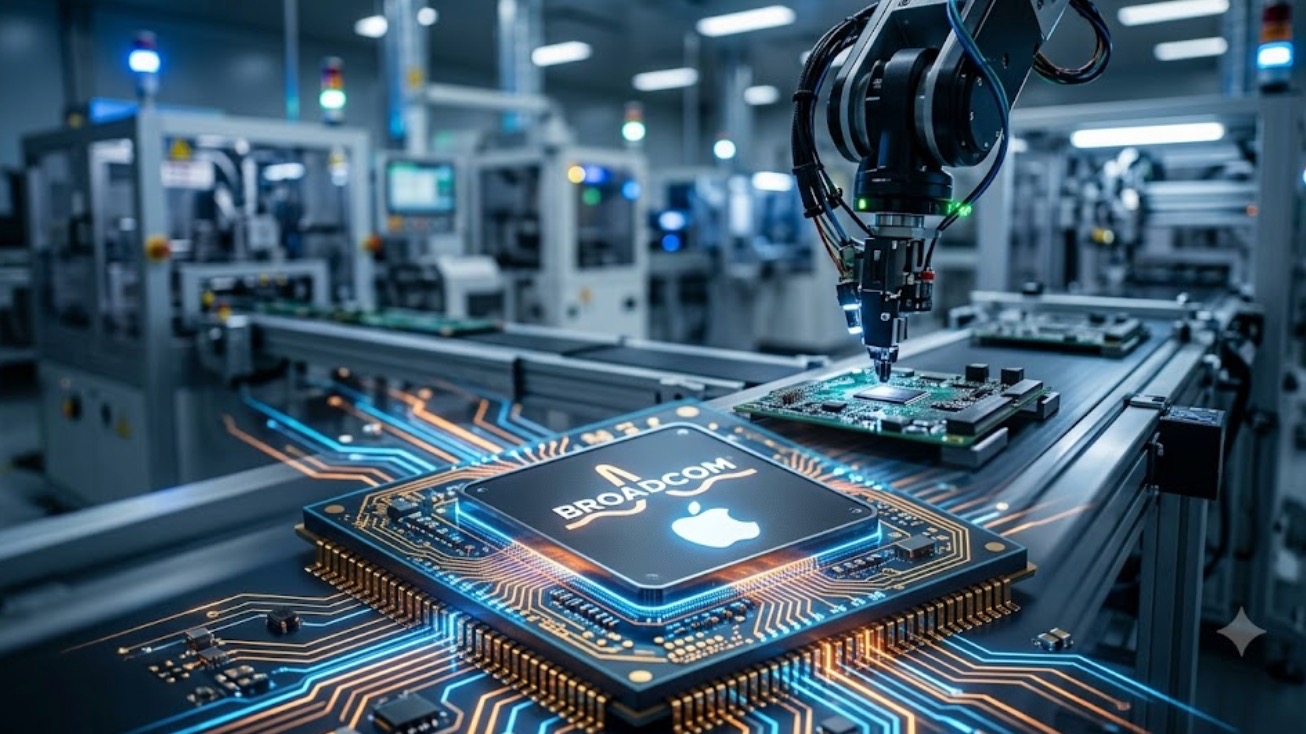
Apple has announced an expanded multi-year agreement with Broadcom focused on U.S.-made chips.
The Wall Street Journal reported that Apple plans to spend more than $30 billion on U.S.-made chips from Broadcom over five years. The agreement is expected to cover more than 15 billion domestically produced chips, including radio and communication components used in Apple devices, such as 5G, GPS, Bluetooth and Wi-Fi chips.
TechRadar also reported that Broadcom’s agreement with Apple has been extended through 2031, strengthening a long-running partnership in custom chips, radio frequency components, Wi-Fi, Bluetooth and networking hardware.
For Broadcom, the deal provides long-term revenue visibility from one of the world’s most important technology customers.
For Apple, the deal helps secure critical components for future product cycles.
That is why the market reaction was different for the two companies. Broadcom is the more direct revenue beneficiary, while Apple is using the agreement as part of a broader supply chain and hardware strategy.
Why This Deal Is About More Than Wi-Fi Chips
At first glance, the deal may look like a routine component supply agreement. But in the AI era, connectivity and custom silicon matter more than before.
AI features on consumer devices depend on several layers of hardware: processors, memory, sensors, connectivity, power efficiency and specialized chips. If Apple wants more AI to run directly on devices, it needs hardware that can support fast, private and efficient processing.
Barron’s reported that Broadcom will provide custom ASICs to Apple and linked the deal to “edge AI,” where artificial intelligence runs directly on devices such as phones, laptops, watches and tablets instead of relying entirely on cloud infrastructure.
This is important because Apple’s AI strategy is different from companies spending heavily on cloud AI infrastructure.
Apple’s advantage has always been hardware-software integration. If the company can improve on-device AI through custom silicon and better connectivity, it may offer AI features without needing the same level of data center spending as some cloud-first competitors.
That could make Apple’s AI strategy more capital-efficient.
Edge AI Is Becoming a Key Apple Theme
Edge AI means AI processing happens closer to the user, often directly on a device.
For Apple, this fits naturally with its ecosystem. The company controls the device, operating system, chip design, app environment and user experience. That gives Apple a strong position if AI features can be built directly into everyday products.
This is different from a cloud-first AI model. Cloud AI may require large data center investments, expensive GPUs and heavy power consumption. Edge AI can reduce latency, improve privacy and make AI features feel more integrated into the device experience.
Barron’s recently described Apple as an unusual defensive technology stock because its AI approach is more restrained and device-focused than peers that are spending heavily on frontier AI models and cloud infrastructure. The same report noted that Apple’s lower-cost edge AI strategy has become attractive to investors concerned about rising AI capital expenditure across the tech sector.
This does not mean Apple faces no AI risk. It means Apple is trying to compete in AI through product integration, device intelligence and ecosystem control rather than only through large-scale cloud spending.
Supply Chain Control Is Now Part of AI Strategy
The Broadcom deal also shows that AI hardware strategy is becoming a supply chain strategy.
Technology companies are under pressure to secure critical components, reduce geopolitical risk and show stronger commitments to domestic manufacturing. Apple has long relied on a global supply chain, but recent years have made supply chain resilience more important for investors.
The Wall Street Journal reported that Apple’s Broadcom agreement is part of a broader U.S. investment commitment and supports domestic production, including Broadcom’s facility in Fort Collins, Colorado.
This matters for AAPL stock because supply chain control can influence several key investor concerns:
-
product launch reliability,
-
component cost stability,
-
tariff and regulatory exposure,
-
margin protection,
-
long-term manufacturing flexibility.
In the AI era, supply chain delays are not just operational problems. They can affect product timelines, AI feature rollout and market confidence.
Apple Is Not Fully Moving Away From Global Supply Chains
It is also important not to overstate the story. Apple’s Broadcom deal does not mean Apple is moving its entire chip supply chain to the United States. Apple still relies on a global ecosystem for many key components.
The Wall Street Journal reported that Apple continues to source more expensive components such as logic and memory chips internationally from companies including TSMC, Samsung and SK Hynix, even as it strengthens domestic supply commitments for other chips.
This is the more realistic interpretation. Apple is not abandoning global manufacturing. It is becoming more selective and strategic. Critical custom chips, communication components and certain U.S.-made parts can help reduce risk, while global suppliers remain essential for advanced logic, memory and large-scale production.
For traders, this distinction matters.
Apple’s strategy is not “full reshoring.” It is supply chain diversification.
Why Broadcom May Benefit More Directly
Broadcom may be the clearer short-term winner from the agreement.
A major long-term Apple supply contract gives Broadcom revenue visibility and strengthens its role in custom chip and connectivity markets. TechRadar reported that Apple accounts for about 20% of Broadcom’s revenue, which helps explain why investors reacted strongly to the extended relationship.
Broadcom is also increasingly viewed as an AI infrastructure company, not only a wireless chip supplier. The company has become important in custom silicon, networking and ASIC markets, areas that are closely tied to both edge AI and data center AI demand.
For Apple, the benefits are more strategic and long-term. For Broadcom, the benefits are more directly tied to revenue visibility.
Tapbit View
Apple’s Broadcom agreement is not just a chip supply headline. It shows how AI hardware is becoming a strategic supply chain battle.
Apple is trying to strengthen its edge AI position by controlling more of the hardware foundation behind future devices. Broadcom benefits from long-term visibility and a deeper role in Apple’s custom chip roadmap. Investors are watching both sides because the AI trade is moving beyond models and GPUs into the components that make AI possible.
For Tapbit users, the broader lesson is clear. Markets do not only price stories. They price execution. A company can have a strong AI narrative, but traders still need to watch supply chains, margins, customer demand and whether the market has already priced in too much optimism.
Users can visit Tapbit to explore supported crypto services. Existing users can access their accounts through Tapbit Login, while new users can start through Tapbit Register.
Frequently Asked Questions (FAQ)
What is Apple’s Broadcom chip deal?
Apple has expanded its agreement with Broadcom to purchase U.S.-made chips, including communication and radio components used in Apple devices. The Wall Street Journal reported that the agreement is worth more than $30 billion over five years.
Why does the Broadcom deal matter for AAPL stock?
The deal matters because it supports Apple’s long-term hardware supply chain, edge AI strategy and access to critical communication components.
What is edge AI?
Edge AI refers to artificial intelligence processing that happens directly on devices such as smartphones, laptops, tablets and wearables, rather than entirely in cloud data centers.


