Building a Layer-1 blockchain is rarely derailed by bad code — it’s usually derailed by broken community trust. Right now, Pi Network is caught precisely in between.
Earlier this week, the Pi Core Team issued a hard mandate: all node operators must upgrade their software to Protocol 21 by April 6, 2026. If they miss the deadline, their nodes will be forcibly desynchronized from the mainnet.
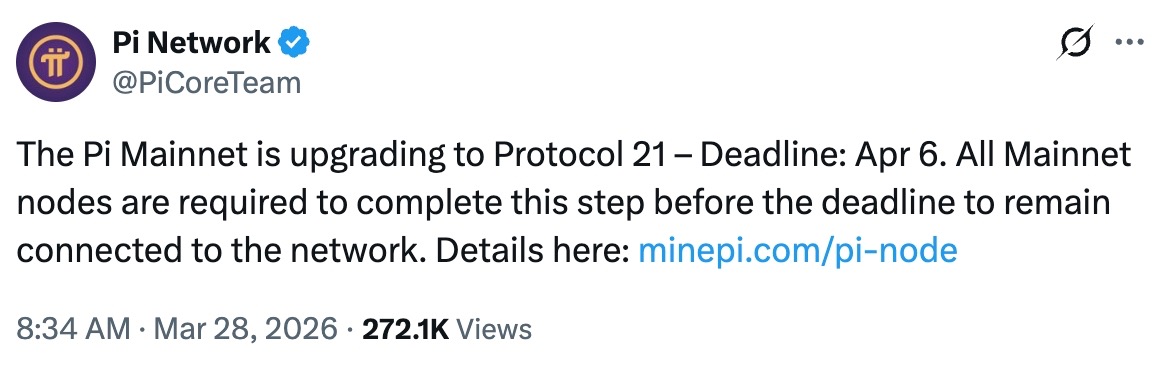
From an engineering perspective, it’s a standard network patch. But in the context of Pi's current ecosystem, this announcement has triggered a massive backlash. At Tapbit, we've been tracking the widening gap between Pi’s aggressive technical roadmap and its paralyzed user base.
Here is why a routine software upgrade is exposing the deepest vulnerability in the Pi Network ecosystem—and how it’s currently bleeding into the IOU markets.
The Code: Why Protocol 21 is Non-Negotiable
Let’s strip away the emotion for a second and look at the architecture. The Pi Core Team isn't forcing this upgrade just to flex their authority. Protocol 21 is a necessary structural foundation.
The development team is executing a highly sequenced rollout. If a node survives the April 6 Protocol 21 cutoff, it prepares the network for the v22.1 stability patch later this month. All of this is merely scaffolding for the main event: the v23.0 release slated for May 18.
The May rollout is make-or-break. It is designed to introduce native smart contract functionality and the underlying architecture for a Pi Decentralized Exchange (DEX). You cannot migrate a network from a closed payment system to a smart-contract hub if half your nodes are running deprecated software. A hard deadline is the only way to ensure consensus alignment.
The Community: 3 Years in the KYC Waiting Room
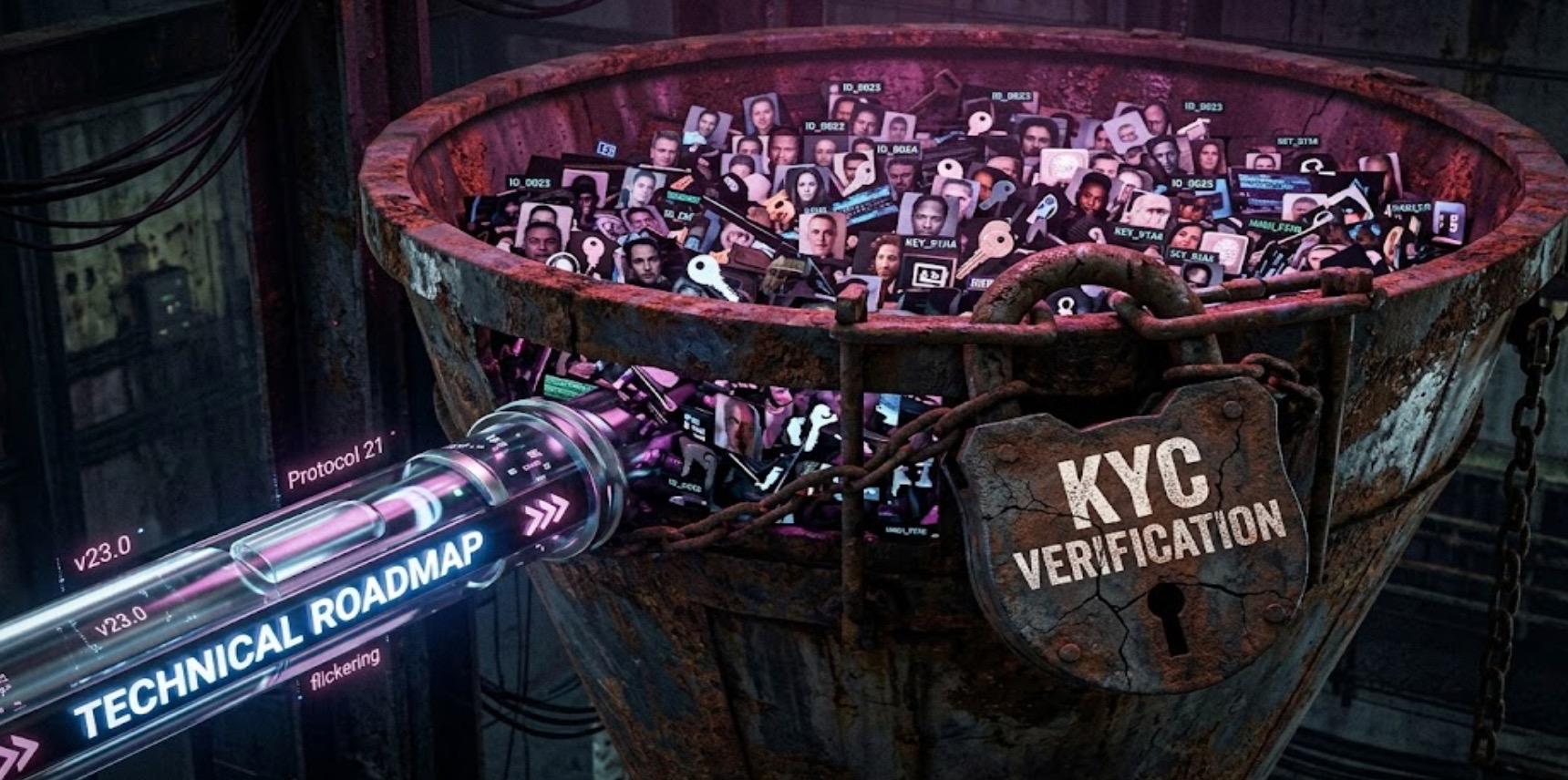
The problem is that you can’t pitch a decentralized future to a community that feels entirely locked out of the present.
When the Pi team announced the Protocol 21 deadline on X, the replies weren't from developers discussing node latency. The feed was instantly flooded by users furious about the ongoing KYC (Know Your Customer) paralysis.
We are looking at a starkly polarized network. On one side, roughly 119,000 "Pioneers" have successfully completed their second mainnet migration. On the other side, millions of early adopters have been trapped in an unmoving KYC verification queue for over three years. They have completed every task on their mainnet checklist, only to be stonewalled by an opaque approval process.
When a project demands immediate compliance from node operators while leaving retail miners in a three-year KYC backlog, the perception gap is stark.
The Market Reality: Enclosed Mainnet and IOU Price Pressure
For traders, this community drama isn't just noise—it's a quantifiable risk that is heavily impacting the market.
Because Pi Network remains locked in its Enclosed Mainnet phase, it operates behind a strict technical firewall. It is technically impossible to deposit or withdraw actual Pi tokens to any external centralized exchange (CEX). Therefore, the PI currently trading on major platforms exists entirely as unofficial IOUs (promissory notes).
When you trade PI today, you are trading a future promise, completely disconnected from actual on-chain liquidity. This structural reality makes the IOU market incredibly sensitive to community sentiment.
If node operator fatigue sets in—driven by the multi-year KYC blackout and the lack of a clear timeline for the Open Mainnet—the fundamental narrative of the project weakens. This psychological exhaustion is already pricing itself into the exchanges. With retail miners losing patience and early adopters feeling abandoned, heavy speculative sell pressure is pinning the PI IOU price in a suppressed, highly volatile range between $0.17 and $0.19. Investors are actively pricing in the risk that the network might struggle to maintain decentralization if node operators unplug their hardware in frustration.
The Bottom Line
Pi Network has the technical talent to launch smart contracts in May. But if they don't solve the KYC bottleneck, they will be launching a state-of-the-art blockchain for an empty room.
Whether you are navigating the volatility of PI IOUs or trading fully mature Layer-1 assets, risk management is your only defense against network uncertainty. Register your Tapbit account today to trade with institutional-grade liquidity. Already tracking the markets? Log in to the Tapbit Trading Terminal to execute your strategies securely.
Frequently Asked Questions (FAQ)
What exactly happens on April 6 for Pi Network?
April 6, 2026, is the hard deadline for all Pi node operators to upgrade to Protocol 21. Any node that fails to run the updated software by this date will be unable to sync with the blockchain, effectively removing them from the network's consensus process.
Why is the Pi community angry about a technical upgrade?
The frustration is misdirected at the upgrade itself. The real anger stems from the fact that the Pi Core Team is aggressively enforcing technical deadlines while millions of everyday users have been stuck waiting for their mandatory KYC (Know Your Customer) approvals for over three years.
What is the Protocol v23.0 upgrade coming in May?
Scheduled for May 18, v23.0 is the highly anticipated core update that the current Protocol 21 mandate is laying the groundwork for. While the Pi Core Team has not publicly released the specific technical payload or feature set for this version, it represents a critical structural milestone in advancing the network's overall mainnet roadmap.


