
In April 2026, Rakuten Wallet officially integrated XRP into its trading and payment ecosystem, marking one of the most significant real-world adoption events for Ripple in Japan this year.
With access to millions of users and a deeply integrated consumer economy, the move raises a critical question:
Can Rakuten’s adoption push XRP toward the $2 milestone?
Rakuten Wallet Adds XRP to Its Ecosystem
According to official announcements, Rakuten Wallet listed XRP alongside assets like Dogecoin, Stellar, Shiba Inu, and Toncoin in April 2026.
Although the launch experienced a brief delay due to system adjustments, services were quickly restored and the rollout resumed.
More importantly, this listing is not just another exchange integration—it connects XRP to one of Japan’s largest consumer ecosystems powered by Rakuten Group.
44 Million Users Gain Access to XRP
Through integration with Rakuten Pay, XRP now gains exposure to approximately 44 million users, enabling:
-
Direct purchase of XRP via Rakuten Wallet
-
Conversion of Rakuten Points into XRP
-
Spending XRP at over 5 million merchants across Japan
This effectively bridges:
loyalty points → crypto → real-world payments
Few cryptocurrencies have achieved this level of consumer-level integration in a regulated market like Japan.
Spend Crypto with XRP
Real-world payments grow
Why This Matters for XRP Adoption
This development positions XRP uniquely in three ways:
Real-World Utility at Scale
Unlike speculative trading alone, XRP can now:
-
Be earned indirectly (via points)
-
Be spent in everyday scenarios
-
Be integrated into a mainstream payment flow
This significantly strengthens XRP’s utility narrative.
Entry Point for Non-Crypto Users
Rakuten’s ecosystem includes:
-
Tens of millions of active users
-
A large-scale loyalty economy
This creates a low-friction onboarding path for new users who may never have used crypto exchanges before.
Institutional Signal From Japan
Japan remains one of the most regulated crypto markets globally, and XRP is already widely supported within its exchange ecosystem.
The Rakuten integration reinforces:
-
Institutional trust
-
Regulatory alignment
-
Long-term viability of XRP in payment systems
XRP Price Reaction and Technical Context
Despite the bullish fundamental news, XRP price remains relatively stable:
-
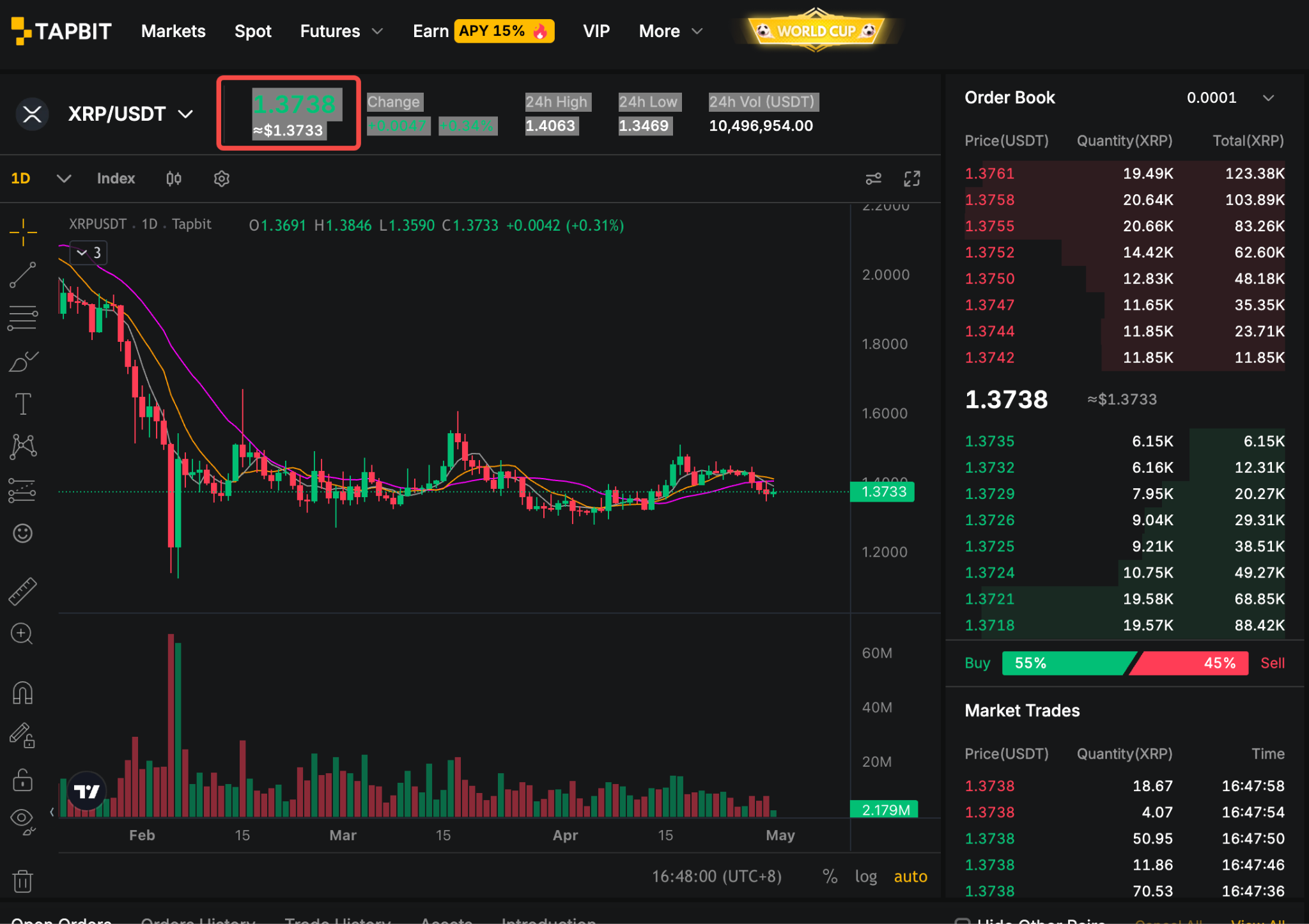
Current price: ~$1.37
-
Resistance: $1.40–$1.45
-
Support: ~$1.30
Market data suggests XRP is still trading within a consolidation pattern, with limited immediate breakout momentum.
This indicates that adoption alone is not enough—market confirmation is still required.
Can Rakuten Push XRP to $2?
Bullish Argument
The Rakuten integration introduces:
-
Massive user exposure
-
Real-world transaction utility
-
A new demand channel via loyalty conversion
If adoption scales, this could:Increase organic demand for XRP
Bearish Reality Check
However, several constraints remain:
-
XRP has not yet broken $1.50 resistance
-
Macro market conditions remain uncertain
-
User adoption of crypto payments is still gradual
In other words:Utility ≠ immediate price surge
Market Outlook: Short-Term vs Mid-Term
Short Term (Q2 2026)
-
XRP likely remains range-bound ($1.30–$1.50)
-
Rakuten impact still in early adoption phase
Mid-Term (Q3–Q4 2026)
-
If usage grows:
-
Increased transaction volume
-
Stronger demand fundamentals
XRP could begin testing $1.80–$2.00
Long-Term Implication
The Rakuten integration is less about immediate price and more about:embedding XRP into everyday finance
This is a structural shift that may:
-
Reduce reliance on speculation
-
Strengthen long-term valuation models
FAQ
What is Rakuten Wallet’s role in XRP adoption?
Rakuten Wallet enables users to buy, hold, and use XRP within Rakuten’s broader ecosystem.
Can XRP be used for payments in Japan now?
Yes. Through Rakuten Pay, users can convert XRP into spendable value and use it at merchants across Japan.
Did XRP price surge after the Rakuten news?
Not significantly. XRP remains in a consolidation range around $1.30–$1.40.
Can this push XRP to $2?
Potentially in the mid-term, but only if:
-
Adoption increases
-
Market conditions improve
-
Technical resistance levels are broken


