

United States Water Reserve (USWR) is a Solana-based cryptocurrency project that has attracted attention through its connection to water scarcity, infrastructure demand, and resource-focused investment narratives. As discussions around climate change, population growth, and AI-related resource consumption continue to grow, water has become an increasingly important topic in both traditional markets and the crypto industry.
The USWR project attempts to position itself within this narrative by using reserve-style branding and water-related themes. While the concept is easy to understand, investors should recognize that a compelling story does not automatically mean a token is backed by real-world assets. Before evaluating USWR as an investment opportunity, it is important to understand what the project represents and what risks may be involved.
What Is United States Water Reserve (USWR)?
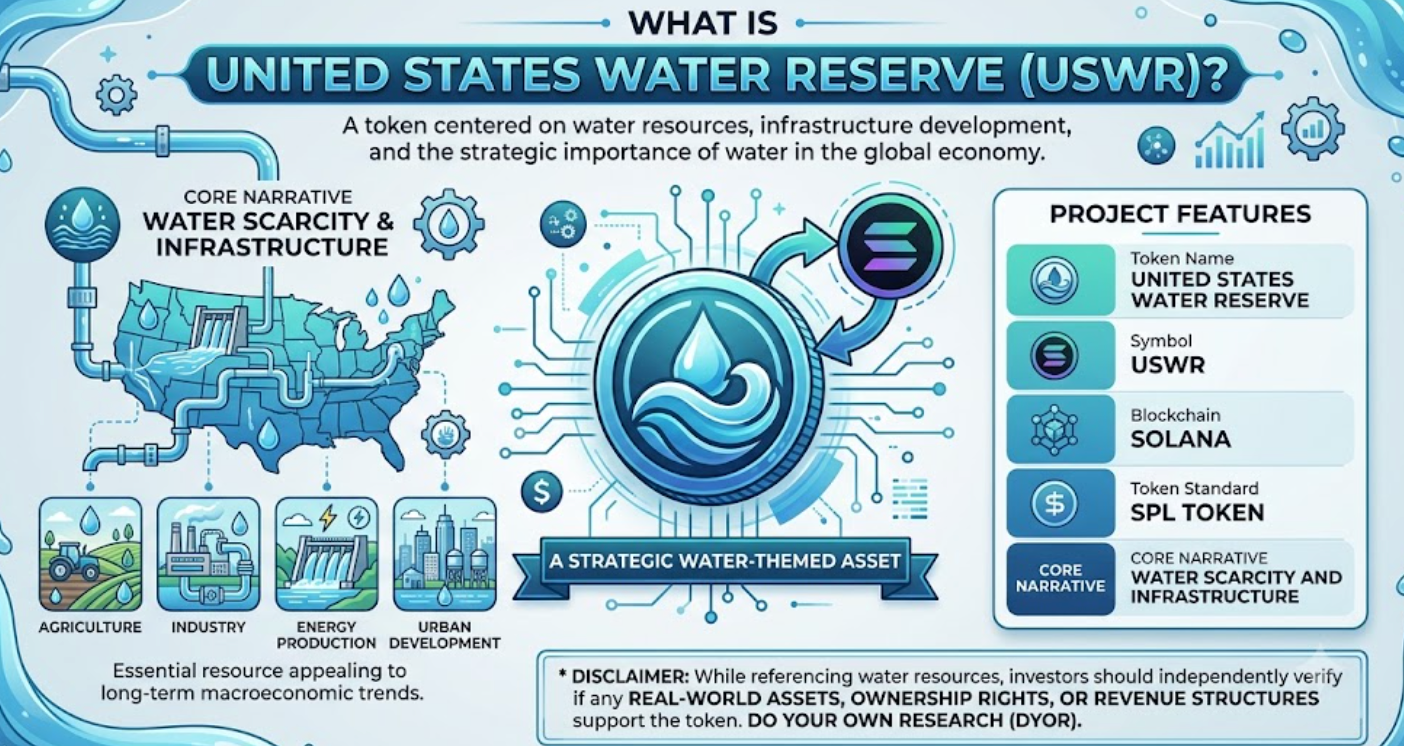
USWR stands for United States Water Reserve, a token operating within the Solana ecosystem. The project centers its identity around water resources, infrastructure development, and the growing importance of water as a strategic asset in the global economy.
Because water is an essential resource for agriculture, industry, energy production, and urban development, the narrative naturally appeals to investors looking for exposure to long-term macroeconomic trends.
| Project Feature | Description |
|---|---|
| Token Name | United States Water Reserve |
| Symbol | USWR |
| Blockchain | Solana |
| Token Standard | SPL Token |
| Core Narrative | Water scarcity and infrastructure |
Although the project references water reserves and resource management, investors should independently verify whether any real-world assets, ownership rights, or revenue structures support the token.
Why Is USWR Getting Attention?
Resource-based narratives have become increasingly popular across crypto markets.
While many projects focus on artificial intelligence, gaming, or decentralized finance, USWR takes a different approach by linking its identity to one of the world's most essential resources.
Several factors have contributed to growing market interest.
| Market Theme | Why It Matters |
| Water Scarcity | Increasing global concern |
| Infrastructure Growth | Long-term investment narrative |
| Resource-Based Assets | Easy for investors to understand |
| Solana Ecosystem | Access to active trading communities |
| Small-Cap Potential | Higher volatility and attention |
The combination of a simple narrative and growing awareness of resource challenges has helped USWR gain visibility among speculative traders.
Is USWR Backed by Real Water Assets?
This is one of the most important questions investors should ask.
A project name that includes terms such as "reserve" or "water" may create the impression of physical asset backing. However, ownership of a cryptocurrency token does not automatically grant rights to water reserves, infrastructure assets, utility revenues, or resource ownership.
A truly asset-backed structure would typically include:
- Legal documentation
- Custody arrangements
- Independent audits
- Ownership records
- Revenue or redemption mechanisms
Without publicly available proof of these elements, USWR should be viewed primarily as a speculative cryptocurrency rather than a verified water-backed investment vehicle.
Understanding USWR Tokenomics
When evaluating USWR, investors should focus on on-chain data rather than marketing narratives.
Token supply is important, but factors such as liquidity, holder concentration, and contract permissions often have a greater impact on risk.
| Evaluation Area | Why It Matters |
| Token Supply | Helps assess inflation risk |
| Liquidity | Determines ease of trading |
| Holder Distribution | Reveals concentration risks |
| Trading Volume | Indicates market activity |
| Contract Permissions | Identifies control mechanisms |
For smaller-cap tokens, liquidity and wallet distribution often influence price movements more than project narratives.
Key Risks Investors Should Consider
Like many emerging Solana-based projects, USWR carries a number of risks that should not be overlooked.
One of the most significant risks is the possibility that investors assume asset backing without independently verifying project claims. Branding can create strong impressions, but investment decisions should always be based on evidence rather than assumptions.
| Risk Factor | Potential Impact |
| Unverified Asset Backing | Uncertain fundamental value |
| Market Volatility | Large price fluctuations |
| Low Liquidity | Difficult trade execution |
| Holder Concentration | Whale-driven price movement |
| Narrative Dependency | Value tied to market sentiment |
These risks do not necessarily mean the project lacks potential, but they highlight the importance of proper research.
How Beginners Can Research USWR
For new investors, understanding a project is often more important than rushing into a trade.
A practical approach is to start by reviewing:
- Official project information
- Token contract details
- Liquidity conditions
- Holder distribution
- Community activity
- Trading volume trends
Monitoring these metrics can help investors better understand how the project is developing over time.
For users interested in exploring broader cryptocurrency markets, tracking emerging projects, and following digital asset trends, the official Tapbit registration page provides access to a wide range of crypto trading tools and market information.
USWR Market Outlook
The future performance of USWR will likely depend on a combination of market sentiment, ecosystem growth, and the continued popularity of resource-related investment narratives.
If interest in water scarcity, infrastructure investment, and real-world resource themes continues growing, projects operating within this space may attract additional attention.
At the same time, long-term sustainability will depend on transparency, liquidity growth, and the project's ability to provide value beyond narrative-driven speculation.
Where to Follow Emerging Crypto Narratives
One of the most important skills for crypto investors is identifying trends before they become mainstream.
Resource-themed projects such as USWR represent just one of many narratives competing for attention alongside AI tokens, RWA projects, DeFi protocols, and meme coins.
Following market developments, liquidity trends, and ecosystem growth can help investors make more informed decisions rather than relying solely on social media momentum.
Conclusion
United States Water Reserve (USWR) is a Solana-based cryptocurrency built around themes of water scarcity, infrastructure demand, and resource-focused investment narratives.
While the project's branding has helped it gain attention among speculative traders, investors should carefully distinguish between narrative and verified asset backing. At present, USWR should be evaluated as a cryptocurrency project rather than automatically assuming ownership of physical water assets.
For investors interested in emerging Solana projects and resource-related crypto narratives, USWR may be worth monitoring. However, thorough research, risk management, and independent verification remain essential before making any investment decisions.
FAQ
What is USWR?
USWR stands for United States Water Reserve, a Solana-based cryptocurrency project built around water scarcity and infrastructure narratives.
Is USWR backed by real water reserves?
Investors should not assume USWR is backed by physical water assets unless supporting legal and ownership documentation is publicly available.
Why is USWR becoming popular?
The project benefits from growing interest in water scarcity, infrastructure investment, and resource-focused market narratives.
What are the biggest risks of USWR?
Major risks include unverified asset backing, liquidity concerns, holder concentration, market volatility, and narrative-driven price movements.
Is USWR an RWA token?
USWR uses real-world asset themes, but investors should independently verify whether any asset backing exists before treating it as a verified RWA project.
Where can I track emerging crypto projects?
Many investors use cryptocurrency exchanges and market platforms to monitor trends, analyze token performance, and discover new opportunities.


