
What Is Ethereum Glamsterdam?
Glamsterdam is Ethereum's next scheduled hard fork — the major protocol upgrade following Pectra and Fusaka, both delivered on time in 2025.
It is a protocol upgrade, not a new token, not a new chain. If you hold ETH, your assets are not affected by the upgrade itself. Glamsterdam changes how Ethereum processes and builds blocks at the base layer.
In late February 2026, Vitalik Buterin publicly outlined eight EIPs defining the upgrade's scope. Two have been formally confirmed as "headliners." Developer documentation references June 2026 as the target, though engineering teams consistently describe this as aspirational. As of early June 2026, Devnet-5 testing is underway.
The Two Core EIPs Every User Should Know
Two EIPs anchor Glamsterdam. Everything else under consideration is supplementary.
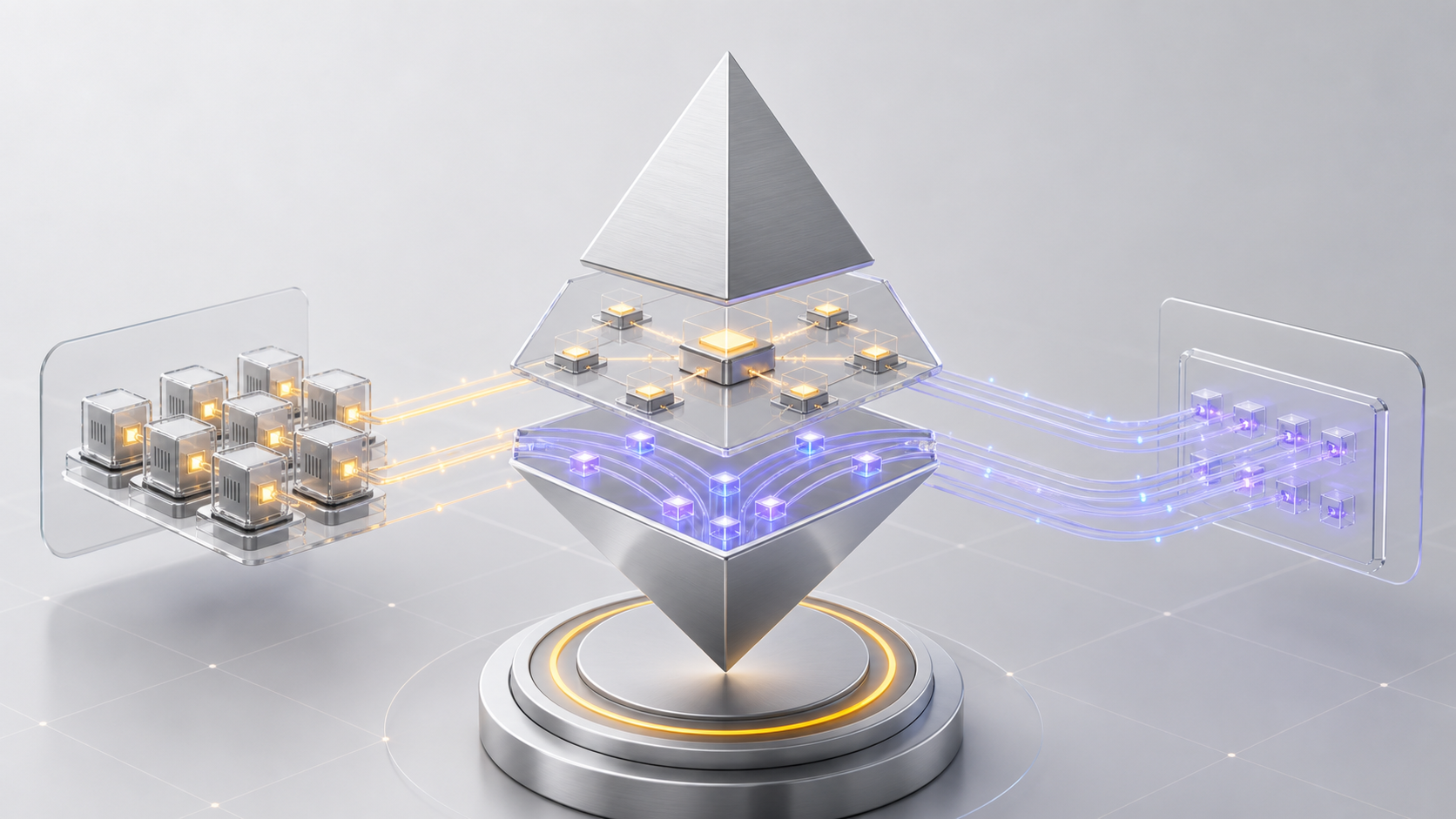
EIP-7732 — Enshrined Proposer-Builder Separation (ePBS)
Today, over 80–90% of Ethereum blocks are built using external relay networks like MEV-Boost. Validators outsource block construction to third parties and trust them to behave honestly. ePBS moves those rules directly into the Ethereum protocol code, removing the need for external relays. Block construction becomes an on-chain, auditable process.
EIP-7928 — Block-Level Access Lists (BALs)
Ethereum currently processes transactions one at a time. EIP-7928 pre-fetches a list of which accounts and storage slots a block will touch, allowing nodes to distribute non-conflicting transactions across multiple CPU cores in parallel — a multi-lane highway instead of a single lane.
| EIP | What It Fixes | Plain-English Summary |
|---|---|---|
| EIP-7732 (ePBS) | Block builder centralization | Ethereum handles block construction itself |
| EIP-7928 (BALs) | Serial transaction processing | Transactions run in parallel |
More than 25 additional EIPs are under consideration but none are formally confirmed for inclusion.
What Glamsterdam Is Trying to Fix — MEV and Centralization
MEV (Maximal Extractable Value) is extra profit extracted by controlling the order of transactions in a block. A builder who knows a large swap is coming can insert their own trades around it to capture value — a practice called sandwiching.
ePBS does not eliminate MEV. The economic incentive still exists. What ePBS does is move the competition on-chain, making it transparent and auditable instead of happening through private off-chain coordination. It also allows smaller validators, including home stakers, to compete fairly in block building — a meaningful decentralization improvement.
For context on how Ethereum's staking ecosystem fits into this picture, our guide to what staking Ethereum means covers the basics well.
How Glamsterdam Could Affect Speed and Gas Fees
BALs combined with a planned gas limit increase from roughly 60 million toward 200 million per block target a throughput of around 10,000 TPS — compared to Ethereum's current effective rate of about 1,000 TPS on the base layer.
Glamsterdam also bundles gas repricing EIPs projected to reduce fees significantly for certain transaction types.
Important framing: these are design targets, not post-activation certainties. Actual gas fees depend on user demand, Layer 2 usage patterns, and network congestion — not just capacity. A 10x increase in throughput could still produce high fees during peak periods if usage grows proportionally.
For a fuller view of how Glamsterdam fits Ethereum's 2026 roadmap, see our deep-dive on Ethereum's Strawmap, Glamsterdam, and Hegotá.
When Is Glamsterdam Actually Happening?
Developer documentation references June 2026 as the target — aspirational, not confirmed.
The testing path to mainnet:
- Devnets — Devnet-4 complete; Devnet-5 underway as of early June 2026.
- Public testnets — broader testing with community participation.
- Dual audit phases — security review before mainnet consideration.
- Mainnet activation — only after above stages clear.
Glamsterdam's scope is larger than Pectra or Fusaka. If additional EIPs beyond the two headliners are included, the timeline could realistically move to Q3 or Q4 2026. Check ethereum.org and official client team updates for the current status.
Will Glamsterdam Affect ETH Price or Staking?
Network upgrades can influence market sentiment. But ETH's price in 2026 is shaped by ETF flows, broader crypto cycle conditions, L2 narrative, and macro factors — not the upgrade alone.
For validators and stakers, ePBS changes how builder fees flow through block construction. If you run validator infrastructure, review official Ethereum staking documentation when mainnet activation approaches. Our guide to Ethereum proof-of-stake validator risks is a useful starting point.
For regular ETH holders: no action is required. The hard fork happens at the protocol level. You can monitor ETH prices in real time on Tapbit. For product fit, Tapbit Earn is the strongest match for ETH holders comparing passive asset-management options, while ETH spot and ETH futures fit different levels of trading activity. For broader Ethereum ecosystem context, our explainer on Optimism and the OP Stack covers how L2s complement the L1 upgrade story.
How to Trade and Earn ETH on Tapbit
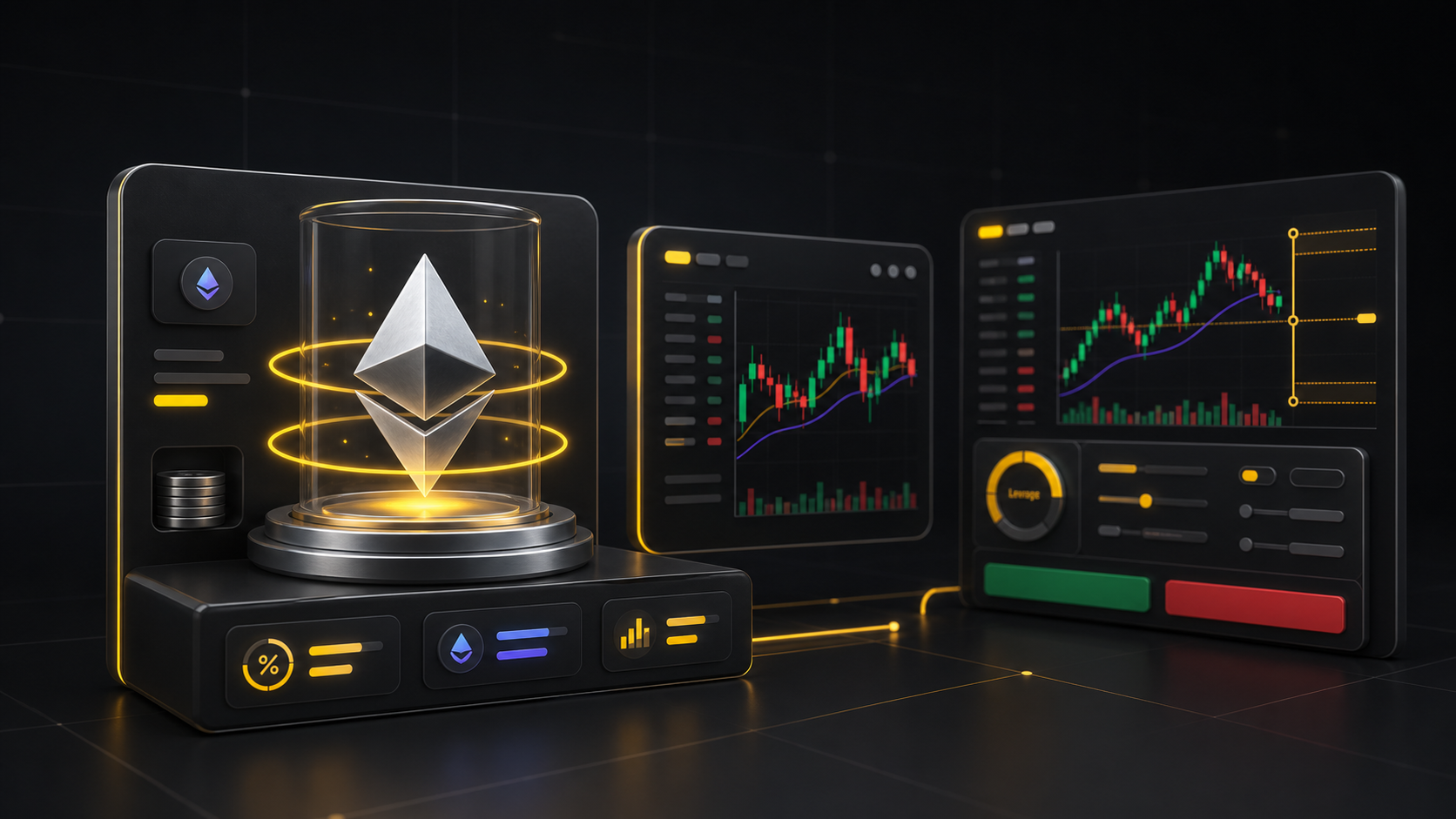
📌 Tapbit Earn is the main fit for passive ETH management. ETH futures and ETH spot serve different trading needs.
ETH Futures Steps
- Open ETH futures if you want derivative exposure to ETH price moves.
- Review funding, mark price, 24H change, volume, and order-book depth.
- Choose margin mode, leverage, and order type carefully.
- Set TP/SL before opening a long or short position.
ETH Spot Steps
- Open ETH spot for direct ETH/USDT trading.
- Check last price, spread, 24H volume, and recent volatility.
- Choose market or limit order based on your entry plan.
- Review order details before confirming the trade.
ETH Earn Steps
- Open Tapbit Earn and find the ETH product if available for your account.
- Compare minimum amount, estimated APY, and redemption rules.
- Subscribe only after reading the product terms.
- Register on Tapbit to manage Earn, spot, and futures tools from one account.
Quick Takeaway — Glamsterdam Is Ethereum's Biggest Structural Upgrade Since the Merge
ePBS + BALs together represent the most significant architectural change to Ethereum since the transition to proof-of-stake. Block production becomes more decentralized. Transaction throughput could increase significantly. Gas fees for certain transactions may fall meaningfully.
The timeline is aspirational. The final EIP list may shift. Market impact is uncertain.
For users and ETH holders: watch the testnet progress and check ethereum.org for official updates. This article is for informational purposes only and is not investment advice.
FAQ
Is Glamsterdam a hard fork?
Yes. Glamsterdam is a hard fork — a protocol upgrade requiring all Ethereum nodes to update their software. Nodes that do not upgrade would diverge from the main chain.
What is ePBS in plain English?
ePBS (Enshrined Proposer-Builder Separation) moves Ethereum's block-building process on-chain. Instead of relying on trusted external relay networks, validators and builders interact through protocol-enforced rules — making block production more transparent and resistant to centralization.
Do ETH holders need to do anything before Glamsterdam?
No action is required for regular ETH holders. If you run validator infrastructure or an Ethereum node, you will need to update your client software before mainnet activation. Check official Ethereum client team announcements for specifics.
Will Glamsterdam lower Ethereum gas fees?
Glamsterdam includes gas repricing EIPs and a gas limit increase that could reduce fees for certain transaction types. But actual fees depend on demand. A bigger network capacity does not mean lower fees if usage grows proportionally. Treat fee projections as targets, not certainties.
What comes after Glamsterdam on the Ethereum roadmap?
Hegotá is the next planned upgrade after Glamsterdam, targeted for H2 2026. FOCIL (Fork-Choice Inclusion Lists) has been identified as a likely headliner. Details remain subject to change.
How does Glamsterdam differ from Pectra and Fusaka?
Pectra (2025) focused on user experience and validator enhancements. Fusaka (2025) expanded data availability for rollups via PeerDAS. Glamsterdam focuses on L1 block production (ePBS) and execution efficiency (BALs) — a shift back toward improving Ethereum's base layer performance.


