March was a wake-up call. When geopolitical tensions spiked in the Middle East, global equities took a massive hit. But if you are looking at the charts now in late April, you’ve probably noticed something strange: the recovery isn't uniform. It is completely fractured.
European indices are still choking on the threat of rising energy costs and supply chain bottlenecks. Meanwhile, the US tech sector—driven by relentless AI infrastructure spending—shrugged off the macro panic and executed a violent V-shaped recovery.
If you are trading through a traditional legacy broker, you are at a massive disadvantage right now. Legacy brokers restrict you to local markets, 9-to-5 trading hours, and agonizing T+1 or T+2 settlement times. By the time the opening bell rings on Monday, the smart money has already priced in the weekend’s news.
So, how are crypto-native traders exploiting this market divergence? They are completely bypassing Wall Street using Tokenized Stocks.
Here is a practical guide on how to use Real World Assets (RWAs) to capture the current tech rebound and hedge your regional risks, directly from your crypto wallet.
The Trading Edge: Why Tokenized Stocks?

Before we get into the strategies, let's strip away the buzzwords. A tokenized stock is simply a digital token backed 1:1 by a traditional share (like Apple, Nvidia, or Tesla).
Why not just use a traditional broker? Because tokenization fixes the broken mechanics of traditional finance, giving you three distinct trading edges:
-
You Can Trade Sunday Night News: Geopolitical conflicts don't pause for the weekend. When a major headline breaks on a Saturday, traditional traders have to sit on their hands and watch futures gap down. Tokenized equities trade 24/7. You can instantly pivot your portfolio into defensive assets while the rest of the world waits for Monday morning.
-
Borderless Capital: If you live outside the US, getting direct, low-fee exposure to American tech stocks can be a regulatory nightmare. Tokenized stocks allow you to use your existing stablecoins (USDT/USDC) to buy fractional shares of US companies instantly, regardless of your geography.
-
Unified Margin & DeFi: You don’t have to wire cash between your crypto exchange and your stockbroker anymore. You can hold Bitcoin and tokenized Nvidia in the same wallet, using them dynamically against each other.
The Playbook: Executing in the Current Market
How is the desk actually trading the April 2026 market split? Here are two setups we are seeing play out on-chain right now:
The Play: Buying the Off-Hours Tech Dip The US tech sector is catching aggressive bids right now because AI spending is insulated from overseas energy shocks. However, algorithmic trading often triggers irrational sell-offs on Friday afternoons ahead of weekend uncertainty.
-
The Setup: When the traditional market closes on a red Friday, crypto traders use stablecoins to accumulate tokenized tech shares (like MSFT or heavily weighted tech ETFs) over the weekend at a discount.
-
The Exit: When traditional markets open higher on Monday as panic subsides, you sell the tokenized shares into the traditional liquidity surge.
The Play: The Geopolitical Rotation (Hedging) If you are heavily exposed to European or Asian markets right now, your portfolio is highly sensitive to Brent crude prices and shipping lane disruptions.
-
The Setup: Instead of cashing out to fiat and waiting days for settlement, traders are rotating their risk instantly. They sell their vulnerable regional equity tokens and instantly buy tokenized Gold (like PAXG) or US-based energy proxies. It is a seamless, one-click hedge executed entirely on-chain.
The Reality Check: Managing RWA Risk
We are traders, not marketers. Trading real-world assets on a blockchain is an incredibly powerful tool, but it is not without its own unique set of risks. If you are going to trade tokenized stocks, you need to implement strict operational security:
-
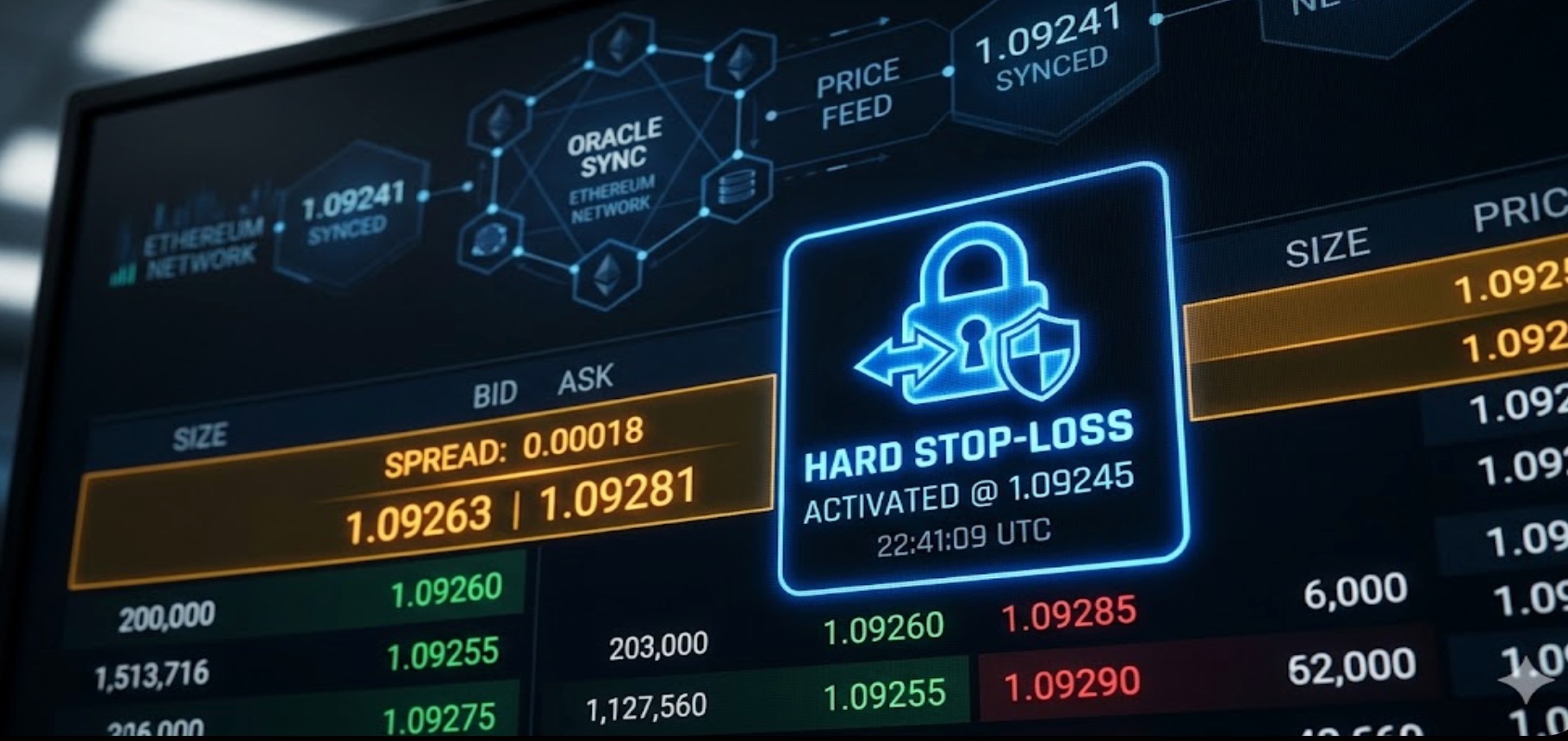
Mind the Weekend Spread: Yes, tokenized stocks trade 24/7, but the actual stock market does not. During traditional off-hours (weekends and nights), the liquidity for tokenized stocks drops. This means the spread between the bid and the ask can widen. Never use market orders during off-hours. Always use limit orders to ensure you don't get slipped on the price.
-
Oracle Lag: Tokenized stocks rely on blockchain oracles (like Chainlink) to feed the real-world stock price on-chain. During moments of extreme, historic volatility, there can be a slight delay between the real-world price and the token price.
-
Use Hard Stops: Because these markets never close, a tokenized asset can drop at 3:00 AM your local time. If you are sleeping, you can't manage the trade. Setting automated stop-losses is mandatory.
The Bottom Line
The 2026 market is moving too fast for legacy financial rails. The divergence between US tech resilience and global energy pressure is creating massive trading windows, but you need agility to catch them. Tokenized stocks bridge the gap, giving you the volatility of traditional equities with the execution speed of crypto.
Assess your current macro exposure, get your stablecoins ready, and start treating global equities with the same 24/7 mindset you apply to Bitcoin.
Frequently Asked Questions
What exactly is a tokenized stock?
Cut through the Web3 jargon—it is simply a digital token issued on a blockchain that is backed 1:1 by a traditional company share (like Microsoft, Apple, or Nvidia). Instead of sitting in a legacy brokerage account, the asset sits in your crypto wallet. This allows you to buy fractional shares using stablecoins like USDT or USDC.
Why should I trade these instead of just using a traditional broker?
Speed and access. Traditional brokers lock you into 9-to-5 trading hours and hit you with T+1 or T+2 settlement delays. Tokenized equities settle instantly and trade 24/7. Furthermore, if you are trading outside the US, getting exposure to American tech stocks usually involves heavy fees and regulatory red tape. Tokenized stocks bypass those borders entirely.
Can I actually trade them over the weekend?
Yes, and this is the biggest edge. Geopolitical headlines—like the Middle East tensions we saw in March—often break on Saturdays and Sundays. While traditional traders are locked out and forced to watch the futures market gap down, you can instantly pivot your stablecoins into tokenized defensive assets (like gold proxies) or buy tech dips right from your wallet.


