
Let’s cut through the noise. If you’re still trading digital assets based on social media hype or whatever meme is trending this morning, you are completely missing the actual capital rotation happening right now.
We are looking at the desk data from the first week of May 2026, and the shift is brutal. The "Systemic Handshake" between Wall Street giants and Web3 infrastructure isn't a pilot program anymore—it's live. The traditional financial plumbing is being ripped out and replaced with on-chain rails.
Forget the theoretical whitepapers. Here is exactly how the heaviest hitters in global finance are moving their money, slicing up the market, and bypassing legacy systems like SWIFT.
The DTCC Monopoly: Moving $114 Trillion On-Chain
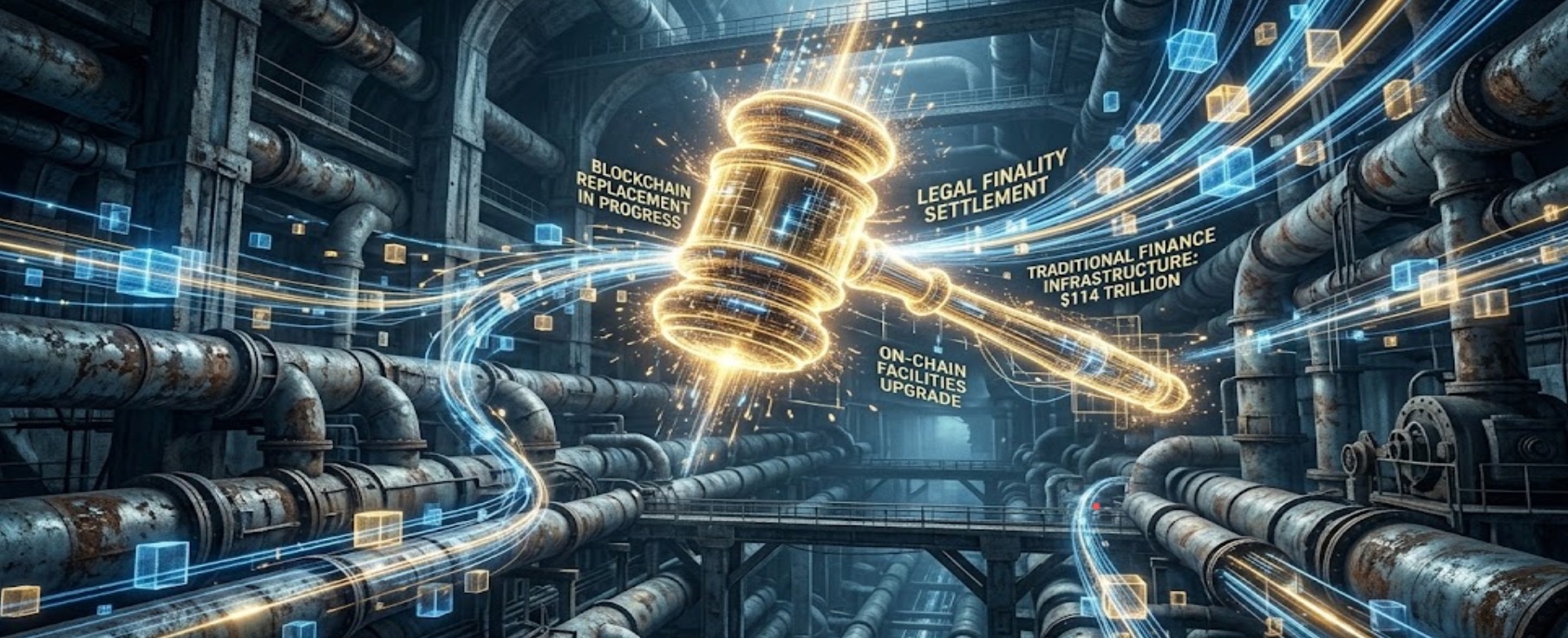
Let's be clear about who we are dealing with. The DTCC doesn't just participate in the U.S. markets; they are the plumbing, clearing over $114 trillion in custodial assets. When they decide to change the pipes, you pay attention.
-
The Timeline: They aren't just testing the waters. DTCC is launching a live trading pilot for tokenized securities this July, with a full commercial rollout locked in for October.
-
The Heavy Hitters: Over 50 major institutions are in the room. We’re talking legacy powerhouses like JPMorgan and Goldman Sachs sitting right next to crypto-native players like Robinhood, Ripple Prime, and Ondo Finance.
-
The Target: They are starting with the highly liquid stuff: Russell 1000 index stocks, massive ETFs, and U.S. Treasuries.
-
Why It Matters: For years, institutional money stayed away from tokenized assets because nobody knew who legally owned what if a blockchain crashed. DTCC just solved the "final settlement" problem by anchoring on-chain assets to their existing, bulletproof legal registry.
Western Union’s Solana Pivot: Actually Killing SWIFT
Crypto has threatened to "kill SWIFT" for a decade. This week, Western Union actually pulled the trigger. This is a massive blow to legacy correspondent banking.
-
The Solana Move: Western Union just deployed its USDPT stablecoin directly on the Solana network. They took a cross-border settlement process that usually takes two days (T+2) and crushed it down to seconds.
-
The Compliance Shield: This isn't a shadow operation. The stablecoin is issued by Anchorage Digital Bank (federally regulated) and routed through Fireblocks' enterprise settlement network.
-
Real World Volume: They are rolling this out in Bolivia and the Philippines immediately—markets covering 130 million people—with 40 more countries coming online by year-end. When you combine this with SoFi's recent stablecoin launch, Solana is now pushing $650 billion in monthly stablecoin volume. It is rapidly becoming the default B2B payment rail.
Bitwise & Superstate: The Grown-Ups Take Over
The era of the "do-it-all" crypto startup is dead. What we are seeing now is the ruthless, professional division of labor you'd expect on Wall Street.
-
The Buyout: Bitwise (sitting on over $11 billion in AUM) just absorbed Superstate’s $267 million Crypto Carry Fund (USCC).
-
The Split: Come June 1, Bitwise takes over all the actual trading and portfolio management to squeeze out market yields. Superstate is stepping back to do what they do best: providing the pure-play blockchain infrastructure via their FundOS platform.
-
The Signal: This is how you scale. Asset managers manage assets; tech companies build tech. This clean split makes it infinitely easier for traditional wealth funds to buy into these products without worrying about who is writing the smart contracts.
BNY Mellon: Building the Sovereign Vault
You can't move billions of institutional dollars onto blockchains without a military-grade vault to hold the keys. Enter BNY Mellon, the largest custodian on the planet with almost $60 trillion under management.
-
The Middle East Play: BNY Mellon just planted their flag in the Abu Dhabi Global Market (ADGM) to offer institutional crypto and RWA custody.
-
The Sovereign Tech: They aren't just using off-the-shelf tech. They are plugging directly into the ADI Chain—a sovereign-level Layer 2 blockchain built specifically for heavily regulated assets.
-
The Completed Loop: Look at the board. BNY Mellon holds the assets securely. DTCC clears the trades legally. Bitwise issues the yield-bearing funds. The loop is closed.
The Tapbit Playbook: Trade the Infrastructure
The numbers are staggering. The tokenized RWA market just closed Q1 2026 at $19.32 billion—a 256% explosion in just over a year, with tokenized Treasuries eating up 67% of that pie.
Smart money isn't gambling on random altcoins right now. It is aggressively positioning itself in the infrastructure layer. If a protocol isn't capable of plugging into this new Wall Street machine, institutional capital is going to leave it behind.
Ready to trade alongside the smart money?
-
New to the Desk? Register on Tapbit right now and grab up to 11,000 USDT in welcome rewards.
-
Active Traders: Log in to Tapbit to hit the bids on top-tier RWA assets and major Layer 1s with zero-fee spot pairs.
-
Check the Tape: Watch the live order flow and track funding rates directly on the Tapbit Homepage.
Frequently Asked Questions (FAQ)
Are stablecoins really putting a dent in SWIFT?
Absolutely. SWIFT is still the king of legacy banking, but for high-frequency B2B payments and global remittances, it’s too slow and too expensive. Western Union moving actual remittance volume to Solana proves that stablecoins have won the speed and cost war.
Why should a retail trader care about DTCC’s pilot?
Because it removes the ceiling. Until now, massive mutual funds and pension funds couldn't touch tokenized assets due to compliance risks. DTCC acting as the ultimate legal backstop opens the floodgates for trillions of dollars to legally flow on-chain.
Why the sudden rush to Abu Dhabi by banks like BNY Mellon?
Regulatory clarity. While Western regulators are still fighting over definitions, hubs like the ADGM are actively building sovereign-grade blockchain infrastructure (like the ADI Chain) and inviting the banks in. Capital always flows to where it is treated best.


