

As traders continue following AI-driven market narratives on platforms like Tapbit, another emerging technology is beginning to attract attention across the crypto industry: quantum computing.
For years, quantum computing was viewed as a distant technological concept with little immediate impact on digital assets and blockchain infrastructure.
That perception is now beginning to change.
Major organizations connected to the crypto industry — including Google, the Ethereum Foundation, and developers involved in the XRP ecosystem — are increasingly discussing one critical question:
Why Quantum Computing Matters for Crypto
Most blockchain networks today rely on modern cryptographic systems such as:
-
Public-private key encryption
-
Elliptic curve cryptography (ECC)
-
Digital signatures
-
Hash-based authentication
These technologies are considered extremely secure using traditional computers.
However, sufficiently advanced quantum computers could theoretically solve some cryptographic problems dramatically faster than classical computing systems.
That means future quantum machines may eventually be capable of:
-
Cracking wallet private keys
-
Forging digital signatures
-
Breaking authentication systems
-
Compromising blockchain transaction security
This is why quantum computing is increasingly viewed as a potential long-term threat to crypto infrastructure.
Why Bitcoin and Ethereum Could Be Vulnerable
Major blockchain networks such as:
-
Bitcoin
-
Ethereum
currently rely on cryptographic standards that were not originally designed for the quantum computing era.
Potential Risks Include
-
Exposure of dormant wallet addresses
-
Compromised private keys
-
Signature verification vulnerabilities
-
Weaknesses in older wallet systems
The concern is not that crypto will suddenly fail tomorrow.
The real issue is whether blockchain ecosystems can upgrade quickly enough before large-scale quantum computing becomes commercially viable.
Big Tech Is Accelerating Quantum Research
Technology companies are rapidly investing billions into quantum research and computing infrastructure.
Google continues advancing its quantum computing initiatives, while multiple global firms compete to build scalable quantum systems capable of solving highly complex computational problems.
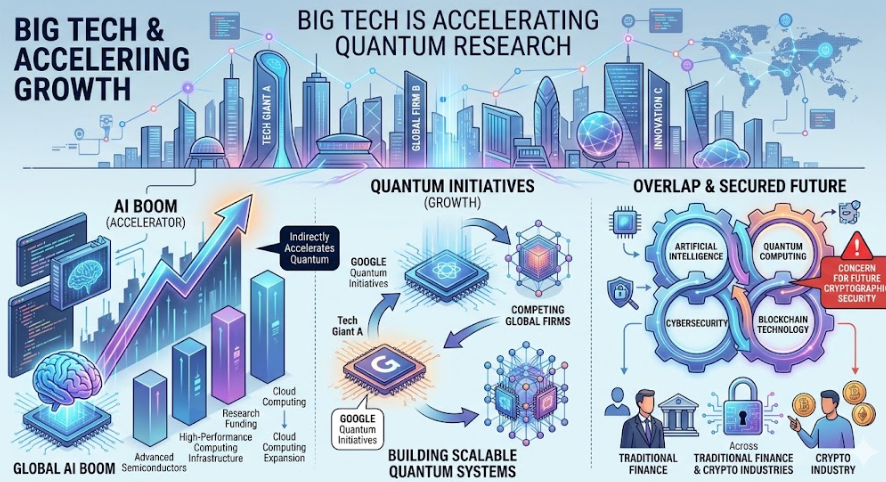
At the same time, the global AI boom is indirectly accelerating:
-
Advanced semiconductor development
-
High-performance computing infrastructure
-
Research funding
-
Cloud computing expansion
This creates growing overlap between:
-
Artificial intelligence
-
Quantum computing
-
Cybersecurity
-
Blockchain technology
As a result, concern about future cryptographic security is increasing across both traditional finance and crypto industries.
Ethereum Developers Are Already Exploring Quantum Resistance
The Ethereum Foundation and broader Ethereum developer community have increasingly discussed post-quantum cryptography and quantum-resistant infrastructure.
Possible future solutions include:
-
Quantum-resistant wallets
-
New signature verification systems
-
Multi-layer authentication models
-
Protocol-level security upgrades
However, implementing these upgrades across decentralized ecosystems is extremely difficult.
Unlike centralized technology companies, public blockchains require:
-
Community governance coordination
-
Consensus-driven upgrades
-
Ecosystem-wide migration
-
Validator and wallet compatibility
This makes blockchain adaptation slower and far more complex than traditional software updates.
Why Enterprise Blockchain Networks Are Paying Attention
Institutional blockchain ecosystems are also monitoring quantum-related risks closely.
As blockchain technology becomes increasingly integrated into:
-
Banking systems
-
Payment infrastructure
-
Cross-border settlement networks
-
Enterprise finance
security standards become even more critical.
This is one reason projects connected to the XRP ecosystem and enterprise blockchain infrastructure are increasingly discussing long-term cryptographic resilience.
For institutional finance, security credibility is essential for mass adoption.
Is Quantum Computing an Immediate Threat?
For now, most experts believe the answer is no.
Large-scale quantum attacks against major blockchain networks are still believed to be years away.
Current quantum systems remain:
-
Expensive
-
Technically unstable
-
Limited in computational scale
-
Difficult to commercialize
However, the crypto industry is taking the threat more seriously because blockchain networks now secure trillions of dollars in global digital assets.
And infrastructure upgrades often require many years to fully deploy.
Why This Debate Matters Right Now
The crypto industry is entering a new phase of maturity.
The conversation is no longer focused only on:
-
ETFs
-
Regulation
-
Institutional adoption
-
Stablecoins
-
Memecoins
Now, infrastructure durability and long-term security are becoming central themes.
The industry is increasingly asking:
Can blockchain security survive the next generation of computing?
At the same time, traders on platforms like Tapbit Futures Trading continue closely monitoring AI-related volatility, tech narratives, and emerging infrastructure trends that may shape the next cycle of crypto innovation.
Potential Industry Responses
1. Post-Quantum Cryptography
Developing encryption systems specifically designed to resist quantum attacks.
2. Wallet Migration
Encouraging users to move assets into newer quantum-resistant wallet structures.
3. Hybrid Signature Models
Combining multiple authentication systems for stronger security protection.
4. Layered Infrastructure
Using Layer 2 and off-chain verification systems to reduce exposure to direct cryptographic attacks.
Could Quantum Computing Eventually Help Crypto?
Ironically, some analysts believe the quantum threat could eventually accelerate blockchain innovation.
If the industry successfully upgrades its infrastructure:
-
Crypto networks may become more secure
-
Security standards could improve significantly
-
Institutional trust may increase
-
Blockchain architecture could evolve faster
In that scenario, quantum computing may become a catalyst for the next generation of blockchain technology rather than simply a threat.
Final Insight
Quantum computing may not destroy crypto.
But it could fundamentally reshape how blockchain security works.
And for the first time, the crypto industry is beginning to realize that the next major battle may not revolve around regulation or adoption —it may revolve around surviving the future of computing itself.
FAQ
Can quantum computers hack Bitcoin?
Not currently. However, sufficiently advanced quantum computers could theoretically threaten the cryptographic systems used by Bitcoin in the future.
Is Ethereum preparing for quantum computing?
Yes. Developers connected to Ethereum have discussed post-quantum cryptography and future security upgrades.
What is post-quantum cryptography?
Post-quantum cryptography refers to encryption systems designed to remain secure against attacks from quantum computers.
Is quantum computing an immediate danger to crypto?
Most experts believe practical quantum threats are still years away, but early preparation may be necessary because blockchain upgrades take significant time.
Why is the crypto industry discussing quantum risks now?
Rapid advances in AI infrastructure, semiconductor technology, and quantum research are making future cryptographic risks more realistic than before.


