
Let’s skip the textbook definitions. When most retail traders see a 50x or 100x slider on their screen, they aren't thinking about risk models. They are calculating how fast a $500 deposit can turn into a down payment on a house.
Here on the Tapbit trading desk, we look at that exact same slider and see something completely different: a very efficient way for undisciplined traders to hand their capital back to the market.
High leverage is not a "get rich quick" button. It’s a professional-grade accelerant. It doesn't change the quality of your setup or improve your win rate—it just speeds up the consequences of your decisions. If you are going to push the limits of your margin, you need to understand the brutal math running under the hood.
The Liquidation Reality Check
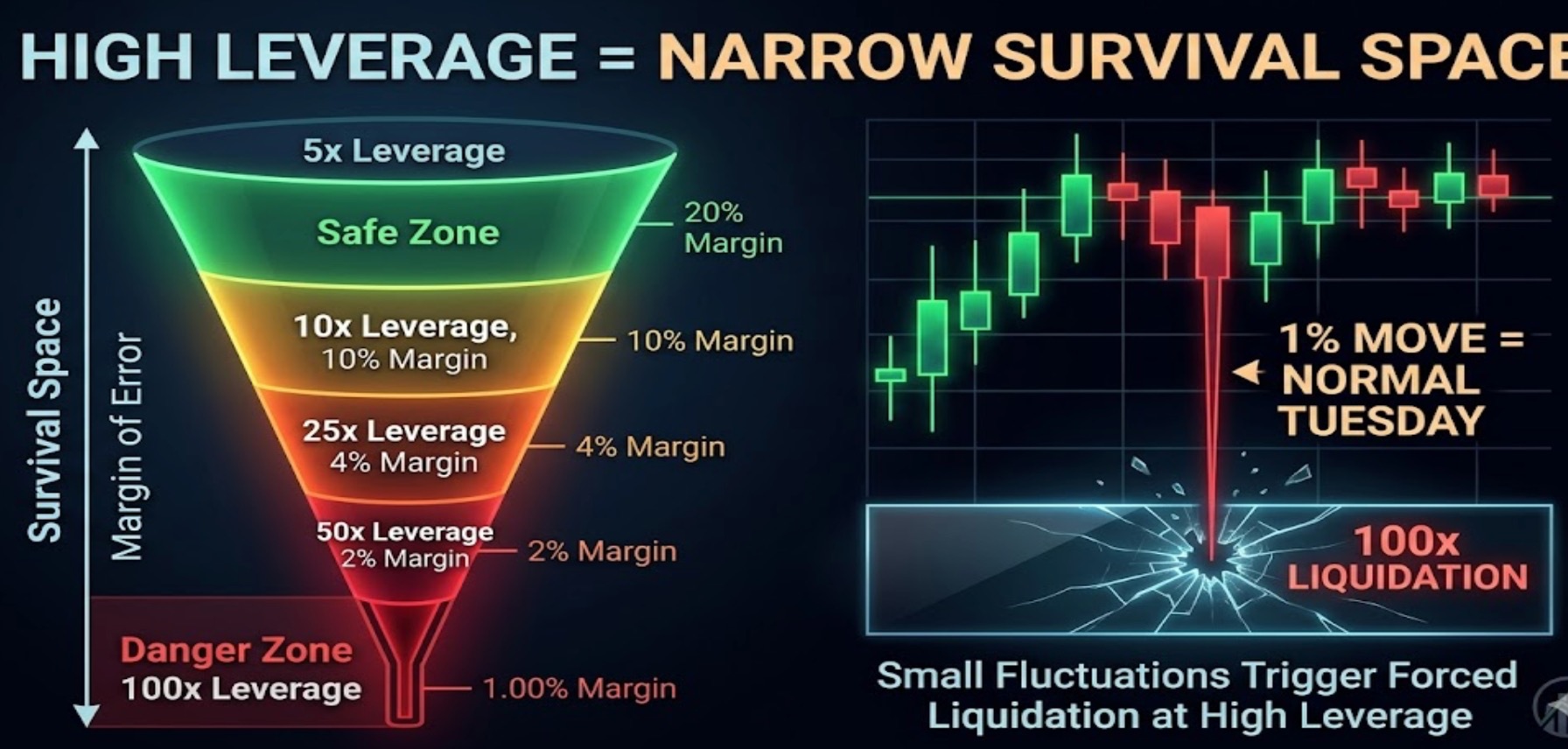
When you crank up the leverage, you are borrowing exchange funds to punch above your weight class. But the market doesn't give out free loans. In exchange for that buying power, your "room to breathe" shrinks exponentially.
Let's look at the actual numbers. If you are trying to control a larger position with just $100 of your own capital, here is exactly how little the market needs to move against you before you are completely wiped out:
|
Leverage |
Purchasing Power |
Liquidation Trigger (Market Move Against You) |
|
5x |
$500 |
~20% |
|
10x |
$1,000 |
~10% |
|
30x |
$3,000 |
~3.33% |
|
100x |
$10,000 |
~1.00% |
At 100x, a 1% wick in the wrong direction liquidates your position. In crypto, a 1% move isn't even volatility; it's just normal Tuesday morning price action. You aren't giving the trade any room to play out.
Cross Margin: The Account Killer
If you are trading high leverage, how you structure your margin is just as important as the trade itself.
Most platforms default to Cross Margin, which pulls from your entire available account balance to keep a losing trade open. It feels forgiving, which is exactly why it’s a trap. If you are over-leveraged and the market tanks, Cross Margin won't just close your bad trade—it will quietly drain your entire account balance until you hit zero.
Professional traders use Isolated Margin for high-leverage setups. It acts as a blast door. If you allocate $200 to a 50x trade and it goes sideways, the exchange liquidates that specific $200 bucket, and the blast door slams shut. The rest of your portfolio survives to trade another day.
Rules of Engagement for the Desk
If you are going to trade high leverage, you have to trade with zero ego. Hope is not a risk management strategy.
-
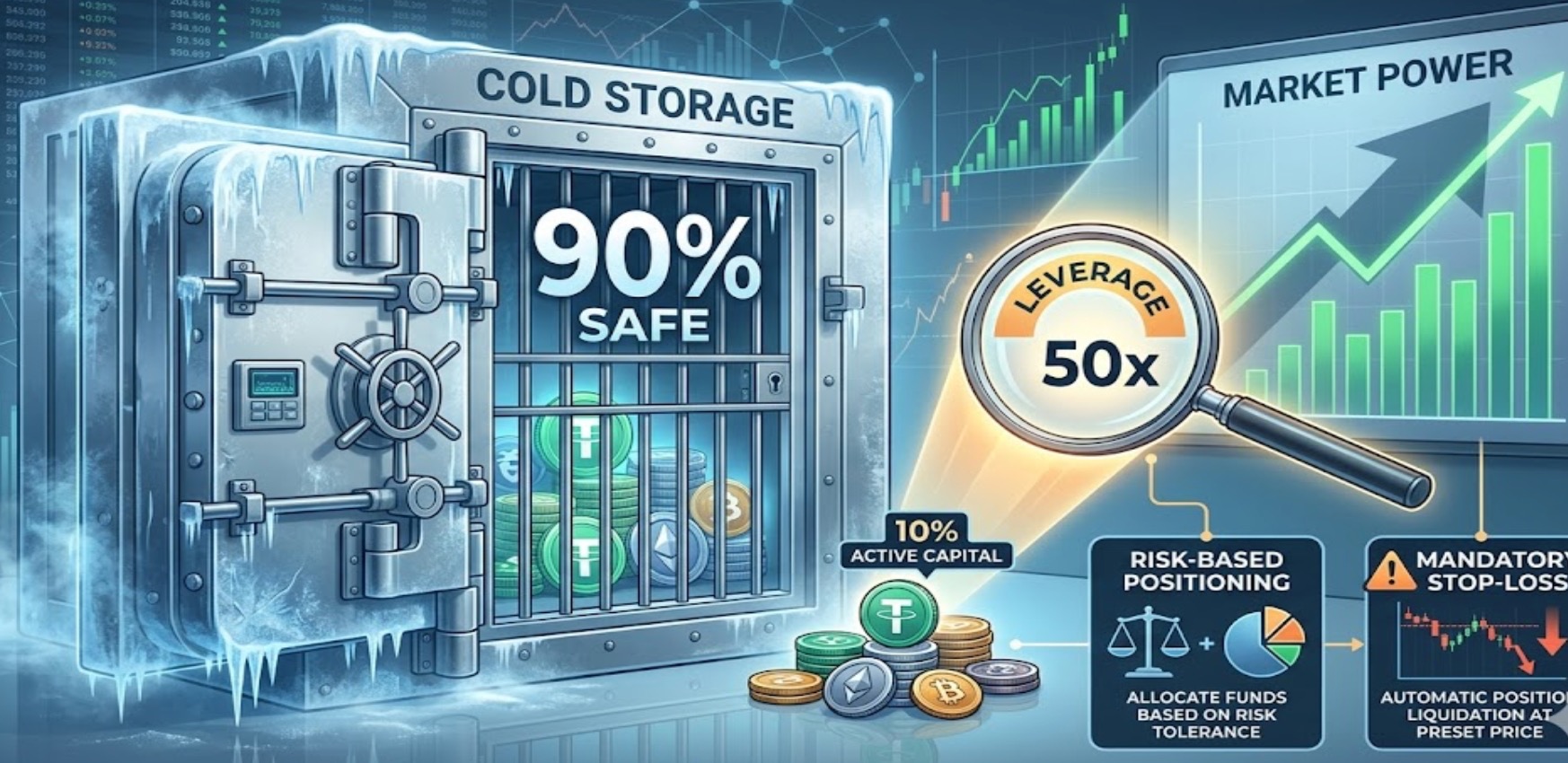
Stop-Losses Are Mandatory: You cannot "wait out a dip" at 50x. Your liquidation price is too close. You must place a hard stop-loss before the exchange's liquidation engine steps in.
-
Size Your Risk, Not Your Multiplier: Don't ask, "How much leverage can I use?" Ask, "If I am dead wrong, how much of my total equity am I willing to lose?" Size your position backward from that number.
-
The Real Use Case—Capital Efficiency: The smartest way to use high leverage isn't to max out your account size. It’s to keep 90% of your capital safe in cold storage, and use 50x leverage on a tiny fraction of your funds to get the exact same market exposure.
The Bottom Line
High leverage demands perfect timing and ruthless execution. If you don't have a defined entry, exit, and invalidation level before you click buy, you are just gambling with borrowed money. For the majority of traders, dialing it back to 3x or 5x keeps you in the game long enough to actually catch the broader market trends.
Ready to execute with discipline?
-
Control Your Margin: Log in to Tapbit to customize your leverage and lock in your risk with Isolated Margin.
-
New to the Desk? Register on Tapbit today to claim up to 5000 USDT in welcome rewards and start trading on a true institutional-grade platform.
-
Track the Order Book: Monitor live liquidity and market depth directly on the Tapbit Homepage.
Frequently Asked Questions (FAQ)
How little does the market need to move to liquidate my trade?
It depends entirely on your leverage. At 10x leverage, a 10% move against you wipes you out. At 30x, it only takes a 3.33% drop. If you max it out to 100x, a microscopic 1% price fluctuation triggers a total liquidation of your margin. In crypto, a 1% move can happen in seconds, leaving you zero time to react.
Why do you recommend against using Cross Margin for high-leverage trades?
Because Cross Margin uses your entire available account balance to keep a losing trade breathing. If you take a highly leveraged shot and the market violently dumps, the exchange won't just close that single bad trade. It will quietly siphon funds from the rest of your portfolio to cover the margin shortfall until your account hits zero.
What is the "blast door" method?
That is our term for Isolated Margin. When you switch from Cross to Isolated Margin, you are locking a specific, fixed amount of capital into a single trade. If that trade gets wiped out, the loss stops right there. The "blast door" shuts, and the rest of your account balance is completely protected from the blast radius.


