

If you are only monitoring Ethereum's daily price chart, you are missing a significant part of the market structure.
Late April 2026 has brought a bizarre, layered divergence to the crypto market. On one hand, we are tracking unprecedented spot accumulation by corporate whales. On the other, price action remains entirely sluggish, trapped under heavy structural resistance.
As market makers and analysts on the Tapbit derivatives desk, we’ve been looking under the hood of this consolidation. Here is a professional breakdown of the current ETH market structure, the institutional strategies suppressing the price, and how you should position your portfolio.
The Derivatives Signal: Shorts Are Exhausted, But Bulls Aren't Buying
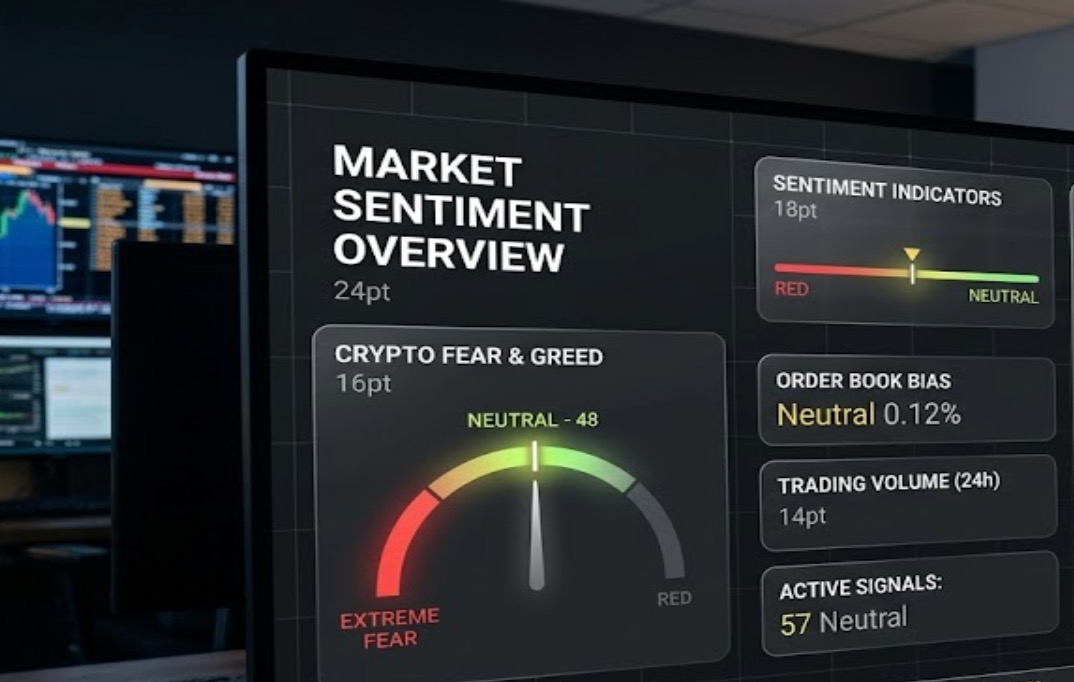
For the majority of April, ETH perpetual funding rates were submerged in deep negative territory. Short positioning appeared increasingly crowded based on persistently negative funding rates.
Over the past few days, the tape has flipped. ETH funding rates have crawled out of the bearish basement, hovering between a slight negative (-0.0044%) and flat zero, outpacing Bitcoin's recovery.
However, amateur traders often misread this data. A neutral funding rate right now does not mean capital is aggressively longing ETH. It simply indicates that short-sellers have exhausted their ammunition and are covering their positions. The immediate threat of a violent short-squeeze has dropped, but we have not hit the 0.01% baseline required to confirm real bullish momentum. We are in a cool-down phase, not a breakout.
The Whale in the Room: 4.21% of Global Supply Locked
Here is the verifiable on-chain data point that should have every trader's attention: Bitmine Immersion Technologies (NYSE: BMNR) recently scooped up another $236 million in ETH.
This isn't a minor portfolio allocation. Bitmine now holds over 5.07 million ETH—representing roughly 4.21% of the entire global circulating supply sitting inside a single corporate treasury.
More importantly, they aren't day-trading this stash. Bitmine is staking approximately 73% of these holdings. By locking up millions of tokens to farm yield, they are engineering a massive "supply sink." Over the long term, draining this magnitude of liquid supply from exchanges builds a rock-solid fundamental floor for the asset.
The Core Contradiction: The Delta-Neutral Ceiling
This brings us to the million-dollar question: If institutions are aggressively accumulating spot ETH, why are we still struggling to break the $2,335 realized price?
The answer is the "cash and carry" trade.
Wall Street and institutional funds don't trade like retail speculators. They are currently executing massive delta-neutral strategies. They buy spot ETH (often via ETFs or OTC desks) and simultaneously short ETH perpetual futures to harvest the yield spread. They are agnostic to whether ETH goes to $10,000 or $1,000; they just want the arbitrage.
This creates a heavy, synthetic ceiling on the market. Every massive spot buy is immediately countered by a massive short position in the derivatives market. This artificial selling pressure is exactly why the price feels pinned down, despite the bullish underlying data.
How to Trade This Setup on Tapbit
Right now, the market is playing a waiting game. We are caught between massive institutional supply sinks and aggressive delta-neutral hedging, all wrapped in macroeconomic uncertainty ahead of the Fed's next moves.
Here is how our desk suggests navigating this chop:
-
Watch the $2,335 Pivot: This is Ethereum's current realized price. Until we flip this from resistance to support with confirmed spot volume, expect the chop to continue. You can monitor these critical support and resistance levels using the advanced charting tools on the Tapbit Official Exchange.
-
Play the Range, Don't Force the Trend: Until the institutional hedging pressure breaks, explosive directional moves are highly unlikely. Use derivatives to trade the range. If you already have open positions, ensure your stop-losses are tight. Log in to Tapbit now to review your margin ratios and adjust your leverage before the weekend volatility kicks in.
-
Wait for the Altseason Confirmation: ETH leading the funding rate recovery is a prerequisite for capital rotation into altcoins, but it’s too early to call a full-blown altseason. We need to see BTC funding rates normalize alongside an uptick in exchange stablecoin inflows.
Ready to trade these institutional insights? If you don't have an account yet, Register on Tapbit today to access deep liquidity, institutional-grade security, and the lowest derivatives trading fees in the market.
Frequently Asked Questions (FAQ)
Does Ethereum's funding rate returning to neutral mean the market is officially bullish?
Not necessarily. The recent shift from deep negative funding rates (e.g., -0.0044%) to neutral primarily indicates that short-sellers are exhausted and covering their positions, which reduces the immediate risk of further downside. However, for a confirmed bullish trend, the market needs to establish a sustained 0.01% funding rate baseline driven by aggressive new long capital, which we have not yet seen.
If companies like Bitmine are buying massive amounts of ETH, why isn't the price skyrocketing?
The lack of upward price action is largely due to the "cash and carry" trade. While institutions are buying massive amounts of spot ETH, they are simultaneously opening massive short positions in the perpetual futures market to harvest the yield spread. This delta-neutral strategy creates a heavy, artificial ceiling of selling pressure that keeps the price pinned down, despite the strong spot accumulation.
What is a "supply sink" and how does it affect Ethereum's long-term value?
A "supply sink" occurs when a massive amount of an asset is removed from active circulation. In this case, corporate whales are not only buying ETH but staking a large majority of it (e.g., Bitmine staking 73% of its 5.07 million ETH). By locking these tokens up for yield, they drain liquid supply from exchanges. While derivatives hedging suppresses the price right now, this supply sink builds a robust fundamental floor for ETH's long-term value.


