

DeXe (DEXE) has moved from one of the most dramatic rallies in the DAO sector to one of the sharpest pullbacks on the chart. After a strong climb into the high-price zone, the token saw an aggressive sell-off that pushed price action back toward the lower single-digit range. For traders searching for “DEXE price drop,” “DeXe crash,” or “DEXE rebound,” the key question is simple: is this a real recovery opportunity, or only a short-lived bounce after an overheated move?
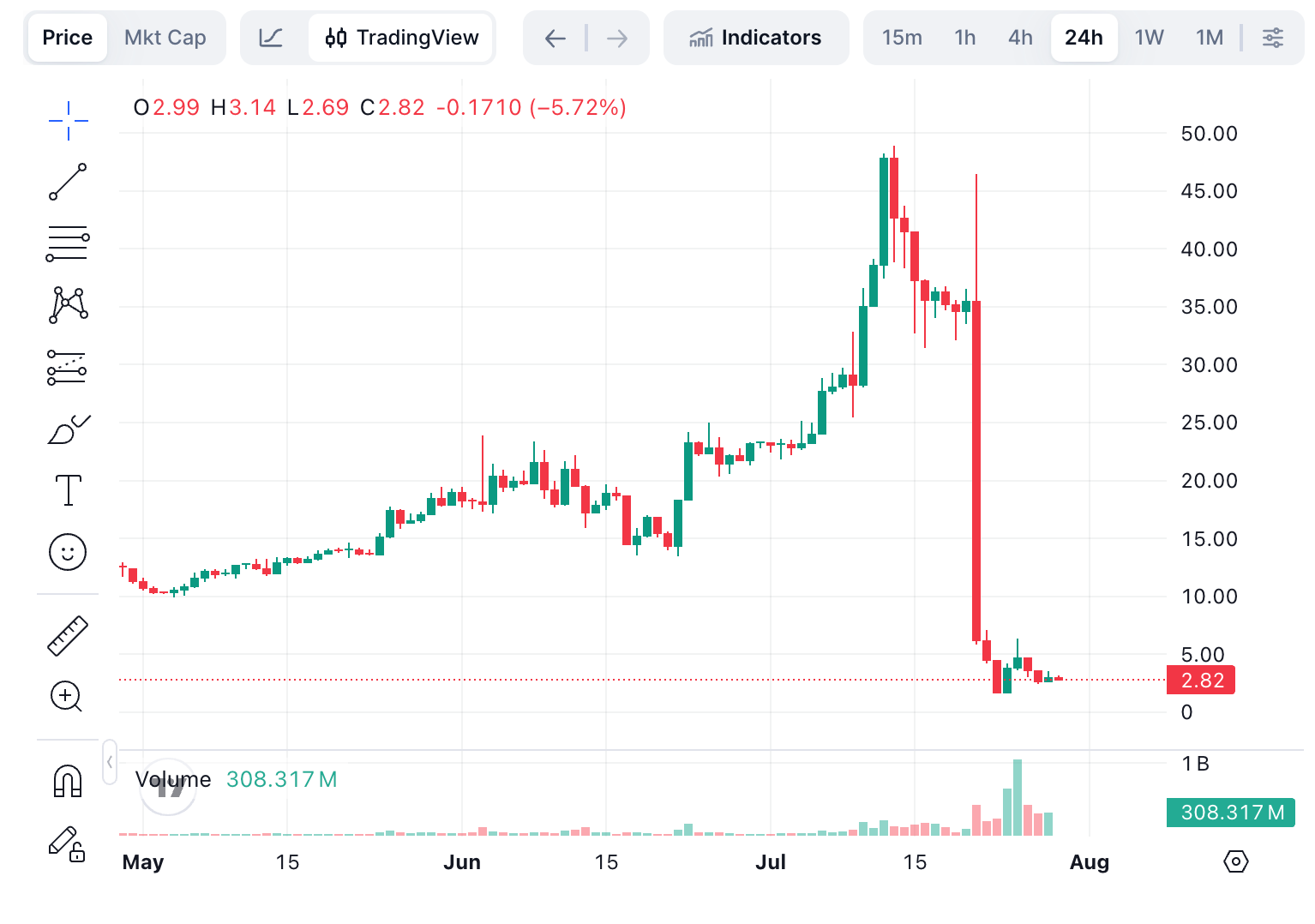
Based on the latest chart supplied by the user, DEXE is shown near $2.82, with a 24-hour move of roughly -5.72%. The chart also shows an open around $2.99, a high near $3.14, a low around $2.69, and a close near $2.82. More importantly, the visual structure shows a steep vertical breakdown after price previously traded much higher, which is the kind of move that often forces traders to reassess liquidity, momentum, and downside risk.
DeXe (DEXE) Crash Recap: What Happened?
The first thing to understand is that DEXE did not decline from a slow, quiet market. The chart shows a powerful rally before the breakdown, which means the token likely attracted fast momentum buyers, short-term traders, and late entrants chasing a rising price. When a market climbs quickly without enough stable support below it, even a moderate sell order can trigger a much larger reaction.
Once price started slipping from the top, the move appears to have accelerated. That pattern often happens when early buyers take profit, leveraged traders get liquidated, and stop-loss orders cluster below obvious support levels. In thin or uneven liquidity, these sell orders can stack on top of each other and create a cascade.
Why Did DeXe Fall So Sharply?
There is rarely one single reason behind a drop like this. The most likely explanation is a combination of overextended price action, profit-taking after a large rally, weaker liquidity, and market uncertainty around whether the DeXe DAO narrative can justify the previous valuation. A token can have a real governance story and still trade like a high-beta speculative asset when momentum becomes crowded.
Another issue is positioning. When traders buy because price is rising rather than because fundamentals are improving, the exit can become crowded. If buyers disappear at the same time that sellers increase, price can move down faster than expected. This is especially true for altcoins where order books may look active during rallies but become much thinner during sell-offs.
Is This a DEXE Rebound or a Dead Cat Bounce?
A rebound would require more than a few green candles. For DEXE to show a healthier recovery, traders would want to see price hold above the recent low area, reclaim short-term moving averages, and recover on improving volume rather than weak, temporary buying. A real rebound usually shows buyers defending higher lows, not just reacting to a large red candle.
A dead cat bounce, by contrast, often appears after a major drop when price briefly rises because sellers pause or short-term traders buy the dip. The problem is that the bounce fails to build structure. If DEXE cannot hold the $2.70-$3.00 area and volume weakens, the market may treat any bounce as another opportunity to exit rather than the start of a new trend.
Key DEXE Price Levels to Watch
| Price Area | Why It Matters |
|---|---|
| $2.69-$2.80 | Recent low and immediate support zone from the supplied chart. |
| $3.00-$3.20 | Short-term recovery area; reclaiming this zone would improve sentiment. |
| $5.00 | Psychological level that may separate a weak bounce from a stronger recovery attempt. |
| $10+ | A higher recovery zone that would require strong volume and renewed narrative demand. |
Whale Selling and Liquidity Risks
Sharp declines often become worse when large holders reduce exposure. If whale wallets or concentrated holders sell into weak liquidity, retail traders may see price move before they can react. This is why holder distribution, exchange depth, and wallet activity matter when analyzing a token after a crash.
Liquidity should be watched closely. A token can look active when price is rising, but if buy-side depth disappears during panic selling, even smaller sell orders may create oversized moves. Traders should not assume that previous trading volume automatically means easy exits during stress.
Does the DeXe DAO Story Still Matter?
DeXe is commonly associated with DAO infrastructure and governance-focused crypto themes. That narrative can still matter if the broader market returns to decentralized governance, treasury management, and on-chain coordination. However, narratives do not protect traders from poor timing. Even strong themes can experience deep corrections if price runs ahead of adoption, revenue, or user growth.
For the DeXe story to regain strength, the market would likely need clearer signs of ecosystem usage, credible updates, and renewed demand for DAO tools. Without that, DEXE may continue to trade more as a momentum asset than as a fundamentals-driven governance token.
DEXE Price Prediction: Bull, Base, and Bear Scenarios
In a bullish scenario, DEXE stabilizes above the recent low zone, volume improves, and price reclaims the $3-$5 range. If broader altcoin sentiment improves and the DeXe DAO narrative attracts attention again, the token could attempt a deeper recovery. This would require clear buying interest rather than a thin technical bounce.
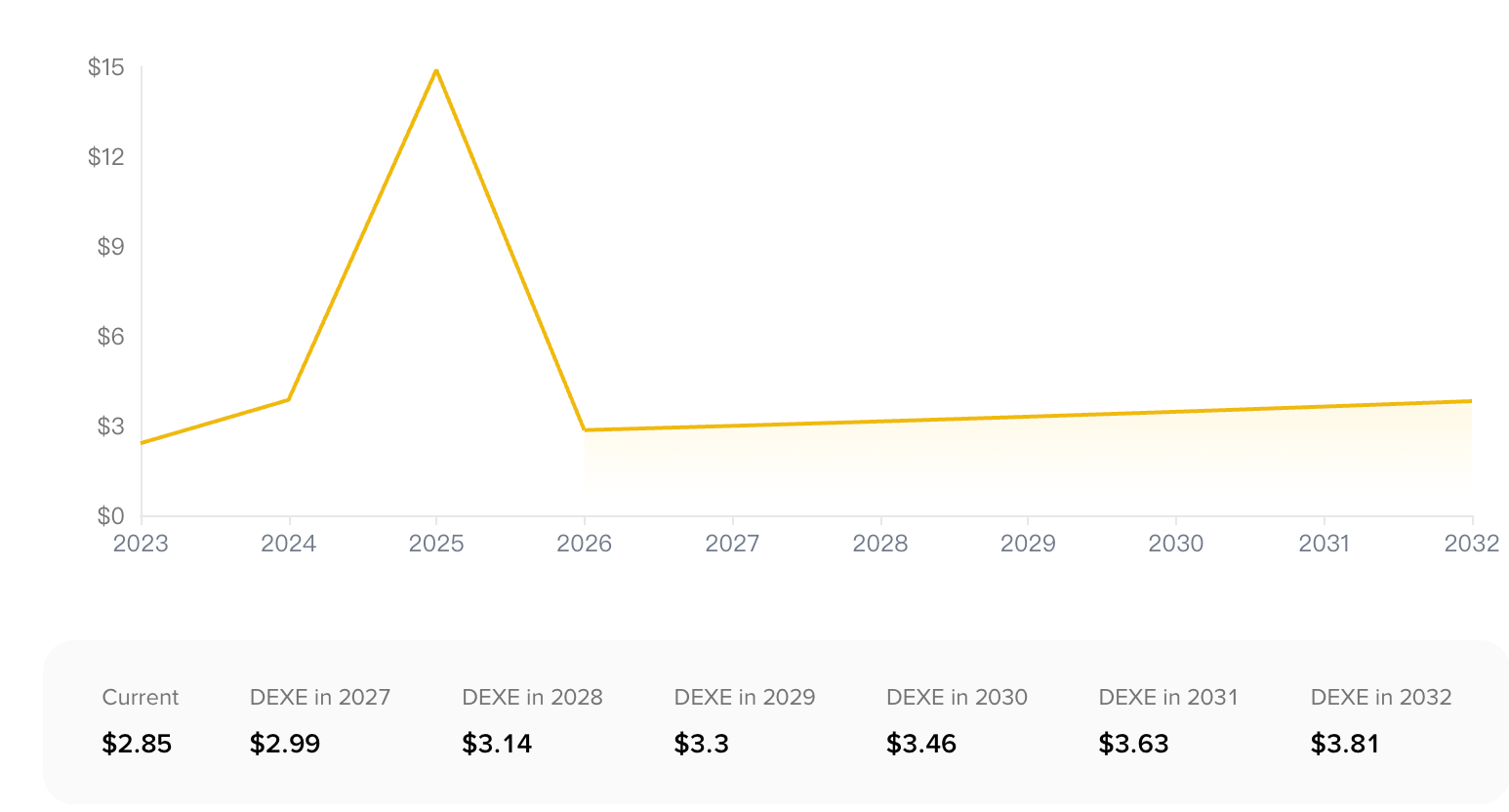
In a base-case scenario, DEXE remains volatile and trades sideways while the market decides whether the sell-off has fully reset expectations. This would mean choppy movement, failed breakout attempts, and continued sensitivity to liquidity changes.
In a bearish scenario, the token fails to hold the recent low area and sellers continue to dominate. If that happens, the market may treat the previous rally as an unsustainable spike, with further downside possible until stronger support forms.
Should Traders Buy DEXE After the Crash?
DEXE may interest traders who specialize in volatile altcoin rebounds, but it is not a low-risk setup. The chart shows that the token can move sharply in both directions, and buying immediately after a large decline requires strict risk management. Traders should avoid assuming that a cheaper price automatically means better value.
Before making any decision, investors should check updated liquidity, exchange depth, holder concentration, project updates, and whether buying demand is returning organically. A safer approach is to wait for confirmation rather than trying to catch the exact bottom.
Final Thoughts
DeXe (DEXE) may still have a role in the DAO and governance-token sector, but the latest price action shows how quickly speculative momentum can reverse. A sustainable rebound would require stronger support, improving volume, and renewed confidence in the project narrative. Until then, traders should treat any recovery as high risk and avoid confusing a short bounce with a confirmed trend reversal.
FAQ
What is DeXe (DEXE)?
DeXe is a crypto project commonly linked to DAO infrastructure, decentralized governance, and token-based coordination tools.
Why did DEXE drop?
The provided chart suggests a sharp correction after a fast rally. Possible reasons include profit-taking, weaker liquidity, stop-loss cascades, and fading momentum.
Is DEXE having a rebound?
It is too early to confirm. A stronger rebound would require price stability, higher lows, and improving trading volume.
Is DEXE a good investment?
DEXE is a high-risk altcoin. Investors should research liquidity, holder distribution, project fundamentals, and market conditions before considering exposure.


