The cryptocurrency market is currently caught in a macro-induced paralysis. Federal Reserve Chair Jerome Powell’s hawkish pause—combined with a high-stakes political standoff against the U.S. Department of Justice (DOJ)—has effectively drained near-term liquidity expectations from the order books. Weighed down by this uncertainty, Bitcoin is fighting a brutal trench war in the $70,000 to $70,900 range.
But institutional capital does not trade the rearview mirror.
Regardless of how aggressively Powell defends his seat through legal channels, his term as Fed Chair expires in May 2026. The smart money is already modeling the monetary policy of the incoming nominee: Kevin Warsh.
A dangerous narrative is circulating on social media branding Warsh as a "crypto-friendly" savior simply because of his past investments in blockchain infrastructure. This is a severe miscalculation. To survive the volatility of the coming transition, traders need to understand Warsh’s actual macroeconomic playbook. Here is an unfiltered breakdown from the Tapbit trading desk on how this potential leadership change will structurally alter crypto liquidity.
The "Crypto Savior" Myth: A Canary, Not a Currency
If you read Warsh’s published frameworks via the Hoover Institution or his Wall Street Journal op-eds, his stance on digital assets becomes crystal clear: Bitcoin is not, and never will be, money.
-
Rejecting the Payment Narrative: Warsh views cryptocurrencies as software masquerading as fiat. He has explicitly argued that Bitcoin’s inherent volatility makes it structurally unfit to serve as a reliable medium of exchange or unit of account.
-
The "Canary in the Coal Mine": Warsh does, however, highly respect Bitcoin as a financial signal. He famously refers to its price action as a "canary in the coal mine." To him, a Bitcoin bull run isn't a victory for decentralized technology—it is a glaring alarm bell signaling that the Federal Reserve has flooded the system with excess liquidity and debased the U.S. Dollar.
The Trading Reality: If Warsh takes the helm, he won't waste political capital trying to arbitrarily "ban" Bitcoin. He respects market signals. However, he will never give it institutional endorsement. Traders should not expect regulatory tailwinds for Bitcoin as a currency under his watch.
The Macro Killshot: Rate Cuts + Aggressive QT
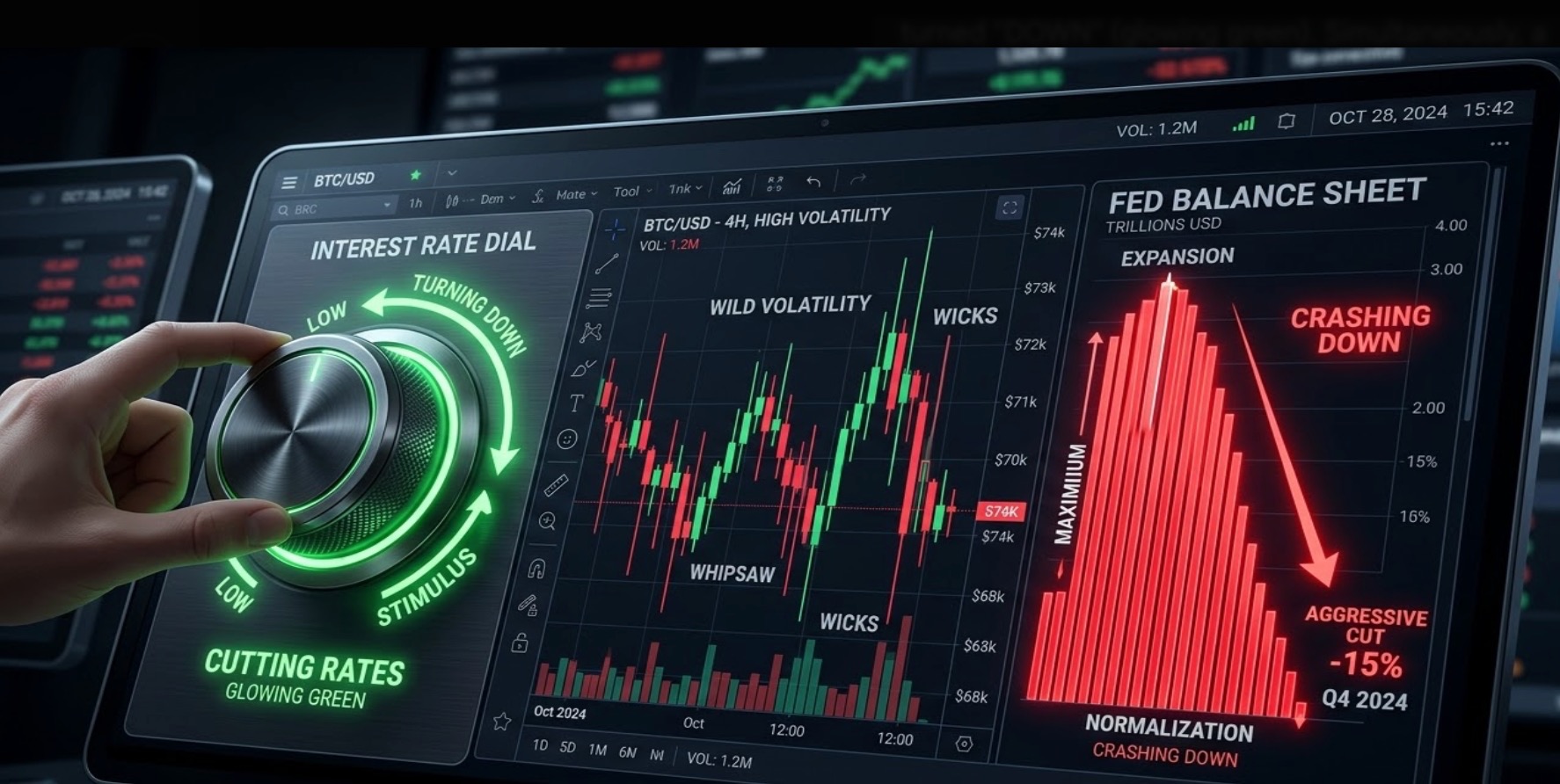
This specific policy combination is the single most important variable for pricing high-beta risk assets over the next 12 to 24 months.
Powell’s current logic is highly linear: if inflation remains sticky, interest rates remain high. Warsh operates on a fundamentally different paradigm. As a "supply-side optimist," he believes the global AI productivity boom will act as a massive deflationary force, eventually offsetting the inflation caused by geopolitical friction.
-
The Warsh Playbook: Warsh is a vocal, long-standing critic of Quantitative Easing (QE) and the Fed’s bloated $6.5+ trillion balance sheet. If confirmed, he will likely advocate for Aggressive Quantitative Tightening (QT) to squeeze out asset bubbles. But there is a twist: he argues that by aggressively shrinking the balance sheet, the Fed creates the economic runway necessary to actually cut the benchmark interest rate and support real economic growth.
-
The Liquidity Shock: This creates a violently complex macroeconomic environment. Lower interest rates are theoretically bullish for crypto, as borrowing costs drop. However, aggressive QT means the central bank is systematically deleting base liquidity from the financial system. For assets like Bitcoin, this push-and-pull dynamic doesn't trigger a smooth, "up-only" bull market—it triggers brutal, wide-range volatility and violent liquidity sweeps.
The Looming Black Swan: A U.S. CBDC
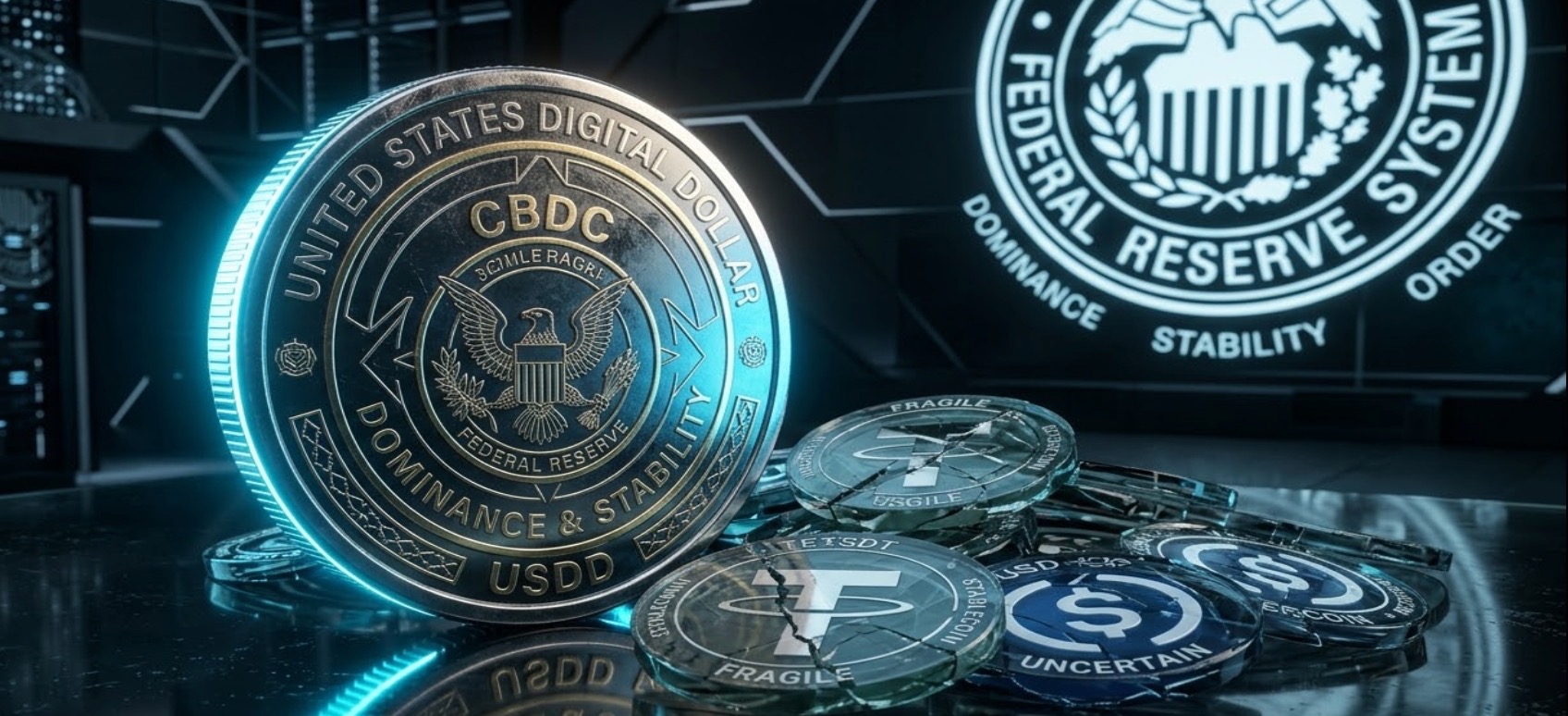
This is the segment of Warsh’s policy framework that requires immediate attention from crypto veterans. It represents the largest regulatory black swan currently hanging over the market.
To combat the rise of foreign digital payment networks and preserve the U.S. Dollar's dominance in global settlements, Warsh is a fierce advocate for launching a Central Bank Digital Currency (CBDC).
-
The Threat to Private Stablecoins: If a Warsh-led Fed accelerates the rollout of an official "Digital Dollar," regulatory agencies will likely move to heavily suppress private stablecoin issuers like Tether (USDT) and Circle (USDC) to eliminate competition and protect sovereign credit. Because stablecoins act as the primary routing liquidity for the entire crypto trading ecosystem, any federal move to choke off their utility will subject the market to a massive stress test.
The Nightmare Scenario: A "Two-Headed" Federal Reserve
Retail traders are largely ignoring a massive loophole in the current political standoff. While Powell’s term as Chair ends in May 2026, his term as a Fed Board Governor extends all the way to January 2028.
Powell has explicitly stated he will not resign from the board until the DOJ investigation is fully resolved. This creates the very real, highly disruptive possibility of a "Two-Headed" Fed: Warsh holding the gavel, while Powell sits at the exact same voting table.
If this materializes, the Fed’s forward guidance will become entirely unreliable. Institutional capital despises political gridlock more than bad news. If Wall Street believes the central bank is paralyzed by internal factionalism, funds will systematically de-risk, pulling capital out of equities and crypto until clear leadership is established.
How to Trade the May Transition on Tapbit
May is not going to be a simple "buy the news" event. It marks the beginning of a highly unpredictable power transition.
-
Play the Range: Until the leadership transition is definitively resolved, macro fear will dictate price action. If BTC loses the $70k psychological support, the $68,000 zone is the technical line in the sand for heavy institutional buyers. Do not blindly long the chop.
-
Capitalize on Volatility: Political standoffs generate massive, headline-driven wicks. Log in to Tapbit to utilize our deep-liquidity, zero-slippage engine. This is an environment built for grid trading and swing setups within the $68,500 - $72,000 range.
-
Protect Your Capital: Uncertainty surrounding the Fed is at historical highs. Register your free Tapbit account today and ensure you are using strict stop-loss parameters on all perpetual futures positions. Capital preservation is your only priority during a macro transition.
Frequently Asked Questions (FAQ)
If Kevin Warsh becomes Fed Chair, will he try to ban Bitcoin?
No. Warsh does not view Bitcoin as a functional currency that competes directly with the U.S. Dollar. He views it as a highly speculative asset and a market hedge—much like digital gold—that investors buy when they lose faith in fiat management. While he won't endorse it, he is unlikely to waste resources trying to outright ban it, preferring instead to focus his regulatory firepower on stablecoins.
What does "Rate Cuts + Aggressive QT" actually mean for crypto prices?
It guarantees extreme market volatility. Rate cuts lower the cost of borrowing capital, which generally pushes funds into risk-on assets like cryptocurrency. However, Quantitative Tightening (QT) means the Fed is actively destroying dollars and pulling structural liquidity out of the banking system. With these two macroeconomic forces fighting against each other, the market is more likely to experience violent, up-and-down liquidation sweeps rather than a smooth bull trend.
Why is a U.S. Digital Dollar (CBDC) bad for the crypto market?
The modern cryptocurrency ecosystem relies almost entirely on private stablecoins (like USDT and USDC) to execute trades, route liquidity across exchanges, and store value on-chain. If the Federal Reserve launches its own official digital currency, regulatory bodies will likely view private stablecoins as direct competition. History shows that governments aggressively regulate or shut down private competitors to protect their monopoly on sovereign currency.
Why doesn't Jerome Powell just resign if his term is up?
Powell's term as the Chair of the Federal Reserve ends in May 2026, but his term as a Board Governor legally lasts until 2028. Because he is currently under investigation by the DOJ—which he views as an executive branch attack designed to force him out—he has explicitly stated he will stay on the Board to protect the central bank's political independence. This could result in a messy scenario where both the new Chair and the old Chair are voting on monetary policy simultaneously.


