Watch CNBC today, and the narrative is clean and institutional: Wall Street is stacking Bitcoin above $71,000, corporate treasuries are expanding, and Ethereum ETFs are settling in. It’s a safe, sterile story.
But if you sit on a trading desk and actually monitor the raw on-chain order flow via tools like Arkham or Nansen, a much dirtier, highly aggressive game is playing out. Behind the scenes of this blue-chip accumulation, the world's highest-net-worth crypto whales are aggressively funneling millions of dollars into assets that legacy finance dismisses as a complete joke: Meme coins.
We are currently looking at a meme coin sector defending a massive $35 billion to $40 billion market cap. Why is the so-called "smart money" deploying seven-figure market buys into cartoon dogs, frogs, and political caricatures?
It’s not because they believe in the tech. It’s because they understand the math of asymmetric betting better than you do. Here is the unfiltered breakdown of how whales are playing this cycle, and how you should adjust your Tapbit portfolio to survive it.
The Tape Doesn't Lie: What the On-Chain Data Shows
Media pundits love to claim that meme coin volatility is driven by bored retail traders gambling their paychecks. The on-chain tape destroys that narrative. Smart money isn't just participating; they are orchestrating the liquidity.
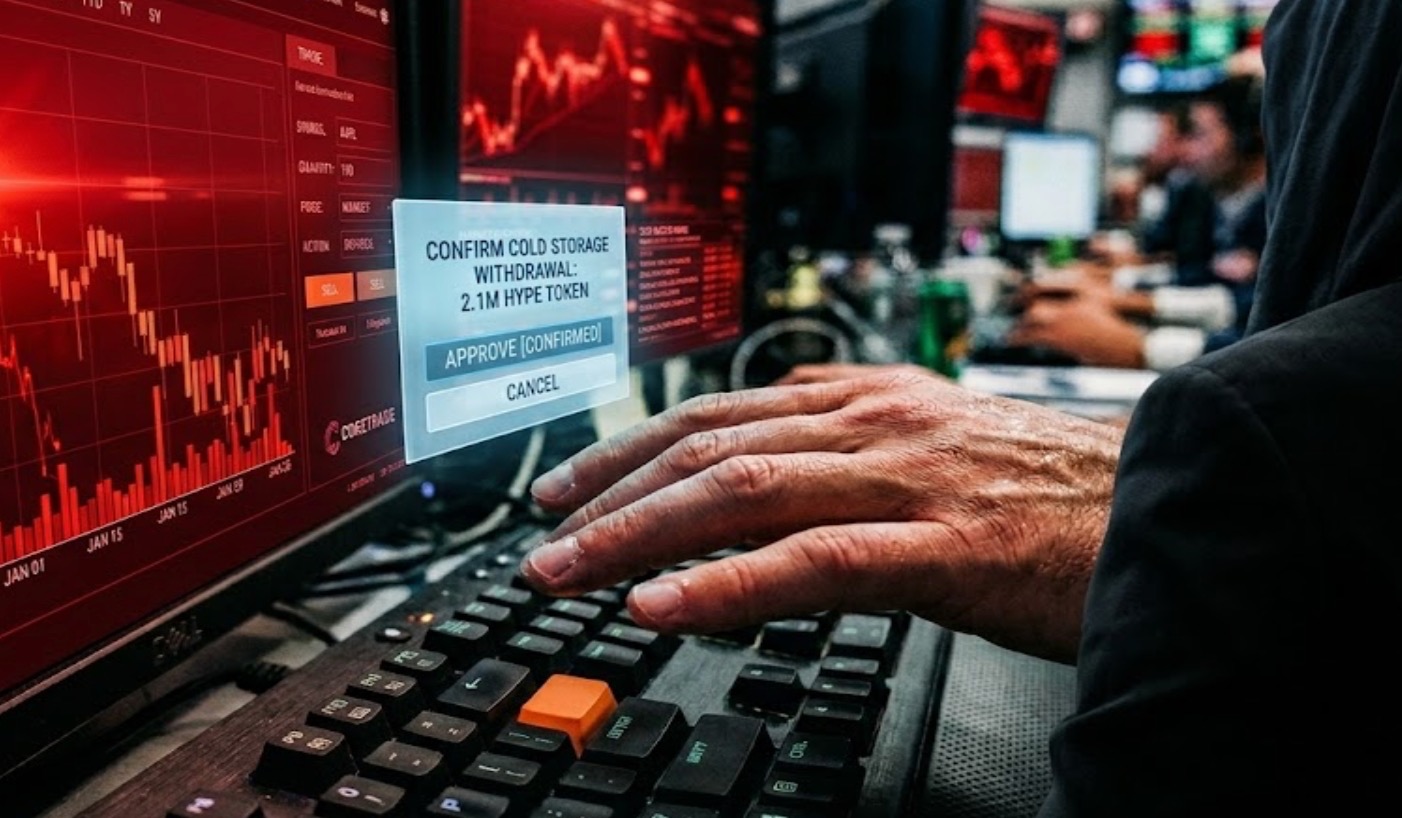
Look at the localized tracking data from this past week alone. We aren't seeing random $500 buys. We tracked a single entity (wallet prefix 0xee0) absorbing over $2.1 million worth of a trending meme token in a single tranche and immediately withdrawing it from the exchange into cold storage.
You do not incur withdrawal fees and lock up millions of dollars of a highly volatile, illiquid micro-cap in a cold wallet unless you are executing a specific, calculated thesis. Whales are using periods of broader market consolidation to absorb the "blood" in the streets. They are buying the panic-selling of retail traders, knowing that when Bitcoin dominance eventually drops, that capital will rotate directly into the high-beta meme sector.
The Real Reason Whales Buy "Jokes": Asymmetric Math
It seems fundamentally broken that a sophisticated millionaire would buy a token with zero utility, zero revenue, and no developer ecosystem. But to understand the whale, you have to look at their portfolio math, not the token's whitepaper.
They are treating liquid meme coins the exact same way Silicon Valley treats early-stage Angel Investing.
If a whale manages a $20 million crypto portfolio, allocating $200,000 (just 1%) to a basket of four trending meme coins is a highly calculated risk.
-
The Downside: If the hype dies, the liquidity vanishes, and the coins go to absolute zero, their total portfolio drops to $19.8 million. It’s a rounding error. They sleep perfectly fine.
-
The Upside: If just one of those tokens catches a viral social media trend, gets a Binance listing, or becomes the center of a "PolitiFi" news cycle, it doesn't just go up 30%. It goes up 50x. That $50k allocation turns into $2.5 million, dragging the performance of the entire $20M portfolio upward.
They are buying a capped downside with a mathematically infinite upside. It is pure momentum trading.
Attention is the New Liquidity
In previous cycles, altcoins needed to promise a "new technological paradigm" (faster transactions, better smart contracts) to attract capital. In 2026, the market has stripped away the pretense.
Whales have realized that attention is the most liquid asset class on earth. Take the "PolitiFi" (Political Finance) sector as the ultimate example. Tokens based on U.S. political figures frequently hit multi-hundred-million-dollar valuations in a matter of days based purely on election news cycles. There is no product. There is only attention. Whales know that where global attention goes, retail liquidity blindly follows. They deploy capital early to front-run the retail attention span.
The Retail Trap: Why Copying Whales Will Bankrupt You
This is the most critical part of this desk note: Mimicking the exact trades of a millionaire whale without having a millionaire's bankroll is financial suicide.
Retail traders see a wallet flagged by Lookonchain buying $1 million of PEPE, and they decide to go "all-in" alongside them. That is a fatal misunderstanding of risk tolerance.
The whale sized that $1 million trade at 1% of their net worth. The retail trader just sized their trade at 100% of their net worth. When the meme coin inevitably corrects by 70% in a single weekend to shake out weak hands, the whale holds comfortably (or buys more). The retail trader gets liquidated or panic-sells at the absolute bottom.
Unlike Ethereum or Solana—which have intrinsic value floors built by network fees and DeFi total value locked (TVL)—meme coins have zero structural support. When the bid side of the order book evaporates, there are no institutional buyers waiting to catch the knife. It is a straight line to zero.
The Tapbit Execution Plan
Meme coins are no longer anomalies; they are established, high-beta trading instruments. If you are going to step into this arena, you must execute like a machine, not a gambler.
-
Strict Position Sizing: Never allocate more than 1% to 5% of your total trading capital to this sector. Consider that capital burned the second you click "Buy."
-
Trade the Majors, Ignore the Trenches: If you don't have the tools to track smart contracts and MEV bots, stay out of the on-chain micro-caps. Stick to the deep-liquidity majors (DOGE, SHIB, PEPE, WIF) where you won't get trapped by a lack of exit liquidity.
-
Take Your Principal Off the Table: Meme coin momentum dies violently. If you catch a 2x or 3x pump, log in to your Tapbit account immediately and sell enough to cover your initial investment. Let the "house money" ride, but secure your baseline capital.
If you want to trade these volatile assets with institutional-grade matching engines and zero lag, register your Tapbit account here and get your limit orders set up before the next liquidity rotation.
Frequently Asked Questions (FAQ)
If meme coins have no utility, what actually drives the price up?
Pure liquidity mechanics and behavioral psychology. Bitcoin requires billions of dollars of fresh capital to move 5%. A mid-cap meme coin only takes a few million dollars of concentrated buy pressure to trigger a massive breakout. When Bitcoin rallies, traders feel "wealth effect" confidence and rotate their BTC profits further out on the risk curve into meme coins, causing them to pump violently.
Should I 'Buy the Dip' when a meme coin crashes 50%?
No. "Buying the dip" is a strategy reserved for fundamentally sound assets that have an institutional floor. Meme coins do not have a floor. A 50% drop is often the first leg of a 99% drop as the community abandons the project. You buy meme coins when they are showing relative strength and breaking resistance, never when they are bleeding out.
How do whales know which meme coin will pump next?
They don't. They use a scattergun approach. A whale might put $50,000 into 10 different meme coins. 9 of them will slowly bleed out or get rug-pulled by the developers. But the 1 token that survives and catches a major narrative will do a 100x, covering all the losses of the other 9 and printing a massive overall profit. Retail traders usually only have enough capital to pick one, massively reducing their statistical odds of survival.


