
The first generation of NFTs successfully solved the digital provenance problem, but it ultimately failed the utility test. The market minted static metadata, attached it to a JPEG, and priced it based entirely on speculative premium and community FOMO.
As the Web3 stack matures, capital is aggressively repricing these passive assets. The new frontier is no longer about proving you own a digital collectible; it is about what that asset can actually do. At Tapbit, our data points to a clear catalyst for the next structural supercycle: the integration of native AI, transforming NFTs from dormant tokens into autonomous on-chain agents.
The Data: Why Capital is Abandoning Static Assets
The numbers reflect a harsh reality for legacy NFTs. In 2025, liquidity for static PFP collections dropped precipitously, while investment in decentralized AI infrastructure surged.
According to aggregate on-chain data and recent industry projections for 2026, smart contract interactions initiated by non-human entities (AI agents) are expected to account for over 30% of total network traffic on major Layer 2s by the end of the year. Capital flows to utility. Investors are no longer willing to park ETH or Solana in assets that do nothing but sit in a wallet. They demand an "Execution Premium"—a valuation multiplier assigned to assets capable of generating independent ROI.
The Problem with Static Architecture
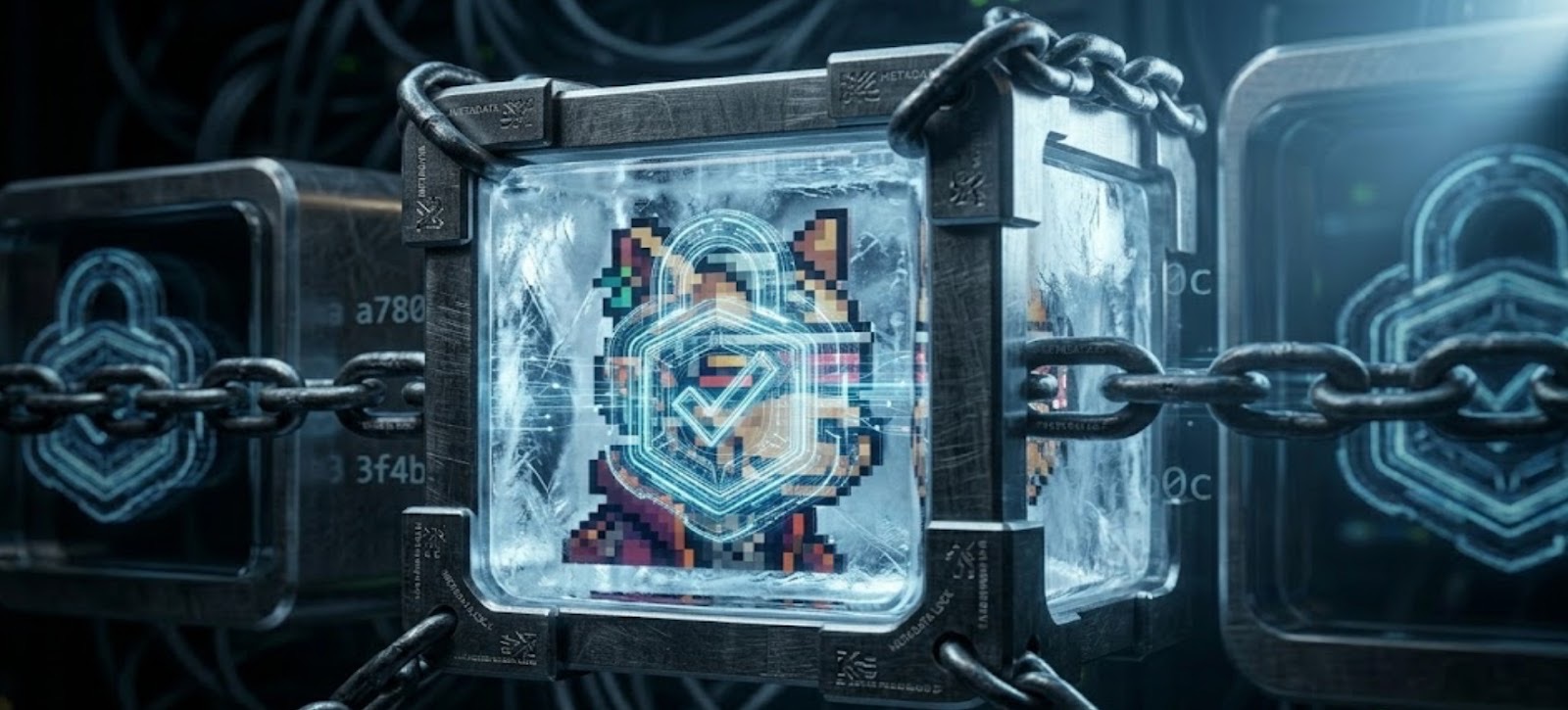
The core bottleneck of early NFT standards is their inability to interact with their environment. Once minted, the asset's state is permanently locked. It cannot read smart contract data, react to external market conditions, or evolve based on user interaction.
Because they act strictly as immutable certificates, their value accrual relies entirely on secondary market liquidity rather than intrinsic utility. This structural flaw is why legacy PFP projects suffer from such extreme, unrecoverable drawdowns when market sentiment shifts.
The Fix: Embedding the Execution Layer
We are currently tracking a massive paradigm shift away from "AI-generated art" toward "AI-embedded architecture."
Protocols like AINFT are pioneering this new primitive by treating artificial intelligence not as an external API call, but as a core computational module bound directly to the token. Leveraging high-throughput environments, these new assets possess real-time data processing capabilities. They can read on-chain activity, parse off-chain data, and dynamically alter their own state.
From Passive Holding to Active Agency
When an NFT gains the capacity to compute, the fundamental relationship between the user and the asset flips. You no longer merely "hold" an NFT in your wallet; you deploy an agent.
Under this framework, these intelligent NFTs act as delegated proxies. A user can authorize their digital agent to monitor yield across decentralized finance (DeFi) protocols, aggregate and analyze DAO governance proposals, or execute complex logic within Web3 gaming economies.
(Ready to adjust your portfolio for the AI narrative? Login to Tapbit to access your dashboard and trade the latest AI and Web3 infrastructure assets.)
Multimodal AI and the Utility Premium
The introduction of multimodal AI—the ability for models to process text, audio, and visual data simultaneously—shatters the remaining boundaries for these assets.
An intelligent NFT is no longer confined to a single ecosystem. It can seamlessly transition from managing a user's SocialFi identity to generating dynamic content or acting as an NPC in a blockchain game. Consequently, the valuation model for these assets shifts dramatically. Value is no longer derived from a one-time minting event or royalty capture, but from ongoing usage frequency, compute demand, and tangible utility.
The Bottom Line
The market has exhausted the pure speculation phase of digital collectibles. The liquidity in the coming cycle will flow toward utility-driven infrastructure. The assets that survive the next decade will not be static images; they will be the schedulable, trustworthy digital agents that execute the Web3 economy.
Stay ahead of the curve. Whether you are trading high-cap AI tokens or discovering the next generation of Web3 infrastructure, Register on Tapbit today to trade with institutional-grade tools and deep liquidity.
Frequently Asked Questions (FAQ)
What is an AI-powered NFT (AINFT)?
An AI-powered NFT is a digital asset that features an embedded artificial intelligence computational layer. Unlike traditional NFTs which rely on static metadata, AINFTs can process data, learn from user interactions, and act autonomously based on environmental changes.
How do Web3 digital agents differ from traditional NFTs?
Traditional NFTs are passive digital certificates of ownership (like a deed to a digital painting). Web3 digital agents are active, schedulable entities. They can execute smart contract logic, manage DeFi positions, or interact in GameFi environments on behalf of the wallet holder.
Will AI agents replace standard crypto wallets?
While they won't replace foundational wallets, AI agents are evolving to possess their own financial autonomy (such as utilizing the x402 payment standard). This allows them to execute micro-transactions and interact with dApps independently, acting as an intelligent proxy for the primary wallet holder.


