
If you spend enough time on crypto social media, you have probably heard the horror stories about GameFi tokenomics. The standard narrative goes like this: Web3 gaming tokens launch with a tiny circulating supply (around 10%), pump to astronomical valuations, and then slowly bleed retail traders to death as venture capitalists unlock and dump the remaining 90% of the supply.
For a long time, that narrative was entirely true. But if you look at the actual data driving the market this week, the landscape has fundamentally shifted.
The major leaders of the current GameFi cycle—specifically PixelVerse (PIXEL), Xai (XAI), and Portal (PORTAL)—have quietly pushed through their most aggressive dilution phases. The "low float, high FDV" trap that defined the early days of GameFi is largely behind them.
Here is the Tapbit desk breakdown of the real-time CoinMarketCap data, what it means for overhead sell pressure, and how you should adjust your trading strategy.
The Data Check: PIXEL, XAI, and PORTAL
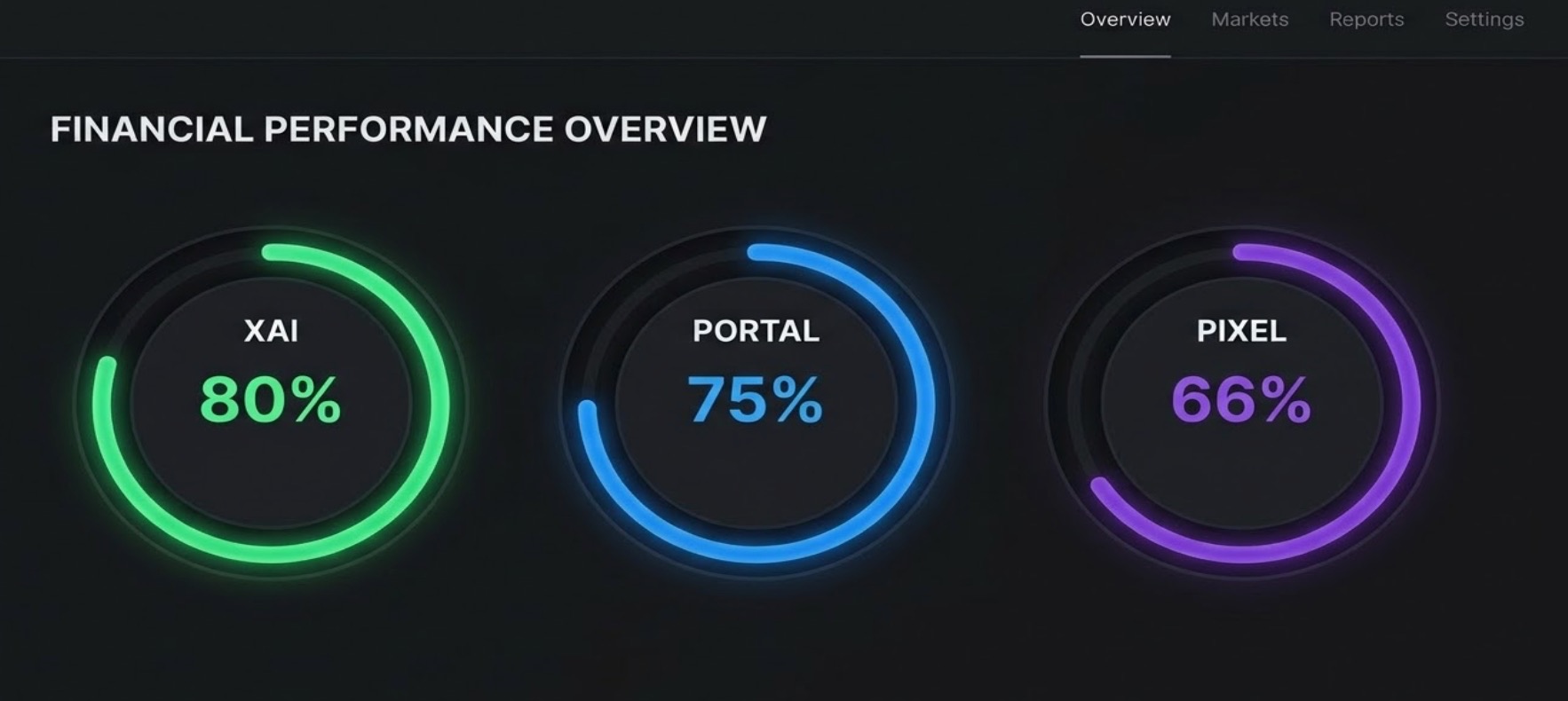
When trading altcoins, the Fully Diluted Valuation (FDV) compared to the actual Market Cap is your most important risk metric. If circulating supply is low, future inflation will crush the price.
But a live scrape of CoinMarketCap reveals that the top gaming infrastructure tokens are surprisingly mature:
-
XAI (Xai Games): The Arbitrum L3 Leader
-
Circulating Supply: ~80.18% (2 Billion XAI)
-
Max Supply: 2.5 Billion XAI
-
The Reality: Xai has officially entered the late stages of its token distribution. With 80% of the supply already on the open market, the threat of sudden, massive VC dumps is effectively neutralized. The price action here is now heavily dictated by actual network usage and developer onboarding, not unlock anxiety.
-
PORTAL (Portal Gaming): The Cross-Chain Liquidity Play
-
Circulating Supply: ~75.66% (756.6 Million PORTAL)
-
Max Supply: 1 Billion PORTAL
-
The Reality: Similar to XAI, PORTAL has released three-quarters of its total supply. While there is still a 25% overhang, the market has already absorbed the heaviest dilution rounds.
-
PIXEL (Pixels): The Ronin Ecosystem Heavyweight
-
Circulating Supply: ~66.03% (3.3 Billion PIXEL)
-
Max Supply: 5 Billion PIXEL
-
The Reality: Earlier in its lifecycle, PIXEL was heavily criticized for having a low float. That is no longer the case. With two-thirds of the supply now circulating, the inflation rate is slowing down drastically. While scheduled unlocks still occur, they are no longer large enough to single-handedly capsize the market structure.
The Narrative Shift: From Unlocks to Fundamentals
What does this data mean for you as a trader? It means you need to stop trading these tokens like they are ticking time bombs.
When a token only has 10% of its supply circulating, every price pump is usually just a manipulated setup to create exit liquidity for insiders. But when a token has 65% to 80% of its supply circulating, the market structure is much more organic.
We are seeing a transition from speculative dilution to fundamental valuation.
If PIXEL or XAI experiences a 20% rally today, it is much more likely to be driven by actual product updates—like the recent Stylus Protocol upgrade on Xai or a major active player milestone on Pixels—rather than a pre-unlock manipulation scheme. The heavy supply overhangs that historically suppressed GameFi breakouts have been largely absorbed by the market.
How to Trade Mature GameFi on Tapbit
Because these assets have healthy circulating supplies, technical analysis and volume profiles are highly reliable again.
-
Trade the Breakouts: You don't have to aggressively short every GameFi pump out of fear of an incoming VC dump. When XAI or PORTAL break key resistance levels with strong volume, they have the structural runway to sustain those trends.
-
Watch the Active User Metrics: Now that tokenomics are mostly out of the way, price action will trail active daily users. Monitor on-chain data for the Ronin network (for PIXEL) and Arbitrum (for XAI).
-
Execute on Tapbit: Stop worrying about liquidity traps and focus on the charts. Log in to Tapbit to trade the PIXEL, XAI, and PORTAL spot markets, or Register your free account to access deep liquidity on our perpetual futures contracts.
Frequently Asked Questions (FAQ)
What is the difference between Market Cap and Fully Diluted Valuation (FDV)?
Market Cap is the total value of the tokens currently trading on the open market. FDV is the hypothetical value of the project if every single token (even the locked ones) were circulating right now. If a token's Market Cap is extremely low compared to its FDV, it means a massive amount of locked supply is waiting to be dumped on the market later.
Why is it a good thing that XAI and PORTAL have 75%+ circulating supply?
It removes the fear of massive dilution. When the vast majority of tokens are already trading on the open market, early investors and venture capitalists can no longer flood the market with new tokens to crash the price. It makes the asset safer and more predictable to trade.
Is PIXEL still at risk of token unlocks?
While PIXEL still has roughly 34% of its supply locked, it has crossed the critical halfway point. With 66% of the supply already circulating, future unlocks are smaller relative to the overall market size, meaning they will not trigger the kind of catastrophic price crashes we see with newly launched, low-float tokens.
Disclaimer: This article is for educational and informational purposes only and does not constitute financial advice. Always conduct independent research before deploying capital or utilizing automated trading tools.


