
For the better part of a decade, the crypto industry has been selling a vision: eventually, every stock, bond, and piece of real estate will live on a blockchain. For years, traditional finance (TradFi) treated this idea as a neat science experiment while keeping their trillion-dollar markets firmly planted on legacy tech.
That dynamic completely shifted on March 18, 2026.
In a landmark regulatory filing (SR-NASDAQ-2025-072), the U.S. Securities and Exchange Commission (SEC) officially gave Nasdaq the green light to trade tokenized stocks. This isn't a whitepaper or a beta test by a startup. It is one of the world's largest equity exchanges wiring blockchain technology directly into its core settlement plumbing.
This event is the ultimate institutional validation of the Real World Asset (RWA) narrative. Here is the Tapbit trading desk’s unfiltered breakdown of what Nasdaq actually built, why they didn't just use a decentralized exchange, and how this capital shift will reprice the crypto market.
Let's Be Clear: This Is Not a Cryptocurrency
The first thing you need to understand is that a tokenized stock on Nasdaq is fundamentally different from trading a token on Uniswap.
When Nasdaq tokenizes an asset under this new SEC framework, they are creating a legally binding "digital twin" of a real-world share. This comes with strict, heavily regulated parameters:
-
Blue-Chips Only: Nasdaq isn't starting with penny stocks. The initial rollout is restricted to highly liquid, large-cap assets—specifically constituents of the Russell 1000 and major ETFs tracking benchmarks like the S&P 500 and Nasdaq-100.
-
The 1:1 Legal Peg: If you hold a tokenized share of Apple (AAPL) in this system, you hold the exact same legal rights as someone holding a traditional paper or electronic share. You get the corporate voting rights, and you get the dividend payouts.
-
The "Same Order Book" Rule: To prevent market manipulation and arbitrage, Nasdaq forces the traditional stock and the tokenized stock to share a single, unified order book. They share the same ticker and the same CUSIP number. An institutional buyer simply checks a box for "tokenized settlement" when executing the trade.
The Pragmatism of the "Hybrid Model"
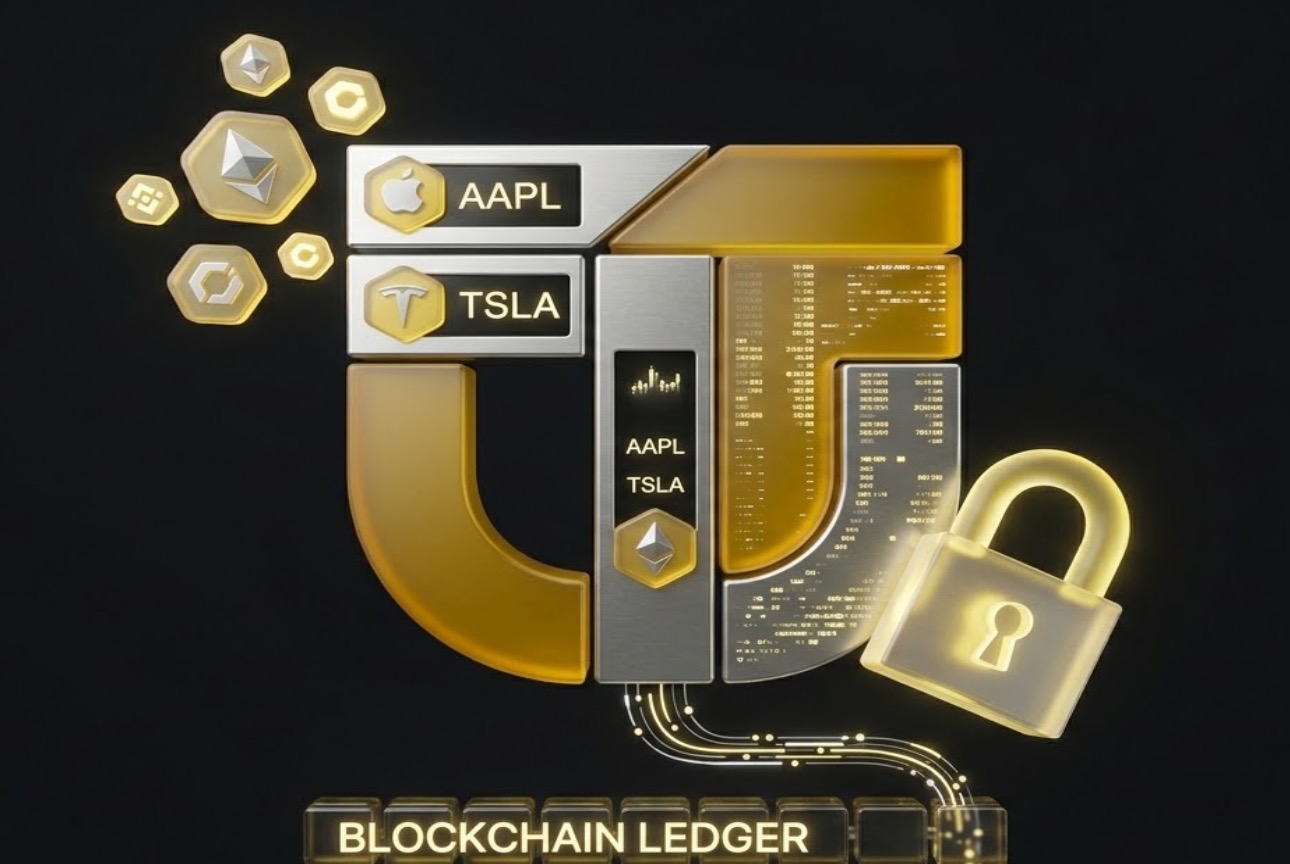
A common question from crypto natives is: Why didn't Nasdaq just build a DEX? The answer comes down to systemic risk. You cannot run a market that processes trillions of dollars a day on a fully decentralized protocol where a single smart contract bug could trigger a global financial crisis.
Instead, Nasdaq and the SEC designed a highly pragmatic Hybrid Model.
-
The Front-End (Trading): The actual buying and selling still happen on Nasdaq's proprietary matching engines. This guarantees the ultra-low latency and deep liquidity that high-frequency trading firms require.
-
The Back-End (Settlement): This is where the blockchain comes in. Once a trade executes, the Depository Trust Company (DTC)—the central ledger keeper of the U.S. stock market—takes over. The DTC holds the underlying physical/electronic shares in custody and mints the representative tokens onto a regulated blockchain for settlement.
Right now, these tokenized trades still settle on the standard T+1 (next day) timeline. But that is just step one. The clearinghouses are explicitly using this architecture to lay the groundwork for instantaneous, T+0 settlement using digital cash by 2027.
The Alpha: Why the RWA Sector is About to Explode
Why should a crypto trader care about how traditional ETFs settle? Because Wall Street just proved our infrastructure works.
For the last two years, the crypto RWA sector has been building the exact plumbing needed to bring off-chain assets on-chain. Nasdaq’s move signals to every major bank and asset manager that the SEC is now comfortable with blockchain-based settlement for regulated securities.
This regulatory clarity will trigger a massive capital rotation into the crypto infrastructure layers that make tokenization possible:
-
Oracle Networks: Smart contracts are blind; they cannot read real-world stock prices without Oracles. The decentralized data feeds that securely pipe TradFi pricing data onto blockchains are about to see unprecedented institutional demand.
-
Institutional-Grade Layer 1s: Wall Street will never issue tokenized securities on congested networks filled with meme coins. Layer 1 blockchains specifically engineered for regulatory compliance, privacy, and high-throughput financial applications will absorb massive amounts of capital.
-
Tokenization Middleware: The protocols that actually forge the smart contracts for asset tokenization have just been handed a massive, multi-year macro tailwind.
How to Trade the RWA Narrative on Tapbit
The institutional validation of blockchain tech is no longer a theory. As legacy capital begins exploring the tokenization of everything from U.S. Treasuries to corporate debt, the crypto assets powering this infrastructure are positioned for aggressive repricing.
-
Spot Accumulation: The smart money is positioning now. Log in to Tapbit to strategically accumulate spot positions in top-tier Oracle networks and RWA-focused infrastructure before retail consensus catches up.
-
Trade the Volatility: News of this magnitude creates massive momentum swings across the market. Register your free Tapbit account to access our deep-liquidity perpetual futures market, allowing you to use strict risk management to trade the RWA breakout.
Frequently Asked Questions (FAQ)
Can I buy tokenized Nasdaq stocks on a crypto exchange right now?
No. The SEC-approved pilot program is heavily regulated and currently confined to traditional institutional channels and approved broker-dealers using the Nasdaq/DTC hybrid framework. You cannot buy an Apple stock token on a decentralized exchange today. However, this regulatory green light paves the way for future integrations where tokenized assets might bridge into specialized, compliant crypto platforms.
Are tokenized stocks just a new type of cryptocurrency?
Absolutely not. A cryptocurrency (like Bitcoin) is a decentralized digital asset whose value is determined purely by market supply and demand. A tokenized stock is a legally binding digital representation of a real-world corporate share. It is regulated by the SEC, backed 1:1 by the actual stock held in custody by the DTC, and entitles the holder to real-world dividends and voting rights.
Why is Nasdaq using a "Hybrid Model" instead of just putting everything on a public blockchain?
It all comes down to risk management. The U.S. stock market processes trillions of dollars in volume. If a decentralized public network experiences an outage or a smart contract exploit, the global economy suffers. By keeping the actual trade execution on Nasdaq's proven, ultra-fast centralized servers, and using the blockchain purely for backend clearing and ownership records, they get the speed and transparency of Web3 without the systemic risk.
Why does this matter for my crypto portfolio?
Because it proves the "RWA" (Real World Asset) use case is real. Wall Street's adoption of blockchain for stock settlement shows that the technology has immense, trillion-dollar enterprise value. Crypto projects that provide the infrastructure for tokenization—such as Oracle networks that supply price data, and blockchains built for institutional finance—are uniquely positioned to capture massive value from this trend.


